
8 Best Brake Fluids for Motorcycle Track Days: My Picks After Years of Boiling Fluid
 Jake Miller
9 min read
Jake Miller
9 min read
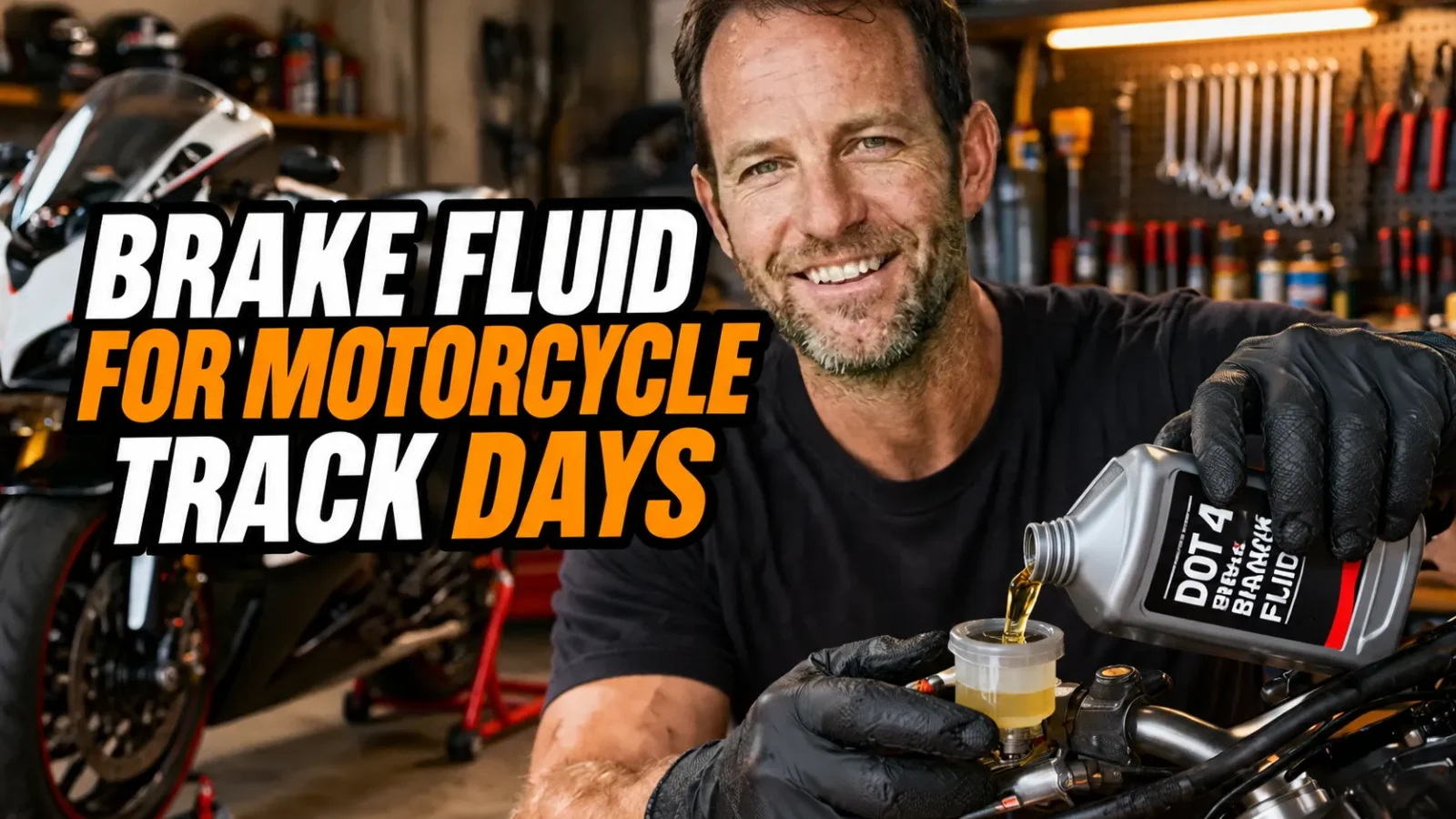
I learned the hard way that brake fluid is one of those things you don’t think about until your lever goes soft at the end of a long straight. My first track day ended early because I showed up on fluid that was two seasons old, and by the third session my brakes felt like squeezing a sponge. That was the day I started actually researching this stuff instead of grabbing whatever was on the shelf.
Since then I’ve flushed my own lines more times than I can count, tested a handful of fluids back-to-back, and talked to enough fast riders and shop mechanics to have real opinions. The short version: the best brake fluid for motorcycle track days is the one with the highest wet boiling point you can actually afford to replace regularly — because fresh, cheap fluid beats old, exotic fluid every single time.
If you’re building out your track-day maintenance routine, brake fluid is just one piece. I’d also point you toward my guide on the what are the different types of motorcycle batteries ultimate guide if you’re sorting out the electrical side of your bike at the same time.
- Motul RBF 660 is my overall pick — 617°F dry boiling point, DOT 4, and sold almost everywhere.
- Castrol React SRF Racing is the ultimate no-compromise fluid if you can stomach the price.
- Wet boiling point matters more than dry for track days — that’s what degrades as fluid absorbs moisture.
- Bleed fresh fluid before every track weekend; fresh budget fluid beats stale race fluid.
- Never mix DOT 5 silicone fluid with DOT 3, 4, or 5.1 systems.
1. Motul RBF 660 Factory Line — My Overall Pick
If I had to pick one fluid and stop thinking about it, this is it. Motul RBF 660 is a DOT 4 racing fluid with a dry boiling point of 617°F (325°C) and a wet boiling point of 400°F (204°C), which is genuinely excellent for a fluid you can buy off the shelf at most shops.
I’ve run this in my track bike for three seasons now. Even at the end of a hot 20-minute session in August, my lever stays firm and consistent. That consistency is what I care about most — I don’t need the absolute highest number on paper, I need brakes that feel the same on lap two and lap twelve.
The catch is that it’s a racing fluid, so it absorbs moisture faster than a standard DOT 4. I bleed it before every track weekend without exception. A 500ml bottle runs about $20-25, which is cheap insurance.
Why I keep coming back to it
RBF 660 is the sweet spot between price, availability, and performance. It’s not the most extreme fluid on this list, but it’s the one I recommend to almost every rider who asks me what to buy.
2. Castrol React SRF Racing — The No-Compromise Option
Castrol React SRF Racing is the fluid I reach for when I’m doing a long endurance-style track day with back-to-back sessions and no real cool-down time. Its dry boiling point is around 590°F, but the real story is its wet boiling point of roughly 518°F — the highest of any fluid I know of.
That wet number is what makes SRF special. Most fluids lose a huge chunk of performance once they absorb moisture; SRF barely budges. I’ve run it for an entire season in a bike I wasn’t diligent about bleeding, and it never went soft on me.
The downside is price. A liter is roughly $70-90 depending on where you buy, and it’s not stocked at every local shop. For a dedicated track bike, I think it’s worth it.
3. Motul RBF 700 Factory Line — Maximum Dry Boiling Point
If you specifically want the highest dry boiling point you can get in a DOT 4 fluid, Motul RBF 700 is it at 622°F (336°C). Its wet boiling point sits around 400°F, similar to RBF 660.
I think of RBF 700 as the fluid for riders who are hard on brakes — big bikes, heavy trail braking, short tracks with lots of hard stops. On a lightweight bike with modest pace, I honestly don’t think you’ll feel the difference over RBF 660.
It costs a bit more than RBF 660, usually $28-35 for 500ml, and it’s slightly harder to find. Great fluid, but only worth the premium if your brakes are actually generating that kind of heat.
4. Brembo HTC 64T — Premium Performance Fluid
Brembo HTC 64T is a DOT 4 racing fluid with a dry boiling point of 601°F and a wet boiling point around 399°F. It’s a well-regarded fluid that a lot of club racers use, and it behaves predictably session after session.
I’ve used this in a friend’s track bike and found it very comparable to Motul RBF 660 in real-world feel. The lever stayed consistent, no fade, no sponginess.
Where Brembo wins is availability in some markets where Motul is harder to source, and it pairs neatly with Brembo brake components if that’s what your bike runs. Expect to pay $25-35 per 500ml.
5. Endless RF-650 — The Club Racer Favorite
Endless RF-650 is a DOT 4 racing fluid with a dry boiling point of 601°F (316°C) and a wet boiling point of 399°F (204°C). It’s a staple in the paddock for riders who take braking seriously.
What I like about RF-650 is how stable it feels over a full track day. I’ve had sessions where I pushed hard for 25 minutes straight and the lever never wandered. That’s the whole game with brake fluid.
It’s typically $30-40 for a 500ml bottle. Not cheap, but it’s a proven fluid with a long track record in racing paddocks.
6. ATE Super Blue / ATE Typ 200 — The Value Pick
ATE Typ 200 (and the classic Super Blue, now harder to find due to dye regulations in some markets) is a DOT 4 fluid with a dry boiling point of 536°F and a wet boiling point around 388°F. It’s not a dedicated racing fluid, but it’s remarkably good for the price.
I used ATE Typ 200 for a full season of novice and intermediate track days, and it never let me down. At roughly $15-20 per liter, it’s by far the best value on this list.
The trade-off: it absorbs moisture a bit faster and its dry boiling point is lower than the racing fluids above. If you’re running advanced pace on a heavy bike, step up. If you’re doing track days casually, this is a fantastic choice.
Where it fits in my routine
I still keep a liter of ATE around for street bikes and for bleeding between events. It’s cheap enough that I never hesitate to use fresh fluid, and fresh fluid is the single biggest performance upgrade you can make.
7. Putoline Racing Brake Fluid DOT 4 — Solid European Option
Putoline’s racing DOT 4 fluid has a dry boiling point of 594°F and a wet boiling point of 383°F. It’s a well-made fluid that’s common in European paddocks and among riders who run Putoline’s other products.
I’ve run this in a bike I was prepping for a two-day track event, and it held up perfectly through both days with a bleed in between. The feel was consistent and the price was reasonable at around $20-25 per 500ml.
It’s not drastically different from Motul or Brembo on paper, but it’s a legitimate racing-grade fluid and a good option if it’s what your local shop stocks.
8. Wilwood EXP 600 Plus — Best for Extreme Heat
Wilwood EXP 600 Plus is a DOT 4 fluid with a dry boiling point of 626°F and a wet boiling point of 417°F. Those numbers are among the highest of any fluid I’ve come across, and it’s designed specifically for extreme brake temperatures.
I’ve used this in a big-bore track bike on a tight circuit where brakes get absolutely hammered. It handled the heat without any fade, and the wet boiling point means it stays strong even when it’s not perfectly fresh.
The downside is availability — it’s more of a motorsport-oriented product, so you may need to order it online. Expect $25-35 for a 500ml bottle. For extreme-heat applications, I think it’s one of the best options out there.
How I Choose Brake Fluid for Track Days
Wet boiling point matters more than dry
Dry boiling point is the number brands love to advertise, but it only applies to fluid straight out of a sealed bottle. The moment your fluid is in the bike, it starts absorbing moisture from the air, and its wet boiling point is what you’re actually dealing with on track.
I weigh wet boiling point heavily in my decisions. A fluid with a slightly lower dry number but a much higher wet number is usually the better long-term choice.
Change it more often than you think
Brake fluid is cheap compared to a crash caused by fade. I bleed fresh fluid through my calipers before every track weekend and do a complete flush at least twice a season.
If your fluid looks dark, or your lever feels spongy, or you’ve done a lot of hard braking in high heat, just change it. There’s no clever trick that beats fresh fluid. While you’re doing fluids, it’s worth sorting out your engine side too — my guide to the best motorcycle oil for track days covers that in detail.
Don’t ignore the rest of your maintenance
Brake fluid is one system, but track days stress everything. If your bike sits between events and won’t start, that’s often a battery issue — I wrote about why a motorcycle battery dies after 3 days and how to fix it.
And if you’re still deciding what oil to run, I’ve compared the best motor oil for 4 stroke motorcycle options, plus a separate breakdown of the top engine oil for 4 stroke motorcycle picks. If you’re riding in India, this guide on the best engine oil for 4 stroke motorcycle in india covers what’s actually available there.
Never mix silicone and glycol fluids
DOT 5 silicone fluid is not compatible with DOT 3, 4, or 5.1 systems, and mixing them will ruin your seals and your braking. I stick to DOT 4 and racing glycol fluids exclusively for track use.
If you’re unsure what’s in your bike, flush the system completely with the fluid you intend to run rather than topping up with something unknown.
Match the fluid to your pace
A novice track day rider on a light bike doesn’t need the most expensive fluid on this list. ATE Typ 200 will serve you perfectly. As your pace picks up and your brakes generate more heat, step up to Motul RBF 660, Brembo HTC 64T, or Castrol SRF.
Spending more on fluid than your riding demands is just money left on the table. Spending less than your riding demands is how you end up with a soft lever at the worst possible moment.
Frequently Asked Questions
What is the best brake fluid for motorcycle track days?
For most riders, Motul RBF 660 Factory Line is the sweet spot: a 617°F dry boiling point, DOT 4 rating, and reasonable cost per bottle. If you run long, fast sessions in high heat, Castrol React SRF Racing is the ultimate choice despite its price.
Can I use DOT 5 silicone fluid in my track bike?
No. DOT 5 silicone fluid is not compatible with DOT 3, 4, or 5.1 systems and cannot be mixed with them. It also absorbs air more easily, which makes it a poor choice for track use. Stick with DOT 4, DOT 5.1, or a racing-specific glycol fluid.
How often should I change brake fluid for track days?
I bleed fresh fluid before every track weekend and do a full flush at least twice a season. Glycol-based fluid absorbs moisture from the air, which drops its wet boiling point fast. If your fluid looks dark or your lever feels spongy, it’s already overdue.
Is DOT 5.1 better than DOT 4 for track riding?
Not automatically. DOT 5.1 has a higher minimum wet boiling point than DOT 4, but plenty of racing DOT 4 fluids like Motul RBF 660 and RBF 700 out-perform standard DOT 5.1. Compare actual dry and wet boiling points, not just the DOT number.

Related Articles

7 Best Disc Brake Locks for Motorcycles: My Real-World Picks After Years of Testing
I've tested disc brake locks on my own bikes for years. Here are 7 real, ride-proven picks, from the ABUS…
Jake Miller
10 min read

7 Best Incandescent Brake Light Bulbs for Motorcycles: My Real-World Picks
I tested and ranked the 7 best incandescent brake light bulbs for motorcycles, from the Philips 1157 to the Osram…
Jake Miller
11 min read

7 Best Brake Pads for Touring Motorcycles: My Real-World Picks After Thousands of Miles
I tested the top brake pads for touring motorcycles. From EBC to Brembo, here are my honest picks for stopping…
Jake Miller
9 min read