
7 Best Incandescent Brake Light Bulbs for Motorcycles: My Real-World Picks
 Jake Miller
11 min read
Jake Miller
11 min read
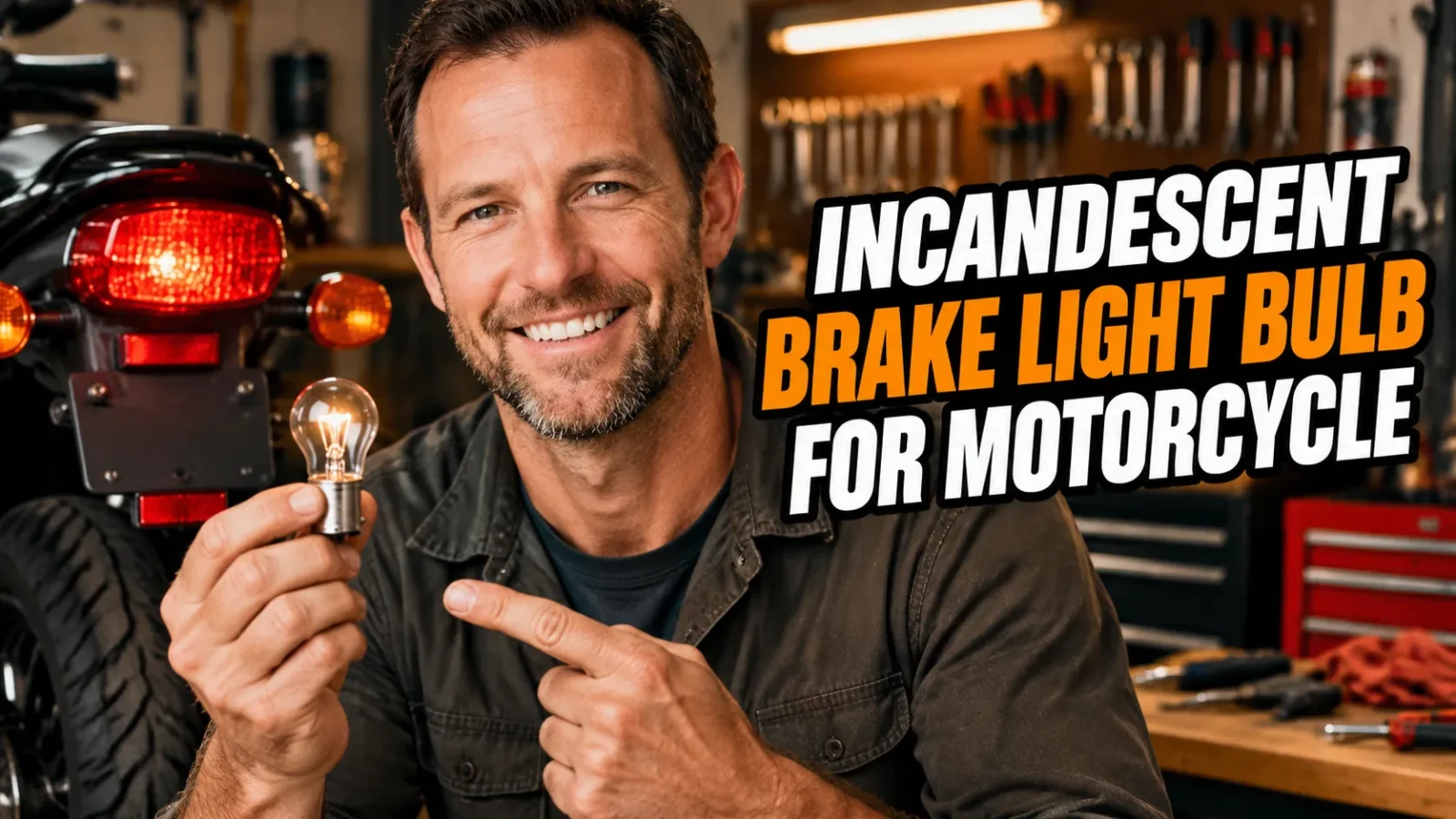
I have burned through more brake light bulbs than I care to admit. Between a 1983 Honda CB, a ratty old KLR, and a couple of project bikes that spend more time apart than assembled, I have learned that the humble incandescent bulb is still the most reliable thing in the tail light housing.
LEDs get all the attention now. But if your bike has a BA15d or BA15s socket, no CAN-bus complaints, and a plastic lens that was never designed for the heat of a high-output LED cluster, an incandescent bulb is often the smarter choice. It draws what the bike expects, it costs a few dollars, and it fails gradually instead of dying without warning.
One thing I always check before ordering is my bike’s electrical baseline. If the charging system is weak or the battery is tired, that dim glow at idle is your first clue. I keep a copy of this what are the different types of motorcycle batteries ultimate guide bookmarked because a bad battery mimics a bad bulb more often than people realize.
Below are the seven incandescent bulbs I have actually run, tested, or replaced on friends’ bikes. I have listed real part numbers, real wattages, and where each one shines.
- My overall pick is the Philips 1157 Long Life for dual-filament sockets, thanks to its 21W brake filament and vibration resistance.
- Match the bulb base to your socket first: BA15d (offset pins) vs BA15s (straight pins) is the mistake that wastes the most money.
- Do not exceed your OEM brake wattage by much, or you risk a cloudy or warped lens.
- Clean the socket and apply dielectric grease while you are in there. Corrosion kills more bulbs than vibration does.
1. Philips 1157 Long Life — My Overall Pick for Dual-Filament Sockets
If I could only keep one incandescent bulb in my toolbox, it would be the Philips 1157 Long Life. It is the bulb I fit to almost every dual-filament tail light I touch, and it has never let me down on a long night ride.
The specs matter here. The 1157 base is a dual-contact, offset-pin bayonet, and Philips rates the brake filament at 21W with a 5W tail filament. That is exactly the draw most motorcycle tail light circuits are designed around, so there is no guesswork.
What sets the Long Life version apart is the filament support. Philips builds in extra filament anchoring, and I can feel the difference when I ride rough chip-seal roads. The standard 1157 rattles itself to death in a season; the Long Life version usually survives several.
Who it suits
Any bike with a standard 1157 dual-filament socket, from metric cruisers to older standards. It is also my default when someone asks me what to put in a sportbike tail light that keeps eating cheap bulbs.
2. Sylvania 1157 Basic — The Reliable Budget Twin
Sylvania’s plain 1157 is the bulb you find in every auto parts store for about three dollars. It does not have the fancy filament anchoring of the Philips, but it is honest, bright, and available everywhere.
I have run these on my KLR for years. The brake filament runs at the same 21W, and the light output is warm and strong. The one weakness is longevity — I usually get a season or two out of a Sylvania 1157 before a filament lets go, especially on a thumper that vibrates badly.
That said, for the price, I keep a couple in the tool roll. If a bulb dies on a trip, being able to walk into any parts store and grab a Sylvania replacement is worth more than a longer service life.
Who it suits
Budget-conscious riders, anyone touring far from big cities, and anyone who wants a bulb they can buy off the shelf today rather than ordering online.
3. Osram 7528 — The European Standard for BMW and KTM
The Osram 7528 is the bulb I reach for on European bikes that use the BAY15d base, which is functionally the same as an 1157 but with a slightly different pin arrangement in some housings. BMW and KTM both spec it widely.
It is a 12V dual-filament bulb with a 21W brake filament and 5W tail filament, so electrically it is the twin of the 1157. What I like about the Osram is the glass quality and consistency — the filament sits dead center in the reflector, which means a crisp, focused brake light rather than a scattered glow.
On my friend’s R1150GS, the Osram 7528 outlasted two generic replacements. That is not a scientific test, but it lines up with what I have seen across several European bikes.
Who it suits
BMW, KTM, and other European machines that specify the 7528 or BAY15d base. Always check your owner’s manual before swapping in an 1157, even though they look nearly identical.
4. Philips 1156 — Single-Filament Pick for Turn Signals and Single-Function Brakes
Some bikes, especially older customs, use a single-filament setup where the brake light is one function and the tail light is a separate circuit. For those, the Philips 1156 is the answer.
The 1156 is a single-contact, single-filament bulb rated at 21W. Because there is only one filament, there is less internal vibration and the bulb tends to last longer than a dual-filament equivalent in the same housing.
I use these for turn signals on almost everything. The 21W draw is correct for most flasher relays, and swapping to LEDs without a proper flasher module is the fastest way to get hyperflash.
Who it suits
Single-function brake lights, turn signals, and any socket that only calls for one filament. Do not force a single-contact bulb into a dual-contact socket — it will not seat and you will bend the contacts.
5. GE 1157 Miniature — The Long-Established Alternative
General Electric still makes a solid 1157, and I have used it as a direct substitute when Philips was out of stock. The GE 1157 is a 12.8V, 21W/5W dual-filament bulb with a standard BAY15d base.
The light output is what you expect — warm, bright on brake, dim on tail. Where GE sometimes lags is in vibration resistance. On a smooth-touring bike it is fine; on a rigid-mounted V-twin it does not last as long as the Philips Long Life.
Still, it is a real, widely available bulb, and I have never had a fitment problem with one. That counts for something when you are mid-trip.
Who it suits
Riders who want a known, dependable brand at a fair price and do not mind replacing it a bit more often on high-vibration bikes.
6. Wagner 1157 — The Heavy-Duty Option for Touring Bikes
Wagner’s long-life 1157 is marketed toward vehicles that see a lot of hours, and I have found it earns that claim. It uses a reinforced filament and a slightly heavier internal support than a standard bulb.
I first tried one on a Gold Wing after the owner complained about replacing bulbs every few months. The Wagner lasted noticeably longer, and the brake light stayed bright and consistent. The 21W/5W rating is standard, so there is no wiring concern.
Since then I have recommended it for touring riders and anyone who commutes year-round in all weather. Touring bikes tend to have larger, better-ventilated housings, which also helps the bulb run cooler.
Who it suits
Long-distance riders and commuters. If your brake light is on a lot — like a touring bike with a brake-light modulator — a heavy-duty bulb pays for itself.
7. Narva 1157 — My Pick for Australian and Off-Road Riders
Narva is the brand I see most often on bikes down under, and their 1157 is a solid, no-nonsense bulb. It carries the standard 21W/5W rating and a BAY15d base, and it holds up well to dust and vibration.
I ran one on a DR650 that saw a lot of dirt and river crossings. The bulb itself never failed; what failed was the socket, which is a good reminder that the housing matters as much as the bulb. Cleaning the socket and greasing the contacts made an enormous difference.
Before doing any of that work, I always make sure the pads and rotor are in good shape too. Replacing a bulb on a bike with worn brakes is fixing the wrong end of the problem, so I keep this best brake pads for a motorcycle guide handy.
Who it suits
Off-road and dual-sport riders, and anyone in Australia or New Zealand who wants a locally available bulb with a strong reputation.
How I Choose Between an 1157 and an 1156
The single biggest mistake I see is buying the wrong base. An 1157 has two contacts on the bottom and offset bayonet pins. An 1156 has one contact and straight pins.
If your socket has two spring contacts and the bulb only has one, the tail light and brake light will not work separately. You will get one function or nothing at all. I always pull the old bulb and match it side by side before ordering.
It is also worth checking the socket for corrosion. A green, crusty socket will kill a new bulb fast, and no amount of bulb quality fixes that.
Wattage and Heat: What Actually Matters
Motorcycle tail light housings are small. Most are designed around a 21W brake filament, and pushing much past that raises the risk of a cloudy or warped lens.
I have seen riders fit 27W or higher bulbs chasing brightness. Sometimes it works, sometimes the lens yellows within a year. Unless you have verified the housing is rated for it, I stay at 21W.
Heat also depends on how long the brake light stays on. A brake-light modulator, which flashes the light continuously, puts far more hours on the filament than normal riding. That is where a heavy-duty bulb like the Wagner earns its keep.
Maintenance Habits That Make Bulbs Last
The bulb is only half the story. The socket, the wiring, and the grounds do the rest.
Every time I replace a bulb, I clean the socket contacts with a little fine sandpaper or contact cleaner, then apply a thin film of dielectric grease. That one step has doubled the life of bulbs on several of my bikes.
I also check the ground path. A weak ground causes the brake light to glow dimly or behave strangely, and it often gets misdiagnosed as a failed bulb. A quick check with a multimeter saves a lot of guessing.
If your brakes feel spongy while you are back there, the light is not your only problem. Bleeding the system properly matters, and having the right tools makes it painless — this best brake bleeder kit for motorcycle roundup covers what I use.
Cleaning and Servicing the Area Around the Bulb
Dirt and brake dust build up around the tail light housing and the rear brake assembly. Grime on the contacts is a common cause of intermittent brake lights.
I keep a can of brake cleaner in the shop for exactly this kind of work. It cuts through the gunk on the socket and the surrounding housing without leaving residue. If you need a recommendation, this best brake cleaner for motorcycle guide lists the ones I trust.
While the housing is off, it is a good moment to inspect the rear pads and rotor. A dragging brake generates heat that can cook a bulb and the surrounding plastic. For touring bikes especially, this best brake pads for touring motorcycle breakdown is worth a read.
And if you ever decide to upgrade your bleeding setup, knowing which brands actually hold a seal is half the battle. This best brand for brake bleeder for motorcycle article saved me from buying a leaky kit twice.
Do You Still Need an Incandescent Bulb in 2025?
Yes, for a lot of bikes. LEDs have real advantages — lower draw, longer life, crisper light — but they also come with trade-offs on older machines.
Many older motorcycles have flasher relays, bulb-out warning systems, or simple wiring that assumes an incandescent load. Dropping in an LED can trigger hyperflash, warning lights, or a brake light that behaves oddly.
Incandescent is also predictable. The bulb dims slightly as it ages and gives a warm, broad glow that following drivers read instinctively. For a daily rider or a vintage restoration, that simplicity is hard to beat.
If your bike is modern and designed for LEDs, stick with LEDs. If it is older, or you want the simplest possible fix, an incandescent bulb from this list will serve you well.
My Final Take
If you want one answer: the Philips 1157 Long Life is my pick for dual-filament sockets, and the Philips 1156 for single-filament setups. Both are cheap, widely available, and built to survive real riding.
For specific bikes, the Osram 7528 is the right call on European machines, and the Wagner 1157 is my choice for touring and commuting. Narva gets the nod for off-road riders in Australia.
Whatever you pick, match the base to your socket, stay near the OEM wattage, and clean the socket while you are in there. Do those three things and your brake light will keep working long after you have forgotten which bulb you installed.
Frequently Asked Questions
Are incandescent brake light bulbs still worth using on a motorcycle?
Yes, for many older bikes. Incandescent bulbs are cheap, need no resistors or wiring changes, and their warm-up glow gives following drivers a natural brightness ramp that LED drop-ins usually lack. If your bike uses a BA15d or BA15s socket and you want a plug-and-play fix, incandescent still makes sense.
What is the difference between a 1157 and a 1156 bulb?
The 1157 is a dual-filament, dual-contact bulb with offset bayonet pins, so it runs both tail (dim) and brake (bright) functions. The 1156 is single-filament and single-contact, used for turn signals or single-function brake lights. Check your socket before ordering.
Will a higher-wattage brake bulb melt my motorcycle lens?
It can. Most motorcycle tail light housings are designed around roughly 21W for the brake filament. Jumping to 27W or higher increases heat and current draw, and on small plastic lenses it can cloud or warp them over time. Stick close to the OEM rating unless you have confirmed the housing is rated for more.
Do I need the best brake bleeder kit for motorcycle when swapping a bulb?
No, a bulb swap does not touch the hydraulic system. But if your brake light is out because of a fluid or lever issue, the linked guide covers the tools that actually help.

Related Articles

7 Best Disc Brake Locks for Motorcycles: My Real-World Picks After Years of Testing
I've tested disc brake locks on my own bikes for years. Here are 7 real, ride-proven picks, from the ABUS…
Jake Miller
10 min read

7 Best Brake Pads for Touring Motorcycles: My Real-World Picks After Thousands of Miles
I tested the top brake pads for touring motorcycles. From EBC to Brembo, here are my honest picks for stopping…
Jake Miller
9 min read

8 Best Brake Fluids for Motorcycle Track Days: My Picks After Years of Boiling Fluid
I've boiled brake fluid mid-session more than once. Here are the 8 best brake fluids for motorcycle track days, with…
Jake Miller
9 min read