
7 Best Brake Pads for Touring Motorcycles: My Real-World Picks After Thousands of Miles
 Jake Miller
9 min read
Jake Miller
9 min read
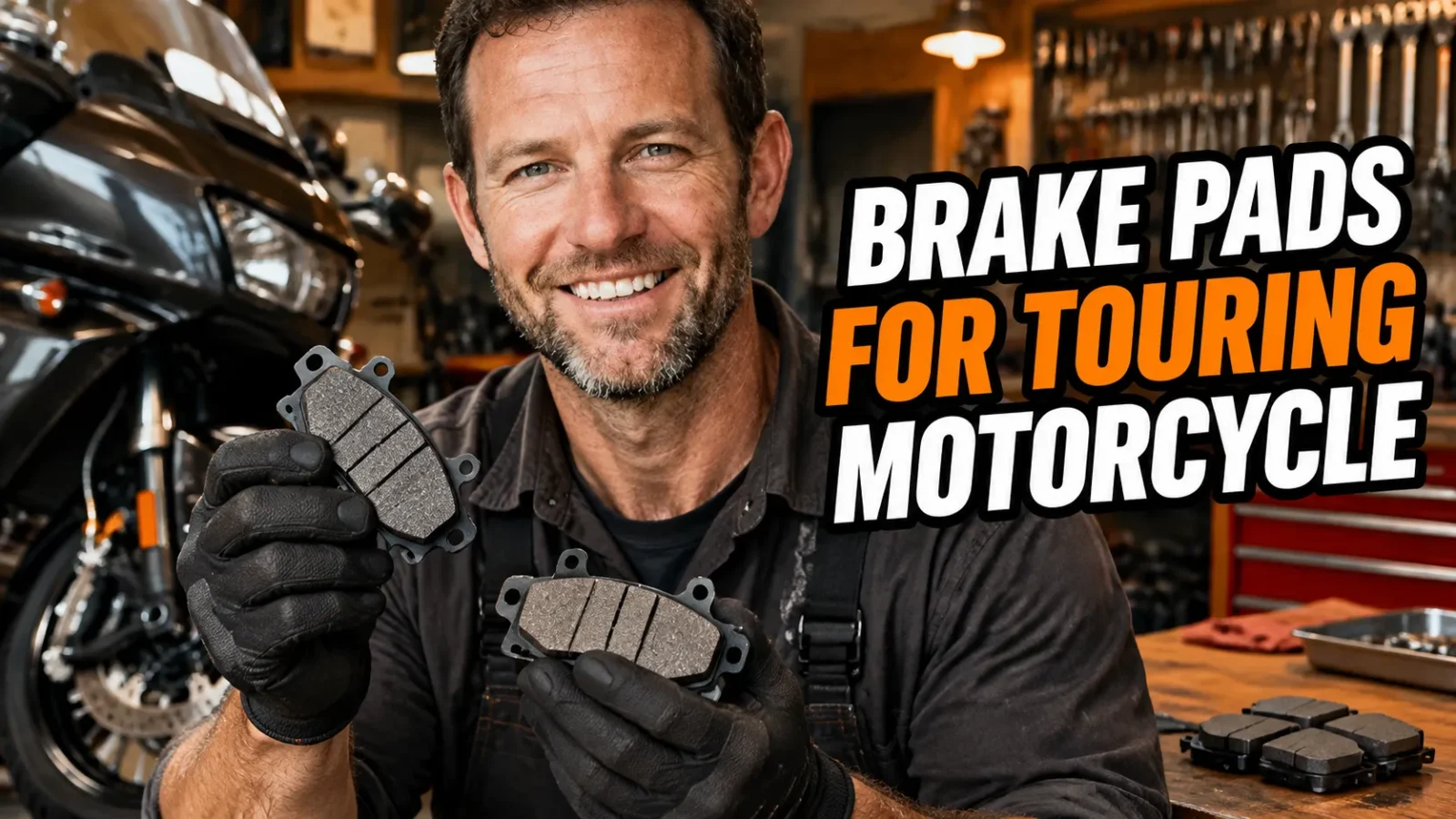
I’ve put well over 60,000 miles on touring bikes across everything from the Blue Ridge Parkway to long hauls across the American West, and if there’s one lesson I keep relearning, it’s that brake pads are not a place to cut corners. A loaded touring bike with a passenger and three days of luggage weighs a lot more than a stripped-down sportbike, and that weight has to stop somehow.
Over the years I’ve burned through cheap pads that faded on mountain descents, tried organic compounds that felt great but wore out in a season, and eventually landed on a handful of pads I genuinely trust. This list is the result of that trial and error. I’ll walk you through the seven sets I keep coming back to, explain what each one does well, and help you match a compound to how you actually ride.
Before we dive in, one quick tangent that matters more than people think: your braking system and your electrical system are both “support” systems that keep a tour running. If you’re planning a long trip, it’s worth understanding your battery situation too, so start with this guide on what are the different types of motorcycle batteries ultimate guide to avoid a dead bike ruining your day.
- My overall pick is EBC Double-H Sintered — the best all-around balance of power, fade resistance, and lifespan for touring.
- Want quiet, rotor-friendly braking? Go with Galfer G1054 Organic.
- Sintered pads last longer and handle heat better; organic pads are quieter but wear faster.
- Match the compound to your riding: mountains and two-up riding demand sintered, casual cruising is fine with organic.
- Always inspect pads every 6,000–8,000 miles on a loaded touring bike.
1. EBC Double-H Sintered — My Overall Pick for Touring
If you only take one recommendation from this entire article, make it this one. The EBC Double-H Sintered pad (part numbers like FA-series depending on your bike) has been my default front-pad choice for touring for years, and it’s never let me down.
What makes it special is the sintered metal compound. It bites hard even when cold, resists fade when you’re dragging brakes down a long mountain pass, and lasts dramatically longer than organic pads. On my last big tour, I got nearly 18,000 miles out of a front set — that’s real value.
Where It Shines
Two-up riding with luggage is exactly where these pads earn their keep. The extra thermal headroom means you’re not losing lever feel halfway down a switchback descent. I’ve never experienced meaningful fade with these, even on fully loaded bikes.
The Trade-Offs
They’re a little noisier than organic pads and can be slightly harder on rotors over time. But for touring, that’s a trade I’ll take every single time. If you want the gold standard for touring stopping power, these are it.
2. Brembo SP Sintered — The Premium Performance Choice
When I want maximum braking confidence and I’m willing to pay for it, I reach for Brembo SP Sintered pads. Brembo is the name most riders know from high-end OEM fitments, and their SP line delivers a level of modulation that honestly surprised me the first time I tried them.
The key difference is feel. The Brembo SP pads give me a progressive, predictable lever with a huge amount of bite once they’re warm. On a big touring bike, that predictability translates directly into confidence in traffic and on wet roads.
Who Should Buy These
If you ride a heavier tourer — think a Gold Wing, a big BMW, or a fully loaded adventure-tourer — and you value precise, linear braking, these are excellent. They’re not the cheapest option, but the build quality is outstanding.
Just keep in mind that genuine Brembo pads cost more, and there are counterfeit versions floating around. Buy from a reputable dealer only. I learned that lesson the hard way once.
3. Galfer G1054 Organic — Best for Quiet, Smooth Braking
Not everyone wants maximum bite. If you do a lot of relaxed highway cruising and you’re tired of squealing brakes, the Galfer G1054 Organic compound is a fantastic choice. I ran a set of these on a lighter tourer and was genuinely impressed by how quiet and smooth they felt.
Organic pads use a resin-based compound rather than sintered metal. That means they’re gentler on rotors, quieter under braking, and give a nice initial bite in normal conditions. For a rider who mostly cruises and rarely pushes hard, they’re ideal.
The Catch
Organic pads wear faster and fade sooner under sustained heat. If you regularly ride two-up through mountains, I’d steer you toward sintered instead. But for fair-weather touring at a moderate pace, the Galfer G1054 is a lovely, refined choice.
4. SBS Dual Sinter — Excellent Heat Management
I started paying attention to SBS Dual Sinter pads after hearing riders rave about them, and after testing a set I understood why. SBS is a Danish brand with a strong reputation in racing, and their Dual Sinter compound is built to handle serious heat without fading.
For touring riders who live near mountains or haul heavy loads, that heat resistance is the whole ballgame. I found the SBS pads gave me consistent performance lap after lap on a long descent, with no spongy lever feel creeping in.
Real-World Notes
They do take a few stops to warm up before delivering full bite, so I keep that in mind for the first mile of a ride. Once warm, though, they’re superb. If your touring includes a lot of elevation change, these deserve a serious look.
5. Ferodo Platinum Sintered — Underrated Longevity
Ferodo is one of those names that doesn’t get as much hype in touring circles as it should. The Ferodo Platinum Sintered pads are a quiet favorite of mine for one reason above all: longevity. I’ve had sets go well past 20,000 miles of mixed touring duty.
These pads use a sintered compound with a strong focus on durability and consistent friction over a wide temperature range. In my experience, they’re a set-and-forget option — you install them, and then you basically don’t think about your brakes for a very long time.
The Feel
They’re not the most aggressive pad out there, and the initial bite is a touch softer than EBC or Brembo. But for a touring rider logging big miles on the highway with occasional spirited stretches, that reliability is worth more than razor-sharp bite.
6. DP Brakes Standard Sintered — Great Value Workhorse
If budget matters (and for most of us, it does), DP Brakes Standard Sintered pads deliver a lot of performance for the money. I’ve used these on a couple of touring bikes when I wanted a solid upgrade without paying premium prices.
DP has a long history in the motorcycle brake world, and their standard sintered compound offers reliable, predictable braking. The fade resistance is decent, the wear life is respectable, and the price is friendly.
Where They Fit Best
These are ideal for the rider who does mostly highway and backroad touring at a moderate pace and wants a dependable, affordable pad. They’re not a race-grade pad, but for everyday touring they get the job done without complaint.
And if you’re looking to keep the whole touring setup economical, it’s worth reading up on the best cheap motorcycle for touring to pair sensibly priced consumables like these with a value-focused bike.
7. Vesrah VD-250 Sintered — A Solid Japanese Alternative
Vesrah is a Japanese brand with deep roots in motorcycle braking, and the Vesrah VD-250 Sintered pads are a genuinely strong alternative if you want something a little different from the usual suspects. I tried these on a friend’s recommendation and came away impressed.
The VD-250 compound offers strong initial bite, good modulation, and solid heat resistance. For a touring rider who wants performance close to the big names without paying quite the same premium, they’re a smart pick.
My Honest Take
They’re not as widely stocked as EBC or Brembo, so you may need to order online ahead of a trip. But the performance is there, and I’d happily run them on a long tour again.
How I Choose the Right Compound for Touring
After all these years, my decision tree is pretty simple. If I’m riding loaded and hitting mountains, I go sintered, no question. If I’m cruising highways and value quiet, smooth braking, I go organic.
Weight and heat are the two variables that matter most. A touring bike with luggage and a passenger generates far more brake heat than a solo rider on a naked bike, and pads that fade under heat are genuinely unsafe on a loaded tourer.
Sintered vs. Organic in Plain Terms
Sintered pads last longer, resist fade better, and bite harder, but they’re noisier and slightly harder on rotors. Organic pads are quieter, gentler on rotors, and smooth, but they wear faster and fade sooner. Match the compound to your actual riding, not to marketing claims.
Don’t Forget the Rest of Your Support Systems
Brakes get you stopped, but your battery gets you started. If you’re prepping for a long tour, it’s worth pairing good brake pads with a reliable power source — check out the best battery for touring motorcycle and the best 6 battery for touring motorcycle for options I trust.
And if you’re still deciding what to ride, my articles on the best motorcycle for touring america and the best motorcycle for adventure touring cover the bikes that pair well with the kind of heavy-duty braking this list is built for.
Final Thoughts From Someone Who’s Been There
If you take nothing else away, remember this: on a touring bike, brake pads are a safety component, not a place to save twenty bucks. I’ve felt the difference between a cheap pad fading on a descent and a proper sintered pad holding strong, and I’ll never go back.
My overall pick remains the EBC Double-H Sintered for the best balance of everything. If you want premium feel, go Brembo SP. If you want quiet and smooth, go Galfer G1054. Whichever you choose, inspect your pads regularly, buy from reputable sellers, and give yourself the stopping power a loaded tourer truly deserves.
Ride safe, and may your descents always end with confident, fade-free braking.
Frequently Asked Questions
What are the best brake pads for touring motorcycles?
For most touring riders, EBC Double-H sintered pads offer the best balance of stopping power, fade resistance, and longevity. If you want quieter, rotor-friendly performance, organic pads like the Galfer G1054 are a great alternative.
Do sintered or organic brake pads last longer on a touring bike?
Sintered pads generally last significantly longer and handle heat better, making them ideal for heavy touring bikes that carry luggage and a passenger. Organic pads wear faster but are gentler on rotors and quieter.
How often should I replace brake pads on a touring motorcycle?
It depends on your riding style and load, but I usually inspect mine every 6,000 to 8,000 miles. If you ride two-up with luggage in mountains, check even more often. Most touring riders replace pads somewhere between 10,000 and 20,000 miles.
Can I upgrade brake pads without changing rotors?
Yes, in most cases you can swap pads on stock rotors. Just make sure the new compound is compatible with your rotor material. Sintered pads work fine on steel rotors, but always check your manufacturer recommendations before mixing compounds.

Related Articles

7 Best Disc Brake Locks for Motorcycles: My Real-World Picks After Years of Testing
I've tested disc brake locks on my own bikes for years. Here are 7 real, ride-proven picks, from the ABUS…
Jake Miller
10 min read

7 Best Incandescent Brake Light Bulbs for Motorcycles: My Real-World Picks
I tested and ranked the 7 best incandescent brake light bulbs for motorcycles, from the Philips 1157 to the Osram…
Jake Miller
11 min read

8 Best Brake Fluids for Motorcycle Track Days: My Picks After Years of Boiling Fluid
I've boiled brake fluid mid-session more than once. Here are the 8 best brake fluids for motorcycle track days, with…
Jake Miller
9 min read