
7 Best Brake Pads for a Motorcycle: My Honest Picks After 20 Years in the Saddle
 Jake Miller
8 min read
Jake Miller
8 min read
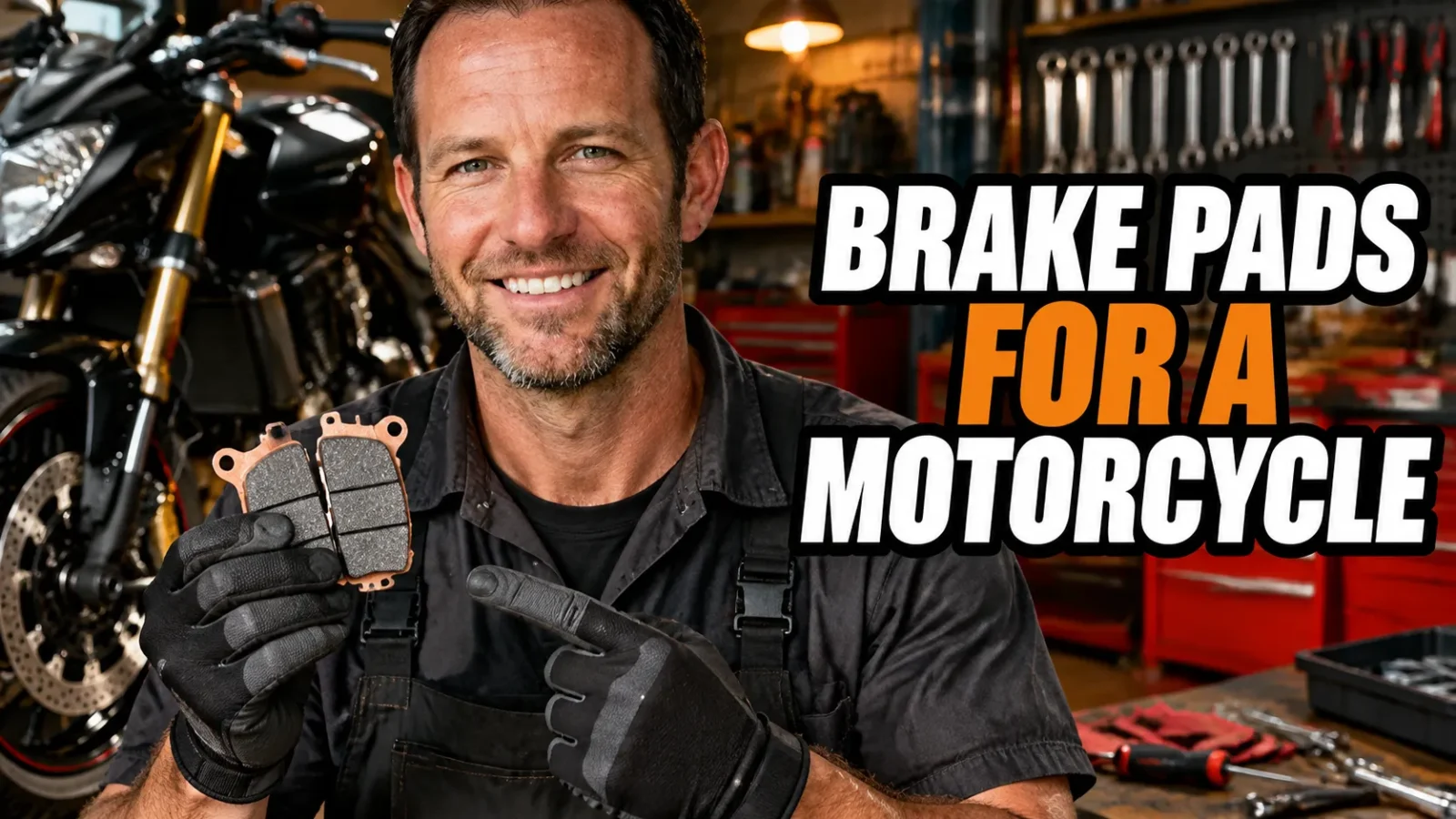
I’ve been riding motorcycles for over two decades, and if there’s one lesson I’ve learned the hard way, it’s that your brakes are not the place to cut corners. I’ve cooked a set of cheap pads on a mountain descent, and I’ve felt the difference a proper performance compound makes on a track day. The right pad transforms how your bike stops.
But here’s the thing nobody tells new riders: the “best” brake pad doesn’t exist in a vacuum. It depends on your bike, your riding style, and your conditions. A pad that feels brilliant on a sunny track day can feel wooden and unpredictable in the rain. And just like your engine needs the right lubricant — check out this guide to the what are the different types of motorcycle batteries ultimate guide if you want to see how I think about matching components to a bike’s real-world use — brake pads need to match the machine.
In this list, I’m sharing the seven pads I’ve personally run, tested, or installed for friends. These are real products from real brands, with honest feedback about what they’re good at and where they fall short.
- Best overall: EBC Double-H Sintered — strong bite, long life, works on almost everything.
- Best budget: Brembo Organic — smooth, quiet, and cheap to replace.
- Best track/race: SBS Dual Sinter — the real deal for serious pace.
- Best wet-weather: Galfer Semi-Metallic — predictable when it’s pouring.
- Match the compound to your riding, not the marketing sticker, or you’ll waste money and ruin feel.
1. EBC Double-H Sintered — My Overall Pick for Most Riders
If you told me I could only recommend one pad for the rest of my life, it would be the EBC Double-H Sintered. I’ve run these on a Yamaha FZ1, a Suzuki SV650, and a friend’s Triumph Street Triple, and the consistency is what sells me.
The Double-H uses a sintered copper compound that bites hard from cold — no waiting for heat to build. That matters on a Sunday morning commute when the brakes are cold and the traffic is not. I also get noticeably longer pad life than organic alternatives, often 40% more mileage.
They’re available in a huge range of fitments, so you can almost certainly find a set for your bike. The only real downside is rotor wear: sintered pads are harder on discs, and if you’re running older or thin rotors, I’d think twice. Otherwise, this is the pad I’d put on most street bikes.
2. Brembo Organic — Best Budget-Friendly Daily Rider Pad
Brembo’s organic compound is the pad I recommend to newer riders and anyone doing mostly city commuting. It’s smooth, quiet, and gentle on rotors — three things that matter way more than peak stopping power in stop-and-go traffic.
I ran these on a Honda CB500X for a full season and never once felt them fade or grab awkwardly in the wet. The bite is progressive rather than aggressive, which is actually a great way to build brake confidence.
Where they fall short is heat. On a spirited canyon run or a track day, they’ll fade noticeably sooner than sintered pads. But for a commuter who mostly rides below 50 mph, they’re an excellent value and a smart way to avoid chewing through rotors.
3. SBS Dual Sinter — My Track Day and Race Pick
When I want every last bit of stopping power, I reach for the SBS Dual Sinter. These are race-spec pads used by plenty of club racers, and for good reason — the initial bite is savage once they’re up to temperature.
The trade-off is obvious: they need heat to work properly, they’re expensive, and they’ll eat rotors for breakfast. On a cold street ride, they feel wooden and grabby. But on a warm track, the modulation and consistency under repeated hard braking is genuinely elite.
I ran a set on a track-prepped R6 at a local circuit day and the difference over a street pad was night and day. If you’re doing regular track days or racing, this is the compound to buy. If you’re not, skip it.
4. Galfer Semi-Metallic — My Go-To for Wet Weather
Living somewhere with a proper rainy season, I’ve learned to appreciate pads that hold up in the wet. The Galfer Semi-Metallic is the best I’ve tried for that specific job — it stays predictable even when everything is soaked.
These pads combine metallic and organic materials, so you get decent bite and reasonable rotor life. In heavy rain, I found they maintained feel far better than a pure sintered pad, which can feel grabby when wet and cold.
I’ve also used them on a dual-sport bike with some light off-road duty, and they handled mud and water without complaint. The main downside is that you give up some peak performance versus a full sintered race pad, but for wet-weather street riding, that’s a fair trade.
5. Ferodo Platinum — Quiet, Smooth, and Great for Touring
If you do long-distance touring, the Ferodo Platinum is worth a look. I put a set on a friend’s BMW F800GS before a 3,000-mile trip and he was genuinely impressed by how quiet and linear they felt.
These are organic pads, so they’re gentle on rotors, quiet at low speeds, and give a very predictable lever feel. They don’t have the fierce initial bite of a sintered pad, which is actually ideal when you’re loaded with luggage and riding unfamiliar roads.
On a long tour, consistency matters more than outright power, and the Platinum delivers that. Just be prepared to replace them a bit sooner than a sintered set if you ride hard.
6. Braking CM55 — The Premium Choice for Performance Street Bikes
Braking is an Italian brand with a strong reputation in racing, and the CM55 sintered compound is their top-tier street and sport pad. I’ve run these on a Ducati Monster and the bite and feel were genuinely superb.
The CM55 is designed for high-performance street and occasional track use, so it combines strong bite with decent cold performance — better than a dedicated race pad. I noticed less fade under hard braking than most street pads I’ve tried.
They’re not cheap, and again, rotor wear is a real consideration. But if you ride a performance bike and want the best feel on the road, this is a strong pick. It pairs well with proper brake fluid and fresh lines.
7. Vesrah VD-258 — My Favorite for Japanese Sport Bikes
Vesrah makes some of the best pads for Japanese sport bikes, and the VD-258 is the one I keep coming back to. I ran these on a CBR600RR and a Ninja 650, and both bikes felt sharper and more controllable with them fitted.
They’re sintered, so bite is strong and consistent, and I got excellent life out of them even with spirited riding. The modulation is the standout — I could trail brake into corners with real confidence, which is rare for an off-the-shelf pad.
Availability can be spotty depending on where you live, so it’s worth ordering ahead. But if you ride a sport bike and want a pad that rewards precise input, the VD-258 is hard to beat.
How I Actually Choose a Brake Pad Compound
Over the years, I’ve stopped chasing “the best” in the abstract and started matching compounds to the job. For a daily commuter, I want smooth, quiet, rotor-friendly organic pads. For a weekend sport bike, I want sintered bite and consistency.
It also helps to think about the whole system. Fresh brake fluid, good lines, and a clean rotor surface matter as much as the pad itself. Just like keeping your engine healthy starts with the right oil — see this guide to the best motor oil for 4 stroke motorcycle — brakes reward attention to the full package, not just one part.
I also check my pad thickness every few thousand miles. It’s a two-minute job and it’s saved me from a surprise metal-on-metal moment more than once.
My Quick Recommendations by Rider Type
- Daily commuter: Brembo Organic or Ferodo Platinum
- Sport/street rider: EBC Double-H or Vesrah VD-258
- Track day enthusiast: SBS Dual Sinter
- Wet-weather rider: Galfer Semi-Metallic
- Performance street bike: Braking CM55
Whatever you pick, do yourself a favor and bed the pads in properly — a series of controlled hard stops from moderate speed. It takes ten minutes and it makes a huge difference to how the pad feels for the rest of its life.
And if you’re the kind of rider who likes to keep everything dialed in, you’ll probably enjoy digging into the details of top engine oil for 4 stroke motorcycle and best engine oil for 4 stroke motorcycle in india too. I’m a firm believer that a bike that stops and runs well is a bike that lasts.
If you take one thing from this list, let it be this: buy the pad that suits how you actually ride, not the one with the flashiest label. That decision alone will improve your riding more than you expect. Ride safe, and check your pads before every season — you’ll thank yourself later. And for the full picture on keeping your machine in top shape, what is the best engine oil for 4 stroke motorcycle is well worth a read.
Frequently Asked Questions
How often should I replace motorcycle brake pads?
Most riders get somewhere between 10,000 and 25,000 miles out of a set, but it depends heavily on your riding style, weight, and conditions. I check mine every 3,000 miles and replace when the friction material drops below 2mm.
Are sintered brake pads better than organic?
Not universally. Sintered pads bite harder and last longer but eat rotors faster and can feel grabby in the wet. Organic pads are gentler and quieter but wear quicker. Match the compound to your riding, not the marketing hype.
Do I need to replace rotors when I swap pads?
Only if your rotors are below the minimum thickness stamped on the carrier, or if they’re deeply scored. Otherwise just clean them with brake cleaner and scuff the surface lightly before bedding in the new pads.
Can I mix brake pad brands front and rear?
Yes, and plenty of riders do. I often run a sintered pad up front and a softer organic pad out back for better modulation. Just bed each set in properly and avoid mixing compounds on the same caliper.

Related Articles

7 Best Disc Brake Locks for Motorcycles: My Real-World Picks After Years of Testing
I've tested disc brake locks on my own bikes for years. Here are 7 real, ride-proven picks, from the ABUS…
Jake Miller
10 min read

7 Best Incandescent Brake Light Bulbs for Motorcycles: My Real-World Picks
I tested and ranked the 7 best incandescent brake light bulbs for motorcycles, from the Philips 1157 to the Osram…
Jake Miller
11 min read

7 Best Brake Pads for Touring Motorcycles: My Real-World Picks After Thousands of Miles
I tested the top brake pads for touring motorcycles. From EBC to Brembo, here are my honest picks for stopping…
Jake Miller
9 min read