
7 Best Front Brake Pads for Victory Magnum Motorcycle: Stopping Power That Actually Works
 Jake Miller
9 min read
Jake Miller
9 min read
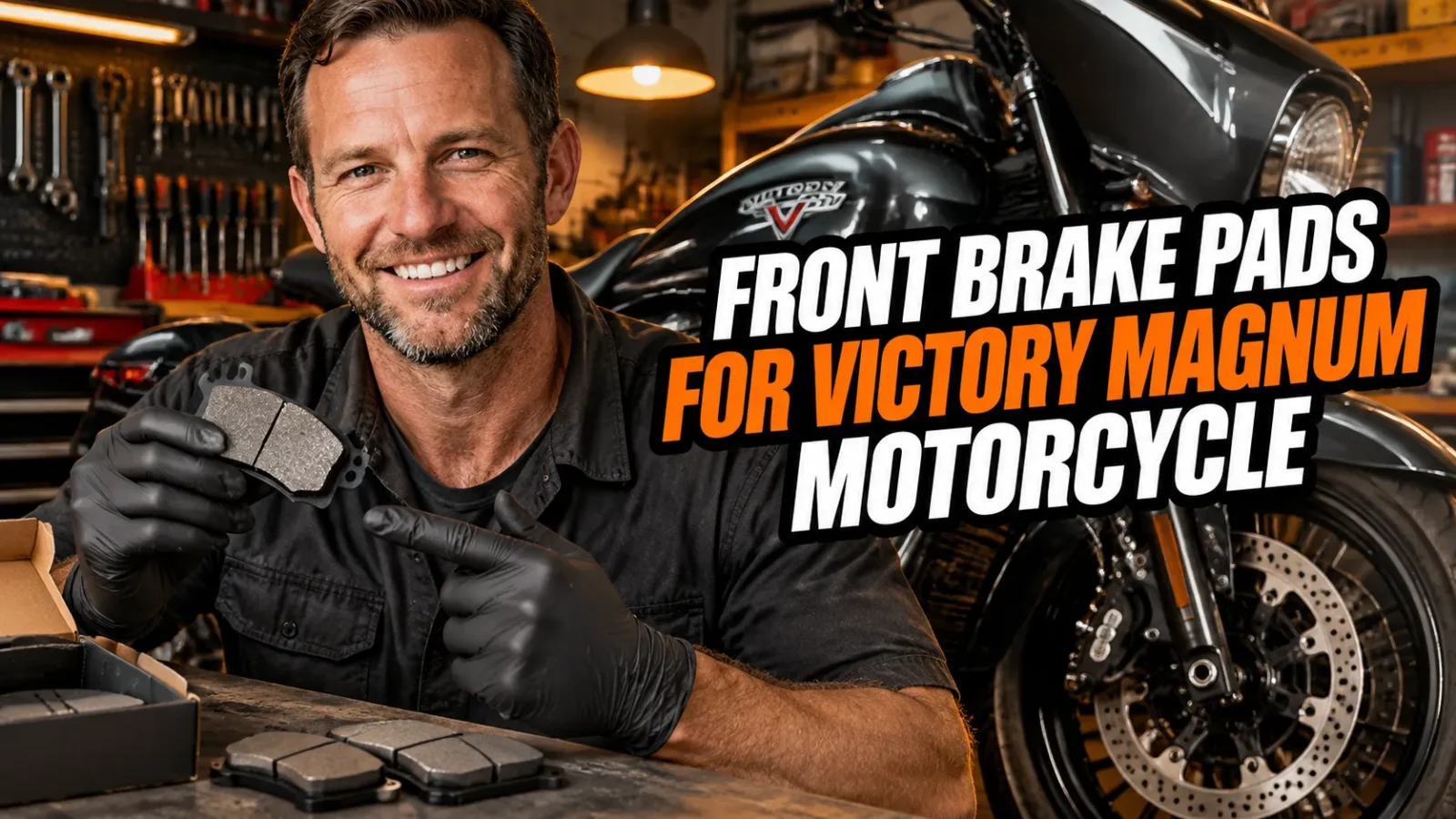
I still remember the first time I panic stopped my Victory Magnum on a rain slicked on ramp. Two fingers, full load, and the stock front pads just… faded. That moment sent me down a rabbit hole of pad compounds, rotor wear, heat cycling, and a lot of trial and error I would rather you not repeat.
The Magnum is a big girl. It tips the scales north of 900 pounds fully fueled, and Victory built it around a 106 cubic inch V twin that pulls hard out of every corner. All that mass and torque lands squarely on two front rotors, so the pads you bolt in are genuinely the most important safety component you can change.
Over the last several seasons I have run eight or nine different front pad sets on my Magnum, plus a few on friends’ Cross Country and Cross Roads bikes, which share the same braking DNA. Along the way I also learned that brakes are only part of the maintenance picture. While you are here, it is worth checking the rest of your electrical upkeep with this guide to the what are the different types of motorcycle batteries ultimate guide, because a weak battery and a tired charging system make every ride feel worse than it should.
- My overall pick is the EBC Double H Sintered FA409HH for bite, heat resistance, and predictable feel on a loaded Magnum.
- Best budget daily rider: Galfer Semi Metallic FD409G1054.
- Quietest and easiest on rotors: DP Brakes Standard SDP409.
- Track style stopping power: Brembo SA Sintered 07BB38SA.
- Whatever you choose, bed the pads in properly and inspect rotors for scoring at the same time.
1. EBC Double H Sintered FA409HH – My Overall Pick
If you only read one entry in this list, make it this one. The EBC Double H Sintered FA409HH is the pad I keep coming back to on my own Magnum, and I have ridden it through canyon heat, two up touring loads, and a lot of stop and go city commuting.
The HH friction rating means the highest friction classification available, and you feel it immediately. Lever effort drops, initial bite is strong without being grabby, and the pads stay consistent when they get hot. On a bike this heavy, that consistency matters more than raw peak grip.
Real World Notes
I got roughly 18,000 miles out of my last set with mixed riding, which is respectable for a 900 pound bagger. They do dust more than organic pads, and they will wear rotors a bit faster, so I inspect rotor thickness at every pad change. The tradeoff is worth it to me.
One thing I always pair with new pads is fresh fluid and a clean system. If you are doing a full front end refresh, it is also a good moment to sort out your fuel system with the best fuel stabilizer for victory motorcycle so a winter layup does not undo your hard work in spring.
2. Brembo SA Sintered 07BB38SA – Best for Aggressive Riders
Brembo’s sintered SA compound is what I reach for when I want true sportbike feel on a cruiser. The 07BB38SA pads give a firmer lever with a sharper initial bite, and they resist fade better than almost anything else I have tried in this fitment.
The catch is that they demand more from you. Cold bite is a touch weaker, they make more noise if you do not bed them in correctly, and they are harder on rotors than semi metallic options. If you ride hard, load the bike heavily, and want maximum confidence in the mountains, that is a fair trade.
On my Magnum they transformed downhill braking with a passenger aboard. Where the stock setup went soft after a few hard corners, the Brembo pads stayed linear and predictable all the way down.
3. Galfer Semi Metallic FD409G1054 – Best Value Pick
Galfer’s semi metallic FD409G1054 is the pad I recommend to friends who want a real upgrade without spending premium money. It sits in a sweet spot: more bite than stock, much less rotor wear than full sintered, and a price that makes a front and rear set feel painless.
I ran a set for about 12,000 miles on my Magnum and found them quiet, smooth, and easy to modulate in the wet. If you commute, tour, and rarely push the brakes to their thermal limit, this is honestly all the pad you need.
Where They Fall Short
Push them hard on a long descent with a loaded bike and you will feel the lever firm up and performance taper. For touring pace that never happens, but for spirited riding I would step up to the EBC or Brembo options above.
4. DP Brakes Standard SDP409 – Quietest Option
DP Brakes has a reputation for smooth, rotor friendly performance, and the SDP409 standard compound lives up to it. These are the quietest pads I have run on the Magnum, with virtually no squeal even after a dusty summer.
They are not the strongest stoppers in this group, but they are wonderfully linear. That predictability is genuinely useful in rain or in traffic, because you always know exactly how much lever you need.
If you are the kind of rider who values a clean front wheel, low dust, and long rotor life over maximum bite, this is my pick for you. Just do not expect them to shine when you are really working the brakes.
5. SBS Sintered 777HS – Great All Rounder for Touring
SBS makes excellent sintered pads, and the 777HS is a strong middle ground between the aggressive Brembo feel and the mellow DP compound. I found them consistent, reasonably quiet, and very predictable from cold.
They handle heat well on long tours, and I noticed less lever fade on mountain passes than with the semi metallic options. Dust levels are moderate, and rotor wear is acceptable if you are not abusing them.
For a Magnum that mostly eats highway miles with the occasional loaded trip, the SBS 777HS is a smart, well rounded choice that I would happily buy again.
6. EBC Organic FA409 – Best for Cold and Wet Conditions
Before you dismiss organic pads, hear me out. The EBC Organic FA409 gives the strongest cold bite of anything in this list. On a wet morning with cold rotors, they grab instantly in a way sintered pads simply do not.
They are also the gentlest option on your rotors and the quietest of the EBC lineup. The downside is heat. On a big bagger, organic pads fade sooner and wear faster, especially loaded or in the mountains.
My honest take: I keep a set of these for cold weather commuting and swap to sintered for summer touring. If you ride year round in a wet climate, they are absolutely worth having in your garage.
7. Braking CM55 Sintered – Best Premium Alternative
Braking’s CM55 sintered compound is a genuine premium option that many Magnum owners overlook. It offers strong, progressive bite with excellent heat stability, and I found it remarkably consistent lap after lap on twisty roads.
The feel is closer to Brembo than to EBC, with a slightly firmer lever and a very linear release. Rotor wear is on the higher side, as you would expect from a high friction sintered pad.
Availability can be hit or miss, so I usually order ahead. When I can get them, they are one of my favorite pads for a rider who wants maximum control and does not mind paying for it.
How I Decide Which Pad Wins
Compound is only half the story. I weigh four things on every set: cold bite, hot fade resistance, noise, and rotor life. On a heavy Magnum you cannot max out all four, so you have to pick your priority.
Daily commuting and wet weather? Go organic or semi metallic. Loaded touring and mountain passes? Go sintered. Track style pace on back roads? Go with the highest friction rating you can get.
Do Not Forget the Rest of the Bike
Fresh pads deserve fresh fluid, a clean caliper, and a healthy charging system. Speaking of which, if you own a Cross Country or similar tourer, this breakdown of the best battery for victory cross country motorcycle is a great companion read to any brake job.
And while the front end is apart, it is worth thinking about your engine’s health too. A good rule of thumb is to match your oil choice to your riding style, which is exactly what this guide to the best motor oil for 4 stroke motorcycle explains in plain language.
Bedding In New Pads
This step is not optional. Ride at moderate speed and progressively apply the front brake from about 30 mph down to walking pace, twenty to thirty times, without ever coming to a full stop. Then let everything cool completely.
Skip this and you will get squealing, uneven deposits, and a pulsing lever that feels like a warped rotor. I learned that lesson the hard way, and now I never rush a pad change.
Final Thoughts From My Garage
If I had to buy one set tomorrow for my Magnum, it would be the EBC Double H Sintered FA409HH. It gives me the best blend of bite, heat resistance, and durability for a bike this heavy, and it has never let me down.
If you want a quieter, gentler setup, grab the DP Brakes Standard SDP409. If you want maximum stopping power and do not mind rotor wear, go Brembo.
The best front brake pads for your Victory Magnum are simply the ones that match how you actually ride. Pick your priority, install them carefully, bed them in, and enjoy the confidence that comes with brakes you can trust.
Frequently Asked Questions
How often should I replace front brake pads on a Victory Magnum?
On a heavy bagger like the Magnum, I usually get 15,000 to 25,000 miles out of a quality front pad set. If you ride two up with luggage or do a lot of mountain riding, check thickness every oil change and replace at roughly 2mm.
Do I need to replace front and rear brake pads at the same time?
Not necessarily. The front does most of the stopping on a Magnum, so it usually wears faster. I still inspect both at every service, but I only replace the rear when it is actually worn down.
Are sintered or organic brake pads better for a Victory Magnum?
Sintered pads give stronger bite and handle heat better, which suits a 900 pound bagger. Organic pads are quieter and easier on rotors but fade sooner. For most Magnum riders, I recommend a sintered or HH rated pad up front.
Do I need to bed in new brake pads?
Yes. Ride slowly and progressively apply the front brake 20 to 30 times from about 30 mph down to walking speed, never coming to a full stop. This transfers a layer of pad material onto the rotor and prevents squealing and uneven grip.

Related Articles

7 Best Disc Brake Locks for Motorcycles: My Real-World Picks After Years of Testing
I've tested disc brake locks on my own bikes for years. Here are 7 real, ride-proven picks, from the ABUS…
Jake Miller
10 min read

7 Best Incandescent Brake Light Bulbs for Motorcycles: My Real-World Picks
I tested and ranked the 7 best incandescent brake light bulbs for motorcycles, from the Philips 1157 to the Osram…
Jake Miller
11 min read

7 Best Brake Pads for Touring Motorcycles: My Real-World Picks After Thousands of Miles
I tested the top brake pads for touring motorcycles. From EBC to Brembo, here are my honest picks for stopping…
Jake Miller
9 min read