
7 Best Yamaha Motorcycles for Beginners: A Rider’s Honest Guide
 Jake Miller
8 min read
Jake Miller
8 min read
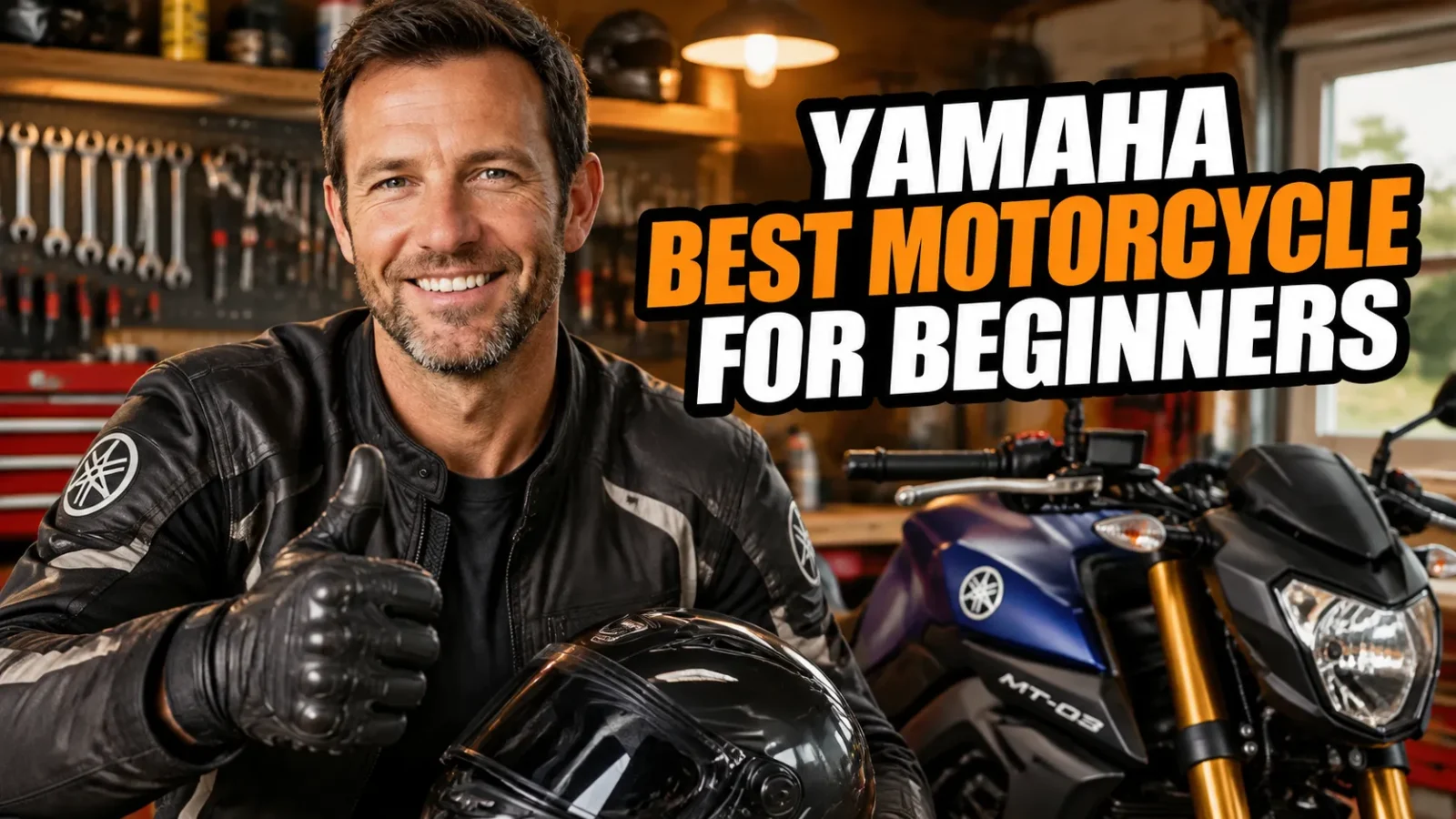
I still remember the day I brought home my first Yamaha. It was a used R3 with a scuffed bar end and a chain that had seen better days, and I was terrified of it for about three weeks. Looking back, that bike was exactly the right size, weight, and power for a nervous new rider — and that’s not an accident. Yamaha has quietly built one of the most beginner-friendly lineups in motorcycling.
Since then I’ve owned, borrowed, and test-ridden just about every small-displacement Yamaha I could get my hands on. I’ve also coached a few friends through their first season, which taught me more about what beginners actually need than any spec sheet ever did. So this list is personal. These are the seven Yamahas I’d genuinely hand the keys to a new rider, ranked by how well they work for someone in their first year or two.
One quick note before we start: whatever you ride, learn how it charges. A dead battery on a Sunday morning is the most common reason new riders miss a ride, and understanding the difference between lead-acid, AGM, and lithium is worth thirty minutes of your time. This guide to the different types of motorcycle batteries is where I’d start.
- My top overall pick is the Yamaha MT-03 — light, upright, and confidence-inspiring.
- The YZF-R3 is the best choice if you want sportbike looks with beginner-friendly manners.
- The V Star 250 is the cheapest and lowest way into a new Yamaha.
- Stay under 400cc for your first bike; the MT-07 is not a starter machine, no matter what the internet says.
- Budget $500–$800 for proper gear on top of the bike price.
1. Yamaha MT-03 — My Overall Pick for New Riders
If you asked me to pick one bike and stop talking, it would be the MT-03. I’ve put real miles on one, and the thing that struck me most was how unthreatening it feels without being boring.
The MT-03 runs a 321cc parallel-twin that makes around 41 horsepower. That’s enough to keep up with highway traffic without being enough to loop you in a parking lot. Yamaha’s fuelling in the low revs is smooth, which matters enormously when you’re still learning clutch and throttle coordination.
What I Like in the Real World
The seat height sits at about 30.7 inches, so I could flat-foot it easily — and I’m not tall. Wet weight is roughly 373 pounds, which means pushing it around a driveway doesn’t feel like moving furniture. The upright bars give you a good view over traffic, and the wide handlebar makes low-speed turns feel natural.
For a bigger comparison of what this size class offers across brands, I’ve written about the best 300cc motorcycle for beginners and the MT-03 sits right at the top of that list for me. It’s also cheap to run, and basic maintenance is straightforward once you know which oil to use.
2. Yamaha YZF-R3 — Best for Riders Who Want the Sportbike Look
The R3 shares its engine with the MT-03, so mechanically you’re getting the same friendly 321cc twin. The difference is everything around it: clip-on bars, a full fairing, and a slightly more forward-leaning riding position.
I owned an R3 for two seasons and I’ll be honest — the clip-ons took a few weeks to get used to. My wrists ached on longer rides at first. But once my core strength caught up, I actually preferred the connected feel of the front end. The R3 turns in beautifully and makes even a mediocre rider feel precise.
Maintenance Notes From Someone Who’s Done It
Oil changes on the R3 are about as easy as they come, and it’s a bike that rewards you for staying on top of them. If you’ve just bought one, the best motorcycle oil for Yamaha R3 breakdown saved me a lot of guessing my first time. There’s no fairing removal needed for the basic service items, which I appreciated as a beginner with a shaky set of socket wrenches.
I’d steer a new rider toward the R3 over a used 600 if they want the sport look. The power is manageable, insurance is cheaper, and it holds its value reasonably well.
3. Yamaha V Star 250 — Cheapest and Friendliest Entry Point
Not everyone wants to lean forward. If you’d rather sit up, plant both feet, and cruise, the V Star 250 is the most inviting bike in Yamaha’s showroom. It’s a 249cc V-twin cruiser with a seat height around 27 inches — the lowest here by a wide margin.
I rode a friend’s V Star 250 for an afternoon and immediately understood why it’s such a popular first bike. It’s light, around 324 pounds wet, and the power delivery is so gentle it almost feels apologetic. That’s not a criticism. For someone who’s never operated a clutch before, that gentleness is a gift.
The trade-off is highway capability. I wouldn’t want to spend hours at 70 mph on one. But for city riding, back roads, and building confidence, it’s excellent — and it’s the cheapest way into a brand-new Yamaha. If you’re comparing small-displacement options generally, my piece on the best 250cc motorcycle for beginners goes deeper on this size class.
4. Yamaha TW200 — The Oddball That Teaches You Everything
I love the TW200 in a way that’s hard to explain to someone who’s never ridden one. It looks like a kid’s toy — massive balloon tires, a low seat, an air-cooled single that’s been in production for decades. And yet it might be the single best bike for learning control.
Those fat tires mean gravel, dirt, wet grass, and potholed back alleys are all fair game. I took one down a fire road and felt more stable than I had any right to. The TW200 is also nearly indestructible, which matters when you’re dropping a bike in a parking lot every other week — as I did.
Top speed is modest, around 70 mph at a push, and the five-speed gearbox runs out of legs quickly. But as a confidence-builder and a bike that lets you explore surfaces a sportbike won’t touch, nothing else in Yamaha’s range comes close.
5. Yamaha XT250 — Better Than the TW on the Road
If you want the dual-sport experience with a bit more highway competence, the XT250 is my pick. Same air-cooled single philosophy, but with a taller seat and more conventional tires. I found it easier to live with as an only bike, since it holds 60–65 mph without feeling strained.
The seat height is around 31.9 inches, which is a genuine consideration if you’re shorter. I’d sit on one before buying. But the suspension soaks up rough tarmac and curbs in a way that made me a more relaxed city rider, and the low-speed handling taught me more about balance than any other bike here.
For a new rider who isn’t sure whether they want street or dirt, the XT250 is the most versatile answer on this list.
6. Yamaha MT-25 — Worth Knowing About
The MT-25 uses a 249cc parallel-twin and is essentially the smaller sibling to the MT-03 you saw at number one. It’s not sold new in every market — in the US, the MT-03 effectively fills this slot — but if you’re buying used or outside North America, it’s worth tracking down.
I’ve ridden one and found it noticeably lighter and more flickable than the MT-03, with a smoother, revvier twin than the V Star’s lumpy V. Power sits around 35 horsepower, which is plenty for a first bike. If your local market offers it, it deserves a serious look. My broader write-up on the best 125cc motorcycle for beginners explains why I generally push new riders toward the smallest engine that comfortably does their commute.
7. Yamaha WR250R — For the Rider Who Wants a Project
The WR250R is the most serious machine here, and I’d only recommend it to a beginner who genuinely wants to ride off-road. It’s a proper dual-sport with fuel injection, a six-speed box, and real suspension travel.
What makes it beginner-friendly is the weight — under 300 pounds wet — and the forgiving low-end fuelling. What makes it less beginner-friendly is the 36.6-inch seat height. I’m average height and I could only get one foot down at stops. That’s a real hurdle in your first months.
If you’re tall, or you’re willing to learn the one-foot-down technique, the WR250R will take you places the other bikes on this list simply can’t. If you want a comparison against road-focused machines in the 400cc bracket, my guide to the best 400cc motorcycle for beginners covers the next step up.
What I’d Tell a Friend Buying Their First Yamaha
Start smaller than your ego wants. I’ve watched too many new riders buy a 650, scare themselves in week two, and quit by month three. Every bike on this list has enough performance to be fun for years, and none of them will punish a mistake as harshly as a bigger machine.
Sit on everything before you decide. Seat height and weight matter more than horsepower figures in your first year, and no review — mine included — can tell you how a bike feels under your body.
And set aside real money for gear. A good helmet, jacket, gloves, and boots cost $500 to $800, and I’d rather you ride a cheaper bike properly equipped than a nicer one in a t-shirt. That’s the advice I wish someone had given me before I bought my first scuffed-up R3.
Frequently Asked Questions
What is the best Yamaha motorcycle for a complete beginner?
In my experience the Yamaha MT-03 is the best all-around first bike, thanks to its light 373cc twin, upright bars, and low 30.7-inch seat. If you want something even lighter and cheaper, the Yamaha YZF-R3 or a used V Star 250 are great alternatives.
Is a Yamaha R3 a good starter bike?
Yes. The R3 makes around 36 horsepower, weighs roughly 375 pounds wet, and has a friendly clutch. It’s sporty enough to grow into but tame enough that you won’t get in over your head in your first month.
How much should I budget for my first Yamaha?
New beginner Yamahas run from about $4,600 for the V Star 250 up to roughly $5,500 for an MT-03 or R3. Budget another $400 to $800 for a helmet, jacket, gloves, and boots before you ride.
Can I start on a Yamaha MT-07 instead?
I wouldn’t recommend it. The MT-07’s 689cc CP2 engine makes 74 horsepower and has real torque off idle, which punishes sloppy throttle control. Start on something under 400cc, then move up.

Related Articles

10 Best Paints for Motorcycle Fairings: My Real-World Picks After Years of Resprays
I've resprayed fairings on everything from track bikes to cruisers. Here are the 10 best paints for motorcycle fairings, with…
Jake Miller
10 min read

What to Know Before Installing Fairings on Your Motorcycle: A Rider’s Honest Guide
Thinking about new fairings? I share everything I learned about fitment, materials, cost, and hidden headaches before you drop cash…
Jake Miller
7 min read

9 Motorcycles Actually Built in India I’d Buy With My Own Money
I've ridden and researched bikes built in Indian factories from Royal Enfield to Hero. Here are 9 real models, their…
Jake Miller
9 min read