
8 Best Cleaners for O-Ring Motorcycle Chains I Actually Trust in My Garage
 Jake Miller
10 min read
Jake Miller
10 min read
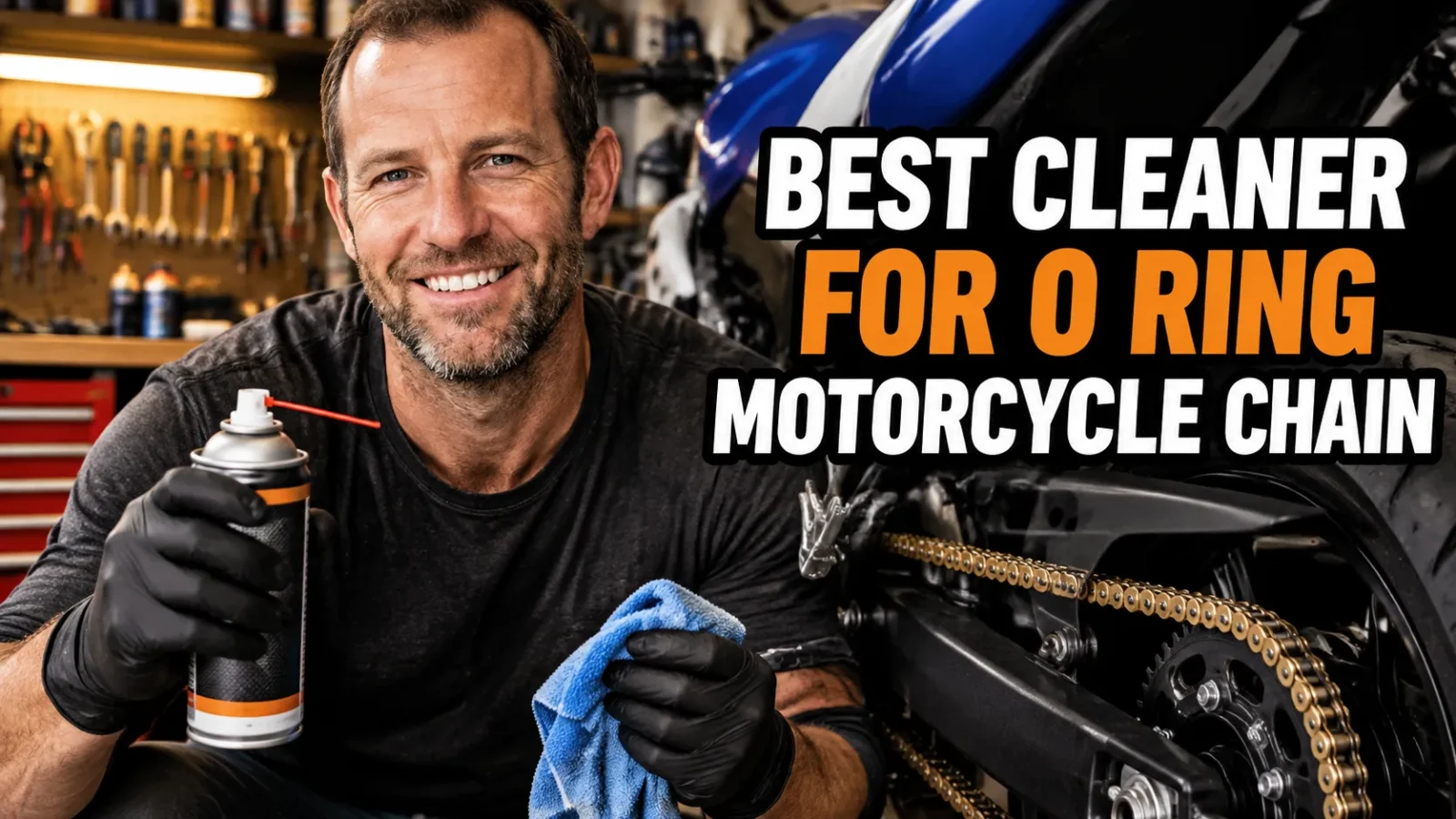
I’ve been riding for the better part of two decades, and I’ll be honest with you: I used to be terrible about chain maintenance. I’d lube, sure, but actually cleaning the thing? That felt like a chore I could skip. Then I toasted a chain and a rear sprocket in under 8,000 miles, and my mechanic gave me a look that I still think about.
Since then I’ve gone a little overboard. I’ve tested more chain cleaners than any sane person should, on everything from a daily-commuter SV650 to a grimy adventure bike that lives on gravel roads. Some of them are genuinely brilliant. A couple of them I’ll never buy again.
Below are the eight I keep coming back to. Every one of these is a real product from a real brand, and every one is safe for the O-rings and X-rings on a sealed motorcycle chain. If you’ve ever wondered whether you’re supposed to use kerosene, brake cleaner, or some pink spray from a bike shop, this should settle it.
- Motul Chain Clean is my overall pick: fast, residue-free, and genuinely seal-safe.
- WD-40 Specialist Motorbike Chain Cleaner is the best value for quick, frequent touch-ups.
- Kerosene is still the cheapest, most proven option, and it’s what most owner’s manuals recommend.
- Never use brake cleaner, gasoline, or harsh citrus degreasers on a sealed chain.
- Always re-lube after cleaning, and clean every 500 to 600 street miles.
What I Look For in a Chain Cleaner
Before I get into the list, here’s my filter. A chain cleaner has to do three things: dissolve old lube and road grit, leave no oily film behind, and not attack the rubber seals that hold the factory grease inside your chain.
That third point is the one people get wrong. An O-ring or X-ring chain is a sealed unit. The rollers are lubricated for life at the factory, and those little rubber rings are the only thing keeping that grease in and the water out. Destroy the seals and the chain is done, no matter how much lube you spray on afterward.
Seal Safety Matters More Than Cleaning Power
This is why I roll my eyes when someone says “just hit it with brake cleaner.” Brake cleaner is fantastic at stripping grease, which is exactly the problem. It’ll dry out and shrink your O-rings, and once water gets past them, the pins and bushings start rusting from the inside.
Gasoline is even worse. Citrus-based degreasers are gentler but can still swell seals with repeated use. Stick to products explicitly labeled O-ring safe, and you’ll never have to think about it again.
How I Actually Test These
My process is boring and consistent. I put the bike on a paddock stand, spin the wheel, and spray or brush the cleaner onto a chain that’s done at least 600 miles since its last lube. I let it dwell, agitate with a Grunge Brush, then wipe with a rag and inspect the rollers.
A good cleaner turns black, gritty paste into something that wipes away clean. A bad one just smears the grime around and leaves a film that attracts dust the second you ride. I also check my hands afterward, because if a cleaner dries out my skin, I get nervous about what it’s doing to rubber.
1. Motul Chain Clean — Best Overall
If you forced me to pick one bottle and throw the rest away, this is it. Motul Chain Clean is a solvent-based aerosol that comes in a 400ml can, usually somewhere between $12 and $16 depending on where you shop.
What I love is the speed. You spray it on, wait maybe 30 seconds, and the old lube basically surrenders. It evaporates fast and leaves zero residue, which means your fresh chain lube actually bonds to the metal instead of floating on top of leftover gunk.
Motul explicitly rates it safe for O-ring, X-ring, and Z-ring chains, and I’ve never seen any seal swelling on my own bikes after years of use. The included straw gets cleaner exactly where you want it, which matters on a bike with a tight chain guard.
Two gripes. It smells like a body shop, so I only use it outdoors or with the garage door wide open. And at roughly $14 a can, it’s not the cheapest way to clean a chain if you’re doing it weekly.
2. Muc-Off Bio Chain Cleaner — Best Eco-Conscious Pick
Muc-Off Bio Chain Cleaner is the one I reach for when I’m cleaning in a driveway where runoff matters. It’s biodegradable, water-based, and that famous pink color makes it easy to see where you’ve sprayed.
It works differently from the solvent sprays. Instead of flashing off, it lifts grime and holds it in suspension so you can rinse it away. That means you need a hose or a bucket, which makes it a bit more involved than a spray-and-wipe product.
Where it shines is with Muc-Off’s own chain brush and the three-sided drivetrain brush. The combo scrubs a filthy chain cleaner than almost anything else I’ve used, and it’s completely safe on seals, anodized finishes, and painted rims.
Price lands around $16 to $20 for a 500ml bottle. That’s more than Motul per ounce, but you’re paying for the eco-friendly formula and it genuinely performs.
3. WD-40 Specialist Motorbike Chain Cleaner — Best Value
I know, I know. Everyone has an opinion about WD-40 and chains. Let me clear this up: regular WD-40 Multi-Use Product is a water displacer, not a cleaner, and it’s actually fine on O-rings. But WD-40 Specialist Motorbike Chain Cleaner is a different animal entirely.
It’s a dedicated foaming degreaser in a 400ml can, usually around $10. It clings to the chain instead of running straight off, which gives it time to work on baked-on grime. Spray, wait a minute, agitate, wipe.
For a commuter bike that gets cleaned every couple of weeks, this is my default because it’s cheap enough that I don’t ration it. I’ve used it on my wife’s CB500X for three seasons with zero seal issues.
It’s not quite as aggressive as Motul on truly caked-on filth, so if your chain hasn’t been touched since last winter, start with something stronger.
4. Maxima Clean Up Chain Cleaner — Best for Caked-On Grime
For adventure bikes, dual-sports, and anything that’s seen mud, Maxima Clean Up is my heavy-artillery choice. It’s a water-based, biodegradable cleaner that comes in both spray and bulk sizes, and it’s specifically formulated to dissolve the kind of buildup that turns into concrete.
I ran this on a friend’s KLR that had a chain that looked like it had been dipped in tar. Two applications and a stiff brush later, the rollers were visible again. That’s a real endorsement.
Because it’s water-based, you’ll want to rinse and then dry the chain thoroughly before lubing. Leaving water in the rollers is the fastest way to get surface rust overnight.
Bulk pricing makes it a smart buy if you maintain multiple bikes. A gallon will last a normal rider years.
5. Motorex Chain Clean 611 — Best Pro Shop Formula
Motorex Chain Clean 611 is what I see on the bench at a lot of independent shops, and there’s a reason. It’s a Swiss-made, fast-evaporating spray that cuts through old lube without leaving anything behind, and it’s explicitly rated safe for O-ring and X-ring chains.
The 500ml can runs about $18 to $22, which puts it at the premium end. What you get for that is consistency. Every can I’ve bought has performed identically, which is more than I can say for some budget brands.
I pair it with Motorex Chain Lube 622 and the two work beautifully together. Clean, let it flash off, lube, let it set, ride.
If you’re the kind of person who buys one thing and wants it to be right, this is a strong candidate.
6. S100 Chain Cleaner — Best Spray-and-Rinse
S100 Chain Cleaner is the product I recommend to people who hate scrubbing. It’s a water-based spray that you apply generously, let sit for a few minutes, then rinse off with a garden hose. The runoff carries the dissolved grime away with it.
It’s safe on O-rings, paint, plastic, and chrome, which makes it a good choice if you’re cleaning the whole rear end of the bike at the same time. S100’s Total Cycle Cleaner is a natural companion if you want to do the swingarm and wheel while you’re at it.
Cost is around $14 to $16 for a 500ml bottle. It’s not the most powerful cleaner on this list, but the convenience factor is genuinely high on a lazy Sunday.
7. Simple Green Extreme Aircraft & Precision Cleaner — Best Concentrate
Here’s my shop-secret pick. Simple Green Extreme Aircraft & Precision Cleaner is a dilutable concentrate that’s non-flammable, has no harsh solvents, and is safe on aluminum and rubber. A quart runs about $20 and dilutes down to several gallons of working solution.
I keep a spray bottle of it mixed up in the garage. For chains, I spray it on, let it dwell, and scrub with a dedicated chain brush that I never use on anything else.
The big advantage is cost per cleaning. Once you’re diluting, you’re paying pennies per chain instead of a dollar or two per aerosol can. On top of that, it’s one of the few cleaners I’d happily use on my hands.
Just don’t confuse it with the standard Simple Green household formula. The Extreme version is the one formulated for precision parts and sensitive metals.
8. Klean-Strip Kerosene — Best Old-School Budget Pick
Sometimes the answer is the one your grandfather used. Kerosene is what most motorcycle owner’s manuals have recommended for sealed chains for decades, and a gallon of Klean-Strip Kerosene costs about $12 at any hardware store.
My method: pour a shallow amount into a metal pan, dip a stiff brush, and scrub the chain over the pan with the bike on a stand. Kerosene dissolves chain lube beautifully and is gentle on rubber seals.
It’s flammable, so this is an outdoor job, away from water heaters and sparks. You also need to dispose of the dirty kerosene properly, which is a real consideration.
But for pure cost-per-clean, nothing touches it. A single gallon has lasted me two full seasons.
How Chain Cleaning Fits Into the Bigger Drivetrain Picture
Cleaning your chain isn’t just about a shiny chain. A gritty drivetrain wears sprockets faster, runs noisier, and puts more load on everything downstream. I run a chain conversion on my old Harley, and I’ve learned the hard way that small neglects snowball into bigger problems, including the kind of harley davidson transmission problems nobody wants to pay for.
So while I’m already kneeling in the garage with dirty hands, I use it as a trigger to check the rest of the drivetrain. That includes a quick look at my clutch free play, since it takes two minutes and saves a lot of grief. If you ride a big twin, I wrote up my whole process for clutch adjustment on harley davidson and it’s worth a read.
On my Triumph, the gearbox shares oil with the engine, and understanding how does a wet clutch work genuinely changed how I think about contamination in the drivetrain. The takeaway is simple: everything downstream of your chain benefits when you keep it clean.
My Quick Verdict
If you want one answer, buy Motul Chain Clean. It’s fast, seal-safe, and leaves nothing behind. If you clean often and want to save money, WD-40 Specialist Motorbike Chain Cleaner is the value king.
If you’re on a tight budget or you maintain several bikes, a gallon of kerosene plus a good brush is still the smartest money in this hobby. And if you care about what washes off into your driveway, Muc-Off Bio Chain Cleaner is the one I hand to friends.
Whichever you choose, remember the two rules that matter: never let a harsh solvent near your seals, and always re-lube after you clean. Do that, and your chain will outlast your enthusiasm for cleaning it.
Frequently Asked Questions
Is WD-40 safe for O-ring motorcycle chains?
The short answer is yes, with a caveat. Regular WD-40 Multi-Use Product will not destroy the O-rings, but it is a light water displacer, not a dedicated degreaser. For real cleaning I reach for WD-40 Specialist Motorbike Chain Cleaner, which is formulated to break down road grime and old lube without attacking the seals.
Can I use kerosene to clean an O-ring chain?
Yes. Kerosene is the classic answer and it is what most owner’s manuals, including Honda and Yamaha, have recommended for decades. It is gentle on the rubber seals, cheap by the gallon, and cuts chain grime beautifully. Just use it outdoors, away from sparks, and dispose of the dirty runoff responsibly.
How often should I clean my motorcycle chain?
For street riding I clean and re-lube every 500 to 600 miles, or any time the chain looks gritty or the rollers feel dry. If you ride in rain, dust, or on gravel, cut that interval roughly in half. Cleaning is far cheaper than replacing a chain and sprocket set.
Will a strong degreaser damage my chain’s X-rings?
It can. Solvents like brake cleaner, gasoline, and citrus-based heavy degreasers can dry out or swell the seals over time. Stick to products labeled O-ring and X-ring safe, and always follow up with a proper chain lube so the seals stay supple.

Related Articles

Motorcycle Chain Keeps Getting Loose? Why It Happens and How I Finally Fixed It
Motorcycle chain keeps getting loose no matter how often you adjust it? I break down the causes, from worn sprockets…
Jake Miller
10 min read

Loose Motorcycle Chain Symptoms: 9 Warning Signs I Learned the Hard Way
Loose motorcycle chain? I walk through the symptoms I've felt and heard, how to measure slack in 5 minutes, and…
Jake Miller
11 min read

Motorcycle Clutch Problems Symptoms: 9 Warning Signs I Wish I’d Caught Sooner
Slipping, dragging, or a mushy lever? I break down the real motorcycle clutch problems symptoms I've found on my own…
Jake Miller
10 min read