
8 Best Chain Lubricants and Oils I Actually Trust on My Own Bikes
 Jake Miller
10 min read
Jake Miller
10 min read
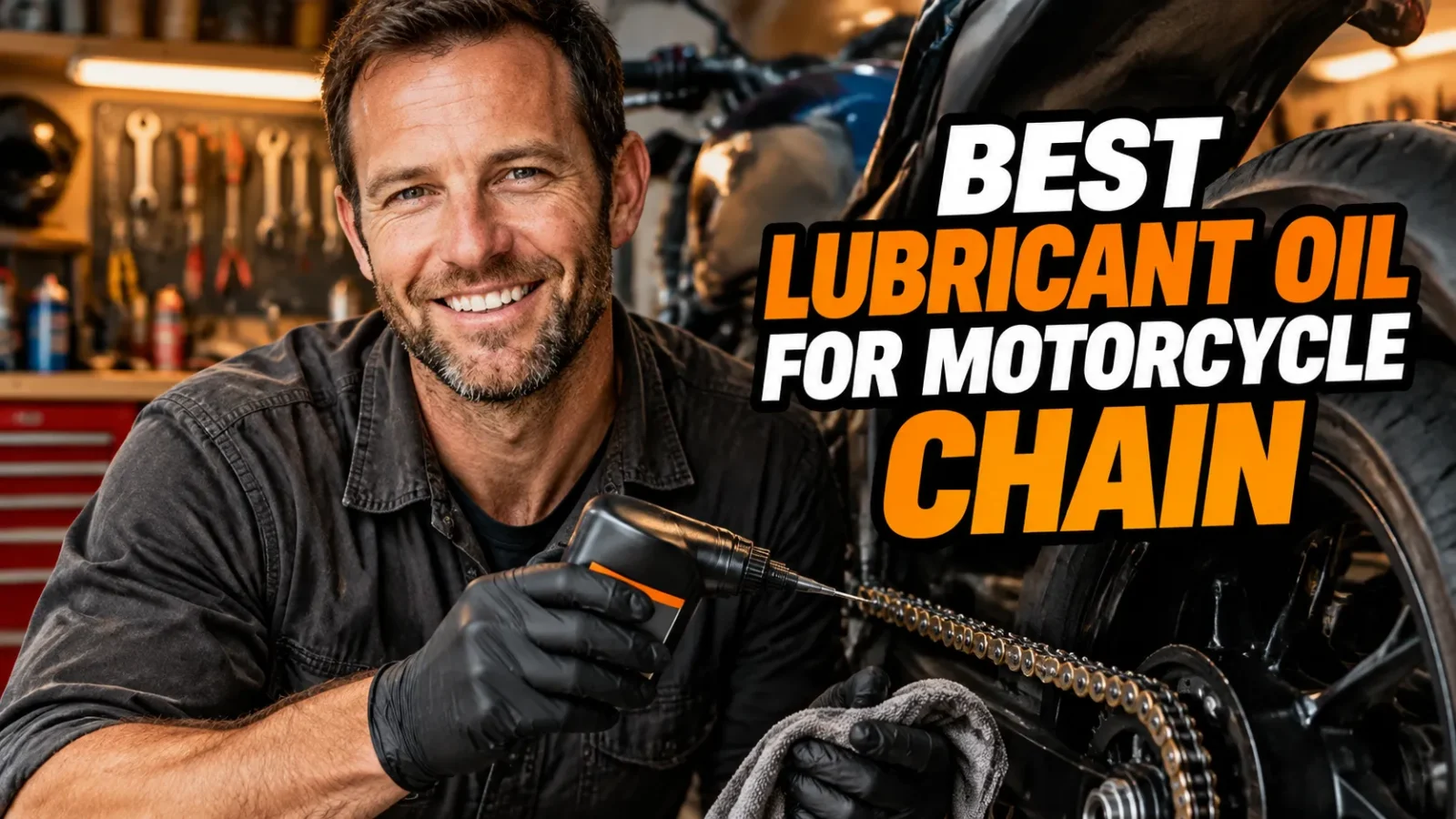
I’ve owned bikes with sealed O-ring chains, X-ring chains, and one old beater with a plain roller chain that ate lube like it was free. Over that time I’ve sprayed, brushed, and dripped just about every chain product that shows up on a shop shelf, and I’ve learned that the “best” one depends almost entirely on where and how you ride.
So this isn’t a spec sheet roundup. It’s the list I’d hand a friend who just bought their first chain-driven bike and doesn’t want to replace a chain and both sprockets every 8,000 miles. Some of these are sprays, one is a paste, and one is plain gear oil straight from the manual.
I’ll be upfront: I still keep three of these in my garage at all times. Different bikes, different weather, different jobs.
- My overall pick is Motul Chain Paste because it goes on with a brush, sticks hard, and barely flings.
- Maxima Chain Wax and Bel-Ray Super Clean are my go-to sprays for long rides and clean rear wheels.
- If your manual calls for gear oil, Lucas Oil 80W-90 costs a fraction of a can of spray lube and works fine.
- Apply to a warm chain, wipe the excess, and let it set 15 to 30 minutes before you ride.
What I Look For in a Chain Lubricant
Before the list, here’s the filter I run every product through. It’s short, and it’s saved me from a lot of mediocre cans.
O-Ring and X-Ring Safety
Sealed chains keep their factory grease locked inside the links. The lube you add on the outside is really there to keep the rollers, pins, and O-rings supple and to stop rust. That means the product must not attack rubber or the seals themselves.
Anything with harsh solvents that stays wet for hours makes me nervous. Purpose-built motorcycle chain products are formulated for this, which is why I mostly stick to them.
Fling and Mess
I hate a greasy rear wheel. Fling is the single biggest complaint I hear from riders, and it’s usually caused by over-application rather than a bad product. Thicker pastes and waxes fling less, but they also need more time to set.
Value per Mile
A $15 can sounds expensive until you realize it lasts a season. The real cost of a bad lube is a stretched chain and hooked sprockets, which is a $200 to $300 job on most bikes. I’ll take the expensive can every time.
1. Motul Chain Paste — Best Overall Chain Lubricant
This is the one I reach for most often. Motul Chain Paste comes in a tube with a built-in brush, so you squeeze and paint it onto the chain rollers with zero overspray and zero mess on your wheel or swingarm.
It goes on white, works into the rollers, and dries down to a tacky film that stays put. On my naked bike I’ve gone well over 500 miles between applications on dry roads, which is far better than most sprays manage.
Where It Wins
It’s brilliant for riders who hate masking off the rear wheel or cleaning overspray off brake rotors. The brush also lets me target the rollers precisely instead of soaking the side plates. It’s safe for O-ring and X-ring chains, which is the first thing I check.
The Catch
It’s slower to apply than a spray, and in cold weather the paste thickens up in the tube. I warm it in my hand for a minute or tuck it in a jacket pocket while I’m cleaning the chain. Also, don’t expect it to double as a cleaner, because it isn’t one.
2. Bel-Ray Super Clean Chain Lube — Best for a Clean Rear Wheel
Bel-Ray has been making chain products for decades, and Super Clean is the one that convinced me a spray lube doesn’t have to coat everything behind the countershaft sprocket in black goo. It sets up as a dry-ish film rather than a wet oil.
I ran this for a full season of commuting and weekend canyon rides. The rear wheel stayed noticeably cleaner than with standard wet lubes, and the chain never felt dry or squeaky.
It’s my pick if you ride a bike with a light-colored rear wheel, or if you’re the kind of person who wipes the bike down after every ride. It’s O-ring safe and available in a standard aerosol can.
3. Maxima Chain Wax — Best for High-Mileage Touring
Maxima Chain Wax is the one I keep for long trips. It sprays on thin, penetrates the rollers, then sets into a waxy film that hangs on through heat and long highway miles.
I’ve done multi-day trips with a single application at the start, and the chain still looked properly coated at the end. That’s not something I can say about every product on this list.
Why Touring Riders Like It
Wax-based lubes are less prone to being thrown off at sustained high speed, which matters when you’re sitting at 75 mph for hours. It also picks up less road grit than a wet oil, and grit is what actually grinds a chain to death.
One Thing to Know
Give it time to set. If you spray and immediately ride, you’ll get some fling. I apply it after a ride while the chain is warm and let the bike sit overnight.
4. PJ1 Blue Label Chain Lube — Best Old-School Street Lube
PJ1 Blue Label has been around forever, and there’s a reason it still sells. It’s a heavy-duty street lube that goes on wet and stays put, with a formula that’s designed for O-ring chains and high-mileage street use.
It’s not the cleanest option, and it does attract dust if you overdo it. But on an older bike with a standard roller chain, or a bike that lives outdoors, I like how much protection it leaves behind.
If you ride in a dusty environment, use it sparingly. A thin, even coat beats a soaking wet chain every single time.
5. Motorex Chainlube 622 Strong — Best for Wet Weather and Distance
Motorex’s 622 Strong is a Swiss-made chain lube that leans toward durability. It sprays on with good penetration and resists being washed off in rain, which is exactly what I want for a bike that lives outside or gets ridden year-round.
I’ve used this through a wet Pacific Northwest winter and the chain stayed rust-free, which is more than I can say for the bargain can I tried the year before. It’s O-ring and X-ring safe.
The tradeoff is that it’s a bit tackier than a wax, so it collects more grime. I clean the chain more often when I’m running it, and I accept that as the price of wet-weather protection.
6. Muc-Off All-Weather Chain Lube — Best for Commuters
Muc-Off makes a range of chain products, and their All-Weather lube is the one I’d hand a daily commuter. It’s designed to handle both dry and damp conditions without needing two different cans in the garage.
The application is easy and the film is on the thinner side, which means less fling and less mess on short trips. It’s a solid choice for a rider who does 30 minutes each way, rain or shine, and doesn’t want to think about it.
For pure summer sport riding I’d pick a wax instead, since the all-weather formula is a compromise by design. For year-round commuting, that compromise is exactly right.
7. WD-40 Specialist Motorbike Chain Lube — Best Easy-to-Find Pick
Let me clear something up first: plain WD-40 is a water displacer, not a chain lubricant. You can use it to wipe down a chain, but it won’t protect it long term.
The WD-40 Specialist Motorbike Chain Lube is a different product entirely, and it’s the one I keep on the shelf for quick top-ups. It sprays evenly, penetrates fast, and is stocked at almost every auto parts store, which matters when you’re traveling and realize your chain is dry.
It’s not my favorite for maximum chain life, but for availability and convenience it’s hard to beat. I’ve grabbed a can at a random hardware store 400 miles from home and it saved my trip.
8. Lucas Oil 80W-90 Heavy Duty Gear Oil — Best Budget Option Straight From the Manual
Here’s the thing nobody tells new riders: a lot of owner’s manuals, especially for adventure and touring bikes, don’t say “chain spray” at all. They say 80W-90 gear oil. Lucas Oil’s 80W-90 is a widely available, inexpensive version of exactly that.
You apply it with a brush or an oil can, wipe off the excess, and you’re done. It costs a fraction of what aerosol lubes cost per application, and it’s completely safe for O-ring chains because there are no solvents in it.
Why I Still Use Gear Oil Sometimes
It penetrates beautifully, it’s cheap enough to use generously, and it doesn’t leave a waxy buildup. On a long trip where I can’t carry a spray can, a small bottle of gear oil is perfect.
The downside is fling. Gear oil is thin and it will end up on your rear wheel if you over-apply. Apply it after a ride, let it soak in, and wipe the side plates down before you head out.
How Chain Care Fits Into the Rest of Your Drivetrain
A chain doesn’t live in isolation. Everything from the countershaft sprocket to the rear wheel is one system, and neglecting one part stresses the others.
If your clutch drags or grabs, the chain gets shock-loaded every time you pull away from a stop. That’s why I keep an eye on clutch health, and on a V-twin it pays to know the signs of harley davidson transmission problems before they turn into a chain-eating, whining mess.
Learning how how does a wet clutch work helped me understand why my drivetrain oil choices matter more than I thought. On most bikes the clutch, gearbox, and engine share the same oil, so the wrong fluid shows up as snatchy engagement that hammers the chain.
And if you ride a Harley or another cruiser with a cable clutch, staying on top of clutch adjustment on harley davidson is one of the cheapest ways to make a chain last longer. A properly adjusted clutch engages smoothly, and smooth engagement means fewer shock loads through every link.
How I Apply Chain Lube So It Actually Sticks
Application matters as much as the product. Here’s the routine I’ve settled into after a lot of trial and error.
- Ride first, lube after. A warm chain lets the product flow into the rollers instead of sitting on top of them.
- Clean before you lube. Grit trapped under fresh lube becomes grinding paste. A quick wipe with a chain cleaner and a brush does the job.
- Apply to the inside of the chain. Spray or brush the rollers while rotating the wheel, focusing on the inner run where centrifugal force pushes the lube outward.
- Wipe the excess. A rag over the side plates removes the stuff that would otherwise fling onto your wheel.
- Let it set. Fifteen to thirty minutes minimum. Overnight is better.
- Keep it off the tire and rotor. This is non-negotiable. Overspray on a rear tire is a crash waiting to happen.
My Honest Bottom Line
If you want one answer, buy Motul Chain Paste. It’s clean, it sticks, it’s O-ring safe, and the brush applicator means I never waste product or soak my wheel.
If you prefer a spray, Maxima Chain Wax for long rides and Bel-Ray Super Clean for a tidy rear wheel are the two I’d buy again tomorrow. And if you’re budget-conscious or your manual specifies oil, a bottle of Lucas Oil 80W-90 will do the job for pennies per application.
The real secret isn’t the can, though. It’s frequency. A cheap lube applied every 400 miles will always beat a premium product applied twice a season. Pick one from this list, keep it on the shelf, and use it more often than you think you need to.
Frequently Asked Questions
What is the best lubricant oil for a motorcycle chain?
For most riders, a purpose-built product like Motul Chain Paste or Maxima Chain Wax is the safest bet because it is formulated for O-ring and X-ring chains. If your owner’s manual specifies gear oil, Lucas Oil 80W-90 is a cheap, proven option that many touring riders swear by.
Can I use gear oil instead of chain lube?
Yes. Plenty of manuals, especially for adventure and touring bikes, recommend 80W-90 gear oil. It is cheap, it does not attack O-rings, and it works well. The tradeoff is that it flings more than a wax or paste, so you will be wiping your rear wheel more often.
How often should I lubricate my motorcycle chain?
I re-lube every 300 to 500 miles, and always right after riding in the rain. A dry chain wears out fast, and a worn chain chews up sprockets, so this is one of the cheapest maintenance habits you can build.
Is WD-40 safe on an O-ring chain?
Plain WD-40 is a water displacer, not a lubricant, so it is fine for cleaning but not for protecting the chain long term. The WD-40 Specialist Motorbike Chain Lube is a completely different product and is designed for the job.

Related Articles

Motorcycle Chain Keeps Getting Loose? Why It Happens and How I Finally Fixed It
Motorcycle chain keeps getting loose no matter how often you adjust it? I break down the causes, from worn sprockets…
Jake Miller
10 min read

Loose Motorcycle Chain Symptoms: 9 Warning Signs I Learned the Hard Way
Loose motorcycle chain? I walk through the symptoms I've felt and heard, how to measure slack in 5 minutes, and…
Jake Miller
11 min read

Motorcycle Clutch Problems Symptoms: 9 Warning Signs I Wish I’d Caught Sooner
Slipping, dragging, or a mushy lever? I break down the real motorcycle clutch problems symptoms I've found on my own…
Jake Miller
10 min read