
Timing Chain Tensioner Going Bad? The Symptoms I Wish I’d Caught Sooner
 Jake Miller
10 min read
Jake Miller
10 min read
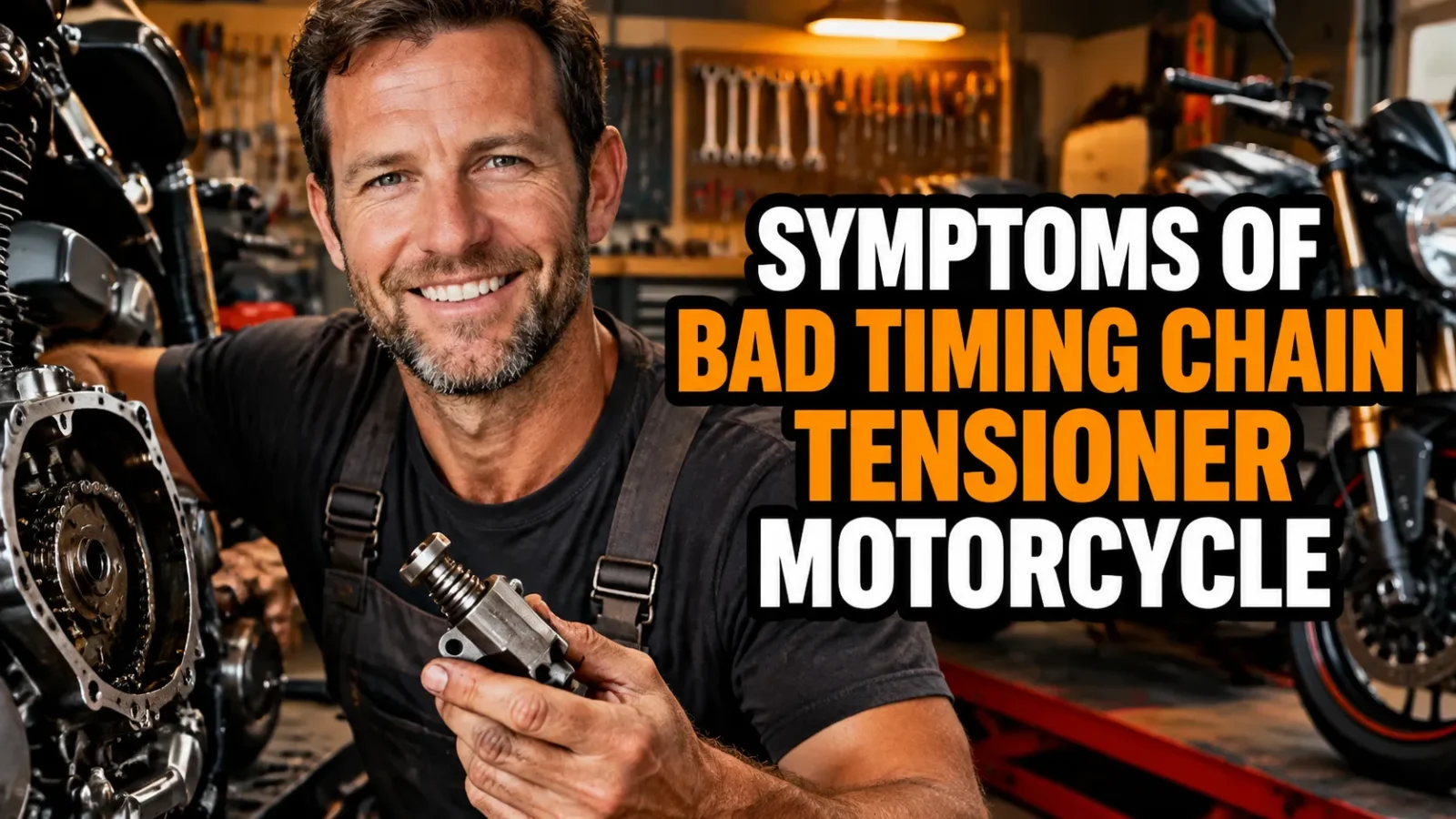
I still remember the morning my old V-twin started sounding like it had a box of loose bolts rattling around in the top end. It only did it for two seconds on cold start, so I shrugged it off. Three weeks later I was pulling the cam cover off and staring at a chain that had been slapping against its guide hard enough to polish the metal.
That noise was my timing chain tensioner telling me it was done. I ignored it, and I got lucky. Plenty of riders don’t.
Since then I’ve owned four bikes with cam chains, and I’ve learned exactly what a dying tensioner sounds, feels, and smells like. Below is everything I’ve picked up, from the subtle early clues to the ones that mean you should shut the engine off immediately.
- The number one symptom is a metallic rattle on cold start that gets longer and louder as the tensioner wears.
- A rhythmic tick at warm idle, rough running, misfires, and lost top end power all point to a slack cam chain.
- Drain your oil and check for glitter. Fine metal on the magnetic plug is a red flag, not a coincidence.
- Riding with a bad tensioner risks jumping timing, bent valves, and a full top end rebuild.
- Fresh oil at short intervals is the cheapest insurance you can buy for a hydraulic tensioner.
What the Tensioner Actually Does (and Why It Matters So Much)
A timing chain connects your crankshaft to your camshafts. That chain needs to stay tight, because even a few degrees of slop throws off valve timing. The tensioner is the part that takes up that slack.
Most modern motorcycles use a hydraulic tensioner. Engine oil pressure pushes a plunger out against a chain guide, keeping the chain snug. Some bikes use a spring and ratchet design instead, and a few aftermarket options are fully manual.
Here’s the catch: hydraulic tensioners depend entirely on clean oil and consistent pressure. When oil pressure drops at idle, or when the internal check valve wears out, the plunger retracts. The chain goes slack. And a slack chain at 6,000 RPM is a genuinely destructive thing.
On my own bikes, the tensioner has always been the first component to complain when I stretched an oil change too far. It’s the canary in the coal mine.
The Symptoms I’ve Actually Experienced, Ranked by Severity
1. The Cold Start Rattle That Lasts Too Long
Every hydraulic tensioner is a little noisy for a split second on a cold start. Oil pressure hasn’t built yet, so the plunger isn’t fully loaded. That’s normal, and it should disappear in about a second.
What isn’t normal is a rattle that lingers for three, five, or ten seconds. On my bike it started at roughly two seconds and crept up to nearly fifteen over a couple of months. That progression is the tell.
If you hear a dry, metallic clack-clack-clack from the top end that fades as the engine warms, your tensioner is losing its ability to hold pressure. It’s the earliest and most reliable symptom you’ll get.
2. A Rhythmic Tick at Warm Idle
Once the tensioner is truly worn, the noise doesn’t go away when the engine is hot. It becomes a steady tick that speeds up with RPM. I could hear mine clearly at idle with my helmet on, which is saying something.
This tick is the chain slapping the guide or the tensioner shoe. Unlike valve clearance noise, which is a light, sharp tap, chain slap is duller and comes from lower down, near the cylinder base.
Get a long screwdriver, touch the tip to the cam cover, and put your ear against the handle. You’ll hear the difference immediately. It’s the cheapest diagnostic tool I own.
3. Rough Idle and Erratic Running
Here’s the part most riders miss. A slack chain doesn’t just make noise. It changes your cam timing.
When the chain flops, the camshaft position drifts relative to the crankshaft. The ECU sees a mismatch. On my fuel injected bike, that showed up as a lumpy, hunting idle that I initially blamed on a dirty throttle body.
If your bike suddenly idles like it’s running on three cylinders, and you’ve already ruled out spark plugs and fuel, the cam chain deserves a hard look.
4. Noticeable Power Loss Up Top
Retarded cam timing kills top end power. I noticed my bike felt flat above 5,000 RPM, like someone had stuffed a rag in the airbox. Mid range felt fine, which is exactly why I ignored it for so long.
If your bike pulls cleanly down low but runs out of breath up high, and it happened gradually rather than all at once, that’s a classic sign of chain stretch and tensioner wear working together.
5. Misfires, Backfires, and Check Engine Lights
Modern bikes with cam position sensors will throw codes when timing drifts. I got a P0016 style code on a friend’s bike that turned out to be a fully collapsed tensioner.
Backfiring through the intake is another one. When the intake valve opens at the wrong moment, you get a pop you can feel through the seat. It’s unnerving, and it’s not a tuning issue.
6. Metal in the Oil
This is the one that made me a believer in magnetic drain plugs. When a chain slaps a guide, it sheds material. Sometimes it’s aluminum from the guide, sometimes it’s steel from the chain itself.
Pull your drain plug and look. A little grey paste is normal. Sparkly glitter or visible flakes are not. If you find them, stop riding and start diagnosing.
7. Hard Starting and Low RPM Stalling
When timing drifts far enough, starting gets difficult. Cranking compression drops, the engine fights itself, and it may stall when you pull the clutch in at a stoplight.
By the time you reach this stage, you’re usually days away from real damage. I’ve seen a bike in this condition bend two intake valves on a single missed downshift.
Ruling Out the Other Noises That Sound Just Like It
Before you tear into the top end, be honest about where the noise is coming from. I’ve chased the wrong part more than once, and it’s expensive.
Primary drive and clutch basket noise can mimic cam chain rattle almost perfectly at idle. If you want to understand why a worn clutch basket chatters the way it does, it helps to know how does a wet clutch work and how the plates load up under oil pressure. A loose basket can sound alarmingly like a chain problem.
I once spent a weekend convinced my cam chain was shot. It turned out the clutch needed attention, and a proper clutch adjustment on harley davidson setups quieted the whole bike down. Lesson learned: check the easy stuff first.
Gearbox whine and shifting complaints are another common red herring. If your noise changes when you pull the clutch in or shift into gear, you may be dealing with harley davidson transmission problems rather than a tensioner at all.
The rule I follow: cam chain noise tracks engine RPM and stays constant whether the clutch is in or out. If the clutch changes it, look elsewhere.
Why Tensioners Fail in the First Place
Hydraulic tensioners die from dirty oil more than anything else. The internal check valve and plunger rely on tiny oil passages. Sludge and varnish clog them, the plunger stops extending fully, and the chain goes slack.
Spring and ratchet tensioners fail differently. The ratchet teeth wear, the spring loses tension, or the pawl sticks. On those, the failure is often sudden rather than gradual, which is why I check them every oil change.
High mileage, aggressive cam profiles, and lugging the engine at low RPM all accelerate wear. So does running oil that’s too thin for your climate.
What Happens If You Keep Riding
I want to be blunt here, because this is the part that costs real money. A slack chain can jump a tooth on the cam sprocket.
When that happens, valves and pistons try to occupy the same space. The result is bent valves, cracked guides, damaged pistons, and sometimes a ruined head. On an interference engine, that’s a four figure repair in a single second.
Even if it never jumps, the chain chews through its guides. Those plastic and metal guides aren’t cheap, and replacing them means pulling the cam cover at minimum, sometimes the whole engine out of the frame.
A tensioner is a cheap part. A top end rebuild is not.
How I Diagnose It in My Own Garage
Here’s the sequence I run through, in order, every time I suspect a tensioner.
- Listen cold, then hot. Note how long the rattle lasts on start up and whether it persists when warm.
- Use a stethoscope or screwdriver. Confirm the noise is coming from the cam cover, not the primary or gearbox.
- Check the oil. Look at level, condition, and anything shiny on the magnetic plug.
- Verify oil pressure. A weak pump can starve a healthy tensioner and look like a tensioner failure.
- Pull the tensioner. Check plunger travel against the service manual spec and look for scoring or a stuck check valve.
- Inspect the chain and guides. If the tensioner is extended near its limit, the chain is stretched and needs replacing too.
That last point matters. Replacing a tensioner on a stretched chain is a waste of money. Do both jobs at once and save yourself the labour.
Replacement Options: OEM, Manual, or Upgraded
For a stock, well maintained bike, a fresh OEM hydraulic tensioner is usually the right answer. They’re designed for the application, they’re quiet, and they need zero maintenance.
If you’ve got a modified engine, high lift cams, or a history of tensioner failures, a manual tensioner is worth considering. It holds tension consistently regardless of oil pressure. The trade off is that you have to adjust it periodically, and set it too tight and you’ll wear the chain and guides prematurely.
Some manufacturers offer updated part numbers that address known weaknesses. I always check for a superseded part before buying a direct replacement. It’s free reliability.
Habits That Keep a Tensioner Alive
Change your oil more often than the manual says if you ride short trips or in dusty conditions. I do mine every 3,000 miles on air cooled engines, and I’ve never had a hydraulic tensioner fail since that change.
Use the correct weight and spec of oil. Thin oil bleeds past a worn plunger faster and makes the rattle worse.
Don’t lug the engine. Low RPM, high load conditions hammer the chain and everything tensioning it. Downshift and let it breathe.
And listen to your bike. That’s really the whole secret. A tensioner almost always warns you before it fails. It taps, it rattles, it ticks, and it gives you weeks of notice.
The riders who end up with bent valves are the ones who turned the radio up. I’ve been that rider once. I don’t plan on being that rider again.
My Honest Take
Of all the maintenance items on a motorcycle, the cam chain tensioner has the worst cost to consequence ratio. It’s a small, inexpensive part that can quietly destroy your engine if you ignore it.
If you take one thing from my experience, let it be this: a rattle that wasn’t there last month is never normal. Investigate it, rule out the clutch and gearbox first, and if the noise is coming from the top end, deal with it before your next ride.
Your engine will thank you, and your wallet definitely will.
Frequently Asked Questions
What does a failing timing chain tensioner sound like?
It usually sounds like a metallic rattle or slapping noise from the top end, loudest on cold start and often settling once oil pressure builds. If it keeps ticking at idle after the engine is warm, that is a serious warning sign.
Can I ride with a bad timing chain tensioner?
You can, but you should not. A loose chain can jump a tooth, bend valves, or destroy the head. I treat any persistent cam chain rattle as a park the bike situation until I have checked it.
How long does a timing chain tensioner last?
There is no fixed interval. Hydraulic units depend heavily on clean oil, so a bike that gets regular oil changes at short intervals can go 50,000 miles or more, while a neglected engine can fail one in 15,000.
Is a manual tensioner better than a hydraulic one?
A manual tensioner removes the oil pressure variable and holds tension consistently, but it needs periodic adjustment. For a high mileage or modified engine, I lean toward manual. For a stock commuter, a fresh OEM hydraulic unit is usually the easier call.

Related Articles

Motorcycle Chain Keeps Getting Loose? Why It Happens and How I Finally Fixed It
Motorcycle chain keeps getting loose no matter how often you adjust it? I break down the causes, from worn sprockets…
Jake Miller
10 min read

Loose Motorcycle Chain Symptoms: 9 Warning Signs I Learned the Hard Way
Loose motorcycle chain? I walk through the symptoms I've felt and heard, how to measure slack in 5 minutes, and…
Jake Miller
11 min read

Motorcycle Clutch Problems Symptoms: 9 Warning Signs I Wish I’d Caught Sooner
Slipping, dragging, or a mushy lever? I break down the real motorcycle clutch problems symptoms I've found on my own…
Jake Miller
10 min read