
How Long Do Motorcycle Ignition Coils Last? Lifespan, Warning Signs & Fixes
 Jake Miller
10 min read
Jake Miller
10 min read
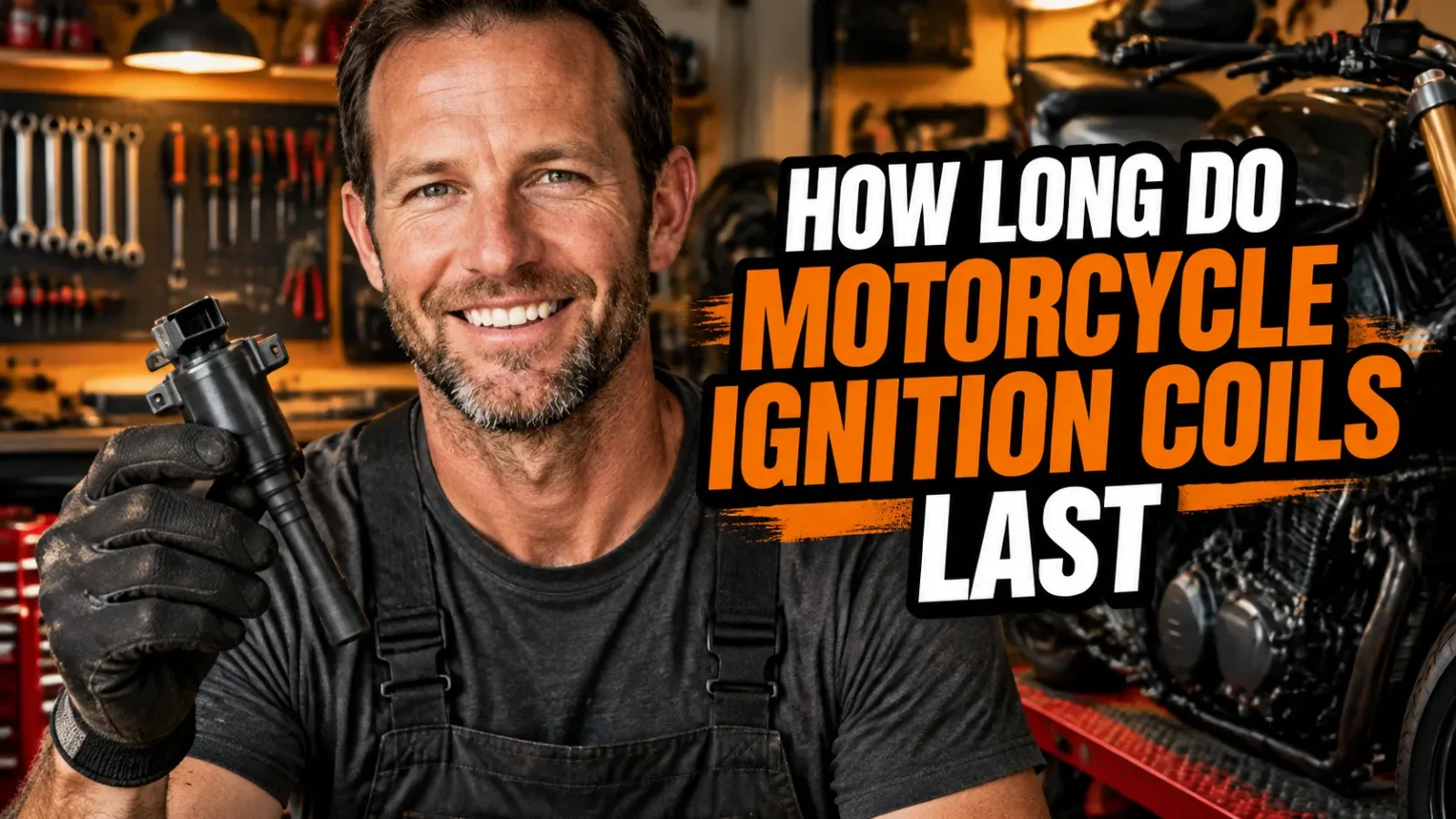
I’ve been riding and wrenching on bikes for a long time, and ignition coils are one of those parts I never thought about until one quit on me. It happened on a Sunday ride, forty miles from home, with a single cylinder suddenly sputtering like it had a mind of its own. That day taught me to respect the humble coil.
So, how long do these things really last? In this guide I’ll share what I’ve seen on my own bikes, what the typical lifespan looks like, and how you can squeeze every last mile out of yours. Since coils depend on a healthy electrical system, it also helps to understand your power source, which is why I recommend reading what are the different types of motorcycle batteries ultimate guide alongside this article.
- Most motorcycle ignition coils last 50,000 to 100,000 miles, or roughly 8 to 15 years.
- Heat, vibration, moisture, and a weak battery or charging system are the biggest coil killers.
- Misfires, hard starts, and rough idle are the classic warning signs of a dying coil.
- A multimeter test takes minutes and can save you from replacing a perfectly good part.
- Good electrical health, correct spark plugs, and clean connections can extend coil life dramatically.
The Short Answer: What I Expect From a Healthy Coil
In my experience, a quality OEM coil should easily reach 50,000 to 100,000 miles. In calendar terms, that usually means somewhere between 8 and 15 years of normal use. Plenty of coils I’ve seen outlive the bikes they were installed on.
That said, there is no hard expiration date. A coil is a simple device with no moving parts, so it fails from wear on its insulation and windings rather than from mechanical fatigue. That is why the lifespan range is so wide.
I’ve pulled original coils off 20-year-old bikes that still tested perfectly. I’ve also seen cheap aftermarket coils die in under a year. Quality and operating conditions matter far more than the odometer.
How an Ignition Coil Actually Works
Before I get into lifespan, a quick refresher helps. An ignition coil is a small transformer. It takes the 12 volts from your battery and steps it up to somewhere around 20,000 to 40,000 volts, which is what your spark plug needs to jump its gap.
Primary and Secondary Windings
Inside the coil are two sets of copper windings wrapped around an iron core. The primary winding has relatively few turns, while the secondary has thousands of fine turns. When the ECU interrupts current to the primary, the magnetic field collapses and induces a huge voltage in the secondary.
Every one of those spark events stresses the insulation a little. Over millions of cycles, that insulation slowly breaks down, which is the root cause of most coil failures.
Stick Coils vs. Traditional Coils
Modern bikes often use coil-on-plug (stick) coils that sit directly on top of each spark plug. Older bikes use a coil with a separate plug wire and cap. Both designs follow the same principle, but they age differently.
Stick coils sit deep in a hot engine area, so they see more heat. Older remote coils are often mounted in cooler spots but depend on plug caps and wires that can crack and leak voltage.
What Shortens Ignition Coil Life
I’ve narrowed coil killers down to a handful of repeat offenders. If you know them, you can avoid most premature failures.
Heat
Heat is the number one enemy. Constant exposure to engine temperatures degrades the epoxy and insulation inside the coil. Air-cooled bikes and riders who sit in stop-and-go traffic tend to cook their coils faster.
If I ride in hot climates, I assume my coils will age sooner than someone riding in mild weather. It is just physics.
Vibration
Motorcycles shake, especially big twins and singles. Over time, vibration can crack internal solder joints, loosen connectors, and fatigue the windings. Rubber mounts and tight brackets help, but they do not eliminate the problem.
Worn Spark Plugs
This one surprises many riders. When a plug’s gap widens from wear, the coil has to work harder to push voltage across it. That extra demand creates heat and stress that can quietly shorten coil life.
I replace plugs on schedule for exactly this reason. A fresh plug is cheap insurance for a much more expensive coil.
Moisture and Corrosion
Water in a plug well or a corroded connector can cause voltage to leak or arc where it should not. I’ve seen coils tracked with carbon from a pressure washer blast aimed in the wrong place. Be gentle when cleaning around the engine.
Weak Batteries and Charging Problems
A tired battery or failing regulator/rectifier feeds the ignition system unstable voltage. Low voltage can produce a weak spark, while voltage spikes can stress the coil’s electronics. This is one of the sneakiest causes of repeat failures.
If you ride a bike with a lithium battery, it helps to know its own lifespan. I covered that in how long do lithium and electric motorcycle batteries last find out, and it pairs nicely with this topic.
Warning Signs I Watch For
Coils rarely die without a hint. If you pay attention, you can usually catch problems early. Here are the symptoms I’ve personally run into.
- Misfires: A stumble, cough, or flat spot under acceleration, often on one cylinder.
- Rough idle: The bike shakes or surges at a stop in a way it never used to.
- Hard starting: Long cranking, especially when the engine is hot.
- Poor fuel economy: Incomplete combustion wastes fuel.
- Loss of power: The bike feels sluggish, particularly at higher RPM.
- Check engine light: Many modern bikes log a misfire code for the affected cylinder.
The Heat-Soak Clue
One pattern I’ve learned to trust: a coil that works fine cold but acts up once the engine is hot. As the windings warm and expand, tiny insulation cracks can open and let the spark leak away.
If your bike runs great in the morning but stumbles after a long ride, the coil should be near the top of your suspect list.
How I Test a Suspect Coil
Before I buy a new coil, I always test the old one. A basic digital multimeter will do the job. Always consult your service manual for the exact resistance specifications for your bike, because they vary widely by model.
Step-by-Step Resistance Check
- Turn the ignition off and let the engine cool.
- Disconnect the coil’s electrical connector.
- Set your multimeter to ohms and measure the primary winding between the terminals. Compare it with your manual’s spec.
- Measure the secondary resistance between the plug terminal and a primary terminal, again comparing it with the spec.
- Inspect the housing for cracks, burn marks, or carbon tracking.
Readings far outside spec, or an open circuit, mean the coil is bad. Readings that look fine do not always clear it, though. Some coils only fail under heat or load.
The Swap Test
On multi-cylinder bikes, I like the swap test. I move the suspect coil to another cylinder and see if the misfire follows it. If it does, the coil is guilty. If the misfire stays put, I look at the plug, injector, or wiring instead.
Check the Battery Before Blaming the Coil
I’ve wasted money replacing a coil when the real culprit was a weak battery. Before condemning any ignition part, I put a charger on the battery and verify it holds a proper charge. Low system voltage can mimic coil trouble surprisingly well.
Charging times matter here too. If you’re using a small trickle charger, how long to charge motorcycle battery at 2 amps explains what to expect, and the same math applies in how long to charge a 12v battery at 2 amps.
A Word on High-Amp Chargers
Some riders borrow a car charger in a pinch. I’d be careful here, since motorcycle batteries are much smaller. If you’re curious how the numbers scale up for larger batteries, take a look at how long to charge a car battery at 10 amps and how long to charge car battery at 50 amps.
The key takeaway for me: slow and steady charging is kinder to a motorcycle battery, and a healthy battery is kinder to your coils.
OEM vs. Aftermarket Coils
When it is time to replace a coil, you will face a choice. I’ve used both OEM and aftermarket parts over the years, and my results have been mixed.
Where OEM Wins
OEM coils are built to your bike’s exact resistance and dwell requirements. They usually deliver the longest, most predictable service life. If your budget allows, I lean toward OEM for newer fuel-injected bikes with sensitive ECUs.
Where Aftermarket Can Work
Reputable aftermarket brands can be excellent, and some offer higher output for modified engines. The trouble is the flood of bargain-bin coils with inconsistent quality. I’d steer clear of the rock-bottom listings, since a cheap coil that fails in a year is no bargain.
Whichever route you pick, match the specs to your service manual and buy from a seller you trust.
How I Make My Coils Last Longer
Good habits go a long way. These are the routines I follow to keep ignition parts healthy for as many miles as possible.
- Replace spark plugs on schedule and use the correct heat range and gap.
- Keep the battery and charging system healthy with regular voltage checks.
- Protect connectors with a dab of dielectric grease to fend off moisture and corrosion.
- Avoid blasting water into plug wells and around coil boots when washing the bike.
- Inspect plug caps and wires on older bikes for cracks and wear.
- Don’t ignore small misfires. Running a failing coil can stress the ECU and catalytic converter.
Storage Matters Too
If your bike sits all winter, use a battery tender and store it somewhere dry. Moisture and a deeply discharged battery are a bad combination for any electrical component. I’ve noticed bikes that are ridden regularly tend to have fewer ignition headaches than those that sit for months.
When to Replace Instead of Repair
Coils are generally not repairable. Once the internal windings or insulation fail, replacement is the only real fix. The good news is that the job is typically simple and takes less than an hour on most bikes.
If one coil fails on a multi-cylinder bike with a lot of miles, I seriously consider replacing the whole set. They have lived the same life, so the others are likely not far behind. It costs more upfront, but it can spare you a second roadside breakdown.
Cost Expectations
Prices vary widely by make and model. A single stick coil might be inexpensive, while a premium OEM unit on a high-end sportbike can cost noticeably more. Check current pricing with your dealer or parts retailer, since I would rather you get a real quote than rely on my guess.
My Final Take
So, how long do motorcycle ignition coils last? In my experience, you can reasonably expect 50,000 to 100,000 miles, and sometimes much more if you treat the electrical system well. They are tough little parts, but they are not immortal.
Watch for misfires, test before you replace, and never overlook the battery and spark plugs. Do those things, and your coils should quietly do their job for years while you focus on the road ahead.
Ride safe, keep your voltage healthy, and may every spark be a strong one.
Frequently Asked Questions
How many miles do motorcycle ignition coils usually last?
Most OEM motorcycle ignition coils last 50,000 to 100,000 miles or roughly 8 to 15 years. Many outlast the bike’s warranty period, but heat, vibration, and a weak electrical system can shorten that considerably.
What are the signs of a failing motorcycle ignition coil?
The most common signs are misfires, rough idle, hard starting, poor throttle response, reduced fuel economy, and a flashing check engine light. Symptoms often get worse when the engine is hot.
Can a weak battery damage an ignition coil?
Yes. A weak battery or faulty charging system forces the coil to work with unstable voltage, which can cause weak spark and extra heat. Keeping your battery healthy is one of the easiest ways to protect your coils.
Should I replace ignition coils in pairs?
On multi-cylinder bikes, it is often smart to replace coils in sets if they are the same age and one has failed. This is not mandatory, but it can save you a second repair later.

Related Articles

How to Fix a Short Circuit on a Motorcycle: A Rider’s Step-by-Step Guide
Learn how to find and repair a motorcycle short circuit step by step, from blown fuses to chafed wires, with…
Jake Miller
11 min read

What Does a CDI Unit Do on a Motorcycle? Purpose, Symptoms and Fixes
Wondering what a CDI does on your bike? I explain how the capacitor discharge ignition works, signs of failure, testing…
Jake Miller
10 min read

How to Test a 6 Volt Motorcycle Battery and Charging System (Step-by-Step)
Learn how to test a 6 volt motorcycle battery and charging system step by step, with multimeter readings, load tests,…
Jake Miller
10 min read