
What Does a CDI Unit Do on a Motorcycle? Purpose, Symptoms and Fixes
 Jake Miller
10 min read
Jake Miller
10 min read
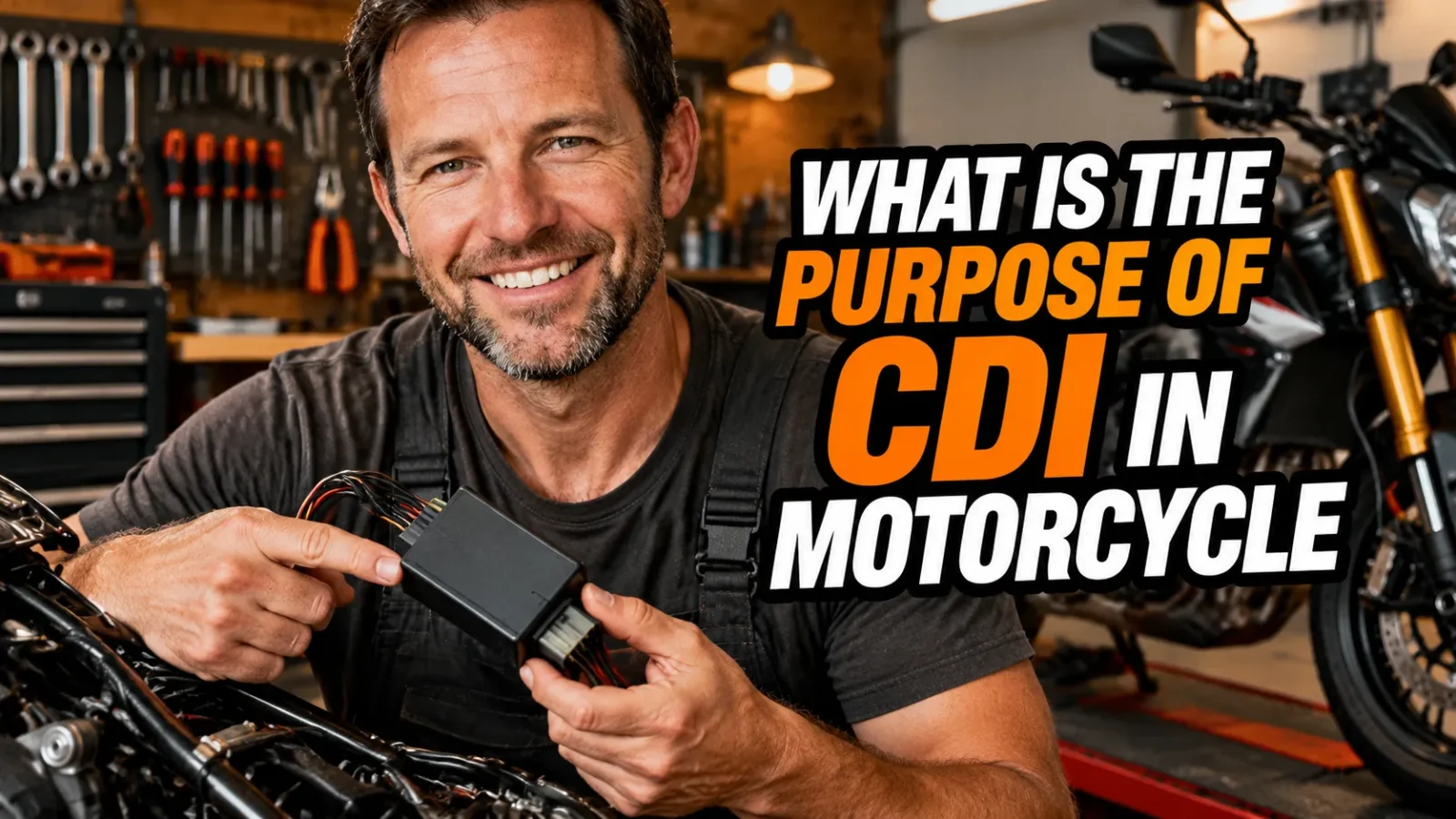
If you’ve ever stared at a dead bike with a perfectly good battery and a full tank, you know how frustrating ignition problems can be. The culprit is often a small, unassuming black box tucked under the seat or behind a side panel. That box is the CDI, and it quietly decides whether your engine lives or dies every single time you hit the starter.
I’ve chased more than one “mystery no-spark” issue back to this little component. In this guide, I’ll walk you through what it does, how it works, how it fails, and how to test it. And because ignition and power supply are tightly linked, I’d also point you to my breakdown of what are the different types of motorcycle batteries ultimate guide if you want the full picture of your bike’s electrical heart.
- A CDI (capacitor discharge ignition) stores energy and releases it as a precisely timed pulse to the ignition coil, creating your spark.
- There are two main types: AC-CDI (powered by the stator) and DC-CDI (powered by the battery).
- Failure signs include no spark, hard starts, misfires, and stalling once the engine heats up.
- Always test the pickup coil, ignition coil, and wiring before blaming the CDI.
- Newer fuel-injected bikes use an ECU or ECM that takes over the CDI’s job.
The Short Answer: Why Your Bike Needs a CDI
The CDI exists to create a strong, perfectly timed spark inside the combustion chamber. Without that spark, the air-fuel mixture never ignites, and no amount of fuel or compression will make the engine run. It’s the conductor of the ignition orchestra.
In my experience, people tend to think of the spark plug as the star of the show. In reality, the plug is just the stage. The CDI decides when the performance starts and how powerful it is.
The Three Jobs I Care About Most
When I explain the CDI to newer riders, I boil its purpose down to three tasks:
- Energy storage: it collects electrical energy in a capacitor.
- Timing control: it releases that energy at the exact crankshaft position needed for combustion.
- Voltage delivery: it feeds a sharp pulse to the ignition coil, which steps it up to tens of thousands of volts.
Get any one of those wrong, and the engine will run badly or not at all. That’s why a failing CDI can produce such strange, inconsistent symptoms.
How a Capacitor Discharge Ignition Actually Works
The name tells you most of the story. Energy goes into a capacitor, and then it is discharged in one fast burst. The process happens thousands of times per minute as the engine spins.
Let me break it down step by step, the way I’d explain it in the garage.
Step 1: Charging the Capacitor
Power from the stator (or the battery, depending on the system) flows into the CDI box. Internal circuitry boosts this to a few hundred volts and stores it in the capacitor. Think of it like pulling back a slingshot.
Step 2: Reading the Trigger Signal
A pickup coil, sometimes called a pulser, sits near the flywheel or rotor. As a reluctor tab passes by, the coil produces a small signal telling the CDI exactly where the piston is. This is the cue that says “now.”
Step 3: The Discharge
When the trigger arrives, a switching component inside the CDI (usually a thyristor) opens the gate. The capacitor dumps its stored charge into the primary winding of the ignition coil in a fraction of a millisecond.
Step 4: Stepping Up to Spark Voltage
The ignition coil multiplies that pulse to roughly 15,000 to 30,000 volts. That jolt jumps the spark plug gap and ignites the mixture. Then the cycle starts again, ready for the next stroke.
AC-CDI vs DC-CDI: Which One Does Your Bike Have?
Not all CDI units are the same. The biggest split is how they get their power, and knowing which you have makes troubleshooting far easier.
AC-CDI
An AC-CDI draws power from a dedicated exciter coil on the stator. It doesn’t need a battery to produce spark, which is why many small-displacement bikes, dirt bikes, and scooters can be kick-started with a completely dead battery.
I like AC systems for their simplicity. Fewer dependencies mean fewer things to go wrong, though they may deliver slightly weaker spark at very low cranking speeds.
DC-CDI
A DC-CDI gets its energy from the battery. It boosts the 12 volts internally before charging the capacitor. This usually gives a more consistent spark, especially at low RPM, and makes starting more reliable.
The tradeoff is that your battery now matters to ignition. A weak or failing battery can cause weak spark and starting trouble. If you’re unsure what your bike needs, I put together a guide on what is the best battery for a motorcycle that covers the key specs.
Beyond Spark: Other Things a CDI Does
Producing a spark is the headline act, but a good CDI does more. Depending on the design, it also manages several supporting functions that protect your engine and improve performance.
Ignition Timing Advance
Engines need the spark to fire earlier as RPM climbs. Many CDIs contain a built-in advance curve that shifts timing automatically. It’s a simple, elegant way to keep the engine efficient across the rev range.
Rev Limiting
Most factory CDIs include a rev limiter that cuts the spark when the engine reaches a set RPM. It protects valves, rods, and bearings from over-revving. Aftermarket “racing” CDIs often raise or remove this limit, which is fun but should be done with care.
Kill Switch and Safety Inputs
Your kill switch usually works by grounding the CDI’s output, which stops the spark. Some bikes also tie in sidestand or clutch sensors the same way. When a CDI misbehaves, these inputs are worth checking too.
Common Signs of a Failing CDI
CDI units are solid-state, so they don’t wear out like brake pads. But heat, vibration, moisture, and electrical spikes can still kill them. Here are the symptoms I watch for.
- No spark at all with a good plug and coil
- Hard starting or long cranking before the engine catches
- Misfiring or sputtering, especially under load
- Stalling when hot, then restarting after cooling down
- Sudden loss of power at specific RPM ranges
- Backfiring caused by incorrect timing
The heat-related stalling is the classic one. I’ve seen bikes run perfectly cold, then die after twenty minutes because a solder joint or internal component expands and loses contact.
Don’t Jump to Conclusions
Here’s where I’ll be honest: a CDI is rarely the first thing I replace. Many of those symptoms also point to a bad pickup coil, worn ignition coil, loose connector, or fouled spark plug. Replacing a CDI without testing is a good way to waste money.
If your bike is newer and fuel-injected, the symptoms can overlap with computer faults. I covered that in what are the symptoms of a bad engine control module, which is worth a read if your bike doesn’t use a traditional CDI box.
How I Test a CDI at Home
You don’t need a fancy shop to narrow down the problem. A multimeter, a spare spark plug, and a bit of patience go a long way. Always disconnect the battery and keep your hands clear of the plug cap when testing for spark.
Start With the Basics
- Check for spark: ground a known-good plug against the engine and crank it. A bright blue spark is healthy.
- Inspect connectors: look for corrosion, bent pins, or melted housings.
- Test the pickup coil: measure its resistance and compare it against your service manual’s spec.
- Test the ignition coil: check primary and secondary resistance as well.
- Check the exciter coil or battery supply: confirm the CDI is actually receiving power.
The Swap Test
If everything upstream checks out, the most reliable method is swapping in a known-good CDI. Borrow one from a friend with the same model, or buy a quality replacement. If the problem disappears, you’ve found your culprit.
Static resistance tests on the CDI itself are often inconclusive. These boxes behave differently under dynamic conditions, so I trust a swap far more than a meter reading on the unit.
What Kills CDI Units (and How I Protect Mine)
Prevention is cheaper than replacement. Most CDI failures trace back to a handful of avoidable causes, and I’ve learned to watch for them.
Heat and Vibration
CDI boxes mounted near the engine or exhaust cook over time. If yours lives in a hot spot, make sure the mounting rubbers are intact and nothing blocks airflow. Cracked solder joints from vibration are surprisingly common.
Moisture
Water getting into the connector or housing causes corrosion and shorts. A little dielectric grease on the plug and a check of the surrounding seals can add years to the unit’s life.
Voltage Problems
Failing regulator/rectifiers, bad grounds, and overloaded circuits can send spikes or sags into your ignition. This matters more than people think once you start adding electronics. If you’re running extra lights or gadgets, check out what is the best motorcycle battery for accessories so your supply keeps up.
Lighting upgrades draw real current as well. If you’re considering one, my take on what is the best hid kit for a motorcycle explains what to expect from the electrical load.
Wrong Replacement Parts
Not every CDI that fits the plug will work. Pin layout, voltage type (AC or DC), and advance curve all matter. I always match the part number and verify the type before ordering anything.
CDI vs ECU: What Changed on Modern Bikes?
Older carbureted bikes and many small-displacement models use a standalone CDI. Modern fuel-injected machines usually pack ignition control into an ECU or ECM that also manages fueling, idle, and emissions sensors.
The principle is the same: sense the engine position, then fire the coil at the right moment. The difference is that the ECU is a full computer with far more inputs and far more precise control.
Why It Matters for Troubleshooting
With a standalone CDI, diagnosis is mostly mechanical and electrical. With an ECU, you often need a scan tool to read fault codes. Know which system your bike uses before you start pulling panels.
Cruisers are a good example of the modern approach. If you ride a V-twin, take a look at what is the best battery for a harley davidson motorcycle, since a stable power supply is critical for those electronically managed ignition systems.
Should You Upgrade to an Aftermarket CDI?
Performance CDIs promise higher rev limits, adjustable timing curves, and stronger spark. They can be a worthwhile upgrade on a modified or race-oriented bike, especially one with a big-bore kit, aggressive cam, or free-flowing exhaust.
For a stock commuter, though, I usually say don’t bother. The factory unit is matched to your engine, and an aftermarket one can change timing in ways that hurt reliability. If you do upgrade, buy from a reputable brand and tune conservatively.
My Final Thoughts
The CDI may be small, but its purpose is huge: it turns stored electrical energy into a precisely timed spark that keeps your engine running. Understanding how it works makes you a sharper troubleshooter and saves you from replacing parts you don’t need.
My advice is simple. Test before you replace, keep your connectors clean and dry, and make sure your battery and charging system are healthy. Do that, and your ignition will reward you with years of reliable starts and smooth running.
Frequently Asked Questions
What is the main purpose of a CDI in a motorcycle?
The CDI (capacitor discharge ignition) stores electrical energy in a capacitor and releases it as a high-voltage pulse to the ignition coil at exactly the right moment, creating the spark that ignites the air-fuel mixture.
What are the symptoms of a bad CDI unit?
Common signs include no spark, hard starting, misfiring, stalling when the engine warms up, and an engine that cuts out at certain RPMs. Because these overlap with coil, pickup and stator faults, test those parts too.
Can a motorcycle run without a CDI?
No. A bike that uses a CDI ignition system cannot produce a properly timed spark without it. Some modern bikes replace the CDI with an ECU or ECM that performs the same job along with fuel control.
Is a CDI the same as an ECU?
Not exactly. A CDI handles ignition timing and spark delivery only. An ECU or ECM typically controls ignition, fuel injection and other engine functions together.

Related Articles

How to Fix a Short Circuit on a Motorcycle: A Rider’s Step-by-Step Guide
Learn how to find and repair a motorcycle short circuit step by step, from blown fuses to chafed wires, with…
Jake Miller
11 min read

How to Test a 6 Volt Motorcycle Battery and Charging System (Step-by-Step)
Learn how to test a 6 volt motorcycle battery and charging system step by step, with multimeter readings, load tests,…
Jake Miller
10 min read

How to Repair a Motorcycle Ignition Coil: My Step-by-Step Rider’s Guide
Learn how to repair a motorcycle ignition coil step by step: diagnose symptoms, test with a multimeter, fix connections, and…
Jake Miller
9 min read