
Bad Pickup Coil Symptoms on a Motorcycle: How to Spot, Test, and Fix Them
 Jake Miller
10 min read
Jake Miller
10 min read
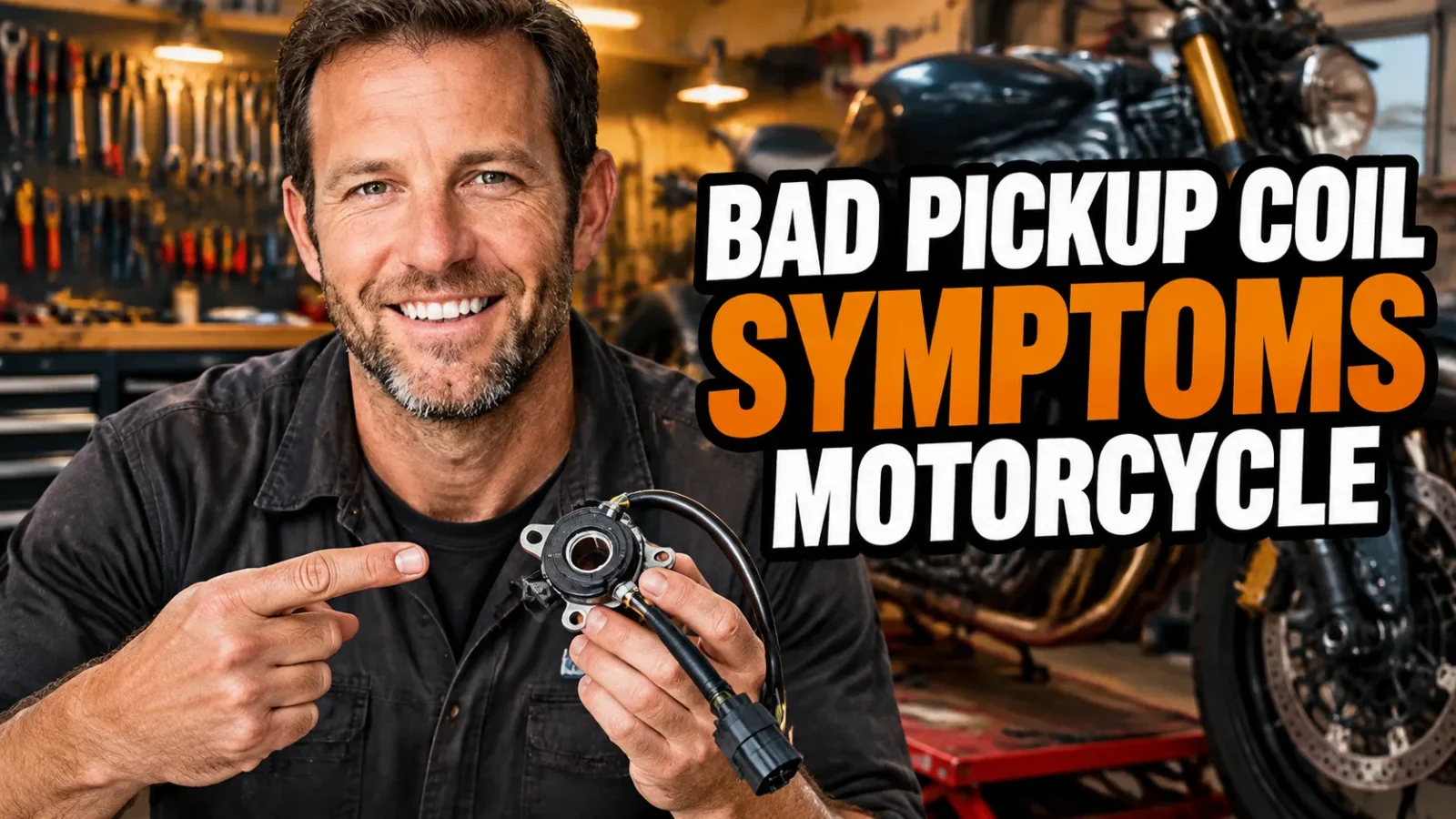
There is nothing quite like the moment your bike cranks happily, sounds healthy, and then refuses to fire. I’ve been there more than once, standing in a parking lot, wondering if it was the battery, the plug, or something sneakier hiding inside the ignition system.
More often than I’d like to admit, the culprit was a tiny, overlooked part called the pickup coil. If you’ve already read up on what are the different types of motorcycle batteries ultimate guide and your battery checks out, this part deserves a close look next.
In this guide, I’ll walk you through the warning signs I’ve learned to recognize, how I test the coil at home, and how I tell it apart from other electrical gremlins. Let’s get your bike running right again.
- A failing pickup coil usually causes no spark, hard starting, stalling when hot, misfires, or a dead tachometer.
- Symptoms often start as intermittent and heat-related, then become permanent.
- A multimeter can confirm the problem in minutes by checking resistance and AC voltage output.
- Rule out the battery, spark plug, ignition coil, and CDI or ECU before replacing anything.
- Replacement is typically cheap and DIY-friendly on most bikes.
What a Pickup Coil Actually Does
The pickup coil, sometimes called a pulser coil or trigger coil, is a small sensor mounted near the flywheel or rotor. As a raised tab on the rotor passes by, the coil generates a tiny electrical pulse. That pulse tells the ignition module exactly when the engine is at the right position to fire the spark plug.
Think of it as the metronome of your ignition system. Without a clean, well-timed signal, the rest of the system has no idea when to act.
On older and simpler bikes, this is a standalone part. On fuel-injected models, the equivalent job is done by a crankshaft position sensor. The principle is the same, and so are many of the symptoms.
Why It Fails
Pickup coils live in a harsh neighborhood. They sit near a hot engine, get shaken constantly, and often deal with oil, moisture, and dirt. Over time, the hair-thin copper windings can crack, short, or break down internally.
In my experience, heat is the biggest enemy. The windings expand as the engine warms up, and a hairline break that conducts fine when cold can suddenly open up. That’s why so many failures look like ghosts.
The Classic Warning Signs I Watch For
No single symptom proves the pickup coil is bad. But when several show up together, I get suspicious fast. Here are the ones I see most often.
1. No Spark at All
This is the headline symptom. The starter spins the engine, fuel is present, and the plug is clean, yet nothing fires. If you pull the plug, ground it against the cylinder, and crank the engine, you’ll see no spark.
When a pickup coil dies completely, the ignition module never gets its trigger signal. The result is a bike that cranks all day and never starts.
2. Hard Starting That Gets Worse Over Time
Early on, I noticed my bike needed extra cranks before catching. Some days it started fine, other days it didn’t. That inconsistency is a hallmark of a coil on its way out.
If the problem seems random and keeps getting more frequent, don’t ignore it. Intermittent faults rarely heal themselves.
3. Stalling After the Engine Warms Up
This one fooled me for a while. The bike would run perfectly for 15 or 20 minutes, then sputter and die. After sitting for a bit to cool down, it would start again like nothing happened.
That heat-related pattern is classic pickup coil behavior. The internal windings open up as they expand, then reconnect once they cool.
4. Misfires and Rough Running
A weak or erratic signal means the spark timing gets sloppy. You might feel stumbling, hesitation, or a stuttering sensation at certain RPM ranges. Some riders describe it as the bike “cutting out” for a split second.
Because the signal is inconsistent, the misfire often seems to have no pattern. That randomness is a clue in itself.
5. Dead or Jumpy Tachometer
On many bikes, the tach reads from the same ignition pulse. If the needle bounces wildly, drops to zero while the engine is still running, or never moves during cranking, the signal path is suspect.
I always watch the tach while cranking. A flat needle during cranking is a useful early hint.
6. Backfiring and Power Loss at Higher RPM
When timing drifts because of a weak signal, unburned fuel can ignite in the exhaust. You may hear pops or backfires, especially on deceleration. Power at the top end can also fall flat.
Keep in mind that these symptoms overlap with lean fuel mixtures and exhaust leaks, so don’t stop your diagnosis here.
How I Test a Suspect Pickup Coil
The good news is that testing is simple. All you need is a digital multimeter and your bike’s service manual. I never skip the manual, because the correct specs vary quite a bit between models.
Step 1: Inspect the Basics
Before reaching for the meter, I look at the obvious. Check the wiring and connector for corrosion, chafing, or loose pins. A bad connection can imitate a dead coil perfectly.
I also check the air gap between the coil and the rotor tab. If the gap is out of spec, the signal weakens even though the coil itself is fine.
Step 2: Measure Resistance
Disconnect the coil connector and set your meter to ohms. Touch the probes to the two coil leads and compare the reading to the manual. Many pickup coils fall somewhere in the low hundreds of ohms, but always trust your model’s spec, not a generic number.
An infinite reading means an open circuit. A reading near zero suggests a short. Either way, the coil is done.
Step 3: Check AC Voltage Output
Resistance can look fine while the coil still fails under real conditions. So I also measure AC voltage while cranking the engine. Set the meter to AC volts, connect it to the coil leads, and spin the motor.
You should see a small but steady voltage that matches the manual. If it’s missing or far too low, the coil isn’t generating a proper signal.
Step 4: Test Hot
Because heat-related failures are so common, I like to repeat the resistance test once the engine is warm. A coil that passes cold but fails hot has just confessed. This extra step has saved me from replacing the wrong part more than once.
Ruling Out the Look-Alikes
Here’s where experience pays off. Several other components create nearly identical symptoms, and swapping parts at random gets expensive quickly. I always work through the suspects in order.
The Battery
A tired battery can cause slow cranking, dimming lights, and starting trouble. These problems feel similar to ignition faults, especially if the bike won’t fire. Before you condemn the coil, review the motorcycle bad battery symptoms and see how many match your situation.
Subtle voltage sag is another sneaky issue. The list of motorcycle weak battery symptoms is worth a read, and so are the signs of a bad motorcycle battery. A quick voltage test can settle the question in under a minute.
The Ignition Coil
The ignition coil is a different part from the pickup coil, and the names confuse a lot of riders. The ignition coil steps up voltage to fire the plug. The pickup coil simply tells the system when to fire.
If your spark is weak or missing, test both. When it’s time to replace the ignition coil, I’d check out the best ignition coil for motorcycle options before buying, since quality varies widely.
The CDI Box or ECU
If the pickup coil tests perfectly but you still have no spark, the brain of the system may be at fault. A failing CDI unit or engine computer can cause dropouts, no-start conditions, and bizarre electrical behavior.
That’s why I recommend reading up on what are the symptoms of a bad engine control module. Comparing the two lists helps narrow things down.
The Simple Stuff
Don’t forget the cheap fixes. A fouled spark plug, a cracked plug cap, a faulty kill switch, a tipped-over sensor, or a blown fuse can all stop a bike cold. I’ve embarrassed myself by tearing into the ignition only to find a kill switch stuck in the wrong position.
Replacing the Pickup Coil
Once testing confirms the coil is bad, replacement is usually straightforward. On many bikes, it’s mounted under the left-side engine cover or behind the stator cover. Expect to drain a little oil if the cover sits in the oil bath.
My Basic Process
- Disconnect the battery to avoid accidental shorts.
- Remove the engine cover and note how the wiring is routed.
- Unbolt the old coil and transfer any grommets or clamps.
- Install the new coil and set the air gap to spec if your model requires it.
- Reassemble with a fresh gasket, torque bolts properly, and refill oil if needed.
Take photos before disassembly. They’ve rescued me from guesswork on reassembly more times than I can count.
OEM or Aftermarket?
I lean toward OEM or reputable aftermarket brands for this part. Cheap no-name coils sometimes fail early or produce weak signals, and you don’t want to repeat the job in a month. Saving a few dollars isn’t worth the headache.
Preventing Future Problems
You can’t make a pickup coil last forever, but you can stack the odds in your favor. A few habits have kept my bikes running reliably.
- Fix oil leaks promptly, since oil can degrade wiring insulation over time.
- Keep connectors clean and apply dielectric grease where appropriate.
- Avoid overheating by maintaining your cooling system and not lugging the engine.
- Inspect wiring during routine service for chafing and brittle insulation.
These small steps cost almost nothing. They also catch trouble early, before it strands you on the side of the road.
When to Call a Professional
I’m a big believer in doing your own wrenching, but I also know my limits. If your tests are inconclusive, if the stator cover is a nightmare on your particular model, or if the electrical system has multiple issues, a good shop can save you time.
Bring your notes with you. Telling a technician exactly what you tested, and what the readings were, speeds up the diagnosis and lowers the bill.
My Final Thoughts
A failing pickup coil is one of those faults that feels mysterious until you know what to look for. Hard starting, stalling when hot, misfires, and a flaky tach all point toward it, especially when they arrive together. The key is to test before you replace.
Work through the battery, plug, ignition coil, and control module systematically, and let your multimeter do the talking. Do that, and you’ll fix the right part the first time and get back to what really matters: riding.
Stay safe out there, and may your spark always arrive right on time.
Frequently Asked Questions
What are the most common bad pickup coil symptoms on a motorcycle?
The most common signs are no spark, hard starting, stalling once the engine heats up, random misfires, and a dead or erratic tachometer. Symptoms often come and go at first, then get worse over time.
How do I test a motorcycle pickup coil?
Unplug the coil and measure its resistance with a multimeter, then compare the reading to your service manual spec. You can also measure AC voltage output while cranking the engine. A reading of zero, infinity, or far outside spec points to a failed coil.
Can a bad pickup coil drain or damage my battery?
Not directly. A failing pickup coil causes ignition problems, but it can mimic battery trouble because the bike cranks without starting. Repeated cranking attempts can wear down a healthy battery, so test the coil before blaming the battery.
Is it expensive to replace a pickup coil?
Usually not. Most pickup coils are inexpensive compared with other ignition parts, and many can be swapped at home with basic tools. The bigger cost is misdiagnosing the problem and replacing the wrong component.

Related Articles

How to Fix a Short Circuit on a Motorcycle: A Rider’s Step-by-Step Guide
Learn how to find and repair a motorcycle short circuit step by step, from blown fuses to chafed wires, with…
Jake Miller
11 min read

What Does a CDI Unit Do on a Motorcycle? Purpose, Symptoms and Fixes
Wondering what a CDI does on your bike? I explain how the capacitor discharge ignition works, signs of failure, testing…
Jake Miller
10 min read

How to Test a 6 Volt Motorcycle Battery and Charging System (Step-by-Step)
Learn how to test a 6 volt motorcycle battery and charging system step by step, with multimeter readings, load tests,…
Jake Miller
10 min read