
Motorcycle Blown Fuse Symptoms: How I Spot, Diagnose, and Fix Electrical Failures Fast
 Jake Miller
9 min read
Jake Miller
9 min read
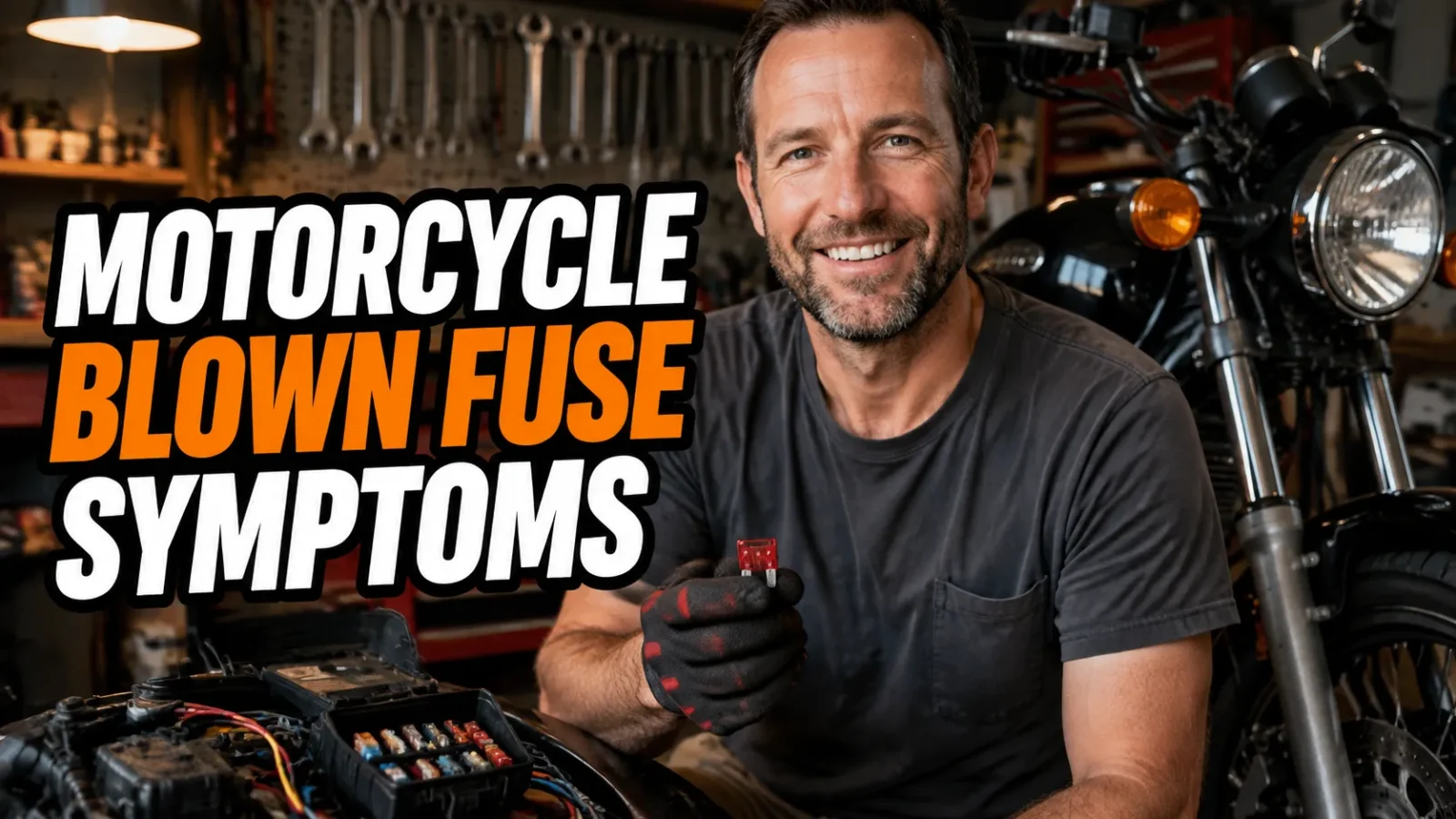
There’s a particular kind of silence I’ve come to dread on a ride. You thumb the starter, nothing lights up, and the bike that was perfectly fine yesterday is suddenly a very expensive paperweight. More often than not, the culprit is a tiny strip of metal costing less than a coffee.
I’ve chased electrical gremlins on dozens of bikes, and I can tell you that a blown fuse is one of the cheapest fixes and one of the most commonly misdiagnosed problems. Riders swap batteries, replace relays, and even blame the ECU before checking the fuse box. If you’re still getting familiar with the power source feeding those circuits, my what are the different types of motorcycle batteries ultimate guide is a great companion to this article.
In this post, I’ll walk you through exactly how a failed fuse shows up, how I tell it apart from other electrical faults, and how I fix and prevent it.
- A blown fuse usually kills one circuit (lights, horn, fuel pump, gauges) while the rest of the bike works normally.
- A no-start or no-crank condition with a healthy battery is a classic sign of a blown main or ignition fuse.
- Always check the fuse box first, since it takes two minutes and costs almost nothing.
- If a replacement fuse blows again, there’s a short or failing component, so never upsize the fuse.
- Carry spare fuses of every rating your bike uses.
Why Fuses Matter More Than You Think
A fuse is a sacrificial part. Its entire job is to die so that your wiring harness, ECU, and expensive components don’t. When too much current flows through a circuit, the thin metal element inside melts and breaks the connection.
That’s a good thing, even though it feels like a disaster at the roadside. A blown fuse is the bike protecting itself from something worse, such as melted wiring or an electrical fire.
What Makes a Fuse Blow in the First Place
In my experience, fuses blow for a handful of predictable reasons. Knowing them helps you fix the cause rather than just the symptom.
- Short circuits: A chafed wire touching the frame is the number one offender I see.
- Overloaded circuits: Adding heated grips, auxiliary lights, or a USB charger without a proper relay can overload a factory circuit.
- Failing components: A worn fuel pump or seized cooling fan motor can draw excess current until the fuse gives up.
- Reverse polarity or jump-start mistakes: Connecting a battery backwards can instantly pop the main fuse.
- Age and vibration: Corroded or loose fuse contacts can overheat and fail even without a true overload.
The Most Common Warning Signs I Look For
Let’s get to the heart of it. These are the motorcycle blown fuse symptoms I run into most often, roughly in order of how frequently they show up on the bikes I’ve worked on.
1. A Single System Suddenly Stops Working
This is the textbook symptom. Your horn goes silent, your turn signals stop flashing, or your headlight dies, but everything else keeps working. That pattern is a strong clue that one circuit has lost its protection fuse.
When only one function disappears, I go straight to the fuse box before touching anything else. It’s *almost always* the quickest win.
2. Dead Dash and Gauges
If you turn the key and the instrument cluster stays dark, don’t assume the worst. I’ve seen riders panic about a dead battery when it was simply a blown ignition or meter fuse.
The giveaway is that other things, like the headlight or the horn, may still work. A genuinely dead battery tends to take everything down together.
3. Engine Cranks but Won’t Start
A blown fuel pump or ignition fuse is a sneaky one. The starter spins happily, but the engine never catches because the pump isn’t priming or the coils aren’t getting power.
If you can’t hear that familiar two-second fuel pump hum when you switch the key on, check that fuse right away. I’ve fixed this exact problem roadside with a spare and a flashlight.
4. Total Silence When You Hit the Starter
No click, no crank, no lights. When the main fuse blows, the bike can go completely lifeless, which looks exactly like a dead battery.
This is where the main fuse, often located near the starter relay or battery, deserves a look. It’s the big gatekeeper for the whole system.
5. Intermittent Operation
Sometimes a fuse isn’t fully blown but is cracked or sitting in a corroded holder. The result is a component that works, cuts out over a bump, then returns.
These intermittent faults drive riders crazy. I always wiggle each fuse gently and inspect the contacts for green or white corrosion.
6. Cooling Fan or ABS Warnings
Modern bikes have dedicated fuses for the radiator fan, ABS module, and fuel injection. A blown fan fuse can lead to overheating in traffic, while an ABS fuse often triggers a warning light on the dash.
If a warning light appears alongside a dead feature, the fuse is a prime suspect.
Blown Fuse or Battery Trouble? How I Tell the Difference
This is the question I get asked the most, and it’s a fair one. The symptoms overlap, so a little detective work saves a lot of money.
Clues That Point to the Battery
A battery problem affects the whole bike. Lights look dim, the starter turns slowly or clicks rapidly, and the dash may flicker or reset. If that sounds familiar, I’d read through my breakdown of motorcycle bad battery symptoms to confirm.
The earlier warning signs are subtler. A battery that is fading but not yet dead often shows up as lazy cranking, which I cover in motorcycle weak battery symptoms.
Clues That Point to a Fuse
A fuse problem is usually selective. One circuit dies, the rest of the bike behaves, and the battery voltage tests normally at around 12.6 volts when resting.
If your multimeter says the battery is healthy but a component has no power, I’d bet on the fuse nine times out of ten.
When It Might Be Something Bigger
Occasionally, a whole set of systems goes offline because the engine management is unhappy rather than because of a fuse. If you’ve checked every fuse and still have unexplained faults, it’s worth reading what are the symptoms of a bad engine control module before you start throwing parts at the problem.
My Step-by-Step Method for Checking Fuses
Here’s the routine I follow every time. It’s simple, safe, and takes about ten minutes even if you’re a beginner.
Step 1: Turn Everything Off
Switch the ignition off and remove the key. This avoids accidental shorts while you work. If you’re nervous, disconnecting the negative battery terminal adds an extra layer of safety.
Step 2: Find the Fuse Boxes
Most bikes have at least two locations: a main fuse near the battery or starter relay, and a secondary box under the seat or side panel. Your owner’s manual shows the layout and the rating of each fuse.
On some models, reaching the battery area means removing panels. If you ride a Harley, for instance, my guide on how to remove harley street 750 battery shows the kind of access work involved.
Step 3: Inspect Each Fuse
Pull the suspect fuse with a fuse puller or small pliers. Hold it up to the light. A good fuse has an intact metal strip, while a blown one shows a visible break or a dark, scorched look.
Don’t trust your eyes alone. I always confirm with a multimeter on the continuity setting, because hairline cracks are easy to miss.
Step 4: Replace with the Exact Rating
Swap in a new fuse with the identical amperage. This is non-negotiable. Fitting a 30-amp fuse where a 15-amp belongs removes the safety margin and can melt wiring before the fuse ever blows.
Step 5: Test and Observe
Turn the key on and test the affected function. If it works, great. If the new fuse blows immediately, stop and investigate, since you have a short or a failing component somewhere on that circuit.
A Quick Note on Repeat Offenders
When a fuse blows twice in a row, I trace the wiring visually for rubbed insulation, pinched harnesses, or melted connectors. Pay special attention near the steering head and under the tank, where movement and heat do the most damage.
How I Prevent Blown Fuses
Prevention is mostly about good habits and a little maintenance. None of it is complicated, and it pays off the first time you avoid a roadside breakdown.
- Carry spares: I keep a small assortment of every rating my bike uses taped under the seat.
- Use relays for accessories: Heated gear and auxiliary lights should have their own fused, relayed feed.
- Keep contacts clean: A dab of dielectric grease on fuse terminals fights corrosion.
- Check your wiring: Inspect for chafing whenever I change oil or remove bodywork.
- Mind your charging system: Voltage spikes from a failing regulator can stress the circuits.
Keep the Battery Healthy Too
A stable, well-maintained battery makes the whole electrical system happier. If your bike sits for long stretches, a smart charger is one of the best investments you can make.
If you’re curious about how those devices keep your battery topped up without overcharging, I explain it in how does a battery tender work.
What to Keep in Your Roadside Electrical Kit
I never ride far without a few basics. They weigh almost nothing and have saved me more than once.
- Assorted blade and glass fuses in your bike’s ratings
- A fuse puller (often clipped inside the fuse box)
- A compact multimeter
- A short length of wire and a few spare connectors
- Electrical tape and zip ties
With that small kit, most fuse-related breakdowns become a five-minute inconvenience instead of a tow-truck call.
Final Thoughts from My Garage
After years of wrenching and riding, I’m convinced that checking the fuses first is the single best electrical habit a rider can build. It’s quick, cheap, and solves a surprising share of “mystery” problems.
Remember the pattern: one dead circuit, a healthy battery, and sudden silence usually point to a fuse. If it keeps blowing, respect the warning and find the underlying fault. Ride safe, and keep those spares handy.
Frequently Asked Questions
What are the most common signs of a blown fuse on a motorcycle?
The most common signs are a component that suddenly stops working, such as headlight, horn, fuel pump, or gauges, while the rest of the bike works normally. A dead dash or a bike that cranks but won’t start can also point to a blown fuse.
Can a blown fuse stop a motorcycle from starting?
Yes. Fuses protect the ignition, fuel pump, starter relay, and ECU circuits, so a blown fuse in any of these can leave you with a no-crank or no-start condition even when the battery is fully charged.
Why does my motorcycle fuse keep blowing?
A fuse that blows repeatedly usually means there is a short circuit, a failing component drawing too much current, or damaged wiring. Fix the root cause rather than fitting a higher-rated fuse, which can cause wiring damage or fire.
How do I know if it is a fuse or the battery?
A weak or dead battery usually affects the whole bike, with dim lights and slow cranking. A blown fuse typically takes out one circuit or a group of related components while everything else works normally.

Related Articles

How to Fix a Short Circuit on a Motorcycle: A Rider’s Step-by-Step Guide
Learn how to find and repair a motorcycle short circuit step by step, from blown fuses to chafed wires, with…
Jake Miller
11 min read

What Does a CDI Unit Do on a Motorcycle? Purpose, Symptoms and Fixes
Wondering what a CDI does on your bike? I explain how the capacitor discharge ignition works, signs of failure, testing…
Jake Miller
10 min read

How to Test a 6 Volt Motorcycle Battery and Charging System (Step-by-Step)
Learn how to test a 6 volt motorcycle battery and charging system step by step, with multimeter readings, load tests,…
Jake Miller
10 min read