
7 Warning Signs Your Motorcycle Battery Is Dying (And What To Do About It)
 Jake Miller
12 min read
Jake Miller
12 min read
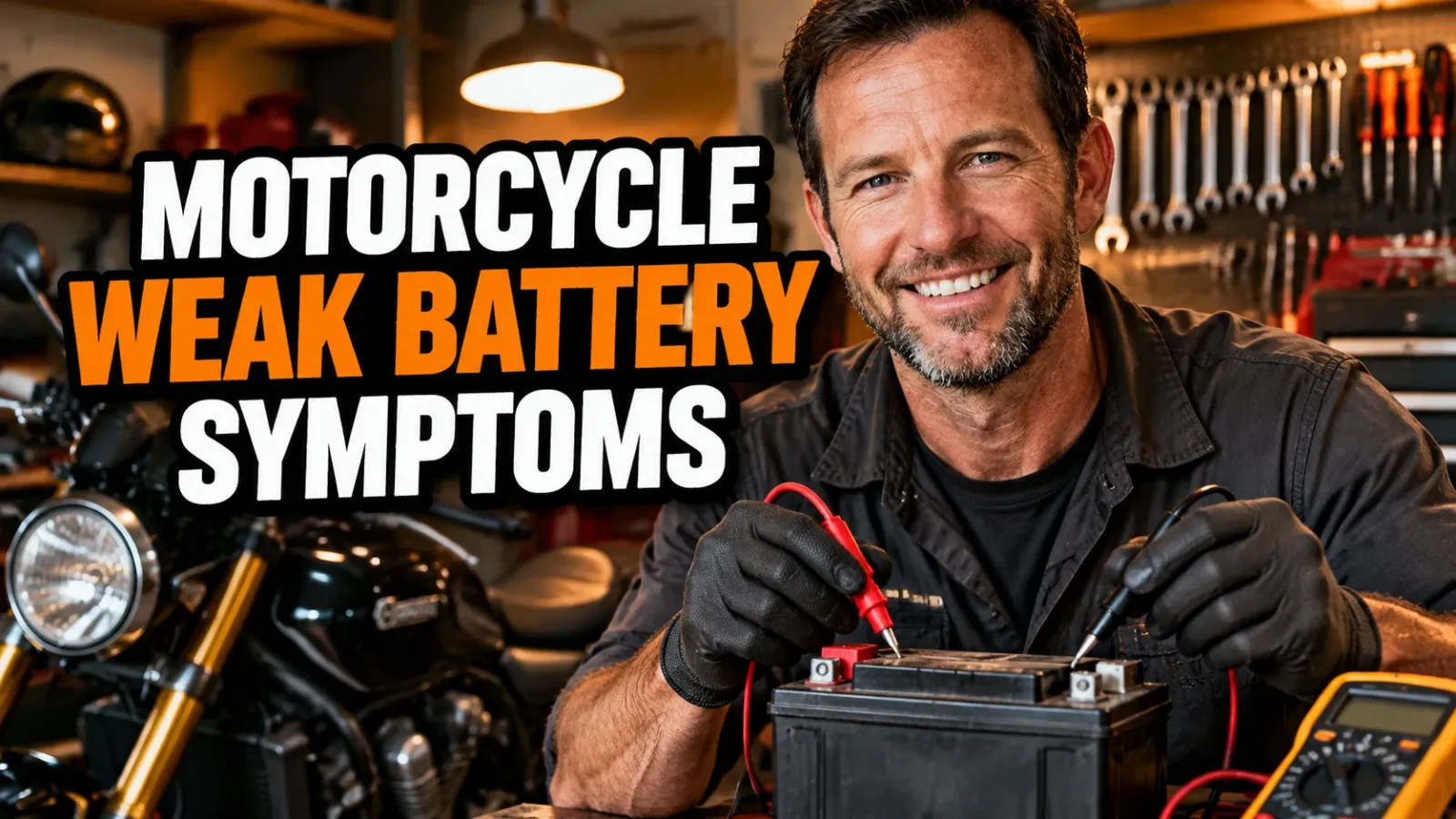
I’ve been riding for over fifteen years, and I can tell you from experience that a dying motorcycle battery rarely gives up without warning. The problem is, most riders miss the early signs until they’re stuck in a parking lot with a bike that won’t start. I’ve been there myself, and it’s not fun.
Understanding motorcycle weak battery symptoms isn’t just about avoiding inconvenience. It’s about safety, reliability, and saving money by catching problems before they strand you miles from home. In this guide, I’m sharing everything I’ve learned about recognizing, diagnosing, and dealing with battery issues before they leave you walking.
- Slow cranking and clicking sounds are the most common signs your battery is failing
- Dim or flickering lights indicate voltage drops that worsen as the battery degrades
- A healthy battery should read 12.6V or higher when fully charged and off the bike
- Most motorcycle batteries show warning signs 6-12 months before complete failure
- Regular maintenance and proper charging can extend battery life significantly
The Slow Crank: Your First Warning Sign
The most obvious symptom I’ve encountered with a weak battery is slow cranking when starting the engine. You know that sound—instead of the strong, confident turnover you’re used to, the starter motor labors like it’s pushing through molasses.
This happens because the starter motor requires a massive surge of current to spin the engine. When your battery can’t deliver that amperage anymore, everything slows down. I’ve noticed this symptom gets progressively worse over weeks or months.
Cold weather makes this symptom even more pronounced. If your bike cranks normally in summer but struggles when temperatures drop, your battery is likely on its way out. Chemical reactions inside the battery slow down in cold conditions, reducing available power by up to 50%.
What Normal Cranking Should Sound Like
A healthy battery turns your engine over with a consistent, rapid spinning sound. There should be no hesitation, no gradual speed-up, and the sound should be the same whether it’s the first start of the day or the fifth.
If you’re hearing any variation from this—even slight—start paying closer attention. I’ve learned that my bike tells me exactly what’s wrong if I’m willing to listen.
The Dreaded Click: When Your Battery Has Nothing Left
There’s a sound every motorcyclist learns to hate: that single click or rapid clicking when you hit the starter button. I’ve experienced this more times than I’d like to admit, and it’s almost always a dead giveaway of battery trouble.
The clicking sound comes from the starter solenoid trying to engage but not receiving enough current to complete the connection. It’s attempting to do its job, but the battery simply can’t provide the power it needs. This is often the final stage before complete battery failure.
One click usually means the solenoid engaged once but couldn’t maintain the connection. Rapid clicking means the solenoid is repeatedly trying and failing to engage. Either way, you’re not going anywhere without a jump start or battery replacement.
Dim or Flickering Lights: A Visual Battery Health Check
I always check my lights before every ride, and for good reason. Your motorcycle’s lighting system provides immediate visual feedback about battery condition. Dim headlights, especially at idle, are a clear warning sign.
When I turn on my ignition, I expect my dashboard to light up bright and clear. If the lights are noticeably dimmer than usual or flicker when I operate the starter, that’s my battery telling me it’s struggling to maintain voltage under load.
Pay special attention to how your lights behave at idle versus higher RPMs. A weak battery will cause lights to brighten significantly when you rev the engine because the alternator is taking over power duties. This shouldn’t be dramatic with a healthy battery.
Dashboard Warning Lights and Indicators
Modern motorcycles have sophisticated electrical systems with multiple warning lights and digital displays. I’ve noticed that a weak battery can cause strange behavior in these systems—flickering displays, inconsistent readings, or warning lights that come and go.
These electrical gremlins often appear intermittently at first, which makes them easy to dismiss. But in my experience, they’re early indicators that your battery voltage is dropping below optimal levels, causing the bike’s computer systems to act erratically.
Difficulty Starting When Cold: Temperature Tells the Truth
Cold weather is brutal on weak batteries, and I’ve learned this lesson the hard way multiple times. If your bike starts fine in warm weather but becomes increasingly difficult to start as temperatures drop, your battery is likely nearing the end of its life.
Battery capacity decreases significantly in cold weather—a battery that’s at 50% capacity in summer might only deliver 25% in freezing conditions. This is why I’ve had perfectly functional summer batteries fail completely come November.
The chemical reactions that generate electricity in your battery slow down dramatically when cold. If your battery is already weak, cold temperatures can reduce its effective capacity below the threshold needed to crank your engine. This is particularly problematic if you store your bike in an unheated garage.
Electrical Accessories Acting Strange
I run several accessories on my bike—heated grips, GPS, phone charger, and auxiliary lights. When my battery started weakening last year, these accessories were the first to show symptoms. They’d work fine at highway speeds but dim or shut off at stoplights.
Your motorcycle’s electrical system prioritizes power distribution, and accessories are typically lower priority than ignition and fuel systems. When voltage drops, you’ll notice accessory performance degrading before core systems fail.
If your USB ports stop charging properly, your heated gear doesn’t get as warm as it used to, or your auxiliary lights dim at idle, start investigating your battery. These are subtle symptoms that many riders overlook until more serious problems develop.
Voltage Drops Under Load
I’ve tested this countless times with a multimeter: a weak battery will show acceptable voltage when the bike is off but drop dramatically when you turn on the ignition or activate the starter. A healthy battery should maintain at least 9.5 volts during cranking.
This voltage drop under load is one of the most reliable indicators of battery health. Even if your battery reads 12 volts at rest, if it drops to 8 or 9 volts when you hit the starter, it’s time for a replacement. The internal resistance has increased to the point where it can’t deliver sufficient current.
Backfiring or Misfiring Issues
This symptom surprised me the first time I encountered it. I was experiencing occasional backfires and rough running that I initially attributed to carburetor issues. After hours of troubleshooting, I discovered my weak battery was the culprit.
Modern fuel-injected motorcycles rely heavily on consistent electrical power. When battery voltage fluctuates, the fuel injection system and ignition timing can become inconsistent. This causes misfires, backfires, and rough idle conditions that mimic other mechanical problems.
I’ve seen this particularly with bikes that have been sitting or are only ridden occasionally. The battery slowly loses capacity, and the bike develops running problems that seem completely unrelated to electrical issues. It’s worth noting that similar electrical issues can also cause symptoms of overheating motorcycle problems by affecting cooling fan operation.
The Battery Won’t Hold a Charge
I’ve had batteries that would take a charge from my tender overnight but be dead again within a few days of sitting. This is a classic symptom of a battery that’s reached the end of its usable life.
When a battery won’t hold a charge, it typically means the internal plates have sulfated beyond recovery or there’s internal damage preventing proper chemical reactions. No amount of charging will fix this—the battery needs replacement.
One test I always perform: charge the battery fully, disconnect it from the bike, and let it sit for 24 hours. Then check the voltage. A healthy battery should still read 12.6 volts or higher. If it’s dropped to 12.2 or below, the battery has internal issues and won’t perform reliably.
How to Test Your Battery Properly
I never rely on guesswork when diagnosing battery problems. A basic multimeter costs less than $20 and gives you definitive answers about battery health. Here’s my testing process that I follow every time.
First, I test resting voltage with the bike off and all accessories off. Wait at least two hours after riding to get an accurate reading. A fully charged battery should read between 12.6 and 12.8 volts. Anything below 12.4 volts indicates the battery is less than 75% charged.
Next, I test voltage with the ignition on but engine off. The voltage should drop slightly but remain above 12 volts. If it drops significantly, the battery’s internal resistance is too high.
The Cranking Test
This is the most important test I perform. With the multimeter connected, I hit the starter button and watch the voltage. A healthy battery shouldn’t drop below 9.5 volts during cranking. If it drops to 9 volts or below, the battery can’t deliver sufficient cranking amps and needs replacement.
I also pay attention to how quickly the voltage recovers after cranking. A good battery bounces back to 12+ volts almost immediately. A weak battery takes several seconds to recover or doesn’t fully recover at all.
Understanding Battery Age and Lifespan
In my experience, most motorcycle batteries last between two and five years depending on usage patterns and maintenance. I keep track of when I installed each battery because age is one of the best predictors of imminent failure.
Even if a battery shows no obvious symptoms, I start monitoring it more closely after three years. The chemical processes inside batteries degrade over time regardless of use, and performance eventually declines even with perfect maintenance.
I’ve found that batteries in bikes that sit for extended periods tend to fail faster than batteries in regularly ridden bikes. The charging system keeps a battery healthy through regular use, while long periods of inactivity allow sulfation to build up on the plates.
Preventing Premature Battery Failure
I’ve learned that proper maintenance dramatically extends battery life. The most important thing I do is keep my batteries on a quality maintainer during storage periods. This prevents the deep discharge cycles that permanently damage batteries.
I also check my charging system regularly. A faulty voltage regulator or stator can overcharge or undercharge your battery, leading to premature failure. Your bike should output between 13.5 and 14.5 volts at 3,000 RPM with the battery fully charged.
Clean battery terminals are essential. Corrosion increases resistance and prevents proper charging. I clean my terminals every few months with a wire brush and apply dielectric grease to prevent corrosion from returning.
Storage and Maintenance Best Practices
When I store my bike for winter, I always remove the battery and keep it on a smart charger in a climate-controlled space. This single practice has extended my battery life from an average of three years to consistently reaching five years or more.
If you can’t remove the battery, at minimum disconnect the negative cable to prevent parasitic drain from the bike’s electrical system. Even when off, many modern motorcycles have computers and alarms that slowly drain the battery over time.
When to Replace vs. Recharge
I follow a simple rule: if a battery is less than three years old and shows symptoms, I try charging it first with a best battery charger for a motorcycle. Often, a deeply discharged battery just needs a proper charge cycle to recover.
However, if the battery won’t accept a charge, drops below 12.4 volts within a week of charging, or is over three years old with multiple symptoms, I replace it immediately. Trying to squeeze extra life from a failing battery isn’t worth the risk of being stranded.
When shopping for a replacement, I research thoroughly to find what is the best battery for a motorcycle based on my specific bike and riding conditions. Not all batteries are created equal, and investing in quality pays off.
Choosing the Right Replacement Battery
I’ve used several battery brands over the years, and quality varies dramatically. When selecting a replacement, I research the best battery brand for motorcycle applications to ensure I’m getting reliable performance.
For touring riders who depend on their bikes for long trips, I particularly recommend looking into best 6 battery for touring motorcycle options that offer enhanced capacity and durability for extended rides with multiple accessories.
I always match or exceed the original equipment specifications for cold cranking amps (CCA) and amp-hours (Ah). Going slightly higher is fine, but never install a battery with lower specifications than your bike requires.
Emergency Solutions and Jump Starting
Despite best intentions, I’ve been caught with a dead battery more than once. Knowing how to safely jump start a motorcycle is essential knowledge every rider should have. I keep a compact lithium jump starter in my touring bag for this exact situation.
When jump starting from another vehicle, I never let the vehicle run—motorcycles have smaller electrical systems that can be damaged by the higher output from a running car alternator. Connect positive to positive, negative to a ground point on the frame, and attempt to start.
If jump starting doesn’t work and you’re just getting clicks, the battery is likely too far gone for even a jump start to help. At that point, you’re looking at a tow or a battery replacement on the spot.
Final Thoughts on Battery Health
After years of dealing with battery issues, I’ve learned that prevention and early detection are everything. The symptoms I’ve outlined rarely appear suddenly—they develop gradually over weeks or months, giving you plenty of warning if you’re paying attention.
I now check my battery voltage monthly, keep it on a maintainer during storage, and replace batteries proactively at four years regardless of symptoms. This approach has virtually eliminated unexpected failures and the frustration that comes with them.
Your motorcycle battery is a relatively inexpensive component that’s absolutely critical to reliable operation. Don’t ignore the warning signs, don’t try to squeeze extra life from a failing battery, and don’t wait until you’re stranded to address problems.
Stay observant, test regularly, and maintain properly. Your battery will reward you with years of reliable service and the confidence that your bike will start every single time you thumb that starter button.
Frequently Asked Questions
How do I know if my motorcycle battery is weak?
A weak motorcycle battery typically shows signs like slow cranking, dim headlights, difficulty starting (especially when cold), clicking sounds when you press the starter, and flickering dashboard lights. If you notice any of these symptoms, test your battery voltage — it should read 12.6V or higher when fully charged.
Can a weak motorcycle battery cause running problems?
Yes, a weak battery can cause your motorcycle to run poorly or stall while riding. Modern bikes with fuel injection and electronic ignition systems rely heavily on consistent voltage. A failing battery can cause misfires, rough idling, and inconsistent performance even after the engine starts.
How long does a motorcycle battery last before showing symptoms?
Most motorcycle batteries last 2 to 5 years depending on usage, maintenance, and climate. You’ll typically notice early warning signs 6 to 12 months before complete failure, including slower cranking speeds and reduced electrical performance during startup.
Should I replace my motorcycle battery or try charging it first?
If your battery is less than 3 years old and hasn’t been physically damaged, try charging it first with a quality motorcycle battery charger. If it won’t hold a charge or shows less than 12.4V after a full charge, replacement is likely necessary.

Related Articles

Scooters vs Motorcycles: My Honest, First-Hand Comparison After Riding Both for Years
After thousands of miles on both scooters and motorcycles, I break down cost, comfort, maintenance, and safety to help you…
Jake Miller
10 min read

7 Scooters That Look Like Motorcycles for Riders Who Want Style and Storage
Explore my top 7 scooters that look like motorcycles, from adventure crossovers like the Honda X-ADV to sporty maxis like…
Jake Miller
9 min read

How Long Do Honda Motorcycles Last? My 20-Year Owner’s Reality Check
Discover how long Honda motorcycles really last from an owner with 100k+ miles of experience. Learn maintenance secrets, high-mileage examples,…
Jake Miller
10 min read