
7 Warning Signs Your Motorcycle’s Engine Control Module Is Failing (And What to Do)
 Jake Miller
15 min read
Jake Miller
15 min read
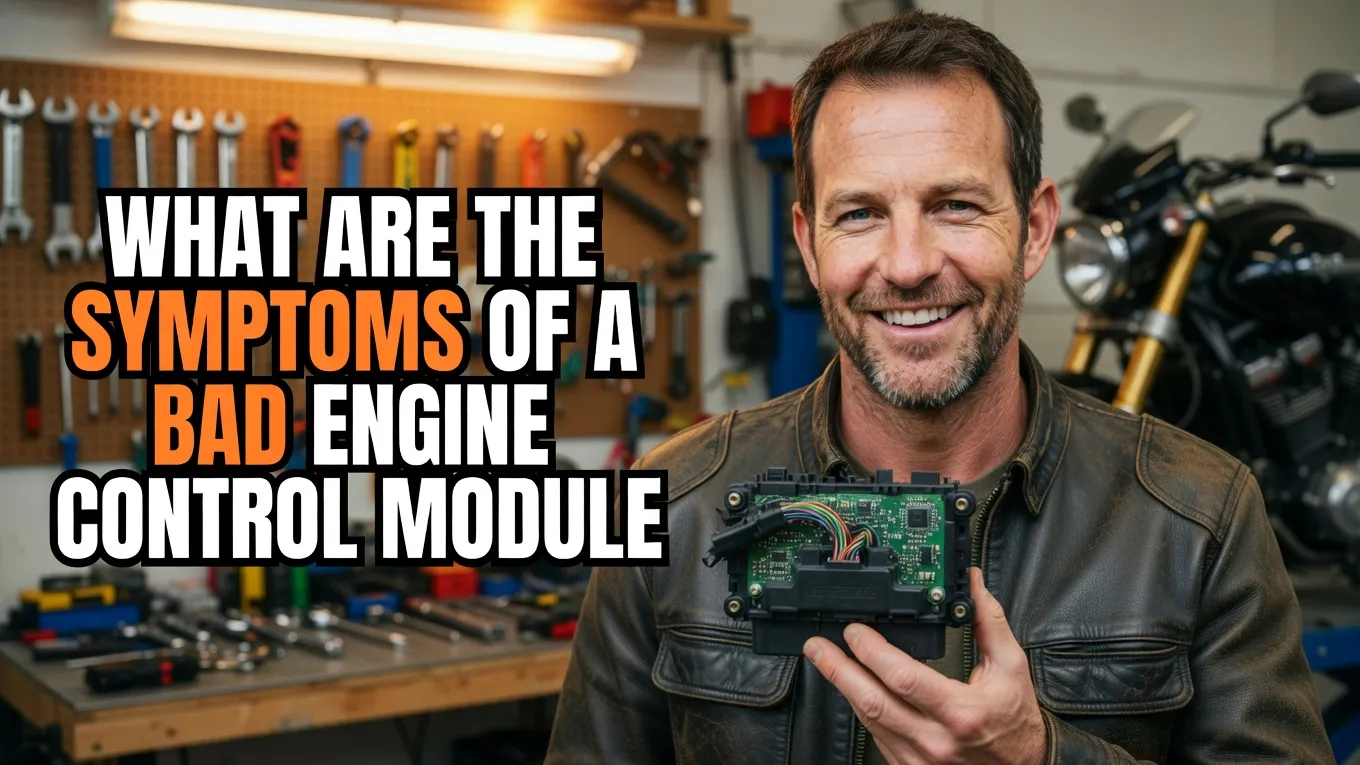
I’ve been riding for over fifteen years, and I can tell you from experience that few motorcycle problems are as frustrating as a failing engine control module. One day your bike runs perfectly, the next it’s throwing tantrums like a spoiled child.
The engine control module (ECM), also called the engine control unit (ECU), is essentially your motorcycle’s brain. It manages everything from fuel injection and ignition timing to emissions control and sensor data. When it starts failing, the symptoms can range from mildly annoying to completely disabling.
I learned this the hard way when my bike started acting possessed on a cross-country trip. Random stalls, mysterious misfires, and a check engine light that flickered on and off like a disco ball. After ruling out every other possibility, the culprit turned out to be a corroded ECM connector.
- A failing ECM causes check engine lights, starting problems, stalling, poor fuel economy, and erratic engine performance
- Symptoms often mimic other issues like bad sensors or fuel system problems, making diagnosis tricky
- Moisture, vibration, electrical shorts, and corrosion are the main causes of ECM failure
- Professional diagnosis with proper scanning tools is recommended before replacing the ECM
- Prevention through regular maintenance and protecting electrical connections can extend ECM life
Understanding What Your ECM Actually Does
Before diving into symptoms, let me explain what this critical component actually controls. Your ECM receives input from dozens of sensors throughout your motorcycle—oxygen sensors, throttle position sensors, coolant temperature sensors, and more.
It processes this information thousands of times per second and adjusts fuel delivery, ignition timing, and other parameters to keep your engine running optimally. When the ECM starts failing, it’s like having a conductor who can’t read sheet music leading an orchestra.
Modern motorcycles are incredibly dependent on their ECMs. Unlike older carbureted bikes that could run with basic electrical systems, fuel-injected bikes simply won’t operate without a functioning control module. This is why ECM problems feel so catastrophic—they can literally stop you dead in your tracks.
The Check Engine Light That Won’t Quit
In my experience, the most obvious symptom of ECM trouble is a persistent or intermittent check engine light. Now, I know what you’re thinking—check engine lights come on for hundreds of reasons. You’re absolutely right.
But when the ECM itself is failing, you’ll often see strange behavior. The light might come on randomly with no pattern. You might get multiple unrelated error codes at once. Or the codes might not make logical sense given your bike’s actual performance.
I remember scanning my bike during that cross-country trip and getting codes for the oxygen sensor, throttle position sensor, and fuel system—all simultaneously. When three unrelated systems supposedly fail at once, it’s usually not those systems. It’s the thing controlling them all.
When Error Codes Don’t Add Up
Here’s a pro tip I’ve learned: if your diagnostic scanner shows multiple sensor failures or communication errors, suspect the ECM before replacing every sensor on your bike. I’ve seen riders spend hundreds replacing perfectly good sensors when their ECM was sending false error codes.
The ECM might also fail to store codes properly, or you might get a “no communication” error when trying to scan the system. These are red flags pointing directly at ECM problems.
Starting Problems and Cranking Issues
A failing ECM often manifests as starting difficulties that seem to come and go mysteriously. Your bike might start perfectly one morning, then refuse to fire up that afternoon. Or it might crank endlessly without catching.
I’ve experienced this personally, and it’s maddening. You turn the key, the fuel pump primes, the starter cranks strong—but the engine just won’t fire. Then an hour later, it starts on the first try like nothing was wrong.
This happens because the ECM controls ignition timing and fuel delivery during startup. When internal components begin failing, they might work when cold but fail when hot, or vice versa. Temperature-sensitive failures are classic ECM symptoms.
The Difference Between ECM and Other Starting Issues
How do you know it’s the ECM and not your battery, starter, or fuel pump? With ECM issues, the starter will typically crank strong and you’ll hear the fuel pump prime normally. Everything sounds right, but the engine just won’t catch and run.
If you’re also dealing with broader maintenance concerns, proper engine care makes a huge difference. Using what is the best engine oil for 4 stroke motorcycle applications ensures your engine components stay protected even when electrical issues arise.
Random Stalling That Makes No Sense
Nothing’s scarier than having your bike die unexpectedly in traffic. I’ve had my share of heart-stopping moments when my ECM was acting up, and random stalling is one of the most dangerous symptoms.
Your bike might be idling perfectly at a stoplight, then suddenly die without warning. Or it might cut out mid-ride when you’re cruising at steady throttle. The engine just shuts off as if you hit a kill switch.
This happens when the ECM loses track of sensor inputs or fails to send proper signals to the fuel injectors or ignition system. It’s essentially having a momentary brain freeze that kills your engine.
Identifying ECM-Related Stalls
ECM stalls usually happen without any warning symptoms beforehand. The engine doesn’t cough, sputter, or run rough first—it just dies instantly. After stalling, the bike might restart immediately or refuse to start for several minutes.
If your stalling follows a pattern (always when hot, always at idle, always after running for exactly 20 minutes), that actually points more toward a specific sensor failure rather than the ECM itself. Random, unpredictable stalls are more ECM-characteristic.
Poor Fuel Economy and Rich Running
When my ECM started failing, one of the first things I noticed was my fuel economy tanking. I went from getting about 45 mpg to barely scraping 30 mpg, with no changes to my riding style.
A malfunctioning ECM often runs the engine excessively rich, dumping too much fuel into the cylinders. You might notice black smoke from the exhaust, a strong fuel smell, or black engine oil symptoms developing more quickly than normal as excess fuel washes down the cylinder walls.
The ECM might also do the opposite and run too lean, though this is less common. Lean running causes poor performance, overheating, and potential engine damage. Either way, when fuel mixture goes haywire for no apparent reason, suspect the brain controlling it.
Why This Happens
The ECM calculates fuel delivery based on inputs from oxygen sensors, throttle position, engine temperature, and air flow. When it misreads these inputs or can’t process them correctly, it defaults to preprogrammed fuel maps that are often overly rich for safety reasons.
You might also notice your exhaust smells different—either very rich and fuel-heavy, or has that lean, hot smell like burning metal. Your nose can actually be a surprisingly good diagnostic tool.
Rough Idle and Performance Issues
I’ve experienced plenty of rough running conditions over the years, but ECM-related roughness has a distinctive quality. The idle might surge up and down randomly, hunting between 800 and 2,000 RPM like it can’t make up its mind.
You might feel the engine missing or cutting out intermittently, or experience sudden power losses while riding. The throttle response becomes unpredictable—sometimes crisp, sometimes laggy and unresponsive.
This erratic behavior stems from the ECM sending inconsistent signals to fuel injectors and ignition coils. It’s trying to manage the engine but making wrong decisions based on corrupted data or internal failures.
Misfires and Hesitation
ECM-caused misfires feel different from spark plug or coil-related misfires. They’re often more random and don’t correspond to specific cylinders. One moment the bike runs smooth, the next it’s bucking and jerking like it forgot how to run.
I’ve also noticed that ECM issues often cause throttle hesitation—that annoying dead spot when you crack the throttle and nothing happens for a split second. The ECM is struggling to process your throttle input and respond appropriately.
Complete Electrical Chaos
When an ECM really starts dying, you might experience what I call “electrical chaos syndrome.” Multiple systems act up simultaneously in ways that make no logical sense.
Your tachometer might read incorrectly or jump around. Warning lights might illuminate randomly. The fuel gauge could give false readings. All these symptoms happening together point to the central computer losing its mind.
I once had my speedometer read 90 mph while sitting still in my garage with the engine idling. That’s when I knew for certain my ECM had gone completely haywire. These kinds of bizarre electrical gremlins are hallmark ECM symptoms.
Communication Failures
Modern motorcycles use CAN bus systems where the ECM communicates with other modules like the instrument cluster, ABS controller, and traction control system. When the ECM fails, these communication networks break down.
You might get warning messages on your display about system malfunctions or communication errors. These aren’t the individual systems failing—it’s the ECM failing to talk to them properly.
Transmission and Shifting Problems (On Bikes with Electronic Shifting)
If you ride a bike with electronic shifting assistance or quickshifter functionality, ECM problems can cause transmission issues. Shifts might become harsh, delayed, or refused entirely.
I haven’t personally dealt with this since I ride mostly cable-clutch bikes, but fellow riders with DCT or semi-automatic transmissions have told me ECM failures absolutely wreak havoc on shift quality and timing.
The ECM controls engine cut during shifts and coordinates with the transmission control module. When it fails, that coordination breaks down and shifting becomes problematic.
What Actually Causes ECM Failure?
Understanding why ECMs fail helps you prevent future problems. In my experience, the most common causes are environmental rather than simple age-related wear.
Moisture and corrosion top the list. ECMs are usually well-sealed, but connectors can corrode, allowing moisture inside. I’ve pulled ECM covers off bikes that were never properly winterized and found actual water droplets inside the module housing.
Voltage spikes from jump-starting incorrectly or electrical shorts can fry sensitive ECM components. I learned this lesson when helping a stranded rider and accidentally reversed polarity while jump-starting—smoked his ECM instantly.
Vibration and Physical Damage
Motorcycles vibrate constantly, and that vibration eventually cracks solder joints inside the ECM. This is especially common on older high-mileage bikes or bikes that have been crashed.
Physical impacts from crashes or even aggressive off-road riding can damage ECM mounting points or internal components. I’ve seen ECMs that looked fine externally but had cracked circuit boards inside from severe vibration.
Heat and Age
ECMs mounted near the engine or exhaust suffer heat stress over time. Electrolytic capacitors inside the ECM gradually degrade with heat cycles, eventually failing completely.
Most ECMs are designed to last the life of the motorcycle, but real-world conditions often cut that lifespan short. I consider 10-15 years of hard use about the upper limit before ECM issues become common.
How to Diagnose ECM Problems Properly
Here’s the tricky part—many ECM symptoms mimic other problems. I can’t count how many times I’ve thought “definitely the ECM” only to discover it was a corroded ground connection or failing sensor.
Start by checking the basics first. Verify battery voltage, inspect all ground connections, and scan for error codes. If you get sensor codes, test those sensors before condemning the ECM.
Use a quality diagnostic scanner that can read live data streams. Watch sensor values while the bike is running. If readings are jumping around randomly or showing impossible values, you might have ECM problems.
The Substitution Test
If you know someone with the identical bike model, the most definitive test is swapping ECMs. I’ve done this several times at track days where multiple riders have the same bike. If your problems move to their bike and their ECM fixes yours, you’ve found your culprit.
However, be careful—some modern ECMs are VIN-locked or require programming to match your bike. Consult your service manual before attempting ECM swaps.
Professional Testing
Honestly, I recommend professional diagnosis before spending money on ECM replacement. A good dealer or independent shop has specialized equipment to test ECM outputs and inputs that we don’t have in home garages.
They can perform pin-point tests, check internal ECM resistance values, and verify whether signals are being sent and received properly. This testing might cost you $100-200, but it’s worth it before dropping $800 on an ECM you might not need.
Prevention and Maintenance Tips
While you can’t prevent all ECM failures, I’ve learned some practices that significantly extend their lifespan. First, protect electrical connections religiously. Apply dielectric grease to ECM connectors and inspect them annually.
Keep your battery properly maintained and charged. Weak batteries cause voltage fluctuations that stress the ECM. I use a battery tender during storage periods to maintain consistent voltage.
For 2-stroke riders dealing with engine maintenance alongside electrical issues, choosing what is the best 2 cycle oil for a motorcycle engine setups helps maintain overall engine health, which indirectly reduces stress on your ECM from abnormal running conditions.
Proper Storage and Winterization
If you store your bike for winter, disconnect the battery to prevent parasitic drain and potential voltage irregularities. Store the bike somewhere with stable temperature and low humidity if possible.
I’ve seen far more ECM problems on bikes that sit outdoors under covers compared to garage-stored bikes. Moisture is the enemy of electronics, and ECMs are no exception.
Be Careful with Electrical Modifications
Every time you tap into your bike’s electrical system for accessories, you risk creating problems. I always use proper fused connections and never draw power directly from ECM circuits.
Aftermarket fuel controllers, quick shifters, and other electronic add-ons should be installed correctly with proper grounding and clean connections. Sloppy electrical work causes more ECM problems than almost anything else in my experience.
Repair vs. Replacement Considerations
When you’ve confirmed ECM failure, you face a decision: repair or replace? New OEM ECMs are expensive—often $600-1,200 depending on your bike. Aftermarket options exist but may require programming.
ECM repair services can rebuild your existing module for $200-400. I’ve had mixed results with repairs. Some lasted years, others failed again within months. It depends on the specific failure mode and the quality of the repair shop.
For racing applications where performance matters most, riders often ask about what is the best engine oil for motorcycle racing scenarios. While oil quality doesn’t directly affect ECM health, maintaining pristine engine conditions reduces the chance of abnormal running conditions that might stress your electronics.
Used ECMs: Worth the Risk?
I’ve bought used ECMs from salvage yards with success, but there’s risk involved. You don’t know the history of that module or whether it’s developing the same problems that will manifest next month.
If buying used, try to get some warranty or return policy. Test the ECM immediately and thoroughly before the return window closes. I once bought a “good used” ECM that worked for exactly three days before failing identically to my original.
What to Do When Your ECM Fails on the Road
Let me share what I learned from that cross-country trip when my ECM started acting up 800 miles from home. First, don’t panic. Even a failing ECM might get you home if you’re smart about it.
If the bike stalls, let it sit for 10-15 minutes before trying to restart. Temperature-related failures often reset temporarily when components cool down. This got me through several hundred miles of limping along.
Reduce electrical load by turning off heated grips, GPS, phone chargers, and other accessories. Less electrical demand might help a struggling ECM function more reliably.
Emergency Workarounds
If you’re getting intermittent starting problems, try disconnecting and reconnecting the ECM harness. Sometimes a loose connection is the culprit, and reseating it might restore function temporarily.
Carrying dielectric grease and contact cleaner in your tool kit can be lifesavers. I once cleared up ECM issues on the roadside by cleaning corrosion from a connector with contact cleaner and resealing it with dielectric grease.
For dual-sport riders tackling mixed terrain where reliability is critical, maintaining your bike with appropriate lubrication like what is the best engine oil for a dual sport motorcycle applications helps ensure mechanical components don’t compound electrical issues with additional stress.
Final Thoughts on ECM Problems
After dealing with ECM issues on multiple bikes over the years, I’ve learned they’re frustrating but usually manageable. The key is methodical diagnosis rather than throwing parts at the problem.
Don’t assume ECM failure until you’ve ruled out simpler explanations. Test sensors, check grounds, verify wiring integrity, and scan for codes systematically. Many suspected ECM failures turn out to be corroded connections or failed sensors.
But when it truly is the ECM, don’t delay replacement. A failing ECM only gets worse, never better, and the risk of being stranded increases daily. I learned that lesson the hard way on that cross-country trip.
Keep your bike’s electrical system clean and protected, maintain proper voltage with a healthy battery, and don’t ignore early warning signs. Your ECM will reward you with reliable service for many miles if you treat it right.
Most importantly, build a relationship with a good shop that has proper diagnostic equipment. ECM problems benefit from professional expertise more than almost any other motorcycle issue I’ve encountered. Sometimes the hourly diagnostic fee is the best money you’ll spend.
Frequently Asked Questions
What is the most common symptom of a bad engine control module?
The most common symptom is an illuminated check engine light accompanied by erratic engine performance, including rough idling, stalling, or difficulty starting. However, intermittent electrical issues and poor fuel economy are also frequent indicators.
Can a motorcycle run with a faulty ECM?
Yes, a motorcycle can sometimes run with a partially faulty ECM, but performance will be severely compromised. You may experience stalling, misfires, reduced power, and unpredictable behavior. Complete ECM failure will prevent the bike from starting at all.
How much does it cost to replace a motorcycle engine control module?
ECM replacement typically costs between $400 and $1,200 depending on your motorcycle model. OEM modules are more expensive than aftermarket options, and labor costs vary. Some riders opt for ECM repair services, which can cost $200 to $400.
Can I diagnose a bad ECM myself?
You can perform basic diagnostics using an OBD-II scanner to read error codes and check for obvious symptoms like erratic behavior or starting issues. However, definitively confirming ECM failure often requires professional testing, as many symptoms overlap with other electrical or sensor problems.

Related Articles
7 Best Batteries for Motorcycles I’ve Tested and Trust in 2026
I've tested dozens of motorcycle batteries to find the best performers. From AGM to lithium, here are my top picks…
Jake Miller
15 min read

The Perfect Battery for Your Harley Davidson Softail: A Rider’s Complete Guide
Discover the perfect battery for your Harley Davidson Softail. I've tested multiple options and share real-world performance data, maintenance tips,…
Jake Miller
14 min read

The Best Battery for Your Harley Davidson: My Complete Guide After Years of Testing
Discover which battery truly performs best for Harley Davidson motorcycles. Real rider experience with AGM, lithium, and OEM options to…
Jake Miller
12 min read