
Best HID Kits for Motorcycles: How I Choose the Right One for Night Riding
 Jake Miller
9 min read
Jake Miller
9 min read
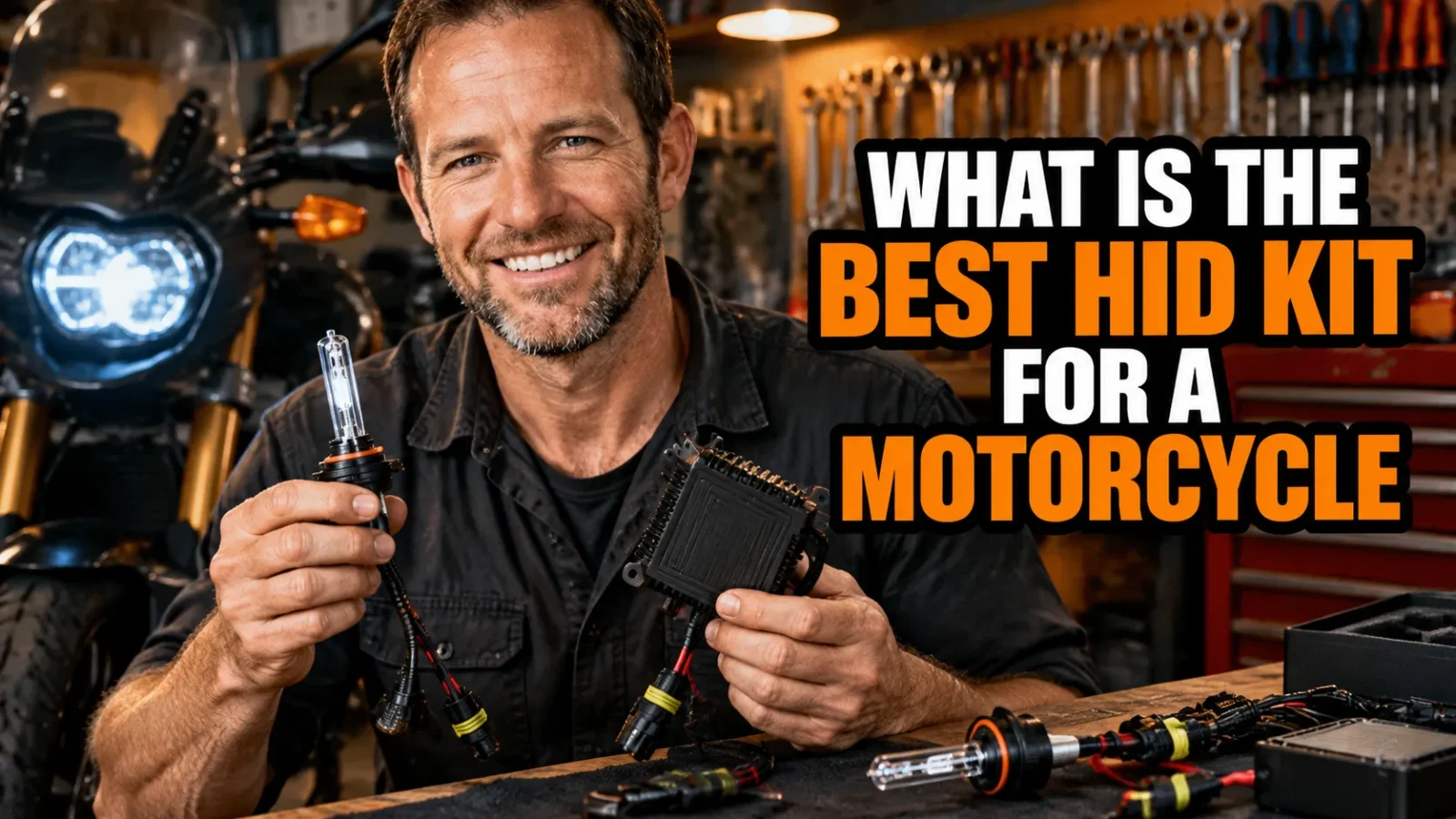
I still remember the first night ride where my stock halogen headlight felt like a candle in a cave. Country roads, no streetlights, and a deer-shaped shadow I spotted far too late. That ride sent me down the rabbit hole of headlight upgrades, and HID kits were the first thing I tried.
If you’re asking what the best HID kit for a motorcycle actually looks like, the honest answer depends on your bike, your riding, and your local laws. Before you even think about headlights, it’s worth understanding your power source. My what are the different types of motorcycle batteries ultimate guide explains why a healthy battery matters so much for any lighting upgrade.
In this guide, I’ll share how I evaluate kits, what I look for, and the mistakes I’ve seen riders make. I’ll also be upfront about where HID makes sense and where it doesn’t.
- My pick for most riders is a 35W kit at 4300K to 5000K with a slim, waterproof ballast.
- Check legality first, because HID retrofits in halogen housings are often not road legal.
- A strong battery and clean wiring matter as much as the kit itself.
- If you want an easier, legal-friendly upgrade, LED is worth a serious look.
Why I Considered HID in the First Place
Halogen bulbs on many motorcycles are modest at best. They produce a yellowish, dim beam that struggles in rain and on unlit roads. For a vehicle with a single headlight, that’s a real safety limitation.
HID (high-intensity discharge) lights work differently. Instead of heating a filament, they create an arc of electricity through xenon gas. The result is a much brighter, whiter output from a similar amount of power.
What I Noticed Right Away
The first thing I noticed was how much farther I could see down the road. The second was how much more relaxed I felt on dark corners. Better visibility reduces fatigue, and that matters on long night rides.
That said, brightness alone is not the goal. *Useful* light, meaning a well-focused beam that lights the road without blinding oncoming drivers, is what I care about.
The Legal Question I Always Raise First
Here’s the part many sellers skip. In the US, aftermarket HID conversion kits installed into housings designed for halogen bulbs are generally not DOT compliant. Many other countries have similar rules.
The reason is simple. Halogen reflectors and projectors are designed around a filament’s exact position. An HID arc sits differently, which can scatter light and cause glare for other drivers.
My Advice on Staying Out of Trouble
Check your local regulations before buying anything. Some regions allow HID only when the bike came with it from the factory, and enforcement varies widely.
If you ride off-road, on private land, or on a bike used for show purposes, the calculus changes. For daily street riding, I’d think hard about compliant options.
What I Look for in a Quality Kit
After trying a few setups and talking with other riders, I’ve boiled my checklist down to a handful of features. Cheap kits often fail on these basics, and that’s where most of the complaints come from.
Wattage: Why I Prefer 35W
You’ll see 35W and 55W kits. The 55W option sounds better, but in my experience it generates more heat, draws more current, and doesn’t always improve the beam pattern.
A good 35W kit gives you a massive upgrade over halogen without taxing your bike’s stator. For smaller bikes with limited charging output, this matters even more.
Color Temperature: Don’t Chase Blue
Color temperature is measured in Kelvin. Lower numbers look warmer and yellower, higher numbers look bluer. Many riders assume bluer means brighter, but it doesn’t.
My sweet spot is 4300K to 5000K. It looks crisp and white, and it performs well in rain, fog, and mist. Once you go past 6000K, you lose usable output and gain a purplish tint that looks flashy but sees less.
Ballast Quality and Size
The ballast regulates power to the bulb, and it’s the most failure-prone part of a kit. I look for a slim, sealed, vibration-resistant unit. Motorcycles shake a lot more than cars, and a bulky ballast needs to be secured properly.
Waterproofing is not optional. A ballast that gets soaked on a rainy commute will fail sooner or later.
Bulb Type and Fitment
Know your bulb type before buying. Common sizes include H4, H7, H11, and 9005/9006. Many motorcycles use H4, which combines high and low beams in one bulb.
For H4 setups, you need a bi-xenon (hi/lo) kit. A mechanical shutter or sliding mechanism handles the switching between high and low beam.
A Quick Fitment Checklist
- Confirm your stock bulb type in the owner’s manual.
- Measure the space behind the headlight for the bulb and dust cover.
- Check where the ballast and igniter will mount.
- Make sure your wiring can handle the startup current.
Projector vs. Reflector Housings
This is where HID results vary the most. A projector housing, which uses a lens to focus light, handles HID far better than a reflector bowl. The cutoff line stays sharper and glare stays lower.
In a reflector housing, HID light tends to scatter. That can mean a splotchy beam and angry oncoming drivers. If your bike has a reflector, I’d be especially cautious.
When HID Genuinely Shines
I’ve seen the best results on bikes with projector headlights or in housings designed for HID. The beam is tight, the cutoff is clean, and the light lands exactly where it should.
That’s the setup I’d recommend if you’re set on HID. Otherwise, you may want to consider alternatives.
Your Battery and Charging System Matter
HID kits pull a noticeable surge of current when the arc strikes, then settle to a lower draw. If your battery is weak or aging, you might see flickering, delayed start-up, or a bulb that refuses to light.
If you’re not sure which battery suits your bike, my breakdown of what is the best battery for a motorcycle is a good place to start. A fresh, properly rated battery makes HID behave much better.
If You Run Extra Accessories
Heated grips, GPS units, auxiliary lights, and USB chargers all add to your electrical load. Add HID to the mix and your charging system can get stretched thin.
In that case, I’d look closely at what is the best motorcycle battery for accessories before committing to a lighting upgrade.
For Harley Riders
Big twins have their own electrical quirks, including heavy accessory loads on touring models. If you ride one, take a look at what is the best battery for a harley davidson motorcycle to make sure your power supply is up to the task.
Installation: What I Do and Don’t Recommend
You can install most kits at home with basic tools, but patience pays off. Rushing leads to loose connectors, pinched wires, and mysterious failures down the road.
My Basic Steps
- Disconnect the battery before touching any wiring.
- Remove the stock bulb and install the HID bulb carefully, without touching the glass.
- Mount the ballast and igniter in a dry, vibration-free spot.
- Route wires away from heat and moving parts.
- Reconnect the battery and test both low and high beam.
- Aim the headlight properly to avoid blinding other drivers.
A Tip on Relays
I strongly prefer a relay harness. It takes load off the factory switch and wiring, and it delivers steadier voltage to the ballast. Many reliability complaints I’ve heard trace back to skipping this step.
When Electronics Misbehave
Some modern bikes have sensitive electronics that react badly to aftermarket lighting. You might see dashboard warnings, bulb-out errors, or odd behavior from other systems.
If things get strange, don’t ignore it. Learning what are the symptoms of a bad engine control module can help you tell whether your headlight is the culprit or something else is going on.
Common Mistakes I See Riders Make
Most disappointments come from the same handful of errors. Avoiding them saves money and frustration.
- Chasing high Kelvin ratings and losing real-world visibility.
- Buying the cheapest kit with an unsealed, fragile ballast.
- Ignoring beam aim, which creates glare and reduces safety.
- Skipping a relay harness and overloading stock wiring.
- Using HID in reflector housings without realizing the glare problem.
My Pick: The Kit Profile I’d Buy Again
I won’t pretend one single brand wins for every bike. Instead, here’s the profile I’d shop for, and it’s served me well as a baseline.
The Ideal Setup in My Book
- 35W power for strong output without excess heat.
- 4300K to 5000K for crisp, usable light.
- Slim, sealed ballast built to handle vibration and moisture.
- Bi-xenon design for H4 bikes needing hi/lo switching.
- Relay harness included for stable power delivery.
- Solid warranty and responsive customer support.
Pair that with a projector housing and a healthy battery, and you’ll have a seriously capable night setup. Just remember to check your local rules first.
Should You Consider LED Instead?
Honestly, for many riders I’d now lean toward LED. LEDs light up instantly, draw less power, and don’t need a bulky ballast. They’re also generally easier to fit and more tolerant of vibration.
If that sounds appealing, I put together a rundown of the best led headlight kit for motorcycle options worth considering. It might save you some hassle.
HID vs. LED: How I Think About It
HID still offers impressive raw output, especially in a proper projector. But LED wins on convenience, longevity, and electrical friendliness.
If you want the brightest possible beam and your bike is set up for it, HID is great. If you want simple and reliable, LED is hard to beat.
Final Thoughts From the Saddle
Good lighting is one of the most meaningful safety upgrades you can make. I’ve never regretted investing in better visibility, but I have regretted rushing a cheap install.
Choose a quality 35W kit, keep the color temperature sensible, support it with a strong battery, and aim it correctly. Do that, and your night rides will feel dramatically better. *Ride safe, and see farther.*
Frequently Asked Questions
Are HID kits legal on motorcycles?
In many regions, including the US, aftermarket HID retrofit kits are not street legal when installed in halogen housings. Rules vary by country and state, so check your local regulations before installing one.
What wattage is best for a motorcycle HID kit?
I recommend 35W for most riders. It delivers a big brightness gain over halogen, runs cooler, and puts less strain on your bike’s charging system than 55W kits.
What color temperature should I choose?
4300K to 5000K is the sweet spot. It gives bright, neutral white light with good contrast in rain and fog, while 6000K and above looks bluer and loses usable output.
Will an HID kit drain my motorcycle battery?
HID kits draw a surge of current at startup, then settle at a lower draw than halogen once warmed up. A healthy battery and a stable charging system are usually all you need, but a weak battery can cause flickering or failed ignition of the bulbs.

Related Articles

Harley Davidson Headlight Problems: What I Learned Fixing Mine in the Dark
Chasing a dead, dim, or flickering Harley headlight? I walk through the real causes, my own diagnostic steps, and the…
Jake Miller
9 min read

Red Oil Light on Your Bike: How Many Seconds Do You Actually Have?
Is it too late when the oil light comes on? After nearly losing an engine to a 30-second delay, here's…
Jake Miller
10 min read

Why Only One Headlight Works on Your Motorcycle (and How I Fix It)
Only one headlight working on your motorcycle? I break down the real causes, from dead bulbs to bad relays, and…
Jake Miller
10 min read