
7 Best 300cc Motorcycles for New Riders: My Hands-On Picks for 2025
 Jake Miller
10 min read
Jake Miller
10 min read
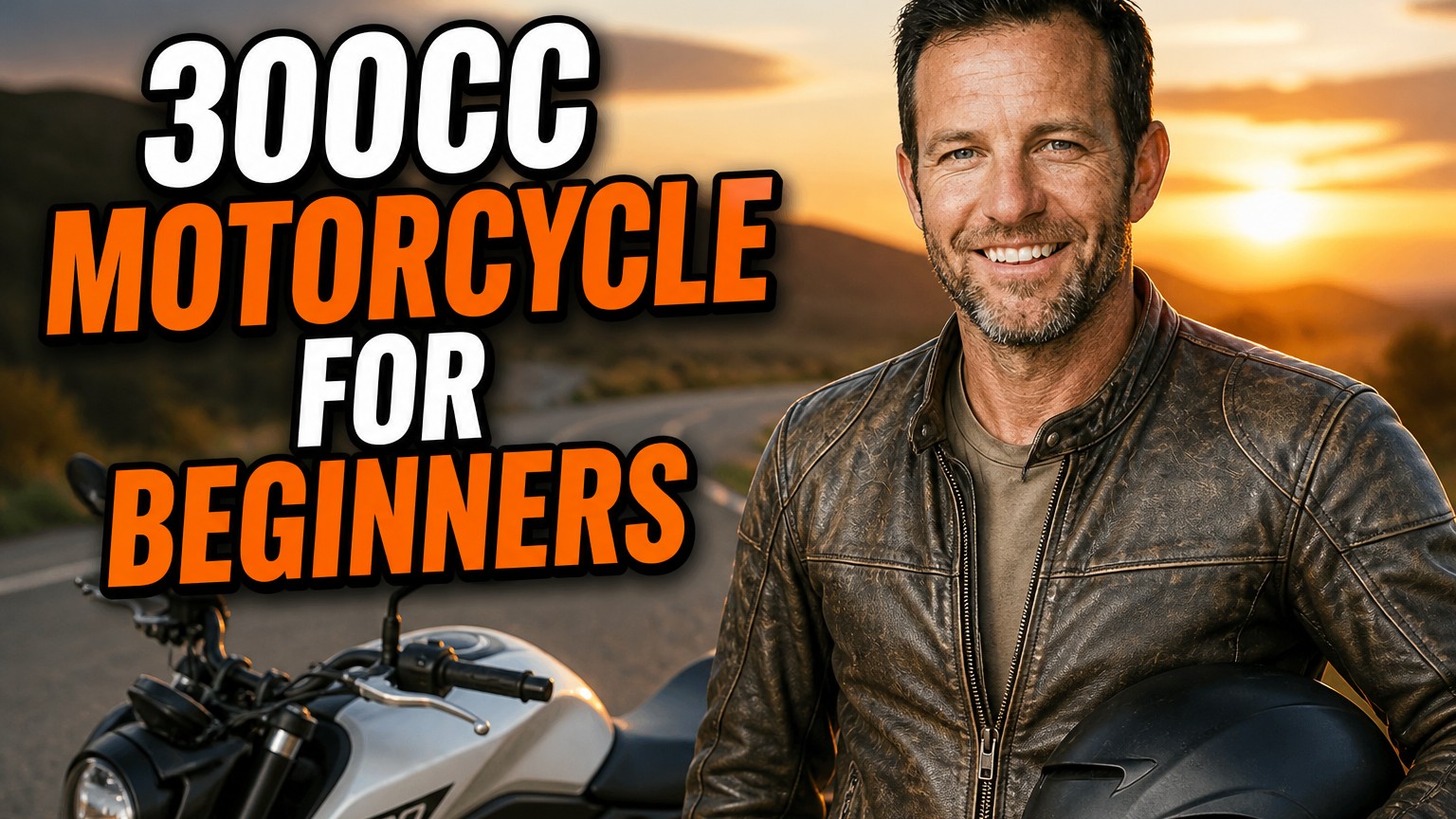
I still remember the first time I swung a leg over a small-displacement bike. It felt light, friendly, and only as fast as I wanted it to be. That’s the magic of the 300cc class, and it’s why I recommend it to nearly every new rider who asks me for advice.
A good 300 gives you enough power to keep up with traffic and enough forgiveness to survive beginner mistakes. It’s also cheap to run, easy to resell, and fun long after you’ve “graduated.” I’ve ridden, borrowed, or spent serious time around every bike on this list.
Below are my seven favorite picks, with real specs, real prices, and honest opinions about who each bike suits best. Note that a few of these displace slightly more than 300cc (like 313cc or 321cc), but they sit squarely in the same beginner-friendly class.
- My top all-round pick is the Honda Rebel 300: low seat, light controls, and a friendly price.
- If you want sportbike looks with real performance, the Yamaha YZF-R3 is hard to beat.
- Want to ride on dirt too? The Honda CRF300L and Kawasaki KLX300 are my favorites, but they sit tall.
- Seat height, weight, and ABS matter more than top speed for your first bike.
What I Look for in a Beginner-Friendly 300
Before the list, let me explain how I judge these bikes. Horsepower is the least important number on the spec sheet for a first-time rider. I care much more about how the bike behaves at 5 mph in a parking lot.
Seat Height and Weight
If you can’t comfortably touch the ground, you’ll never feel relaxed. I look for seat heights under 32 inches for street bikes and a curb weight below about 380 lbs. Lighter bikes are easier to pick up, push, and recover when something goes sideways.
Predictable Power Delivery
I want smooth, linear throttle response, not a sudden hit of power. A forgiving clutch and a tractable low end let you focus on learning instead of stalling at every light.
Safety Features and Running Costs
ABS is non-negotiable in my book. I also weigh insurance, fuel economy, and maintenance costs, since a cheap bike that’s expensive to keep running isn’t really cheap.
1. Honda Rebel 300: Best Overall for First-Time Riders
The Honda Rebel 300 is the bike I recommend most often, and I rarely hesitate. Its seat sits at roughly 27.2 inches, which is among the lowest in the entire category. Even my shortest friends can plant both feet flat.
The 286cc single-cylinder engine makes about 27 horsepower. That’s modest on paper, but it’s perfect for learning. The power comes in smoothly, the clutch is light, and the six-speed gearbox is a joy.
Why I Love It
The Rebel 300 weighs around 370 lbs ready to ride, but the low center of gravity hides it well. I’ve U-turned it on narrow streets with total confidence. Standard LED lighting and available ABS make it feel more modern than its price suggests.
Expect to pay around $4,700 to $5,000 new. Used examples are plentiful and hold their value impressively well.
What I’d Change
Highway work is possible, but the single-cylinder engine runs out of breath above 70 mph. The suspension is also on the soft side. If you plan on frequent freeway commuting, look at the next bike on my list.
2. Yamaha YZF-R3: Best Sporty Option
I’ll be honest: I expected the Yamaha YZF-R3 to feel intimidating. Instead, it surprised me with how approachable it is. The 321cc parallel-twin is smooth, rev-happy, and makes around 42 horsepower.
That extra power makes highway riding genuinely relaxing. I’ve held 75 mph on the R3 without feeling like I was wringing its neck. It’s also one of the few bikes here that will keep you entertained on twisty roads for years.
Key Specs
- Engine: 321cc liquid-cooled parallel-twin
- Seat height: about 30.7 inches
- Curb weight: roughly 375 lbs
- Price: around $5,300 to $5,600
Things to Know
The R3’s sporty riding position puts weight on your wrists, which can tire you out on long commutes. I’d call it a great choice if you like the sportbike look and don’t mind leaning forward. Its upright cousin, the Yamaha MT-03, is covered later.
3. Honda CB300R: Best Naked Bike for City Riding
The Honda CB300R is the bike I’d pick if I lived in a dense city. It has a neo-sports café look, a comfortable upright seating position, and a light, nimble chassis. At roughly 313 lbs, it’s one of the lightest bikes here.
The 286cc single makes about 30 horsepower, and it pulls eagerly through the midrange. The slipper clutch and standard ABS are fantastic for beginners. I especially love the upside-down fork, which is usually reserved for pricier bikes.
Why It Works for Beginners
The CB300R’s seat height is around 31.4 inches, so it’s a bit taller than the Rebel but still manageable. The upright ergonomics are easy on your back and wrists. Visibility in traffic is excellent.
Pricing typically lands around $4,900 to $5,200. It’s a premium-feeling bike for the money, and I think it’s a bit underrated.
4. BMW G 310 R: Best Premium Feel
I’ll admit I was skeptical of a BMW at this price point. But the BMW G 310 R won me over quickly. The 313cc single-cylinder engine makes about 34 horsepower and feels punchy and lively in town.
The chassis is light and responsive, and the build quality feels a notch above many rivals. A TFT-style display is not on offer here, but the clear LCD dash and LED lighting still feel upscale.
The Trade-Offs
The engine is a little buzzy at highway speeds, and the seat is on the firmer side. Seat height is around 30.8 inches, which most riders will find manageable. Expect to pay roughly $5,000 to $5,500.
If you value brand prestige and a sharp, flickable chassis, this is a great first step. Just budget for slightly higher service costs than the Japanese options.
5. Honda CRF300L: Best Dual-Sport for Mixed Riding
Not every beginner wants to stay on pavement. If you dream of fire roads and weekend trail rides, the Honda CRF300L is my top recommendation. It’s reliable, easy to ride, and genuinely capable off-road.
Its 286cc single makes about 27 horsepower and delivers tractable, grunty power. I’ve ridden it on gravel and city streets in the same afternoon, and it handled both without drama. ABS is available, and I’d tick that box.
The Height Problem
Here’s the catch: the seat height is around 34.7 inches. That’s tall, and shorter riders may struggle at stops. The suspension is soft enough that the bike sinks a bit under your weight, but I’d still sit on one before buying.
Price runs around $5,300 to $5,900. For a versatile first bike, it’s tough to argue with.
6. Kawasaki KLX300: Best for Trail-Focused Beginners
The Kawasaki KLX300 is more dirt-oriented than the CRF300L, yet it’s still street legal. Its 292cc fuel-injected single produces smooth, usable power. I find it lighter and more playful on trails than most bikes in this class.
On pavement, it’s perfectly fine for commuting and backroads. I wouldn’t choose it for long highway slogs, though. The gearing and suspension are tuned for the trail, so expect some vibration and wind exposure at 70 mph.
Who Should Buy It
Pick the KLX300 if you plan to ride off-road at least half the time. The seat height is around 35 inches, so it’s another bike for taller or confident riders. It costs about $5,500 to $5,900 new.
One note from experience: dirt bikes demand more frequent maintenance. Keep a close eye on air filters, chain tension, and oil changes.
7. Yamaha MT-03: Best Upright Alternative to the R3
The Yamaha MT-03 shares the R3’s engine, which is that excellent 321cc parallel-twin. The difference is the riding position. It’s an upright naked bike, so it’s far easier on your wrists and neck.
I like it for daily commuting because the seat height is around 30.7 inches and the handlebar feels natural. Availability varies by region, and it’s sold in many markets outside the US. Prices change from country to country, so check with a local dealer.
My Take
If the R3’s aggressive looks don’t appeal to you, the MT-03 is the same fun with better comfort. The wind protection is minimal, though, so a good jacket matters on cold mornings. I’d call it the best “everyday” twin in this group.
Quick Comparison: Which One Fits You?
Here’s how I’d match riders to bikes if you want a fast answer.
- Shorter riders or cruiser fans: Honda Rebel 300
- Highway and sport riding: Yamaha YZF-R3
- City commuting: Honda CB300R
- Premium feel and agility: BMW G 310 R
- Mixed pavement and trails: Honda CRF300L
- Serious trail use: Kawasaki KLX300
- Comfortable daily twin: Yamaha MT-03
Keeping Your First Bike Healthy
A reliable 300 will last for years if you treat it right. The single most important habit I’ve built is regular oil changes. Fresh oil protects the engine, the clutch, and the gearbox in a single shot.
Choosing the Right Oil
Not every oil works in a motorcycle. You need a wet-clutch-friendly formula, usually rated JASO MA or MA2. If you want a place to start, I found this guide to the best motor oil for 4 stroke motorcycle really helpful for understanding viscosity and ratings.
You can also read about the top engine oil for 4 stroke motorcycle options if you prefer comparing a few brands side by side. For a broader overview, I’d check out best engine oil for motorcycle picks as well.
Oil Questions Riders Ask Me
Plenty of people ask me what is the best engine oil for 4 stroke motorcycle engines in general. My answer is always the same: follow your manual first, then choose a quality oil that meets the spec.
If you’re riding in hot, dusty climates, there’s a useful resource on the best engine oil for 4 stroke motorcycle in india, which covers conditions that apply well beyond that region.
Gear and Habits I Wish I’d Started With
Your bike is only half the equation. I never ride without a full-face helmet, armored jacket, gloves, sturdy pants, and over-the-ankle boots. Spend real money on your helmet, because it’s the one piece of gear that can save your life.
I also strongly recommend a basic rider course. It teaches you braking, cornering, and emergency skills in a safe environment. In my experience, those two days did more for my confidence than months of guessing.
Start Slow and Build Skills
Spend your first few weeks in empty parking lots. Practice clutch control, tight turns, and hard braking. Ride your own ride, and don’t let anyone pressure you into going faster than you’re ready for.
Final Thoughts From My Own Experience
There’s no single perfect bike for everyone, but this list covers nearly every type of beginner. If I had to choose one for a friend with zero experience, I’d hand them the keys to the Honda Rebel 300 without a second thought.
If you crave speed and style, go for the Yamaha YZF-R3. If you want adventure, the Honda CRF300L is a great partner. Whatever you choose, sit on it first, buy ABS, and invest in good gear.
Your first motorcycle should make you want to ride more, not less. Pick the one that makes you grin the moment you sit on it, and you’ll already be halfway to becoming a confident, lifelong rider.
Frequently Asked Questions
Is a 300cc motorcycle good for a first bike?
Yes. A 300cc bike usually makes 27 to 42 horsepower, which is enough for highway speeds but gentle enough to learn on. Most weigh under 380 lbs, so they are easy to handle, forgiving, and affordable to insure and maintain.
Which 300cc motorcycle is the easiest for short riders?
The Honda Rebel 300 is my top choice for shorter riders. Its seat height is only about 27.2 inches, so most people can flat-foot it at a stop.
Can a 300cc motorcycle go on the highway?
Yes. Bikes like the Yamaha YZF-R3 and Honda CB300R cruise comfortably at 65 to 75 mph. Dual-sport bikes like the CRF300L can do it too, but they are buzzier and have less passing power.
How often should I change the oil on a 300cc motorcycle?
Most manufacturers recommend an oil change every 4,000 to 8,000 miles or once a year, whichever comes first. Check your owner’s manual and use an oil rated for wet-clutch motorcycles (JASO MA or MA2).

Related Articles
7 Best Batteries for Motorcycles I’ve Tested and Trust in 2026
I've tested dozens of motorcycle batteries to find the best performers. From AGM to lithium, here are my top picks…
Jake Miller
15 min read

The Perfect Battery for Your Harley Davidson Softail: A Rider’s Complete Guide
Discover the perfect battery for your Harley Davidson Softail. I've tested multiple options and share real-world performance data, maintenance tips,…
Jake Miller
14 min read

The Best Battery for Your Harley Davidson: My Complete Guide After Years of Testing
Discover which battery truly performs best for Harley Davidson motorcycles. Real rider experience with AGM, lithium, and OEM options to…
Jake Miller
12 min read