
7 Best 400cc Motorcycles for New Riders: My Honest Picks After Years in the Saddle
 Jake Miller
10 min read
Jake Miller
10 min read
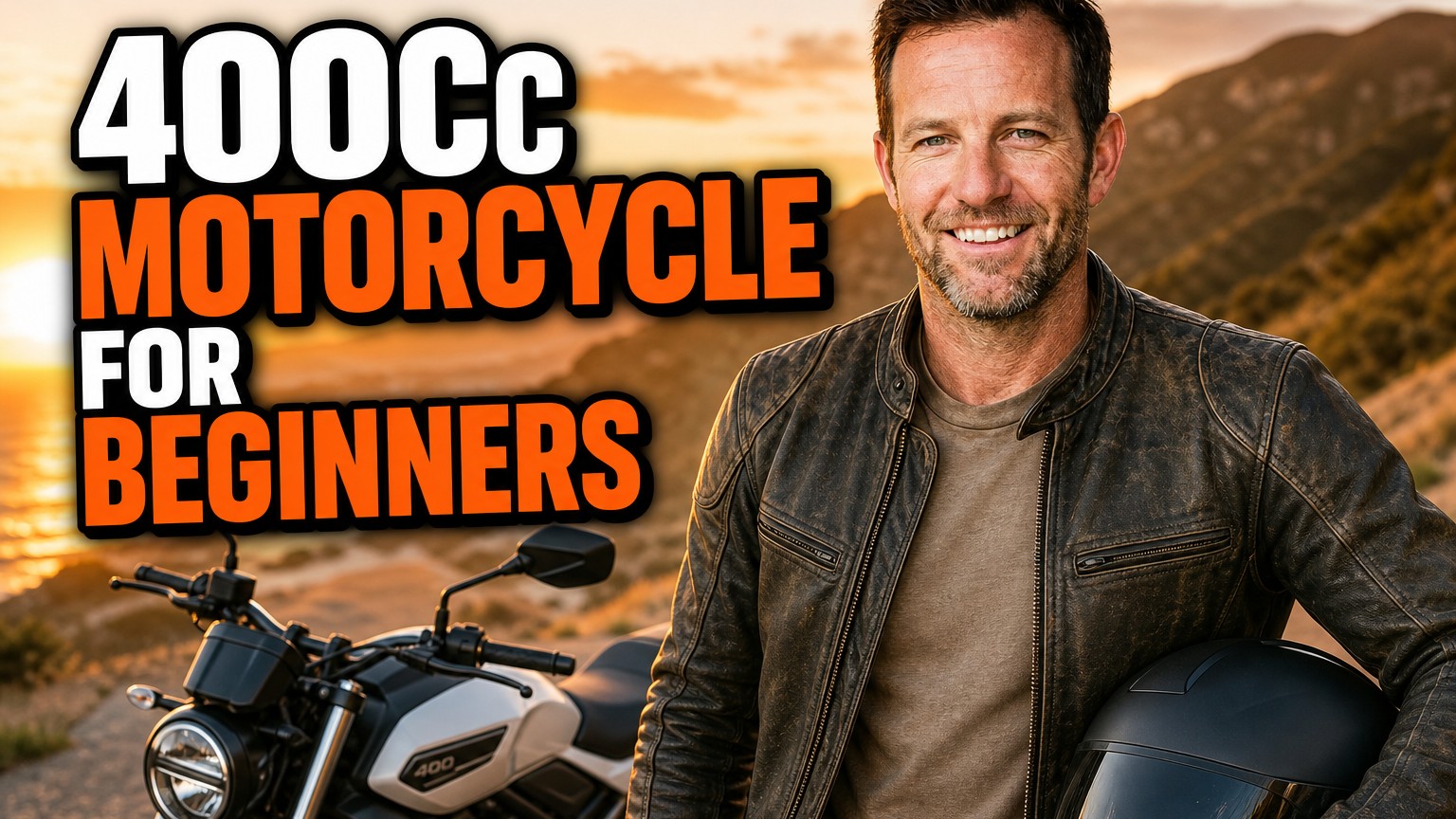
I still remember the day I swung a leg over my first 400cc bike. It felt like the perfect middle ground: far more capable than a 250, but nowhere near as intimidating as a literbike. Years later, that sweet spot is exactly why I recommend this class to almost every new rider who asks me for advice.
In this guide I’m sharing the seven models I’d confidently point a beginner toward. I’ve ridden or spent real time around most of them, and I’ve leaned on owner feedback and manufacturer specs for the rest. I’ll be upfront about what each bike does well and where it falls short.
- The Kawasaki Ninja 400 is my all-around pick for a first sportbike, and the Triumph Speed 400 is my favorite for relaxed street riding.
- Look for ABS, a slipper or light clutch, a seat height under about 32 inches, and a curb weight under roughly 400 lb.
- Prices for the bikes below run from roughly $5,000 to $7,500 new, depending on your market.
- Good gear and regular oil changes matter more than a few extra horsepower.
Why a 400cc Bike Is a Smart First Motorcycle
Most 400cc bikes make between 40 and 46 horsepower. That’s enough to keep up with highway traffic and have fun on twisty roads, yet the power arrives smoothly enough that you won’t get into trouble when you twist the throttle a little too eagerly.
These bikes are also forgiving. They’re light, cheap to insure, easy to maintain, and they hold their resale value. I’ve seen plenty of riders keep one for years instead of “outgrowing” it in six months.
What I Look for in a Beginner Bike
Before the list, here’s the checklist I use. Every bike below meets most of these points.
- Manageable weight: easy to push, park, and pick up after a tip-over.
- Low to moderate seat height: flat feet at a stop build confidence fast.
- ABS: I consider it non-negotiable for a new rider.
- Smooth throttle response: no snatchy, on/off power delivery.
- Reasonable running costs: parts, tires, and insurance that won’t hurt.
1. Kawasaki Ninja 400 — Best Overall Beginner Sportbike
If you want a bike that looks fast and rides like a friend, the Kawasaki Ninja 400 is it. It’s been my default recommendation for years, and it has earned that spot.
Key Specs
The Ninja 400 uses a 399cc liquid-cooled parallel twin making around 45 hp. It weighs roughly 366 lb fully fueled, with a 30.9-inch seat. A slip-and-assist clutch keeps the lever light, and ABS is available. In many markets it has been succeeded by the Ninja 500, so check what’s on dealer floors or the used market near you.
What I Love
The Ninja 400’s chassis is the star. It feels planted in corners, and the brakes are strong without being grabby. The parallel twin pulls cleanly from low revs, so I never felt the need to ride it hard to enjoy it.
It’s also tough. Owners routinely pass 30,000 miles with only basic maintenance, which makes it a great used buy too.
What Could Be Better
The riding position is sporty, though far less extreme than a supersport. On long days my wrists notice it. The dash is also basic compared with newer rivals.
2. Kawasaki Z400 — Best Naked Bike for Upright Comfort
Think of the Kawasaki Z400 as the Ninja’s relaxed sibling. It shares the same engine and frame, but it ditches the fairings for a more upright seat and wider bars.
Why It Works for New Riders
You get the same 399cc twin with about 45 hp, a similar 30.9-inch seat height, and a curb weight near 364 lb. The wider handlebar gives you extra leverage at low speed, which makes U-turns and parking-lot work far less stressful.
In my experience, new riders who start on a naked bike like the Z400 tend to build confidence faster in city traffic. You see more, and you feel more in control.
Downsides
There’s no wind protection, so highway stints get tiring. Availability also varies by region, so you may need to hunt for a used example.
3. Triumph Speed 400 — Best for Classic Style and Torque
The Triumph Speed 400 surprised me. I expected a pretty modern-retro bike with modest performance, but it’s genuinely fun and very easy to ride.
Specs That Matter
It runs a 398cc liquid-cooled single making about 40 PS and 37.5 Nm of torque, with a 790 mm seat and a claimed curb weight near 176 kg. It comes with ABS, traction control, a slip-assist clutch, and a ride-by-wire throttle. Expect to pay roughly $5,500 to $6,500 depending on your market.
The Ride
The single-cylinder motor is torquey right off idle, so you can short-shift and cruise without constantly stirring the gearbox. The Speed 400 feels agile and light in town, and the upright ergonomics suit a wide range of heights.
It’s also one of the best-looking bikes in this class, and that matters more than people admit. A bike you love looking at is a bike you’ll ride more often.
Things to Know
The single does buzz a little at highway speeds. If you plan on long motorway trips, you may find the twin-cylinder Kawasakis smoother.
4. Triumph Scrambler 400 X — Best Entry-Level Adventure-Style Bike
If your dream involves gravel roads and the occasional dirt detour, the Triumph Scrambler 400 X deserves a look. It shares the Speed 400’s engine but adds long-travel suspension and a more rugged stance.
What You Get
The Scrambler 400 X packs the same 398cc single with about 40 PS, plus a 19-inch front wheel, 17-inch rear, switchable rear ABS, and a taller 835 mm seat. It weighs around 179 kg ready to ride. Pricing generally lands around $6,000 to $7,000.
Who It’s For
I’d recommend it to riders with a 30-inch inseam or longer, or anyone willing to learn on a taller bike. The upright seating and commanding view make it great for mixed-surface commuting.
If you’re shorter, I’d sit on one at a dealer first. The extra height can feel like a lot at your first stoplight.
5. KTM 390 Duke — Best for Tech and Sharp Handling
The KTM 390 Duke is the bike I’d choose if I wanted something a bit more exciting. It’s quick, sharp, and loaded with features, but I’ll admit it’s the most spirited bike on this list.
Highlights
The latest generation uses a 399cc single making around 45 hp and 39 Nm of torque. It has a 5-inch TFT display, cornering ABS, switchable traction control, and a seat height around 820 mm. Pricing typically sits near $6,000.
Is It Too Much for a Beginner?
It depends on your discipline. The throttle is responsive and the front end is eager, so you need to respect it. However, the electronics act as a decent safety net, and the light weight makes it easy to handle.
If you’re an athletic, motivated learner who takes a rider course seriously, the Duke is a thrill. If you’re nervous, start with one of the Kawasakis.
6. Bajaj Dominar 400 — Best Value Sport-Tourer
The Bajaj Dominar 400 is a bargain, especially in India and other markets where it’s sold. It’s heavier than the others here, but it’s stable and comfortable for long days.
Specs and Features
It uses a 373cc liquid-cooled single making around 40 PS and 35 Nm of torque. You get dual-channel ABS, a slipper clutch, LED lighting, and a wide, comfortable seat. Curb weight is about 193 kg, and pricing is typically around ₹2.2 to ₹2.4 lakh.
Where It Shines
The Dominar’s stability at highway speeds is excellent, and its tall windscreen and relaxed ergonomics make touring easy. It’s also inexpensive to run, with service costs well below those of European brands.
The trade-off is weight. At low speeds, especially for smaller riders, it can feel hefty. If you ride in India, choosing the right oil is a big part of ownership, and I cover that in the maintenance section below.
7. Honda NX400 — Best for Long-Distance Comfort
The Honda NX400 is a sport-adventure bike that feels like a smaller, friendlier cousin to bigger Honda ADVs. It isn’t sold everywhere, but where it is, it’s a very sensible choice.
Real-World Details
It carries a 399cc parallel twin with roughly 46 hp, plus Honda Selectable Torque Control, ABS, an adjustable windscreen, and a 19-inch front wheel. Seat height is about 800 mm, and the bike weighs a little under 200 kg ready to ride. Pricing is generally in the €7,000 range in Europe.
Why I’d Pick It
Honda’s smoothness is the headline. The twin is refined, the controls are light, and the ergonomics give you a commanding but comfortable position. It’s the bike I’d choose for a new rider who plans to commute during the week and tour on weekends.
It’s heavier than the Ninja or Z400, so it’s not the best for tight urban maneuvering. But once it’s moving, the weight disappears.
How to Choose the Right Bike From This List
Match the Bike to Your Riding
I always tell new riders to be honest about where they’ll ride most. City commuters should look at the Z400 or Speed 400. Highway riders will love the Ninja 400, Dominar 400, or NX400.
Sit on Everything
Spec sheets can’t tell you how a bike fits. I’ve changed my mind about bikes within five seconds of sitting on them, so visit a dealer and try as many as you can.
Budget for More Than the Bike
Plan on spending another $800 to $1,500 on a quality helmet, jacket, gloves, boots, and riding pants. In my view, gear is the best investment you’ll make, and it’s worth more than any engine upgrade.
Keeping Your 400cc Bike Healthy
The easiest way to keep a small-displacement engine running for years is to be consistent with oil changes. These engines rev hard and often share oil with the clutch and gearbox, so oil quality matters.
If you’re not sure what to buy, I’d start with this guide to the best motor oil for 4 stroke motorcycle models like these. It explains viscosity and certifications in plain language.
For a deeper look at brands, this breakdown of the top engine oil for 4 stroke motorcycle engines is worth a read. You can also see what is the best engine oil for 4 stroke motorcycle owners in different climates.
For Riders in India and Beyond
Heat, traffic, and fuel quality can all change your oil needs. If you own a Dominar or any other 400cc bike there, check out this guide to the best engine oil for 4 stroke motorcycle in india.
And if you just want a broad overview, this roundup of the best engine oil for motorcycle options covers the essentials. Whatever you choose, look for a JASO MA or MA2 rating to protect a wet clutch.
My Final Thoughts
You can’t really go wrong with any bike on this list, but I do have favorites. The Kawasaki Ninja 400 is my top all-around pick, the Triumph Speed 400 is the one I’d ride every day, and the Honda NX400 is the most comfortable for distance.
Whichever you choose, take a rider course, buy proper gear, and give yourself time to learn. A good first bike should make you want to ride more, and every one of these does exactly that.
Frequently Asked Questions
Is a 400cc motorcycle good for a beginner?
Yes. A 400cc bike usually makes 40 to 46 horsepower, which is enough for highways and fun back roads but still manageable for a new rider. Models like the Kawasaki Ninja 400 and Triumph Speed 400 have predictable power delivery, ABS, and moderate weight.
Which 400cc motorcycle is the easiest to ride?
In my experience the Kawasaki Z400 and Kawasaki Ninja 400 are the easiest. They have light clutches, smooth parallel-twin power, a low seat height of about 30.9 inches, and a forgiving chassis.
How often should I change the oil on a 400cc bike?
Most 400cc bikes call for an oil change every 3,000 to 6,000 miles (5,000 to 10,000 km), but you should always follow your owner’s manual. Use a quality 4-stroke motorcycle oil with the right JASO MA or MA2 rating for wet clutches.
Should I buy a new or used 400cc motorcycle as a beginner?
Both can work. A used bike saves money and is less painful if you drop it, but a new one gives you a warranty and the latest rider aids such as ABS and traction control. Check service history and inspect for crash damage on any used bike.

Related Articles
7 Best Batteries for Motorcycles I’ve Tested and Trust in 2026
I've tested dozens of motorcycle batteries to find the best performers. From AGM to lithium, here are my top picks…
Jake Miller
15 min read

The Perfect Battery for Your Harley Davidson Softail: A Rider’s Complete Guide
Discover the perfect battery for your Harley Davidson Softail. I've tested multiple options and share real-world performance data, maintenance tips,…
Jake Miller
14 min read

The Best Battery for Your Harley Davidson: My Complete Guide After Years of Testing
Discover which battery truly performs best for Harley Davidson motorcycles. Real rider experience with AGM, lithium, and OEM options to…
Jake Miller
12 min read