
7 Best 4T Oils for Motorcycles: My Tested Picks for Every Rider and Budget
 Jake Miller
9 min read
Jake Miller
9 min read
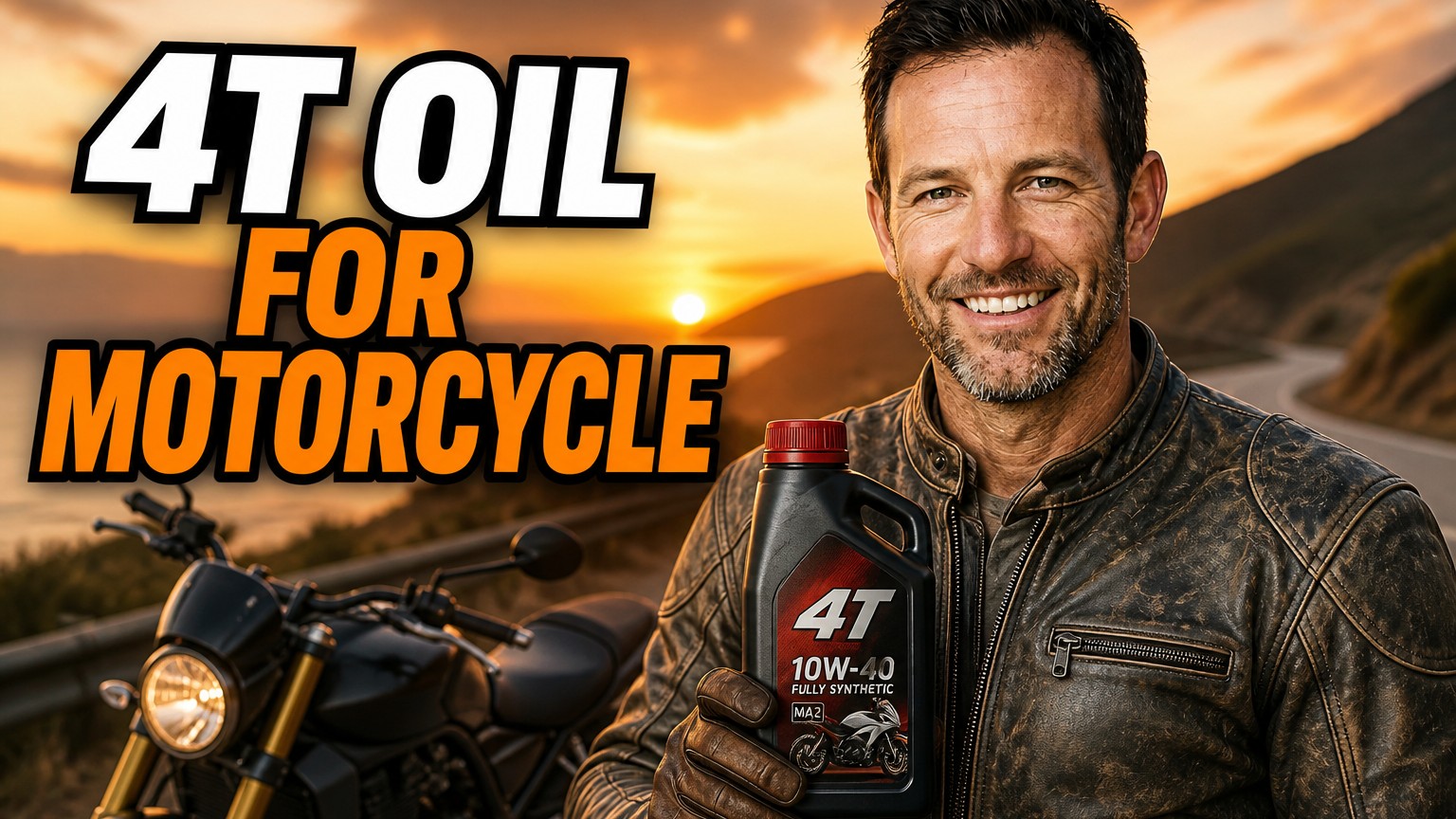
I’ve been riding and wrenching on my own bikes for years, and if there’s one thing I’ve learned, it’s that engine oil is the cheapest insurance policy you can buy. A bad choice won’t kill your engine overnight. Over thousands of kilometres, though, it shows up as a gritty clutch, hotter running temperatures and a motor that feels tired.
So I put together this list of the 4T oils I’d actually pour into my own bikes. I’ve used most of these personally, and I’ve leaned on long-term feedback from riding buddies and mechanics for the rest. Whether you commute daily or chase corners on weekends, there’s a pick here for you.
- My overall favourite is Motul 7100 4T 10W-40, a full synthetic ester oil that suits most bikes.
- For budget commuters, Castrol Power1 4T 10W-40 and Motul 3000 4T 20W-50 are the smart buys.
- Always match the viscosity in your manual and look for a JASO MA2 rating if you have a wet clutch.
- Full synthetics cost more per litre but handle heat and long intervals better.
How I Chose These Oils
I didn’t just pick the shiniest bottles. Every oil here had to meet a few non-negotiable standards before it earned a spot.
What I looked for
- JASO MA or MA2 certification so the wet clutch grips properly.
- Real-world availability, since a great oil you can’t buy is useless.
- Consistent feedback on shifting, heat control and long-term engine feel.
- Fair value for the protection you get per litre.
If you want to go deeper after this list, I’ve also covered the best motor oil for 4 stroke motorcycle in a separate guide. It’s a handy companion read.
1. Motul 7100 4T 10W-40 — Best Overall Full Synthetic
If I could only use one oil for the rest of my riding life, the Motul 7100 4T 10W-40 would be a very strong contender. It’s a 100% synthetic, ester-based oil that meets JASO MA2 and API SN standards. It’s a popular choice with riders on everything from 300cc singles to litre-class fours.
Why I like it
The first thing I noticed with the Motul 7100 was how crisp the gearbox felt. Shifts were smoother, especially on cold mornings, and neutral was easier to find at a stop.
The ester chemistry helps the oil cling to metal surfaces and resist breaking down under heat. That’s why I trust it during summer traffic and long highway runs.
Where it falls short
Price is the main drawback. Expect roughly $14 to $20 per litre, depending on where you shop. Counterfeits also exist, so I always buy from authorised dealers and check the batch code.
Best for: riders who want premium protection and don’t mind paying for it.
2. Castrol Power1 4T 10W-40 — Best Budget-Friendly Everyday Oil
The Castrol Power1 4T 10W-40 is the oil I recommend to friends who want dependable protection without a big spend. It’s a widely available semi-synthetic that carries a JASO MA2 rating. You’ll find it on shelves from small-town shops to big-box retailers.
Why I like it
I used Castrol Power1 on a 150cc commuter for about a year. The engine stayed quiet, the clutch stayed predictable, and I never had trouble finding a bottle when a service was due.
It’s also forgiving. If you stretch your oil change by a few hundred kilometres, it doesn’t punish you with noticeable roughness.
Where it falls short
It isn’t a full-on performance oil. If you ride hard in extreme heat, I’d step up to a full synthetic. For normal commuting, though, it’s tough to beat for the money, usually around $8 to $12 per litre.
Best for: daily commuters and first-time bike owners.
If you’re shopping in South Asia, my notes on the best engine oil for 4 stroke motorcycle in india may help you narrow things down for local conditions.
3. Shell Advance AX7 4T 10W-40 — Best Semi-Synthetic for Mixed Riding
The Shell Advance AX7 4T 10W-40 is a semi-synthetic oil that meets JASO MA2. Shell markets it with active cleansing technology, which is meant to keep sludge and deposits in check between changes.
Why I like it
I ran Shell Advance AX7 in a mid-size twin during a rainy season of stop-and-go riding. The engine felt smooth and consistent. When I drained it, the oil looked cleaner than I expected for the mileage.
The clutch engagement was predictable too, with no slipping or grabbing. That’s exactly what I want from a shared-sump motorcycle oil.
Where it falls short
It doesn’t have the extreme-heat headroom of a full ester synthetic. It also isn’t always the easiest to find in every region. Pricing usually sits around $9 to $14 per litre.
Best for: riders who split time between city and highway.
4. Liqui Moly Motorbike 4T Synth 10W-40 Street Race — Best for Spirited Street Riding
When I want a performance-leaning oil that doesn’t feel like overkill, I reach for the Liqui Moly Motorbike 4T Synth 10W-40 Street Race. It’s a fully synthetic, ester-based oil that carries JASO MA2 approval. It’s formulated for high-revving, high-load engines.
Why I like it
On twisty weekend rides, the Liqui Moly Street Race gave me a confident, consistent feel, even after repeated hard pulls. Heat management seemed excellent, and the engine felt freer at higher rpm.
German formulation and strict batch quality are a big part of why I trust it. It’s a great pick for sport and naked bikes.
Where it falls short
It’s pricier than mainstream semi-synthetics, often $15 to $22 per litre. For a basic 100cc commuter, it’s more oil than you need.
Best for: sport bikes, naked bikes and weekend canyon carvers.
5. Mobil1 Racing 4T 10W-40 — Best for High-Revving Engines
The Mobil1 Racing 4T 10W-40 is a full synthetic designed with motorcycles and track use in mind. It meets JASO MA2, so it plays nicely with wet clutches. I like it for bikes that spend a lot of time in the upper half of the rev range.
Why I like it
Mobil1’s reputation for thermal stability is well earned. On a hot day, I noticed less of that “stringy” feel some oils develop as they cook. The engine felt composed and the gearbox stayed light.
It’s also easy to find in many markets, which makes keeping up with service intervals simple.
Where it falls short
It costs more than conventional oils, usually $13 to $19 per litre. If you only putter around town, you won’t use its full potential.
Best for: sport-touring and performance riders who like a trusted global brand.
For a broader look at the field, I’ve put together a guide to the best motorcycle engine oil brand options if you’d like to compare manufacturers.
6. Amsoil Synthetic Motorcycle Oil 10W-40 — Best for Long Drain Intervals
The Amsoil Synthetic Motorcycle Oil 10W-40 is a favourite among riders who like to stretch intervals responsibly. It’s a full synthetic that meets JASO MA2 and API SN. It’s designed to handle shared engine, transmission and clutch duty.
Why I like it
I like Amsoil for its strong shear stability. Oil in a motorcycle gearbox gets chewed up, and a good synthetic needs to hold its viscosity. In my experience, Amsoil holds up admirably, and used-oil analysis from other riders backs this up.
It’s a great fit for big touring bikes and cruisers that cover serious mileage between services.
Where it falls short
Availability can be patchy outside North America, and it’s usually sold through dealers or online. Expect around $14 to $20 per litre.
Best for: high-mileage tourers and riders who value long-term protection.
7. Motul 3000 4T 20W-50 — Best Mineral Oil for Hot Climates
Not everyone needs or wants synthetic. The Motul 3000 4T 20W-50 is a mineral-based oil that meets JASO MA2 and offers a thicker viscosity for hot weather and older engines. It’s a solid, honest choice.
Why I like it
I recommend Motul 3000 for older air-cooled bikes that run hot or have a bit of wear. The thicker 20W-50 grade helps maintain oil pressure and can quiet mechanical noise.
It’s also inexpensive, usually $7 to $11 per litre, so frequent changes won’t hurt your wallet.
Where it falls short
Thicker oil isn’t right for every engine. Always check your manual, because many modern bikes call for 10W-30 or 10W-40. Mineral oil also needs more frequent changes than synthetic.
Best for: older, air-cooled or hot-climate bikes where the manual allows 20W-50.
How to Choose the Right 4T Oil for Your Bike
Picking from this list is easier when you know what actually matters. Here’s the checklist I run through every time.
Check viscosity first
Your owner’s manual is the final word. Viscosity like 10W-40 tells you how the oil flows when cold (the first number) and hot (the second). Using something wildly different can affect protection and performance.
Look for JASO MA or MA2
Most motorcycles share oil between the engine, gearbox and wet clutch. JASO MA and MA2 ratings confirm the oil won’t make your clutch slip. I avoid anything without this label unless my bike has a separate clutch lubrication system.
Mineral, semi-synthetic or full synthetic?
Mineral
Affordable and fine for older, low-stress engines. Plan on shorter change intervals.
Semi-synthetic
The sweet spot for most commuters. You get better protection than mineral at a moderate price.
Full synthetic
Best for heat resistance, high revs and longer intervals. It costs more, but I think it’s worth it on performance bikes.
If you want a quick comparison across the whole category, my overview of the best engine oil for motorcycle riders covers the basics, and the top engine oil for 4 stroke motorcycle breakdown digs into specific scenarios.
Common Oil Mistakes I See Riders Make
I’ve made a few of these myself, so no judgment here. Avoiding them can save you money and engine wear.
- Using car oil with friction modifiers that cause clutch slip.
- Overfilling, which can cause foaming and power loss.
- Skipping filter changes and pouring fresh oil through a clogged filter.
- Ignoring intervals because the oil still “looks fine.”
- Buying from sketchy sellers and ending up with counterfeit oil.
My Final Verdict
For most riders, the Motul 7100 4T 10W-40 is the one I’d buy first. It’s smooth, protective and widely trusted. If budget matters more, the Castrol Power1 4T 10W-40 delivers dependable everyday performance at a friendlier price.
Riders who push hard should look at the Liqui Moly Street Race or Mobil1 Racing 4T. High-mileage tourers will appreciate the Amsoil Synthetic Motorcycle Oil. And for older air-cooled machines in hot weather, the Motul 3000 4T 20W-50 remains a simple, honest option.
Whatever you choose, stick to the viscosity in your manual, check for JASO MA2, and change your oil on schedule. Do that, and your engine will repay you with thousands of happy kilometres.
Frequently Asked Questions
What does 4T mean on a motorcycle oil bottle?
4T stands for four-stroke. These oils are formulated for engines that complete a full intake, compression, power and exhaust cycle, and many are also designed to lubricate a shared engine, gearbox and wet clutch.
Is synthetic 4T oil worth the extra money?
In my experience, yes for most riders. Full synthetic oil resists heat and shear better, which matters in hot climates, stop-and-go traffic and high-revving engines. For a small commuter bike with short change intervals, a quality semi-synthetic is often enough.
Can I use car engine oil in my motorcycle?
I wouldn’t. Many car oils contain friction modifiers that can make a wet clutch slip. Look for a motorcycle-specific oil with a JASO MA or MA2 rating instead.
How often should I change 4T motorcycle oil?
Follow your owner’s manual first. As a rule of thumb, I change mineral oil around every 3,000 km, semi-synthetic around 4,000 to 5,000 km, and full synthetic around 5,000 to 8,000 km, depending on how hard I ride.

Related Articles
7 Best Batteries for Motorcycles I’ve Tested and Trust in 2026
I've tested dozens of motorcycle batteries to find the best performers. From AGM to lithium, here are my top picks…
Jake Miller
15 min read

The Perfect Battery for Your Harley Davidson Softail: A Rider’s Complete Guide
Discover the perfect battery for your Harley Davidson Softail. I've tested multiple options and share real-world performance data, maintenance tips,…
Jake Miller
14 min read

The Best Battery for Your Harley Davidson: My Complete Guide After Years of Testing
Discover which battery truly performs best for Harley Davidson motorcycles. Real rider experience with AGM, lithium, and OEM options to…
Jake Miller
12 min read