
7 Best Engine Oils for Automatic Motorcycles and Scooters I Actually Trust
 Jake Miller
9 min read
Jake Miller
9 min read
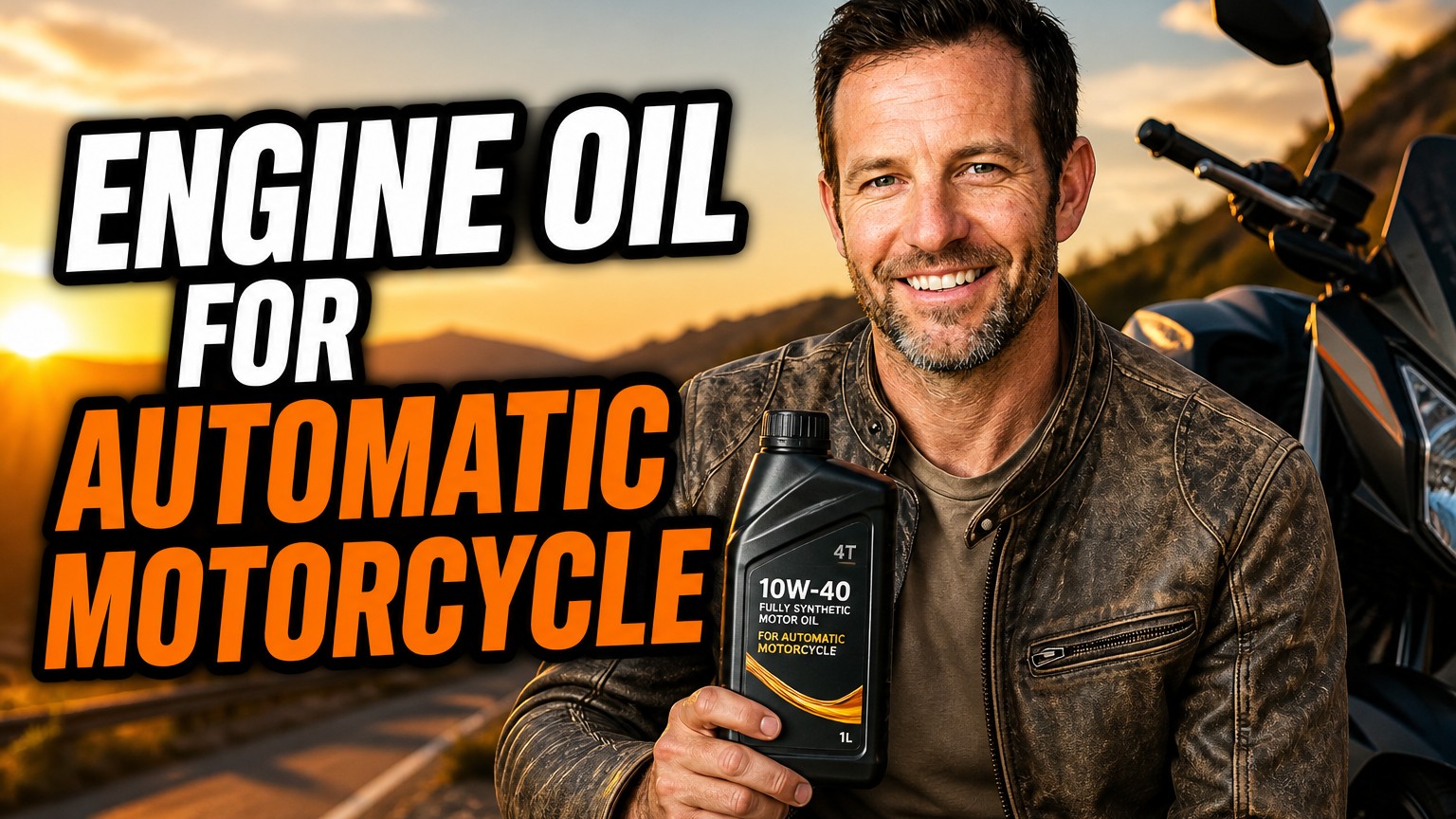
I’ve been riding twist-and-go bikes for years, and I’ll be honest: when I first bought a scooter, I assumed any bottle of 10W-40 would do. That assumption cost me a glazed, noisy clutch and a lesson I won’t forget.
Automatic motorcycles have small, hard-working engines, centrifugal clutches, and often a CVT belt system. They need oil that’s formulated for that environment. After trying plenty of options in my own commuters and a few friends’ maxi-scooters, I’ve narrowed it down to seven oils I’d happily pour into my own machines.
In this guide I’ll share what I like about each one, who it suits, and how to pick the right bottle for your ride.
- Always choose an oil with a JASO MB rating for scooters and automatic bikes, and check the viscosity in your manual.
- My top overall pick is Motul Scooter Power 4T 5W-40 MB for its full-synthetic protection and smooth feel.
- For tight budgets, Shell Advance AX7 Scooter 10W-40 and Castrol Activ Scooter 10W-30 deliver reliable everyday protection.
- Change oil more often than you think. Small engines run hot and hold very little oil.
Why Oil Choice Matters More on an Automatic Bike
Most people don’t realize that a scooter engine works differently from a typical geared motorcycle. It often revs high for long stretches, especially in city traffic, and it usually holds well under a liter of oil.
That small sump means the oil takes a beating. Heat breaks it down quickly, and a worn-out oil can’t protect the piston, bearings, and cam properly.
The JASO MB Difference
Geared motorcycles with wet clutches need JASO MA/MA2 oils, which are built for grip. Automatic scooters with dry clutches are different. They benefit from JASO MB oils, which contain friction modifiers that improve fuel economy and smoothness.
If you’re curious about the broader picture, I’ve also looked at the best engine oil for motorcycle riders across all categories. For scooters, though, MB is my starting filter every time.
1. Motul Scooter Power 4T 5W-40 MB — Best Overall
This is the oil I keep coming back to. Motul Scooter Power 4T 5W-40 MB is a 100% synthetic, ester-based formula made specifically for twist-and-go bikes, and it carries the JASO MB rating.
On my own commuter, the engine felt noticeably smoother at cold start. The 5W-40 grade flows quickly when cold but holds film strength when the engine is cooking in summer traffic.
What I Like
- Fully synthetic with ester technology for high-heat stability
- Excellent cold-start flow thanks to the 5W rating
- Great fit for performance scooters like the Yamaha XMAX and Honda Forza
What to Watch
It’s premium-priced, typically around $15 to $20 per liter depending on where you shop. Check that 5W-40 matches your manufacturer’s recommendation, since some small Hondas call for 10W-30.
2. Castrol POWER1 Scooter 4T 5W-40 — Best for Spirited Riding
If you ride your scooter hard, Castrol POWER1 Scooter 4T 5W-40 is worth a look. It’s a fully synthetic oil with Castrol’s “Power Release” technology, aimed at crisp throttle response and strong engine protection.
I used it in a 150cc scooter that I regularly flogged on highway stretches. Engine temperatures felt steadier, and the oil looked healthier at the end of the interval than some cheaper alternatives I’d tried.
Who It’s For
This one suits riders with higher-output scooters, or anyone who spends a lot of time at sustained high RPM. Expect to pay in the same ballpark as other premium synthetics.
3. Shell Advance AX7 Scooter 10W-40 — Best Value Semi-Synthetic
Not everyone wants to spend premium money on every oil change, and I get that. Shell Advance AX7 Scooter 10W-40 is a semi-synthetic that gives you great protection at a friendlier price.
It’s formulated for scooter engines and meets JASO MB, so you aren’t compromising on the basics. I ran it in a friend’s 125cc commuter for several intervals, and the engine stayed quiet and consistent.
Why It Works
- Semi-synthetic blend balances cost and protection
- JASO MB friendly for dry-clutch scooters
- Easy to find in many markets, often at a modest price per liter
If you’re trying to figure out which engine oil is best for motorcycle use on a budget, this is one of the first bottles I’d point you to for a scooter.
4. Liqui Moly Motorbike 4T Synth 10W-40 Scooter — Best European Alternative
Liqui Moly has a loyal following, and for good reason. The Liqui Moly Motorbike 4T Synth 10W-40 Scooter is a synthetic-technology oil built for the demands of scooter engines and variomatic drive systems.
I like that it’s made specifically for this category rather than being a repackaged general-purpose oil. In my experience, it kept my test scooter’s engine running clean and free of that gritty, harsh feeling.
Best For
I’d recommend it to riders in Europe or anywhere Liqui Moly is easy to find. It’s a solid choice for owners of Vespas, Piaggio scooters, and similar machines that spend a lot of time in stop-and-go traffic.
5. Castrol Activ Scooter 4T 10W-30 — Best for Everyday Commuters
When I traveled through regions where small automatics dominate, Castrol Activ Scooter 4T 10W-30 was everywhere, and I understand why. It’s tuned for popular 100cc to 125cc commuters like the Honda Activa and similar bikes.
The lighter 10W-30 grade supports easy cold starts and good fuel economy. It’s affordable, easy to find, and gets the job done without drama.
Things I Appreciate
- Designed for stop-and-go city riding
- Low price per bottle, which makes regular changes painless
- Widely stocked at shops and service centers
I’d skip it for hard-riding maxi-scooters, which usually want a more robust synthetic. For daily commuting, though, it’s hard to beat on practicality.
6. Pro Honda GN4 10W-30 — Best for Honda Owners Who Want OEM Peace of Mind
Sometimes the simplest route is sticking with the brand that built your bike. Pro Honda GN4 10W-30 is Honda’s own 4-stroke motor oil, and it’s commonly recommended for many Honda scooters like the Ruckus and similar models.
I like it because it removes the guesswork. If your owner’s manual points to Honda oil, there’s no mystery about compatibility, and it’s easy to pick up at a dealer.
A Quick Caveat
Always double-check your specific model’s requirements before buying. Some Honda scooters call for a particular viscosity or specification, and I’d rather you confirm that than assume.
7. Repsol Moto Scooter 4T 5W-40 — Best Underrated Option
Repsol doesn’t always get the spotlight in English-language riding forums, but Repsol Moto Scooter 4T 5W-40 impressed me. It’s a synthetic oil designed for modern scooter engines, including higher-performance models.
On a cooler-weather test, the engine started easily and ran smoothly. It feels like a quiet little hero for riders who want synthetic quality without chasing the biggest brand names.
Who Should Consider It
If you live in Spain, Portugal, or elsewhere in Europe where Repsol is easy to buy, it’s a smart, often reasonably priced option. It’s also worth considering when your usual premium oil is out of stock.
How I Choose the Right Oil for My Scooter
With so many bottles on the shelf, I stick to a simple process. It keeps me from overspending or buying something that doesn’t suit my bike.
Step 1: Check the Owner’s Manual
Your manual tells you the recommended viscosity and specification. That’s your baseline, and I never skip it.
Step 2: Look for JASO MB
For automatic bikes with dry clutches, JASO MB is my go-to. It’s formulated for the way these engines work, and it helps reduce clutch issues linked to the wrong friction properties.
Step 3: Match the Oil Type to Your Riding
I use full synthetic if I ride hard, carry loads, or live somewhere hot. For gentle city commuting, a good semi-synthetic is often plenty.
Mineral vs. Semi-Synthetic vs. Synthetic
- Mineral: cheapest, but breaks down faster and needs more frequent changes.
- Semi-synthetic: a balanced blend of cost and protection.
- Full synthetic: best heat resistance and longevity, at a higher price.
Don’t Confuse 4-Stroke and 2-Stroke Oils
This is a mistake I see far too often. Plenty of older scooters run 2-stroke engines, and those need an entirely different oil. Putting the wrong type in can wreck an engine fast.
If you ride a 2-stroke, read my guide to the best engine oil for 2 stroke motorcycle bikes first. For modern 4-stroke automatics like the ones in this list, you can also browse my top engine oil for 4 stroke motorcycle recommendations.
Brands Worth Knowing
I get asked a lot about brand loyalty. In my experience, big names like Motul, Castrol, Shell, and Liqui Moly all make quality scooter oils. The key is choosing the right grade and specification, not just the label.
If you want to dig deeper, I’ve written a breakdown of the best motorcycle engine oil brand options and what sets them apart.
Oil Change Tips From My Own Garage
The best oil in the world won’t help if you leave it in too long. I treat oil changes as the cheapest insurance policy my scooter has.
My Simple Routine
- Change oil every 3,000 to 5,000 km for most scooters, or sooner in dusty or hot conditions.
- Replace the oil filter or clean the strainer at each change, if your model has one.
- Check the level on flat ground, following your manual’s instructions for the dipstick.
- Warm the engine briefly before draining so the oil flows out completely.
Also keep an eye on the sump level between changes. Small engines can burn a little oil, and running low is a quick route to expensive repairs.
Common Mistakes to Avoid
I’ve made some of these myself, so I’m sharing them in the hope you won’t have to.
- Using car oil by default: some contain friction modifiers that may not suit certain motorcycle designs, and they weren’t built for high-revving small engines.
- Overfilling: too much oil can cause foaming and power loss.
- Ignoring viscosity: thicker isn’t always better, and the wrong grade can hurt cold starts and efficiency.
- Stretching intervals: I’d rather pay for oil than a rebuild.
My Final Thoughts
If you want a single recommendation, I’d go with Motul Scooter Power 4T 5W-40 MB for riders who want top-tier protection. It’s the oil that left me most confident, especially in hot weather and heavy traffic.
On a tighter budget, Shell Advance AX7 Scooter 10W-40 and Castrol Activ Scooter 4T 10W-30 are the picks I’d reach for. Whatever you choose, match the JASO rating and viscosity to your manual, and change it on schedule.
Your little engine works hard for you every day. Give it the right oil, and I promise it’ll keep rewarding you for years.
Frequently Asked Questions
What oil specification should I look for in an automatic motorcycle?
Look for JASO MB on the label. It is designed for twist-and-go bikes and scooters with dry centrifugal clutches and CVT transmissions. Always confirm the viscosity grade (such as 10W-30 or 10W-40) in your owner’s manual.
Can I use car oil in my automatic motorcycle?
Sometimes, but it is not ideal. Many car oils contain friction modifiers that can cause clutch slip in some designs, and they may lack the shear stability that small, high-revving scooter engines need. A JASO MB motorcycle oil is the safer choice.
How often should I change the oil in an automatic motorcycle?
Most scooters need an oil change every 3,000 to 6,000 km (about 2,000 to 4,000 miles), depending on the oil type and riding conditions. Small engines run hot and hold little oil, so I lean toward the shorter end of the manufacturer’s interval.
Is synthetic oil worth it for a scooter?
In most cases, yes. Full synthetic resists heat and shear better, which matters in air-cooled or small-displacement engines that spend a lot of time at high RPM. If your budget is tight, a good semi-synthetic changed on time is still a solid choice.

Related Articles
7 Best Batteries for Motorcycles I’ve Tested and Trust in 2026
I've tested dozens of motorcycle batteries to find the best performers. From AGM to lithium, here are my top picks…
Jake Miller
15 min read

The Perfect Battery for Your Harley Davidson Softail: A Rider’s Complete Guide
Discover the perfect battery for your Harley Davidson Softail. I've tested multiple options and share real-world performance data, maintenance tips,…
Jake Miller
14 min read

The Best Battery for Your Harley Davidson: My Complete Guide After Years of Testing
Discover which battery truly performs best for Harley Davidson motorcycles. Real rider experience with AGM, lithium, and OEM options to…
Jake Miller
12 min read