
7 Best 600cc-Class Motorcycles for New Riders: My Honest, Tested Picks
 Jake Miller
9 min read
Jake Miller
9 min read
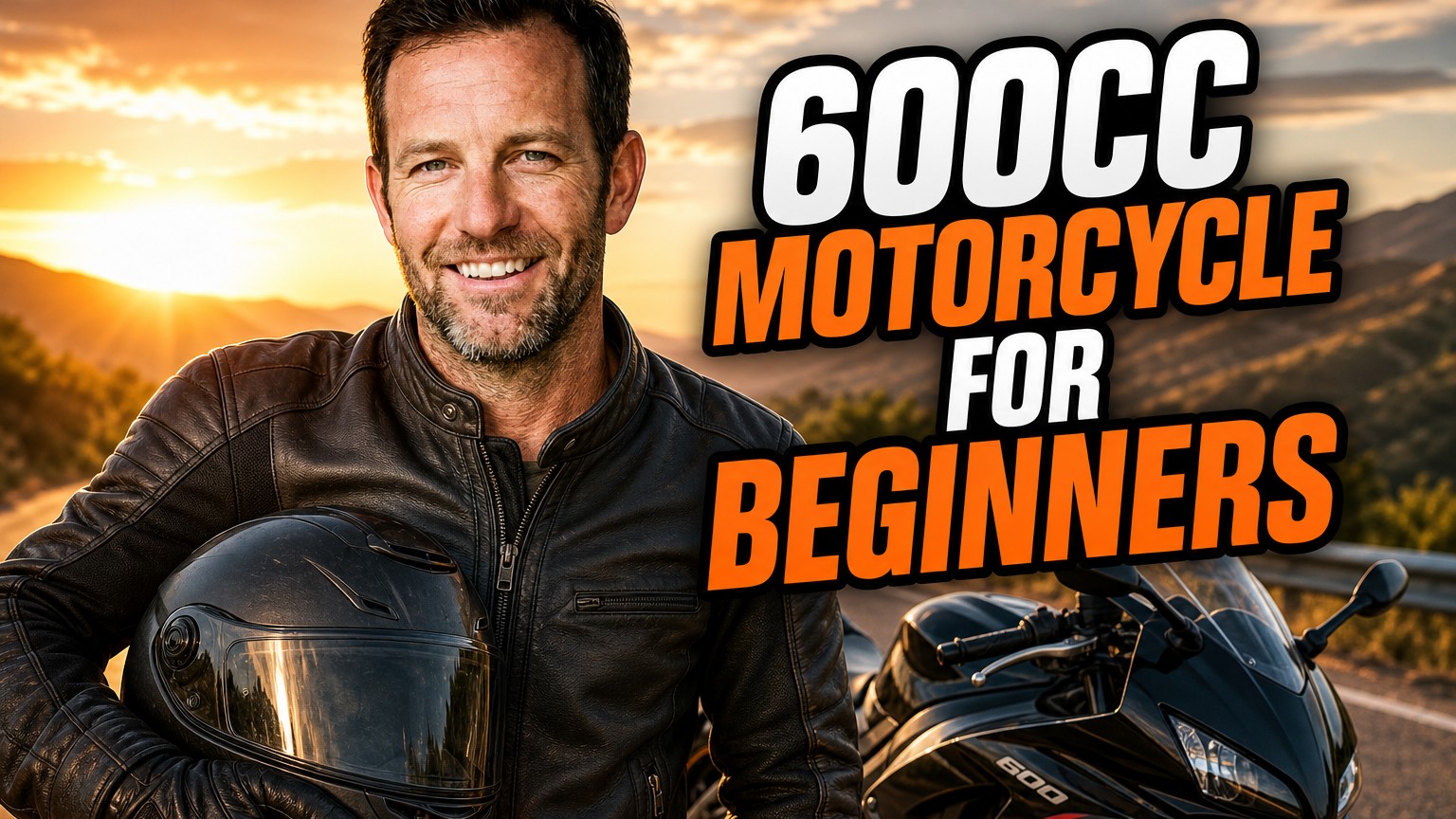
When I got my first middleweight, I wanted “enough” bike so I wouldn’t outgrow it in six months. I also didn’t want something that would punish every small mistake with the throttle. That’s the tension behind the search for the best 600cc motorcycle for beginners.
Here’s the honest truth I wish someone had told me early on. A true 600cc supersport is a very different animal from a 650cc or 700cc twin, even though the engine sizes look similar on paper. The bikes I list below sit in that 600 to 700cc sweet spot, and they are genuinely friendly.
I’ve ridden, borrowed, or spent serious time around every bike on this list. Below, I share what I like, what annoys me, and who each one suits best.
- My overall pick for new riders is the Kawasaki Ninja 650: smooth, comfortable, and forgiving.
- Skip pure 600cc supersports like the CBR600RR or YZF-R6 as a first bike. Choose a twin or triple middleweight instead.
- The Yamaha MT-07 and Suzuki SV650 are excellent value, while the Triumph Trident 660 has the best electronics.
- Budget about $8,000 to $10,000 new, and don’t forget gear, a rider course, and proper maintenance.
What “600cc” Really Means for a New Rider
Displacement alone tells you very little. What matters is how the engine delivers power, how heavy the bike is, and how tall the seat sits. A 650cc parallel twin with 68 horsepower feels nothing like a 600cc inline-four screaming to 15,000 rpm.
Why I Avoid Pure Supersports for First Bikes
Bikes like the Honda CBR600RR, Yamaha YZF-R6, and Kawasaki Ninja ZX-6R are fantastic machines. But they have aggressive riding positions, peaky power, and twitchy throttle response when you are still learning. I’d rather you buy one of those as a second or third bike.
What I Look for in a Beginner Middleweight
- Predictable, linear power that doesn’t surprise you mid-corner.
- A manageable curb weight, ideally under 450 lb.
- A seat height around 31 inches or lower.
- ABS as standard, plus a light, forgiving clutch.
- Good resale value and cheap running costs.
1. Kawasaki Ninja 650 — Best Overall for New Riders
If a friend asked me for one bike to buy, the Kawasaki Ninja 650 is what I’d say. It has a 649cc parallel twin making roughly 68 hp, a seat height of about 31.1 inches, and a curb weight near 420 lb. Those numbers are very approachable.
What I love most is how relaxed the Ninja 650 feels. The riding position is sporty but not cramped, and the clutch is light enough for stop-and-go traffic. The fairing also gives real wind protection on the highway.
Why It Works for Beginners
The power is smooth from idle all the way up. I’ve never felt the Ninja 650 surprise me with a sudden surge. Its ABS and slip-and-assist clutch also make mistakes easier to recover from.
Expect to pay roughly $8,000 to $8,500 new, depending on the year and trim. The upgraded TFT dash versions are worth a look if you like connectivity.
My Only Gripe
The stock seat gets uncomfortable after a couple of hours. A gel seat pad or aftermarket seat fixes that quickly.
2. Yamaha MT-07 — Best for Fun and Character
The Yamaha MT-07 is the bike I recommend when someone says, “I want something exciting, but not scary.” Its 689cc CP2 crossplane twin makes around 73 hp and loads of low-end torque. The engine feels alive without being overwhelming.
At roughly 414 lb and with a seat height of about 31.7 inches, the MT-07 is light and nimble. I find it one of the easiest bikes to flick through tight corners. The upright, naked riding position makes city riding a joy.
Strengths
- Punchy, torquey engine that’s easy to ride at low rpm.
- Excellent handling for the price (around $8,000 to $8,300).
- Huge aftermarket support and strong resale value.
Things to Know
The MT-07 has no fairing, so highway rides can be tiring. The throttle is also a bit snappy in the lowest gears at first. You’ll get used to it within a week or two.
3. Suzuki SV650 — Best for Smooth V-Twin Manners
The Suzuki SV650 has been a beginner favorite for decades, and I understand why. Its 645cc V-twin is incredibly smooth and tractable. Suzuki also adds the Low RPM Assist and Easy Start systems, which help prevent stalls.
Seat height is one of the lowest on this list at roughly 30.7 inches. Curb weight is around 430 lb, but it feels lighter once you’re moving. That low seat is a big confidence booster for shorter riders.
Why I Like It
The SV650 doesn’t try to impress with electronics. It just works. Pricing runs about $7,700 to $8,100 new, which makes it one of the best bargains in the class.
Where It Falls Short
The dash is basic and you get no riding modes. But if you want a simple, reliable bike, I’d happily accept that tradeoff. Used examples are also everywhere and often cheap.
4. Kawasaki Z650 — Best Naked Alternative to the Ninja
The Kawasaki Z650 shares its engine and chassis with the Ninja 650. That means the same friendly 649cc twin, similar weight (around 410 lb), and a seat height of roughly 31.1 inches. The difference is the naked styling and more upright posture.
I like the Z650 for commuting. The wide handlebar gives great leverage in tight spaces, and the visibility in traffic is excellent. The TFT display with smartphone connectivity is a nice modern touch.
Who It’s For
Choose the Z650 if you don’t want a fairing and prefer a more aggressive naked look. It typically costs about $8,000 to $8,300. I’d pick the Ninja for touring and the Z for city life.
5. Triumph Trident 660 — Best Electronics and Refinement
The Triumph Trident 660 is the most premium-feeling bike on my list. Its 660cc inline-triple makes about 81 hp with a lovely, linear pull. The triple sound is also addictive.
For a new rider, the real draw is the safety tech. You get ride-by-wire throttle, switchable traction control, ABS, and two riding modes (Road and Rain). The Trident 660 weighs roughly 417 lb with a seat height around 31.8 inches.
My Take
Fit and finish are a notch above its Japanese rivals. Pricing is about $8,200 to $8,700 depending on year and color. If you want a bike that feels more expensive than it is, this is it.
A Small Caveat
Dealer networks are thinner than Kawasaki, Honda, or Yamaha in some regions. Check for a nearby Triumph dealer before you commit.
6. Honda CB650R — Best for Inline-Four Smoothness
The Honda CB650R is for the rider who wants an inline-four without the supersport intensity. Its 649cc engine makes roughly 94 hp, and it is remarkably smooth. Honda also offers an E-Clutch version that handles clutch work automatically while still letting you shift manually.
Honda’s Selectable Torque Control (traction control) adds a safety net. Curb weight is roughly 450 lb and the seat sits around 31.9 inches. The “Neo Sports Café” styling is also gorgeous in person.
The Catch
Power climbs quickly in the upper rev range, so you need self-discipline. I’d suggest staying in the lower half of the rev range for your first few months. Price is higher, around $9,000 to $9,500.
7. Honda CBR650R — Best Sport-Styled Pick
The Honda CBR650R is the fully faired sibling of the CB650R. It uses the same 649cc inline-four and delivers about the same ~94 hp. The riding position is sportier, but it’s still far kinder than a CBR600RR.
I like it for riders who want sportbike looks while keeping a reasonable, comfortable stance. It handles beautifully, and the fairing helps on long rides. Expect to pay around $9,500 to $10,000 new.
Is It Too Much?
For some beginners, yes. If you’re a very cautious or smaller rider, I’d start with the Ninja 650 or SV650 first. If you’re confident and disciplined, the CBR650R can be your last bike for years.
How I’d Choose Between These Bikes
Start with seat height and weight. Sit on every bike you’re considering, because spec sheets don’t tell you how a bike feels at a stop. Being able to put both feet down confidently is non-negotiable in my book.
Match the Bike to Your Riding
- Commuting: Kawasaki Z650 or Yamaha MT-07.
- Mixed riding and touring: Kawasaki Ninja 650.
- Budget and simplicity: Suzuki SV650.
- Tech and refinement: Triumph Trident 660.
- Inline-four lovers: Honda CB650R or CBR650R.
Don’t Forget the Extras
Budget at least $800 to $1,500 for quality gear: a helmet, jacket, gloves, boots, and pants. I’d also take a rider safety course before your first big ride. The bike is only half the equation.
Keeping Your Middleweight Healthy
A reliable bike stays reliable only if you maintain it. Oil is the single most important thing I check. If you’re unsure where to start, I found this guide to the best motor oil for 4 stroke motorcycle engines very helpful.
For a deeper comparison, I also like this look at the top engine oil for 4 stroke motorcycle options. If you’re wondering about specific grades, this breakdown of what is the best engine oil for 4 stroke motorcycle clears up a lot of confusion.
Oil Tips From My Garage
- Use oil with a JASO MA or MA2 rating if your bike has a wet clutch.
- Follow the viscosity in your owner’s manual, usually 10W-40 for these bikes.
- Change oil and filter on schedule, and more often if you ride hard or in dusty conditions.
For a general overview, here’s a useful page on the best engine oil for motorcycle riders. And if you’re riding in warmer, dustier regions, this guide to the best engine oil for 4 stroke motorcycle in india covers conditions that apply well beyond one country.
My Final Verdict
If you want my single recommendation, buy the Kawasaki Ninja 650. It’s forgiving, comfortable, affordable, and capable enough that you won’t outgrow it quickly. It has been the best all-rounder in my experience.
If you want more personality, go for the Yamaha MT-07. If you want maximum value and simplicity, the Suzuki SV650 is hard to beat. And if you crave tech and polish, the Triumph Trident 660 is a joy.
Whichever you choose, sit on it, ride it if you can, and start with respect. Ride within your limits, gear up every time, and enjoy the journey. Your first middleweight should be the start of a long love affair with riding.
Frequently Asked Questions
Is a 600cc motorcycle too powerful for a beginner?
It depends on the bike. A 600cc supersport like the Honda CBR600RR or Yamaha R6 is too aggressive for most first-timers. A friendly middleweight twin or triple in the 600 to 700cc range, like the Kawasaki Ninja 650 or Yamaha MT-07, has smooth, predictable power and is very manageable for new riders.
What is the best 600cc-class motorcycle for a first bike?
My top pick is the Kawasaki Ninja 650 because of its smooth parallel twin, upright ergonomics, light clutch, and reasonable price. The Yamaha MT-07 and Suzuki SV650 are close runners-up.
Should I take a rider safety course before buying a 600cc bike?
Yes. A basic rider course (such as the MSF Basic RiderCourse in the US) teaches braking, cornering, and low-speed control. Many insurers also offer discounts for course graduates, and you will build confidence much faster.
How often should I change the oil on a beginner-friendly middleweight bike?
Most manufacturers recommend an oil change every 4,000 to 8,000 miles or once a year, whichever comes first. Always check your owner’s manual and use a quality motorcycle-specific oil with the correct viscosity and JASO MA/MA2 rating.

Related Articles
7 Best Batteries for Motorcycles I’ve Tested and Trust in 2026
I've tested dozens of motorcycle batteries to find the best performers. From AGM to lithium, here are my top picks…
Jake Miller
15 min read

The Perfect Battery for Your Harley Davidson Softail: A Rider’s Complete Guide
Discover the perfect battery for your Harley Davidson Softail. I've tested multiple options and share real-world performance data, maintenance tips,…
Jake Miller
14 min read

The Best Battery for Your Harley Davidson: My Complete Guide After Years of Testing
Discover which battery truly performs best for Harley Davidson motorcycles. Real rider experience with AGM, lithium, and OEM options to…
Jake Miller
12 min read