
The Truth About Motorcycle Accident Fault: What 20 Years of Riding Taught Me
 Jake Miller
13 min read
Jake Miller
13 min read
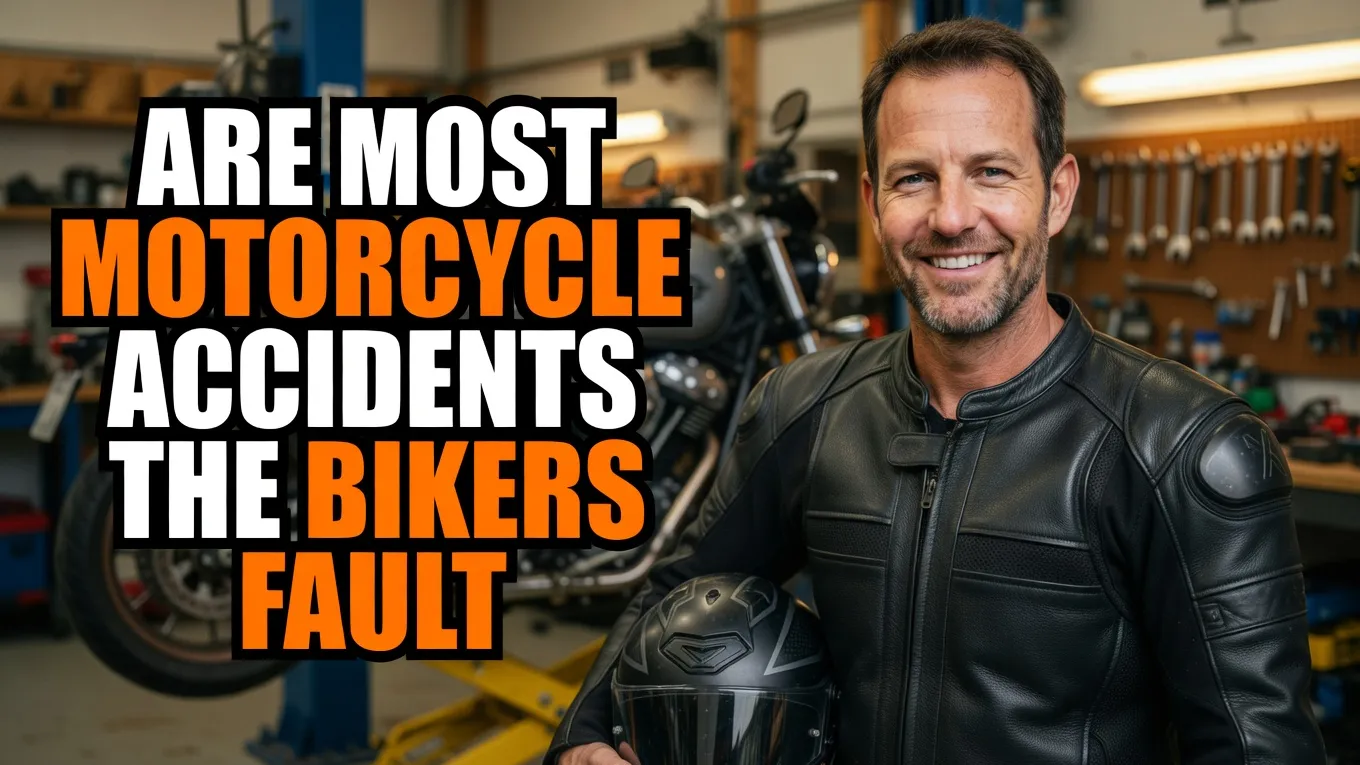
My Journey Into Understanding Motorcycle Accident Statistics
After riding motorcycles for over 20 years and witnessing more crashes than I care to remember, I’ve become obsessed with understanding who’s really at fault when accidents happen. The question “are most motorcycle accidents the biker’s fault” isn’t just academic for me—it’s personal.
I’ve been rear-ended at a stoplight, had cars pull out in front of me, and yes, I’ve made my own mistakes that could have ended badly. Through all of this, I’ve learned that the truth about fault in motorcycle accidents is far more nuanced than most people realize.
- In multi-vehicle crashes, other drivers are at fault 60-75% of the time, primarily due to “looked but failed to see” errors
- Single-vehicle motorcycle accidents (about 35% of all crashes) are typically the rider’s fault due to speed, cornering errors, or inexperience
- Mechanical failures account for less than 3% of accidents, but proper maintenance is still crucial for safety
- Rider training, defensive techniques, and visibility measures dramatically reduce fault and injury severity regardless of who causes the crash
What the Research Actually Shows About Fault
I’ve spent countless hours digging through crash reports and studies, and the data might surprise you. The landmark Hurt Report from the 1980s and more recent studies paint a consistent picture that challenges common assumptions.
In crashes involving a motorcycle and another vehicle, the other driver is at fault roughly 60-75% of the time. That’s a significant majority. The most common scenario? A car violating the motorcycle’s right of way, usually by turning left in front of an oncoming bike or pulling out from a side street.
The “Looked But Failed To See” Problem
I can’t count how many times I’ve heard a driver say, “I looked, but I didn’t see the motorcycle.” This phenomenon has a name in crash investigation circles, and it’s responsible for a huge percentage of accidents where riders aren’t at fault.
Our brains are wired to look for car-sized objects. Motorcycles occupy less visual space, move differently, and are simply easier to miss. This doesn’t excuse negligent drivers, but it explains why we riders need to ride as if we’re invisible—because functionally, we often are.
Single-Vehicle Accidents Tell a Different Story
Here’s where things get uncomfortable for us riders. Single-vehicle motorcycle crashes—where no other vehicle is involved—make up about 35% of all motorcycle accidents. And in these cases, the rider is almost always at fault.
I’ve seen friends lowside in corners they took too fast. I’ve watched inexperienced riders panic-brake and lock the front wheel. These are rider errors, plain and simple, and they’re preventable with proper training and practice.
The Top Rider Errors I’ve Witnessed and Committed
Let me be honest about my own mistakes and what I’ve learned from other riders over the years. Understanding these common errors has kept me alive and helped me become a better, safer rider.
Speed and Overcorrection in Corners
Early in my riding career, I came into a mountain curve too hot. My mind screamed “brake!” but thankfully, muscle memory from my training took over. I looked through the turn, leaned harder, and made it through—barely.
Entering a corner too fast is one of the most common fatal errors riders make. The panic response is to brake mid-corner or stand the bike up, both of which can lead to a crash. This is 100% rider fault, and it’s entirely preventable through practicing proper cornering techniques.
Throttle Control and Mechanical Issues
I’ve learned that smooth throttle control is essential, not just for performance but for safety. Jerky throttle inputs can upset the bike’s balance, especially in corners or on slippery surfaces. Understanding how components like are motorcycle throttle locks dangerous can help you make informed decisions about modifications that affect control.
Speaking of throttle systems, I always check whether are motorcycle throttle tubes universal when doing maintenance. Using the wrong parts can create control issues that might contribute to an accident—and that would technically be rider fault for improper maintenance.
Inadequate Maintenance and Inspection
I once had a cable fray on me during a ride. Luckily, it wasn’t critical and I caught it before complete failure. But that experience taught me to regularly inspect components and understand that not are all motorcycle throttle cables the same—using quality parts matters.
Mechanical failures cause fewer than 3% of motorcycle accidents according to most studies. However, when they do happen and cause a crash, the fault often falls on the rider for failing to maintain their machine properly. I learned to recognize what are the symptoms of a bad engine control module and other critical system failures before they become dangerous.
Impairment and Distraction
This one’s non-negotiable for me. I’ve seen the aftermath of accidents where riders were under the influence or distracted. When alcohol, drugs, or phone use are involved and an accident occurs, the rider bears significant fault regardless of other factors.
The statistics are sobering: alcohol is involved in about 40% of fatal motorcycle crashes. In these cases, even if another driver contributes to the accident, the impaired rider shares substantial legal and moral responsibility.
When Other Drivers Are Clearly at Fault
Let me share some scenarios where I’ve been the victim of others’ negligence, because they represent the majority of multi-vehicle motorcycle accidents. These situations frustrate me because they’re so preventable from the car driver’s side.
The Left-Turn Violation
Three years ago, a driver turned left directly in front of me at an intersection. I had the green light and right of way. Only my defensive riding mindset—always covering the brakes, always having an escape route—saved me from a collision.
This scenario accounts for approximately 42% of car-motorcycle collisions. The car driver violates the motorcycle’s right of way by turning left across the bike’s path. This is clearly the car driver’s fault, yet it happens constantly because drivers don’t properly scan for motorcycles.
Lane Changes Without Looking
I’ve lost count of how many times a car has started drifting into my lane without signaling or checking mirrors. Motorcycles easily hide in blind spots, and distracted drivers make this situation even more dangerous.
When a driver changes lanes without ensuring the lane is clear and hits a motorcycle, they’re at fault. Period. But as riders, we still need to position ourselves to stay out of blind spots whenever possible.
Rear-End Collisions
Getting rear-ended while stopped is terrifying on a motorcycle. I experienced it once at low speed, but it could have been catastrophic. In these cases, the following driver is almost always at fault—they have the responsibility to maintain a safe following distance and stop in time.
The Gray Areas Where Fault Gets Complicated
Not every accident has a clear villain. I’ve investigated crashes where both parties contributed, and determining primary fault becomes a legal and insurance nightmare.
Shared Responsibility Scenarios
Imagine this: a car turns left in front of a motorcycle, violating right of way (car driver’s fault), but the motorcyclist was traveling 20 mph over the speed limit (rider’s fault). Who’s primarily at fault?
In my experience, both parties would share responsibility. The car driver made an illegal turn, but the rider’s excessive speed made the collision unavoidable when it might have been prevented at legal speeds. Insurance companies and courts wrestle with these apportionment questions constantly.
The Experience and Training Factor
Here’s something that bothers me about fault discussions: they often ignore the role of inadequate training. A rider without proper training who makes an error in a situation an experienced rider would handle easily—is that entirely the rider’s fault, or is there systemic failure?
I believe riders have a responsibility to get proper training before hitting the road. Taking a basic safety course isn’t just about passing a test; it’s about building skills that prevent you from being at fault in the first place.
How I’ve Reduced My Risk of Being at Fault
Over two decades, I’ve developed habits and practices that have kept me out of accidents and ensured that if an accident did occur, I wouldn’t be the one at fault. Let me share what’s worked for me.
Defensive Riding as a Core Philosophy
I ride assuming every driver is about to do the stupidest thing possible. That sounds cynical, but it’s kept me alive. I position myself with escape routes, I slow down when approaching intersections even with a green light, and I make eye contact with drivers whenever possible.
Defensive riding means taking responsibility for your safety even when you have the right of way. It doesn’t make other drivers’ errors your fault, but it prevents their errors from becoming your collision.
Visibility and Gear Choices
I wear bright colors and reflective gear religiously. My helmet is white with reflective tape. My jacket has high-visibility panels. Do I look as cool as riders in all-black leather? Maybe not. But I’m dramatically more visible, which reduces the chance of “didn’t see the motorcycle” accidents.
I also upgraded to brighter headlights and added auxiliary lights. The small investment in visibility gear and modifications has probably prevented multiple accidents where drivers might have otherwise claimed they didn’t see me.
Regular Maintenance and Quality Components
I’ve learned that cutting corners on maintenance is gambling with your life and potentially setting yourself up to be at fault if something fails. I keep detailed maintenance logs, replace wear items before they fail, and use quality parts.
For example, I ensure I’m using the best motor oil for 4 stroke motorcycle engines because proper lubrication prevents catastrophic failures. A seized engine at highway speeds could cause an accident where I’d be considered at fault for operating an unsafe vehicle.
Continuous Skill Development
I take an advanced riding course every few years. Track days have improved my emergency braking and cornering skills far beyond what street riding alone could teach me. These skills directly reduce the chances I’ll make an error that causes an accident.
Every rider should invest in ongoing training. The skills you learn go beyond just avoiding being at fault—they can save your life even when someone else makes a mistake.
Legal and Insurance Perspectives on Fault
Understanding fault isn’t just about blame; it has real legal and financial consequences. I’ve helped friends navigate insurance claims after accidents, and I’ve learned how fault determination works in practice.
How Insurance Companies Determine Fault
Insurance adjusters look at police reports, witness statements, physical evidence, and applicable traffic laws. In my experience, they’re often biased against motorcyclists initially, assuming we’re reckless risk-takers.
This is why documenting everything at an accident scene is crucial. Photos, witness contact information, and your own detailed statement can make the difference between being unfairly blamed and having fault correctly assigned to the negligent driver.
Comparative and Contributory Negligence
Different states handle shared fault differently. Some use comparative negligence (you can recover damages proportional to the other party’s fault percentage), while others use contributory negligence (any fault on your part bars recovery).
In comparative negligence states, you might be found 30% at fault while the other driver is 70% at fault. You could still recover 70% of your damages. But in contributory negligence states, that 30% would prevent any recovery at all.
Changing the Narrative Around Motorcycle Accidents
I’m tired of the automatic assumption that motorcycle accidents are always the biker’s fault. The data doesn’t support this stereotype, yet it persists in public perception and even influences how accidents are initially investigated.
The Stereotype Problem
Society views motorcyclists as reckless thrill-seekers, and this bias affects everything from police investigations to jury decisions in court cases. I’ve seen accident reports where the investigating officer assumed the rider was speeding without evidence, simply because they were on a motorcycle.
We need to fight this narrative with facts and by being exemplary representatives of the riding community. Every time we ride responsibly, wear proper gear, and demonstrate skill and courtesy, we chip away at these harmful stereotypes.
Advocacy and Education
I now volunteer with local motorcycle safety organizations, teaching awareness to both riders and drivers. Getting drivers to understand how to share the road safely is just as important as training riders to be defensive.
Programs that teach car drivers about motorcycle vulnerabilities and how to properly scan for bikes have shown promise in reducing accidents. When drivers understand that motorcycles are harder to see and judge speed for, they’re more careful—and fewer accidents occur where riders aren’t at fault.
My Final Thoughts on Fault and Responsibility
After analyzing crash data, examining my own close calls, and witnessing the aftermath of countless accidents, here’s what I believe: the question “are most motorcycle accidents the biker’s fault” has a statistically clear answer—no, most aren’t solely the biker’s fault, especially in multi-vehicle crashes.
But statistics don’t keep us alive. What matters is taking responsibility for our own safety regardless of who might be “at fault” in a legal sense. I can be 100% in the right and still end up seriously injured or dead because a distracted driver didn’t see me.
The Personal Responsibility Approach
I’ve adopted what I call “zero-fault riding”—I ride as if avoiding accidents is entirely my responsibility, even when it’s not. This mindset has saved me multiple times when drivers violated my right of way.
Does this mean accepting blame when I’m not at fault? Absolutely not. It means recognizing that being “right” won’t protect me from physics. I’ll gladly sacrifice pride and assert my right of way if it means getting home safely.
What Other Riders Need to Know
If you’re a new rider wondering about fault, here’s my advice: focus less on who’s to blame in accident statistics and more on developing skills that keep you out of crashes entirely. Take professional training seriously. Practice emergency maneuvers. Maintain your bike meticulously. Ride visible and defensively.
The riders who’ve survived decades on the road, like me, aren’t just lucky—we’ve made deliberate choices that reduce risk. We’ve trained extensively, we ride within our limits (usually), and we never stop learning from close calls and others’ mistakes.
The truth about motorcycle accident fault is complex. Yes, other drivers cause most multi-vehicle collisions with motorcycles. Yes, riders are typically at fault in single-vehicle crashes. But ultimately, fault determination matters most after an accident occurs. What I care about is preventing the accident in the first place.
Ride smart, ride trained, ride visible, and ride defensive. That’s how we change both the statistics and the stereotypes about motorcycle accidents and fault.
Frequently Asked Questions
What percentage of motorcycle accidents are caused by other drivers?
Studies show that in approximately 60-75% of motorcycle-car collisions, the car driver is at fault, often due to failure to yield right of way or not seeing the motorcycle.
What is the most common cause of single-vehicle motorcycle accidents?
The most common causes include rider error in cornering, excessive speed for conditions, poor braking technique, and mechanical failures. Proper training significantly reduces these risks.
Are motorcycle accidents more likely to be fatal than car accidents?
Yes, motorcyclists are approximately 28 times more likely to die in a crash per mile traveled compared to car occupants, primarily due to lack of physical protection.
How can motorcyclists reduce their risk of being at fault in an accident?
Key strategies include taking advanced rider training courses, maintaining proper motorcycle maintenance, wearing high-visibility gear, practicing defensive riding, and avoiding impaired or distracted riding.

Related Articles
7 Best Batteries for Motorcycles I’ve Tested and Trust in 2026
I've tested dozens of motorcycle batteries to find the best performers. From AGM to lithium, here are my top picks…
Jake Miller
15 min read

The Perfect Battery for Your Harley Davidson Softail: A Rider’s Complete Guide
Discover the perfect battery for your Harley Davidson Softail. I've tested multiple options and share real-world performance data, maintenance tips,…
Jake Miller
14 min read

The Best Battery for Your Harley Davidson: My Complete Guide After Years of Testing
Discover which battery truly performs best for Harley Davidson motorcycles. Real rider experience with AGM, lithium, and OEM options to…
Jake Miller
12 min read