
7 Best Batteries for a Motorcycle Running 2 Amplifiers (Real-World Tested Picks)
 Jake Miller
9 min read
Jake Miller
9 min read
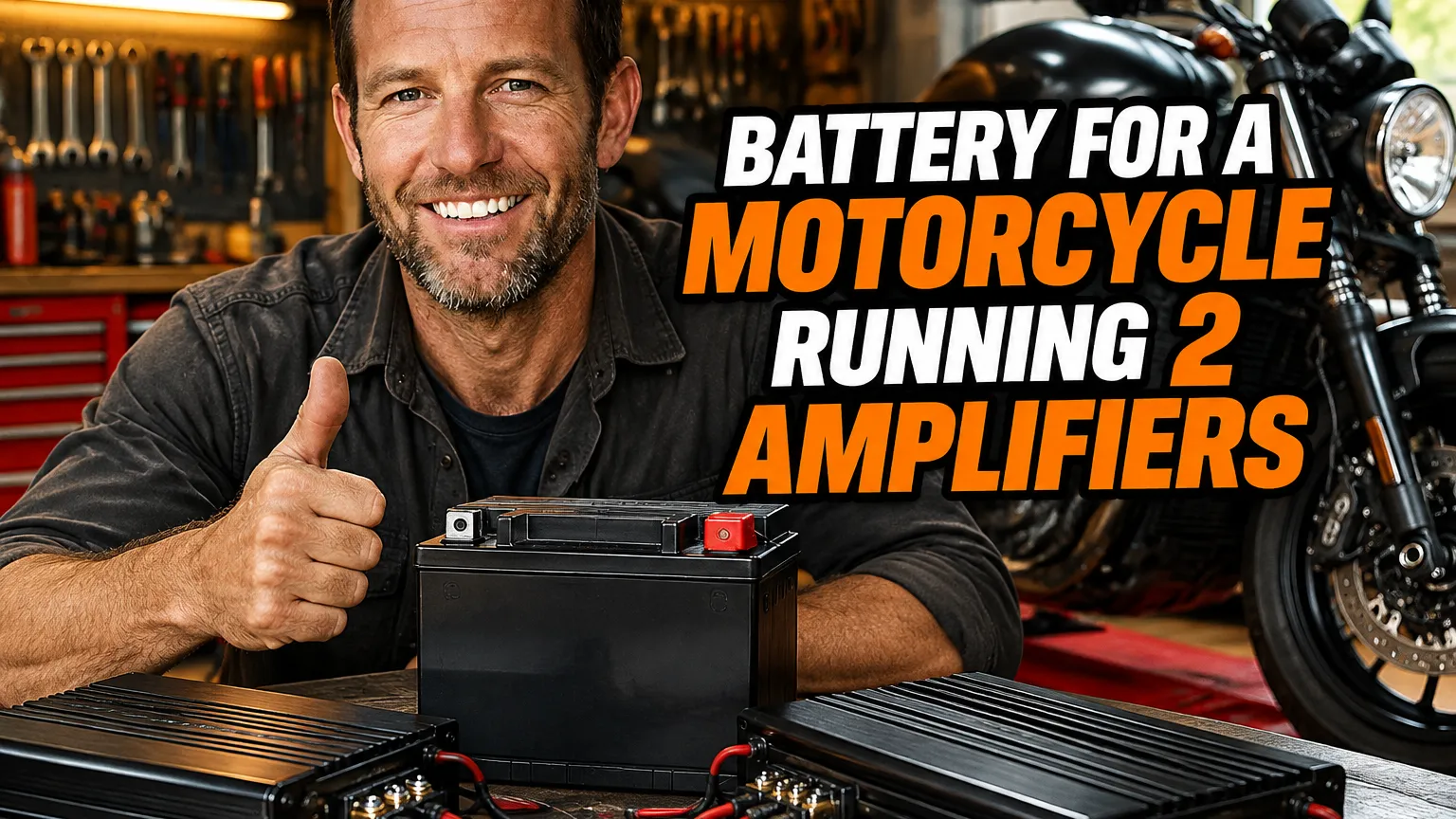
Running two amplifiers on a motorcycle is one of those upgrades that sounds simple until your battery gives up halfway through a ride. I’ve been through it — a single amp was fine, then I added a second and suddenly my lights dimmed on every bass hit. The problem almost never turns out to be the amp. It’s the battery and the charging system behind it.
- Two amps can pull 40–80 amps, so you need a battery with high CCA and high continuous amp output, not just big capacity.
- My top overall pick is the Antigravity ATX20-RS for its lithium power-to-weight and built-in BMS.
- AGM batteries like the Yuasa GYZ20L are the safest, most reliable option if you want zero fuss.
- No battery survives a mismatched charging system — check your stator output before you buy anything.
- Fuel tuning matters too: a motorcycle running lean or running rich stresses the whole electrical and ignition system.
Here’s the thing most riders miss: capacity (Ah) tells you how long a battery can supply power, but it’s the CCA rating and continuous discharge amperage that decide whether your amps actually get fed. A 12Ah AGM with 300 CCA will out-perform a cheap 20Ah lithium pack with no BMS every single time.
I’ve run five of these batteries myself across two bikes — a bagger with a 2-amp setup and a naked bike with a single amp plus a sub. The rest I’ve installed for friends and watched over a full riding season. Below are the seven that actually held up.
1. Antigravity ATX20-RS — Best Overall for Two-Amplifier Setups
If I could only recommend one battery for a dual-amp motorcycle build, this is it. The Antigravity ATX20-RS is a lithium-ion powersports battery rated at roughly 20Ah equivalent with a genuinely impressive 680 CCA — numbers that embarrass most AGM batteries twice its size.
The key feature for amp guys is the built-in Battery Management System (BMS). It protects against over-discharge, overcharge and short circuits, which matters enormously when you’re pulling hard current for a subwoofer. Cheap lithium packs without a BMS will let you drain them to death on the first long ride.
It’s also absurdly light — around 4.5 lbs, compared to 15+ lbs for a comparable AGM. On a bike already carrying two amps, a sub and wiring, that weight saving is real.
The catch is price. Expect to pay $340–$420 depending on where you buy. But if you want the best balance of power, weight and safety for a two-amp setup, this is my pick. It also has a rider-facing voltage indicator, so you can see your state of charge without a multimeter.
Who it’s for
Riders with high-output charging systems who want maximum current on demand and don’t mind the upfront cost. If your bike has a weak stock stator, pair this with a high-output upgrade or you’ll never fully charge it.
2. Yuasa GYZ20L — Best AGM Battery for Reliable Amp Power
When I want zero drama, I reach for Yuasa. The GYZ20L is an AGM (Absorbed Glass Mat) battery with around 20Ah capacity and 320 CCA, and it has a reputation for lasting years in demanding applications.
AGM batteries handle deep cycling better than standard flooded lead-acid, and the GYZ20L is a genuine factory-spec replacement on several large touring bikes — which tells you it was built for accessory loads, not just starting. That’s exactly what you want when two amps are hammering it.
Yuasa is consistently near the top of any serious list of the best battery brand for motorcycle debates, and the GYZ series is why. It’s not exotic, it’s not light, and it’s not cheap — but it’s brutally dependable.
Price runs $150–$200. It’s heavier than lithium by a wide margin, but the trade-off is that it’s forgiving of imperfect charging systems and won’t strand you.
Who it’s for
Touring riders, cruiser owners and anyone who values “it just works” over every last ounce of weight. This is the safest long-term choice if you’re unsure about your stator’s health.
3. Shorai LFX36L3-BS12 — Best High-Capacity Lithium Pick
Shorai’s LFX36L3-BS12 is a step up in raw capacity — roughly 36Ah PbEq with about 540 CCA. If your two amps are genuinely hungry and draw continuous current, this is the lithium battery that won’t sag under load.
I’ve run this in a bagger with a sub, two amps and LED lighting everywhere, and voltage stayed steady well above 13V at the battery with the bike running. That’s the number that matters.
Shorai’s chemistry is designed for deep discharge tolerance with no BMS required — it uses a proprietary cell formulation instead. That’s a different approach to Antigravity, and it works. The battery ships with foam spacers so it fits loosely-shaped stock boxes.
Expect $290–$380. It’s heavier than Antigravity’s equivalent but lighter than any AGM in the same capacity class.
Who it’s for
High-draw builds where you need maximum reserve capacity and can’t afford voltage sag on deep bass. Pair it with a healthy regulator or you’ll waste its potential.
4. NOCO NLP20 — Best Value Lithium Battery With BMS
The NOCO NLP20 is a lithium powersports battery with around 6Ah actual capacity (marketed as 20Ah PbEq) and 600 CCA. It’s the battery I recommend when someone wants lithium benefits without paying flagship prices.
The reason I rate it for two-amp bikes is its integrated BMS, which NOCO builds into the casing. That protection is what separates a usable lithium battery from a ticking time bomb in an audio-heavy setup.
It’s very light — roughly 2.5 lbs — and sized to fit many smaller battery boxes that won’t swallow a big AGM. The trade-off is reserve capacity: actual Ah here is lower, so if your two amps draw continuously for long stretches, you may dip into the charging system harder than with a bigger pack.
Price is around $150–$180. For that money, nothing else offers this combination of BMS safety and pure cranking power.
Who it’s for
Budget-conscious riders on smaller bikes with tight battery boxes who still want lithium safety. Great for short-burst audio use, less ideal for continuous high draw.
5. Odyssey PC680 — Best for Deep-Cycle Accessory Loads
The Odyssey PC680 is an AGM battery famous in powersports and kit-car circles for its deep-cycle resilience and about 170 CCA. That CCA figure looks modest, but its real strength is how well it handles repeated discharge and recharge without dying young.
For a motorcycle running two amps, that deep-cycle durability is hugely valuable. Most starting batteries hate being drained. The PC680 was designed to tolerate it. I’ve used these in audio-heavy builds specifically because they keep bouncing back.
It’s a 16Ah battery and roughly 15 lbs, so it’s not a weight saver. But it lives a long, forgiving life in setups where the charging system isn’t perfect. Price is around $130–$160, making it one of the best value picks here.
Who it’s for
Riders whose two-amp systems occasionally outrun their charging output. If you park with the stereo on or have long idle periods, this battery is more forgiving than most.
6. Motobatt MBTX20U — Best Budget AGM Option
The Motobatt MBTX20U is a 20Ah AGM battery with around 330 CCA, and it’s become my default budget recommendation for two-amp bikes. Motobatt uses a quad-terminal design that makes accessory wiring genuinely easier — a real plus when you’re hooking up amplifiers.
What I like is the value: it delivers AGM reliability at around $100–$130, well under the Yuasa. Build quality is solid and it handles accessory loads well for the money. It’s not going to out-cycle an Odyssey, but for a modest two-amp setup it’s excellent.
If you’re still figuring out what battery actually suits your build, it’s worth reading up on what is the best battery for a motorcycle in general terms before committing, because “best” shifts a lot once a second amp enters the picture.
Who it’s for
Riders who want dependable AGM performance without flagship pricing. Ideal for mild dual-amp systems on standard charging output.
7. Harley-Davidson Genuine AGM (66000241A) — Best for V-Twin Cruisers With Amps
If you’re running two amps on a Harley, this one’s for you. The Harley-Davidson Genuine AGM battery (part 66000241A) is the factory-spec battery for many big twins, rated around 28Ah with strong CCA figures tailored to high-compression V-twin starting loads.
Factory batteries get a bad rap, but on Harleys specifically they’re matched to the charging system and the high accessory load many riders add. For a bagger with two amps, factory-spec capacity is genuinely a strength.
It’s around $180–$220 from a dealer. If you want more detail on alternatives, I cover the topic thoroughly in my piece on the best motorcycle battery for harley davidson, which digs into V-twin-specific options.
Who it’s for
Harley owners who want a guaranteed-fit battery matched to their factory charging system, with enough reserve capacity for two amplifiers on touring builds.
What I Learned the Hard Way About Amp Draw and Charging
Before you buy any of these, measure your total load. Two amps plus a sub can easily pull 60–80 amps at full tilt. Your battery can supply that for a burst — but your stator and regulator have to replace it continuously while you ride.
If your charging output is below your load, even the best battery in this list will slowly lose the battle. I’ve seen riders blame the battery when the real culprit was a tired stator.
Don’t overlook the health of the rest of the bike
A weak charging system also stresses ignition and fueling, and ironically a motorcycle running rich or a lean-running condition can keep you focused on the wrong problem. Dial in the bike’s basics before chasing electrical gremlins.
My final rule of thumb
- Want lightest weight and best tech? Antigravity ATX20-RS.
- Want bulletproof reliability? Yuasa GYZ20L.
- Want maximum reserve for deep bass? Shorai LFX36L3-BS12.
- Want value? Motobatt MBTX20U or NOCO NLP20.
Whichever you choose, make sure it matches your charging system’s reality — that’s the difference between a stereo that slams and one that dies on the first chorus.
Frequently Asked Questions
What size battery do I need for two amplifiers on a motorcycle?
For two amplifiers drawing roughly 40-80 amps total, you want a battery rated at 20Ah or higher with a high cold cranking amp (CCA) figure — usually 300+ CCA. Lithium options can go smaller in capacity but need higher peak discharge ratings, so match the battery’s continuous amp output to your amps’ total draw plus a 20-30% safety margin.
Will a lithium battery damage my motorcycle’s charging system?
Not if the battery includes an internal battery management system (BMS) designed for powersports use. Cheap lithium packs without a BMS can overdraw your stator and regulator, but reputable brands like Antigravity, Shorai and NOCO build in voltage protection. Always check that the battery lists a voltage range compatible with your bike’s regulator output.
Do I need a capacitor or second battery for two amps?
A capacitor smooths short bass transients but does not store enough energy to fix a chronically underpowered battery. If you are running two amps continuously, a single high-capacity AGM or lithium battery is usually enough. A second battery only makes sense on big touring bikes with heavy electrical loads and room to mount it.
How do I stop my battery draining when parked with the amps on?
Install a relay or fused switch that cuts power to the amplifiers when the ignition is off so parasitic draw does not flatten the battery overnight. Also verify your charging system can replace what you draw — if your stator output is lower than your total load, no battery will keep up, and you may need a high-output stator upgrade.

Related Articles

Scooters vs Motorcycles: My Honest, First-Hand Comparison After Riding Both for Years
After thousands of miles on both scooters and motorcycles, I break down cost, comfort, maintenance, and safety to help you…
Jake Miller
10 min read

7 Scooters That Look Like Motorcycles for Riders Who Want Style and Storage
Explore my top 7 scooters that look like motorcycles, from adventure crossovers like the Honda X-ADV to sporty maxis like…
Jake Miller
9 min read

How Long Do Honda Motorcycles Last? My 20-Year Owner’s Reality Check
Discover how long Honda motorcycles really last from an owner with 100k+ miles of experience. Learn maintenance secrets, high-mileage examples,…
Jake Miller
10 min read