
Why Your Motorcycle Battery Keeps Dying: Fixes That Actually Work
 Jake Miller
8 min read
Jake Miller
8 min read
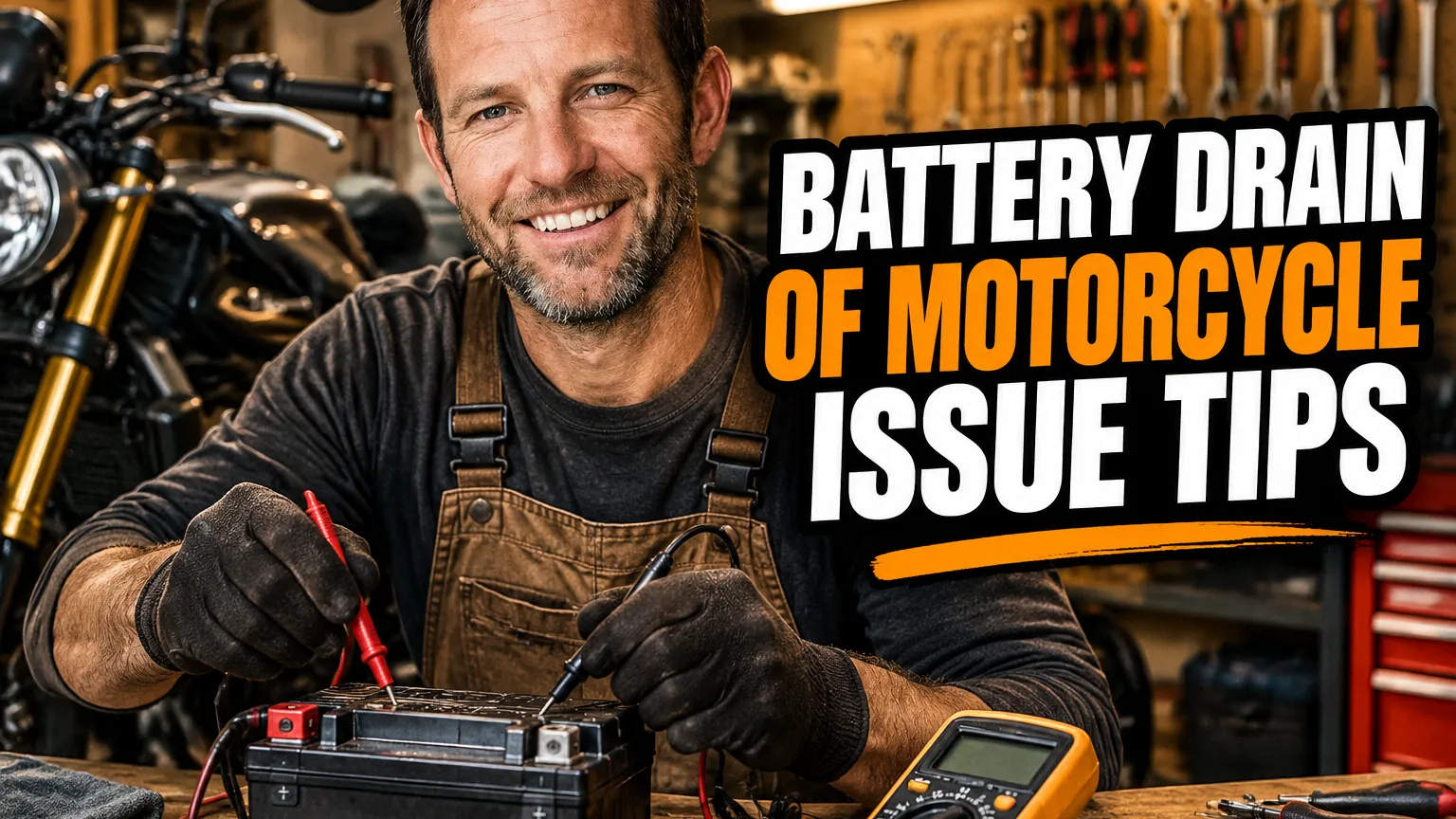
I’ve lost count of how many mornings I’ve walked out to my bike, turned the key, and heard nothing but a sad click. A dead motorcycle battery is one of the most annoying problems a rider can face, because it never happens at a convenient time. It always strikes when you’re already late, already geared up, or already dreaming about a long weekend ride. After years of troubleshooting this exact headache across my own bikes, I’ve learned that constant battery drain is rarely a mystery. It’s almost always one of a handful of fixable culprits. In this post, I’m sharing the battery drain of motorcycle issue tips that have genuinely saved me, plus the diagnostic habits that keep my bikes firing up on the first try.
- Most battery drain comes from a parasitic draw, a weak charging system, or an old battery that no longer holds a charge.
- You can test for parasitic drain at home with a cheap multimeter in about 15 minutes.
- Cold weather, short trips, and aftermarket accessories are the biggest hidden drain culprits.
- Replacing a worn battery with the right model is often the fastest permanent fix.
Why Motorcycle Batteries Drain So Fast In The First Place
Motorcycles have small batteries relative to the amount of work we ask them to do. A car battery has plenty of reserve capacity. My bike’s battery, by contrast, is tiny and delicate, which means even a small problem shows up fast.
Unlike cars, most motorcycles don’t have an alternator that charges at idle. They rely on a stator and regulator to recharge only once the engine is spinning above a certain RPM. That design means short trips around town barely top the battery back up.
Over time, this partial charging leaves the battery in a chronically low state. That’s the perfect environment for sulfation, which permanently reduces how much charge the battery can hold.
The Difference Between Drain And A Dead Battery
I think it helps to separate two problems that riders often lump together. One is an active drain, meaning something is pulling power while the bike sits. The other is a weak battery that simply can’t hold a charge anymore.
Both produce the same symptom: a bike that won’t start. But the fix is completely different, so diagnosing which one you have is the first real step.
How I Test For A Parasitic Draw At Home
A parasitic draw is any current flowing when the ignition is off. In a healthy bike, that should be almost nothing. If something is quietly sipping power overnight, you’ll find it with a basic multimeter.
My Step-By-Step Method
First, I make sure everything is off and the key is out. Then I disconnect the negative battery terminal and set my multimeter to measure DC amps.
I connect one probe to the negative battery post and the other to the disconnected negative cable, completing the circuit through the meter. A reading above roughly 50 milliamps tells me something is draining.
From there, I pull fuses one at a time and watch the reading. When the number drops, I’ve found the circuit responsible. It’s usually an aftermarket alarm, a USB charger, or a heated grip controller left wired to constant power.
Common Culprits I Keep Finding
Accessories wired directly to the battery are the number one offender in my experience. A GPS mount or phone charger can quietly kill a battery in a week. Some riders also leave a Bluetooth module or security system running constantly without realizing it.
If you’re adding electronics, always run them through a switched circuit or a relay so they power down with the key. That single habit has saved me more dead batteries than anything else.
Is Your Charging System Actually Working?
Even a perfect battery won’t stay charged if the charging system is weak. I test this by measuring battery voltage with the engine running. At idle it should read around 13 volts, and at higher RPM it should climb toward 13.5 to 14.5 volts.
If those numbers are low, the problem isn’t the battery at all. A failing stator or a bad regulator can slowly cook a battery or simply fail to recharge it, and no amount of jump-starting will fix it.
Why Cold Weather Makes It Worse
Cold temperatures reduce a battery’s ability to produce current and slow down the chemical reactions inside it. That’s why a marginal battery that worked all summer suddenly dies on the first cold morning.
I’ve learned to keep my bikes on a maintenance charger through winter. It’s a small investment that prevents a lot of springtime frustration.
Short Trips Are Quietly Killing Your Battery
This one took me a while to understand. My daily commute was only about ten minutes each way. That’s not enough engine time to replace the energy the starter used.
Doing this every day caused a slow, cumulative drain that left the battery permanently undercharged. The fix was simple: I started taking the longer route home a couple of times a week.
When A Trickle Charger Is Non-Negotiable
If your riding is mostly short hops, a smart trickle charger is essential. It tops the battery up and then maintains it without overcharging. I now consider it part of my normal routine, not an optional gadget.
Choosing A Battery That Won’t Let You Down
Sometimes the honest answer is that your battery is simply old and tired. Most motorcycle batteries last three to five years, and heat accelerates that decline. If mine is past that window and showing weakness, I stop troubleshooting and replace it.
Picking the right replacement matters a lot. When I was weighing my options, I read a detailed breakdown of the best battery brand for motorcycle use cases, and it helped me match chemistry to how I actually ride.
It’s also worth understanding exactly what is the best battery for a motorcycle in your specific situation, because a bike that sits for months needs a different battery than a daily commuter.
Aggregate Versus Lithium
Traditional lead-acid batteries are affordable and forgiving. Lithium batteries are lighter and hold charge longer, but they can be fussy in extreme cold and need a compatible charger.
For most riders I know, a good sealed AGM battery is the reliable middle ground. It’s maintenance-free and handles vibration and temperature swings better than a basic flooded cell.
Model-Specific Advice For Harley Riders
Harleys have their own quirks. They often have more electrical accessories and larger engines that demand strong cranking power. If your bike struggles to turn over, battery choice becomes even more critical.
I’ve talked to plenty of owners who swear by researching the best motorcycle battery for harley davidson options before buying, and it genuinely makes a difference in cold starts.
Sportster owners face an even more specific set of constraints because of the smaller battery box and tighter clearances. Finding the best motorcycle battery for harley sportster means balancing cranking amps with a physical fit.
Don’t Forget The Terminals
Loose or corroded terminals mimic battery drain perfectly. Before I replace anything, I clean every connection and apply a little dielectric grease. Twice now, that alone solved what I was sure was a dead battery.
Everyday Habits That Keep My Battery Healthy
Prevention beats repair every single time. I’ve built a few small habits that have kept my bikes starting reliably for years, and they cost almost nothing.
Beyond battery care, staying safe and prepared on the road matters just as much. I always revisit the top 10 motorcycle safety tips before a long trip, because a bike that dies unexpectedly is a safety issue, not just an inconvenience.
My Personal Checklist
I use a trickle charger whenever the bike will sit more than a week. I check voltage monthly with a simple meter. I avoid leaving accessories powered on, and I take the occasional longer ride to let the charging system do its job.
I also keep the battery clean and dry. Dirt and moisture around the terminals create tiny current paths that slowly drain power, and wiping them down takes seconds.
When To Stop Diagnosing And Just Replace It
There’s a point where troubleshooting costs more than a new battery. If yours is over four years old, fails a load test, or drops below 12.4 volts after sitting, replacement is the smarter move.
I’ve wasted hours chasing phantom drains on a battery that was simply worn out. Now I test the battery first, and only investigate the bike if the battery checks out healthy.
A Quick Decision Guide
If the battery is new and still drains, look for a parasitic draw. If it’s old and weak, replace it. If it’s new but never seems to charge, test the stator and regulator.
Writing this down on a sticky note in my garage has saved me from going in circles more than once.
Final Thoughts From The Saddle
A dead motorcycle battery is frustrating, but it’s almost always solvable. The battery drain of motorcycle issue tips I’ve shared here have kept my own bikes reliable through cold winters and short commutes alike.
Start with the simplest checks: voltage, connections, and parasitic draw. Most riders find the answer in that first fifteen minutes. And when it’s finally time for a new battery, choose one matched to your bike and your riding style.
Do that, and you’ll spend far more mornings riding than cursing a silent starter.

Related Articles

Scooters vs Motorcycles: My Honest, First-Hand Comparison After Riding Both for Years
After thousands of miles on both scooters and motorcycles, I break down cost, comfort, maintenance, and safety to help you…
Jake Miller
10 min read

7 Scooters That Look Like Motorcycles for Riders Who Want Style and Storage
Explore my top 7 scooters that look like motorcycles, from adventure crossovers like the Honda X-ADV to sporty maxis like…
Jake Miller
9 min read

How Long Do Honda Motorcycles Last? My 20-Year Owner’s Reality Check
Discover how long Honda motorcycles really last from an owner with 100k+ miles of experience. Learn maintenance secrets, high-mileage examples,…
Jake Miller
10 min read