
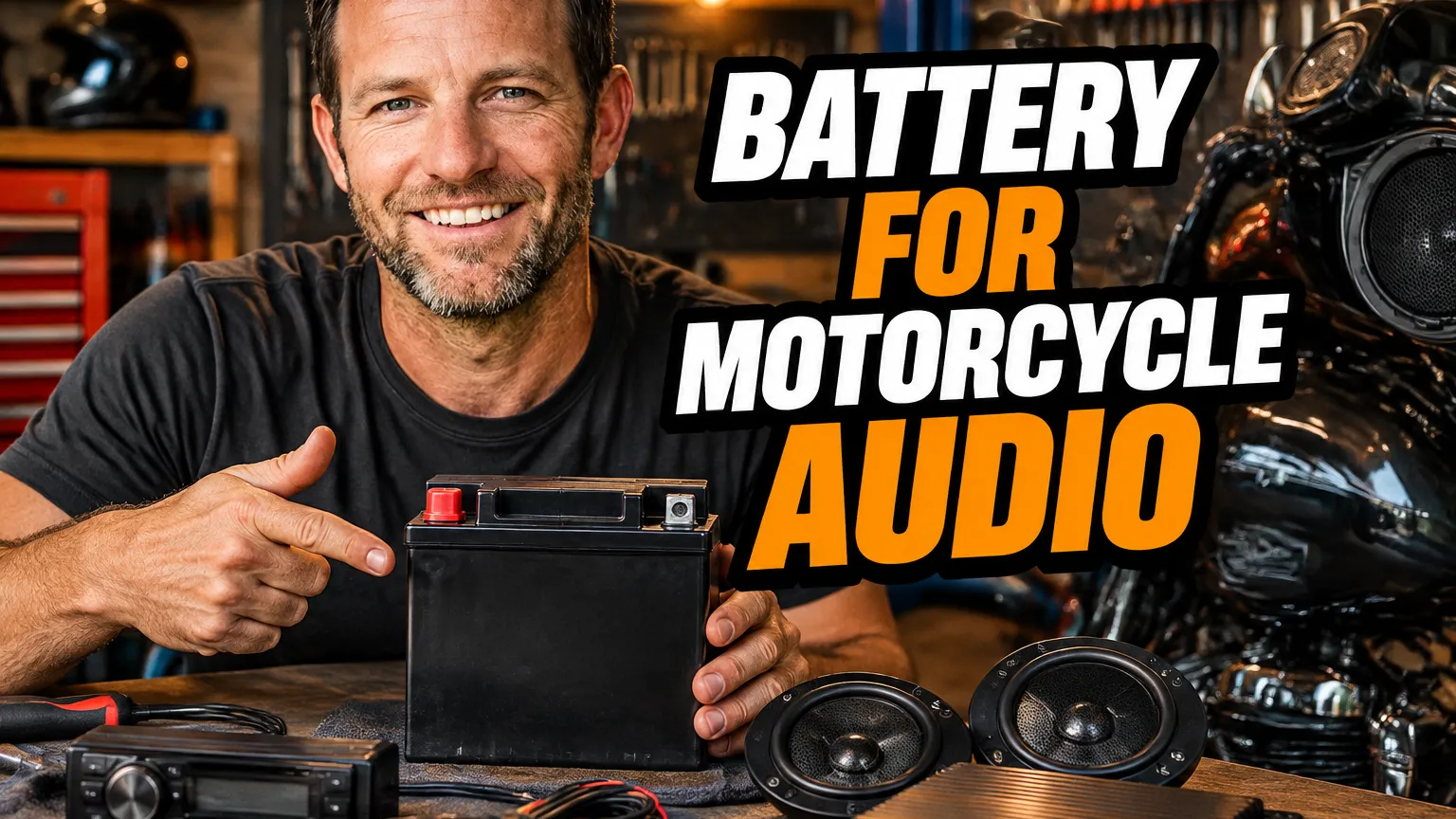
I’ve been running audio systems on my bikes for years, and I’ve learned the hard way that your stock battery isn’t always up to the task. Crank up an amplifier at a stoplight, and suddenly you’re wondering if your bike will start again. That’s why I’ve tested and researched batteries specifically suited for handling both engine starting duties and the continuous power draw of a solid audio setup.
The right battery makes all the difference between enjoying your favorite tracks on the highway and being stuck with a dead bike in a parking lot. I’m sharing my top picks based on actual riding experience, power capacity, and reliability when your sound system demands serious juice.
- AGM batteries offer the best balance of deep-cycle capability and starting power for most audio setups
- Lithium batteries deliver maximum power-to-weight ratio but cost significantly more upfront
- Dual-battery systems are ideal for high-power audio to protect your starting battery
- Always match battery capacity (Ah rating) to your actual audio power consumption
- Consider battery isolators or voltage-sensitive relays to prevent complete discharge
1. Odyssey PC680 — Best Overall for Motorcycle Audio
The Odyssey PC680 has been my go-to recommendation for years, and it’s currently powering the audio system on my touring bike. This pure lead AGM battery packs 16Ah of capacity into a compact package that fits most motorcycle battery trays without modification.
What sets the PC680 apart is its deep-cycle capability combined with 520 cold cranking amps. I’ve run a 400-watt RMS amplifier and a pair of coaxial speakers for hours at bike nights without killing my starting power. The battery bounces back quickly when you fire up the engine, thanks to its low internal resistance.
Odyssey rates this battery for 400 charge-discharge cycles at 80% depth of discharge, which is phenomenal compared to standard motorcycle batteries. In real-world use, I’ve seen these last 4-5 years even with heavy audio use. The non-spillable AGM design means you can mount it in any orientation, which is a huge plus for custom installations.
If you’re researching best battery brand for motorcycle options overall, Odyssey consistently ranks at the top for quality and longevity. The PC680 typically runs around $180-200, which isn’t cheap, but the performance justifies every dollar.
2. Shorai LFX18L1-BS12 — Best Lithium Battery for Audio
I switched to the Shorai LFX18L1-BS12 on my naked bike build specifically because I needed maximum power in minimal space. This lithium iron phosphate battery weighs just 2.6 pounds but delivers 18Ah capacity and up to 270 pulse cranking amps.
The weight savings alone make lithium tempting, but the real advantage for audio is the flat discharge curve and rapid recharge rate. When I’m powering my 300-watt system, voltage stays remarkably stable compared to AGM batteries under the same load. The battery management system prevents over-discharge, adding a layer of protection your audio gear will appreciate.
Shorai’s prismatic cell design allows significantly more usable capacity than the rating suggests. I’ve drawn 200 watts continuously for three hours at a rally without dropping below the safe voltage threshold. Once you start the engine, the battery recovers to full charge within 20-30 minutes of riding.
The main drawback is price—expect to pay $280-320 for the LFX18L1-BS12. Cold weather performance also lags behind AGM options below 40°F, though the battery warms up quickly once you start drawing current. For riders in warmer climates who prioritize weight and performance, this is my top lithium pick.
3. Antigravity Batteries AG-ATX20-RS — Best for High-Power Systems
When I upgraded to a 600-watt audio system on my bagger, I needed something that could handle serious continuous draws without compromising starting reliability. The Antigravity AG-ATX20-RS lithium battery delivers 24Ah equivalent capacity with 680 cranking amps, making it the powerhouse choice for demanding audio setups.
What makes this battery exceptional is the built-in restart feature. If you accidentally drain it completely (yes, I’ve done it), pressing the restart button gives you enough juice for one engine start. That emergency backup has saved me twice when I left my audio system on while grabbing lunch.
The AG-ATX20-RS includes wireless monitoring via Bluetooth, letting you check voltage and state of charge from your phone. I’ve found this incredibly useful for tracking how my audio system affects battery capacity over a typical riding day. The app alerts you before voltage drops to critical levels.
This battery fits standard group 20 trays and weighs just 5.5 pounds compared to 15+ pounds for comparable lead-acid batteries. The compact size freed up space in my battery compartment for a small amplifier. Pricing sits around $400-450, positioning it as a premium option that’s worth every cent if you’re running serious audio power.
4. Yuasa YTX20L-BS — Best Budget AGM Option
Not everyone needs or wants to spend $300+ on a battery, and that’s where the Yuasa YTX20L-BS comes in. I’ve used this battery on multiple bikes, and it consistently delivers solid performance for moderate audio systems without breaking the bank.
The YTX20L-BS provides 18Ah capacity and 270 cold cranking amps in a proven AGM design. When you’re looking at what is the best battery for a motorcycle on a budget, Yuasa’s reputation for reliability makes this an obvious choice. I’ve powered a 250-watt system with head unit and speakers on this battery with no issues.
Yuasa’s sealed maintenance-free construction means you can install it and forget it for years. I’ve gotten 3-4 seasons out of these batteries even with regular audio use, which is respectable longevity at the $120-150 price point. The factory-activated design means it arrives ready to install—no charging or filling required.
This battery won’t handle the deep discharge cycles of more expensive options, so I recommend pairing it with a battery isolator if you’re running amplifiers. For basic audio setups with head units and mid-range speakers, the YTX20L-BS offers excellent value without sacrificing too much performance.
5. Motocross MBTX20UHD — Best for Harley Audio Upgrades
Harley riders upgrading their factory audio or adding aftermarket systems need batteries that fit specific mounting requirements while delivering extra power. The Motocross MBTX20UHD is designed specifically for this application, and I’ve installed it on several touring and bagger builds with excellent results.
This high-density AGM battery provides 21Ah capacity and 310 cold cranking amps, giving you plenty of headroom for upgraded speakers and amplifiers. The sealed construction prevents acid leaks even with Milwaukee vibration, and the pure lead plates offer superior deep-cycle performance compared to standard lead-calcium designs.
For riders researching best motorcycle battery for harley davidson audio applications, the MBTX20UHD fits most touring models from 1997 onward without modification. I’ve used it on Road Glides and Street Glides, and it drops right into the factory battery tray.
The battery includes built-in terminal protectors and comes with all necessary mounting hardware. At around $170-190, it sits in the mid-range price bracket while delivering premium performance. I’ve seen these last 4+ years on bikes with upgraded Rockford Fosgate or Kicker audio systems pulling 400+ watts.
Sportster Considerations
If you’re running a Sportster with audio, you’ll need a different size. Check out options for best motorcycle battery for harley sportster models, as they use smaller group sizes that won’t fit touring bike trays. The MBTX14AU is Motocross’s equivalent for Sportster applications.
6. EarthX ETX18C — Best Lightweight Audio Battery
The EarthX ETX18C lithium battery caught my attention when I was building a custom scrambler with a hidden audio system. At just 2.3 pounds, it’s one of the lightest batteries capable of handling both starting and audio duties without compromise.
This battery delivers 18Ah equivalent capacity with integrated Battery Management System that protects against over-discharge, over-charge, and short circuits. I’ve run a 350-watt system on this battery for extended periods without any voltage sag issues. The flat discharge curve maintains consistent audio performance even as the battery depletes.
EarthX includes a built-in jump-start feature similar to Antigravity’s system. Press the button on the battery case, and it reserves enough charge for one engine start. This safety net has proven valuable during long parking lot sessions at bike shows where I’m running audio without the engine.
The ETX18C fits most standard motorcycle battery boxes and includes foam spacers for custom fitment. I’ve mounted it in unconventional locations thanks to its compact size and any-angle capability. Pricing runs $320-360, positioning it as a premium lightweight option that competes directly with Shorai and Antigravity offerings.
7. Mighty Max ML-U1 — Best Auxiliary Battery for Dual Setups
Sometimes the best solution for serious audio systems isn’t a single better battery—it’s adding a dedicated auxiliary battery. The Mighty Max ML-U1 is my preferred auxiliary battery for dual-battery motorcycle audio installations because it’s affordable, reliable, and specifically designed for deep-cycle applications.
This sealed AGM battery provides 33Ah capacity at a fraction of the cost of high-end lithium options. I run it as a dedicated audio battery with a voltage-sensitive relay isolating it from my starting battery. This setup means I can drain the Mighty Max completely powering my 500-watt system without affecting my ability to start the bike.
The ML-U1 measures 7.75 x 5.16 x 7.16 inches, making it larger than standard motorcycle batteries but still manageable in saddlebags or custom mounts. I’ve installed these in tour packs, behind side panels, and in custom under-seat battery boxes on baggers and cruisers.
At around $75-90, the Mighty Max represents incredible value for dual-battery systems. It won’t win any weight or technology awards, but it delivers consistent power for audio applications where starting current isn’t required. For riders with best motorcycle battery for honda magna or other cruisers with storage space, this auxiliary approach offers maximum flexibility.
Installing a Dual-Battery System
Adding an auxiliary battery requires proper isolation to prevent draining your starting battery. I always use a voltage-sensitive relay (VSR) that automatically connects batteries when the engine is running and disconnects them when voltage drops below threshold. Blue Sea Systems and Cole Hersee make reliable isolators that handle the current demands of motorcycle audio.
What to Consider When Choosing an Audio Battery
Capacity vs. Cranking Amps
I’ve learned that cranking amps matter for starting your bike, but amp-hour (Ah) capacity determines how long you can run audio without the engine. A 250-watt RMS system draws roughly 20-25 amps at 12 volts. Calculate your runtime needs and choose capacity accordingly—I typically recommend at least 18Ah for any bike with amplifiers.
Battery Chemistry Trade-offs
AGM batteries cost less and work in all temperatures, but they’re heavy and have limited deep-cycle capability. Lithium batteries weigh a fraction as much and handle deep discharge better, but they cost 2-3x more and struggle below freezing until warmed up. I choose AGM for bikes I ride year-round and lithium for warm-weather machines where weight matters.
Physical Size and Mounting
The best battery in the world won’t help if it doesn’t fit your bike. I always verify dimensions against the battery tray before ordering. Some bikes have oddly shaped compartments that favor specific battery footprints. Measure twice, order once—especially with expensive lithium batteries that can’t be returned once installed.
Protection and Monitoring
I strongly recommend adding a battery voltage monitor visible from the rider’s seat. Simple LED voltmeters cost $10-15 and prevent accidental deep discharge that kills battery lifespan. For premium batteries with Bluetooth monitoring, the app alerts provide real-time insight into how your audio system affects battery health.
My Installation and Usage Tips
After installing dozens of audio batteries on various bikes, I’ve developed some best practices that maximize performance and longevity. First, always use proper gauge wiring for audio power runs—undersized wires create voltage drops that force the battery to work harder. I use 4-gauge wire for amplifiers drawing more than 60 amps.
Second, consider adding a dedicated audio circuit with inline fuse protection separate from your bike’s main electrical system. This prevents audio issues from affecting critical bike functions and makes troubleshooting significantly easier. I wire directly from the battery positive terminal through a fuse holder to the amplifier.
Third, invest in a quality battery tender if you don’t ride daily. Audio batteries work best when maintained at full charge, and modern smart chargers prevent overcharging while extending battery life. I use Battery Tender Plus models on all my bikes with audio systems.
Breaking In Lithium Batteries
Lithium batteries benefit from a proper break-in period. I run three full charge-discharge cycles before connecting heavy audio loads. This allows the Battery Management System to calibrate and ensures you’re getting accurate capacity readings. The battery will perform better and last longer with this initial conditioning.
Common Mistakes I’ve Seen (and Made)
The biggest mistake riders make is undersizing the battery for their actual audio power demands. That $1,200 amplifier won’t sound good if your $80 battery can’t supply clean power. I calculate total system draw and add 30% headroom when specifying battery capacity.
Another common error is neglecting proper grounding. I’ve troubleshooted countless audio systems where poor ground connections caused voltage drops that mimicked weak battery symptoms. Always use dedicated ground wires back to the battery negative terminal—never rely on frame grounds for high-current audio circuits.
Finally, riders often forget that audio batteries still need proper charging system capacity. Your bike’s alternator must be able to recharge the battery while supplying audio power during riding. I’ve seen bikes with upgraded audio but stock alternators that couldn’t keep up, leading to chronic undercharging and premature battery failure.
Final Thoughts on Audio Battery Selection
Choosing the right battery for your motorcycle audio system depends on your specific power requirements, budget, and riding style. I’ve had excellent experiences with all the batteries on this list, each excelling in its particular category.
For most riders with moderate audio systems, the Odyssey PC680 offers the best balance of performance, reliability, and value. If weight is critical or you’re building a high-performance machine, the Shorai or Antigravity lithium options deliver incredible power-to-weight ratios despite their premium pricing.
Budget-conscious riders will find the Yuasa YTX20L-BS provides solid performance without compromising too much capability. And for serious audio enthusiasts running 500+ watt systems, the dual-battery approach with a Mighty Max auxiliary battery offers maximum flexibility and protection.
Whatever battery you choose, proper installation with adequate wiring, fusing, and monitoring will ensure you enjoy your audio system without worrying about starting your bike. I’ve never regretted investing in quality battery infrastructure—it’s the foundation that makes everything else work reliably.
Frequently Asked Questions
Can I use a regular motorcycle battery for my audio system?
Yes, but dedicated audio batteries or dual-battery setups work better. Standard batteries can drain quickly when powering amps and speakers, leaving you stranded.
What type of battery is best for motorcycle audio?
AGM and lithium batteries are ideal. AGM offers deep-cycle capability at lower cost, while lithium provides maximum power in minimal space with faster recharge rates.
How many amp hours do I need for motorcycle audio?
For a basic setup (head unit + speakers), 12-18Ah works. If you’re running amplifiers and subwoofers, aim for 20-30Ah or consider a dedicated auxiliary battery.
Will adding audio drain my motorcycle battery?
It can. High-power systems draw significant current. Using a battery isolator or dual-battery system protects your starting battery while keeping the music flowing.

Related Articles

Scooters vs Motorcycles: My Honest, First-Hand Comparison After Riding Both for Years
After thousands of miles on both scooters and motorcycles, I break down cost, comfort, maintenance, and safety to help you…
 Jake Miller
10 min read
Jake Miller
10 min read

7 Scooters That Look Like Motorcycles for Riders Who Want Style and Storage
Explore my top 7 scooters that look like motorcycles, from adventure crossovers like the Honda X-ADV to sporty maxis like…
Jake Miller
9 min read

How Long Do Honda Motorcycles Last? My 20-Year Owner’s Reality Check
Discover how long Honda motorcycles really last from an owner with 100k+ miles of experience. Learn maintenance secrets, high-mileage examples,…
Jake Miller
10 min read