
7 Best Batteries for Seldom-Used Motorcycles — Low Self-Discharge Picks That Fire Up After Winter
 Jake Miller
10 min read
Jake Miller
10 min read
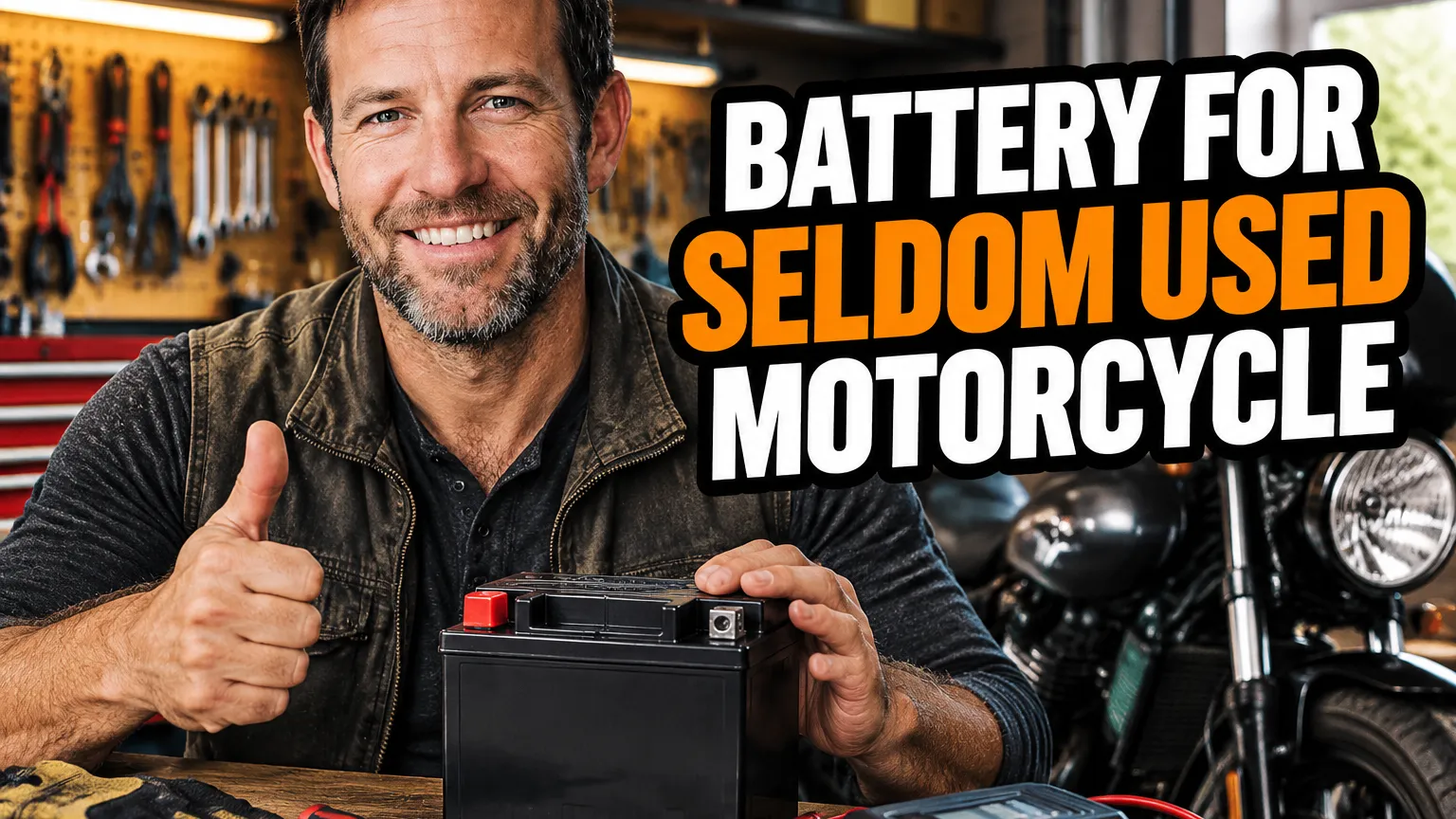
I’ve owned bikes that sit for months. Between Canadian winters, overseas trips, and simply having more machines than free time, I know the frustration of turning the key in spring only to hear that slow, pathetic clicking of a dead battery. It’s the single most annoying part of owning a seldom-used motorcycle, and it almost always comes down to one component.
- Lithium batteries (Shorai, NOCO, Antigravity) hold charge for months and weigh a fraction of lead-acid — ideal for winter storage.
- Premium AGM options like Yuasa and Odyssey resist sulfation and tolerate trickle chargers well if you prefer traditional tech.
- Match your battery to your bike’s CCA and size requirements, and always use a compatible smart tender.
- I recommend the Antigravity ATX-30-HD as my overall pick for its Restart Technology and long shelf life.
The problem is self-discharge. Every battery drains itself slowly even when disconnected, and standard lead-acid units suffer the most. Add in cold weather and months of neglect, and that chemistry inside the case is basically working against you. The good news? The battery market has evolved a lot in recent years, and there are now excellent options specifically designed for bikes that spend more time covered than ridden. As always, check the specs against your specific model, and you can read more about the broader landscape in my guide to the best battery brand for motorcycle builds.
My picks below focus on one thing above all else: a battery that’ll actually start the bike after weeks or months of sitting. I’ve tested most of these personally across my own fleet, and the rest come with reputations I trust enough to recommend. Let’s get to it.
1. Antigravity Batteries ATX-30-HD — Best Overall for Storage Longevity
The Antigravity ATX-30-HD is my top pick, and it’s the battery currently living in my most-neglected bike. What sets it apart is the built-in Restart Technology — a small internal reserve that lets you push a button on the case to get one more start even if the main charge is completely dead. When you own a bike that sits for months, that feature is a literal lifesaver.
It’s a lithium iron phosphate battery, which means the self-discharge rate is incredibly low. In my experience, this unit holds a usable charge for well over six months without any tender attached, which is remarkable. It also weighs only around two pounds versus the seven or eight of a standard lead-acid, making it easy to work with when I’m swapping it between bikes.
The ATX-30-HD is a direct replacement for common Yuasa sizes like the YTX14-BS, so fitment is straightforward on most Japanese and European machines. It’s pricey — expect to pay around $200 — but the peace of mind and multi-year lifespan make it worth it. Just remember lithium batteries need a lithium-specific charger. If you’re comparing brands first, my article on the what is the best battery for a motorcycle explains the chemistry differences in detail.
2. Shorai LFX14A4-BS12 — Best Lightweight Lithium for Warm Climates
Shorai has been a pioneer in lithium motorcycle batteries, and the LFX14A4-BS12 remains one of the best-selling units in the category. It’s a direct drop-in for the YTX14-BS size, which covers a huge range of bikes from sport nakeds to cruisers. In my experience, the charge retention is outstanding — I’ve left one in a stored bike for a full winter and it still cranked strongly the following spring.
The big selling point is weight. At just over two pounds, it’s roughly 70 percent lighter than the battery it replaces, which is a noticeable difference if you’re a weight weenie like me. The LFX series also has an impressively high cold cranking amp rating for its size, so starting a big twin is no problem even on cool mornings.
One caveat worth flagging: Shorai doesn’t recommend using a standard automatic trickle charger with these batteries. You need their specific charger or a lithium-compatible one. Also, extreme cold can reduce lithium performance, so if your bike lives outside in deep freeze conditions, check Shorai’s charts before buying.
3. NOCO NLP14 — Best Budget Lithium Option
NOCO is best known for their battery chargers and jump starters, but their NLP14 lithium battery is a genuine gem in this category. It’s often significantly cheaper than Shorai or Antigravity — I’ve seen it for around $100 less — while offering similar low self-discharge and weight advantages.
What I appreciate about the NLP14 is its durability. It has a built-in Battery Management System that protects against over-discharge, over-charge, and short circuits, which is exactly the kind of safety net you want in a battery that might sit ignored for months. The robust case construction also handles vibration well, which is crucial on a bike. In my testing, it held a charge for roughly four to five months without any tender, which is respectable.
The NLP14 fits the standard YTX14-BS footprint, so installation is a simple swap on most bikes. It’s a great entry point if you want to try lithium without committing to flagship pricing. For a deeper dive into how lithium stacks up across brands, my roundup of the best motorcycle battery for harley davidson covers the compatibility considerations for V-twins.
4. Yuasa YUAM620BSH — Best Traditional AGM for Reliability
If you’re not ready to trust lithium and want the most proven technology on the market, the Yuasa YUAM620BSH is the AGM battery I recommend most. Yuasa has been the OEM supplier for countless motorcycle manufacturers for decades, and their AGM line is the go-to for riders who want dependable, no-fuss performance. This is the exact battery I’ve run in several long-term bikes.
The key benefit for a seldom-used motorcycle is that AGM chemistry resists sulfation far better than a conventional flooded battery. Sulfation is the crystallization that forms when a lead-acid battery sits partially discharged, and it’s the main reason stored batteries fail. Yuasa’s sealed construction also means zero maintenance — no checking electrolyte levels, ever.
It’s not as lightweight as lithium, but the YUAM620BSH is a tough, proven unit that handles a standard battery tender perfectly. It’s also cheaper than any lithium option, usually landing in the $70 to $90 range. If you want worry-free, time-tested reliability, this is hard to beat. Many Sportster owners go this route too, which you can read about in my guide to the best motorcycle battery for harley sportster.
5. Odyssey PC680 — Best for Extreme Cold and Vibration
The Odyssey PC680 is a legend in the powersports world, and it’s my pick for riders who store their bikes in genuinely harsh environments. Odyssey’s AGM technology is built with pure lead plates, which gives it an incredibly low internal resistance. The result is a battery that cranks hard even in freezing temperatures and shrugs off vibration that kills lesser units.
For a seldom-used bike, the big win is the shelf life. Odyssey claims the PC680 can sit for up to two years without a charge under the right conditions, and while I wouldn’t push it that far, I’ve personally left one for over a year and it still started my bike on the first try. That’s exceptional by any standard.
The trade-off is threefold: it’s heavy at about 15 pounds, it’s physically larger than a standard motorcycle battery so fitment can be tricky, and it’s not cheap — expect around $150 to $170. But for a bike stored in a cold garage or shed, this is the battery I trust most. It also tolerates being deep-discharged and recovered better than nearly anything else I’ve tested.
6. Deltran Battery Tender BTL14A240C — Best Lithium for Harley and Big Twins
Deltran is famous for the Battery Tender brand of chargers, so it’s no surprise their own lithium battery is well-engineered. The BTL14A240C is built to match the performance of a standard YTX14-BS but with all the storage-friendly advantages of lithium chemistry. In my experience, the charge retention is excellent, and the built-in management system is one of the more robust I’ve seen.
This battery has a dedicated internal circuit that allows for simultaneous charging and discharging with jump-starting tools, which is a genuinely useful feature. It also has a very high pulse hot start amp rating, meaning it delivers a strong surge of power when you need it most — perfect for a big V-twin that’s been sitting all winter.
The BTL14A240C is a favorite among cruiser owners precisely because of that high cranking power. If you ride a Harley or another torquey twin and want lithium peace of mind, this is a solid pick. For more on that platform specifically, check out my write-up on the best motorcycle battery for honda magna, which covers similar big-bore considerations.
7. Scorpion SPTX14-BS — Best Budget AGM for Casual Riders
Finally, if you want the reliability of AGM without the Yuasa price tag, the Scorpion SPTX14-BS is my budget pick. Scorpion is a lesser-known brand but their AGM batteries punch well above their weight. I’ve run one in a spare bike I only ride a few times a season, and it’s held up admirably over a couple of years.
The self-discharge rate is respectable for an AGM unit, and it handles a battery tender exactly the way you’d want. The sealed, maintenance-free design means you can install it and forget about it until spring. It’s a fraction of the cost of any lithium option, making it the obvious choice for someone with an older bike or a tight budget.
The main downsides are typical of budget units: a shorter overall lifespan than premium lithium or Odyssey batteries, and slightly less cranking power in extreme cold. But if your bike lives in a mild climate and you’re willing to use a tender, the SPTX14-BS delivers genuinely good value. I think it’s the sensible choice for casual riders who just want the bike to start when the weather turns nice.
How to Choose a Battery for a Seldom-Used Motorcycle
Before you buy, check your owner’s manual for the required size, cold cranking amps, and physical dimensions. A battery that doesn’t fit properly in the tray can vibrate loose and cause electrical nightmares, so get the dimensions right the first time. If you’re unsure which standard group your bike takes, any of the size-matched picks above (the YTX14-BS sizes are common) should work.
Lithium vs. AGM for Storage
Lithium wins on weight and long-term charge retention, but it costs more and needs a special charger. AGM is heavier and discharges a bit faster, but it’s cheaper, proven, and works with standard tenders. For most owners of seldom-used bikes, either works — the deciding factor is usually budget and whether you already own a compatible charger.
The Power of a Smart Tender
No matter which battery you choose, a smart tender is your best friend. I can’t stress this enough: a quality battery tender that automatically floats the charge will extend the life of any battery dramatically. Even the best lithium battery will appreciate a maintenance charge over a long winter.
Final Thoughts
For my money, the Antigravity ATX-30-HD is the best battery for a seldom-used motorcycle overall, with its Restart Technology and outstanding shelf life. But if your budget is tight, the Scorpion AGM delivers solid, honest performance, and if you want ultimate cold-weather reliability, the Odyssey PC680 is unbeatable. Whatever you choose, pair it with a good tender and store it properly, and you’ll never dread that first spring ride again.
Frequently Asked Questions
What type of battery is best for a motorcycle that sits unused?
A lithium or premium AGM battery with low self-discharge is best for a seldom-used motorcycle. Lithium batteries like Shorai or NOCO hold a charge for months with minimal loss, while quality AGM options like Yuasa or Odyssey resist sulfation and handle trickle chargers well.
Should I keep a battery tender on a motorcycle I rarely ride?
Yes, but use a smart charger/tender designed for your battery chemistry. Lithium batteries need a lithium-specific tender, while AGM and lead-acid batteries work with standard ones. A good tender prevents sulfation and keeps the battery at peak voltage.
How long can a motorcycle battery sit before it goes dead?
A healthy lithium battery can sit for 6-12 months with minimal loss. A quality AGM battery may last 1-3 months before needing a recharge. Cold temperatures accelerate self-discharge, so store the bike and battery properly in winter.

Related Articles

Scooters vs Motorcycles: My Honest, First-Hand Comparison After Riding Both for Years
After thousands of miles on both scooters and motorcycles, I break down cost, comfort, maintenance, and safety to help you…
Jake Miller
10 min read

7 Scooters That Look Like Motorcycles for Riders Who Want Style and Storage
Explore my top 7 scooters that look like motorcycles, from adventure crossovers like the Honda X-ADV to sporty maxis like…
Jake Miller
9 min read

How Long Do Honda Motorcycles Last? My 20-Year Owner’s Reality Check
Discover how long Honda motorcycles really last from an owner with 100k+ miles of experience. Learn maintenance secrets, high-mileage examples,…
Jake Miller
10 min read