
8 Best Oils for Harley-Davidson Motorcycles: Rider-Tested Picks for Every Budget
 Jake Miller
9 min read
Jake Miller
9 min read
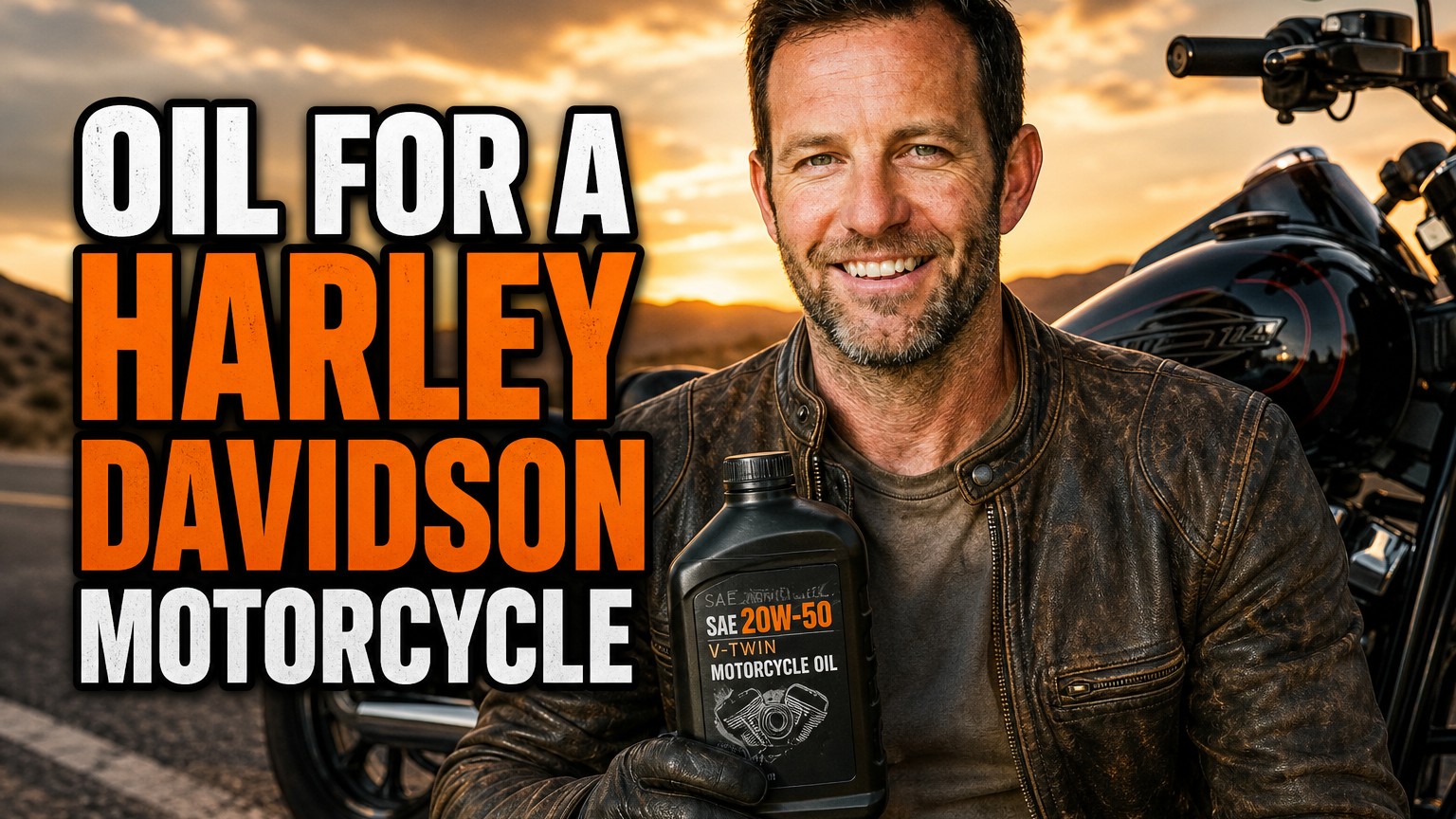
I’ve been wrenching on and riding Harleys for years, and no question gets asked more at the gas pump than “What oil are you running?” Everybody has an opinion, and many of them are loud. After plenty of oil changes, a few oil analysis reports, and one very hot summer in traffic, I’ve settled on some firm views.
Air-cooled V-Twins are tough, but they run hot and put real stress on oil. The right bottle can mean smoother shifting, cooler running, and a longer-lasting engine. The wrong one can mean a clattery top end and a lighter wallet.
Below are the eight oils I trust and recommend, with honest notes on who each one suits best.
- For most air-cooled Harleys, a quality 20W-50 synthetic is the sweet spot for heat protection and longevity.
- My overall pick is Harley-Davidson Genuine SYN3, while Mobil 1 V-Twin is my best value synthetic.
- Budget riders and older bikes do great with Valvoline V-Twin or H-D 360, as long as changes stay on schedule.
- Always check your manual first. Sportsters and Revolution Max engines can have different requirements than Big Twins.
Before You Buy: What I Look for in a Harley Oil
Not every bottle labeled “motorcycle oil” is equal. Before I get to my picks, here’s the checklist I run through every time I shop.
Viscosity Matters More Than Brand Loyalty
Most air-cooled Harleys, including Twin Cam, Evo, and Milwaukee-Eight engines, are happiest on 20W-50. In very cold climates, some riders drop to 10W-40 or 15W-50. Check the manual for your specific model and year.
Newer liquid-cooled Revolution Max engines, like those in the Pan America and Sportster S, are a different story. They call for a lighter oil, so don’t assume every Harley wants 20W-50.
Know Your Oil System
On Big Twins, the engine, primary, and transmission each have their own fluid. That makes oil choice simple. Older Sportsters share engine and transmission oil, so a wet-clutch-friendly formula matters a lot more there.
If you’re digging into the broader topic, I put together some thoughts on the best engine oil for motorcycle riders across all brands. It’s a good companion read.
Synthetic, Blend, or Conventional?
I lean synthetic for anything I ride regularly. It handles heat spikes better and stays stable longer. Conventional is still fine for a garage-kept classic that sees light use.
1. Harley-Davidson Genuine SYN3 Full Synthetic 20W-50 — Best Overall
When I want zero second-guessing, I reach for Harley-Davidson Genuine SYN3 Full Synthetic 20W-50. It’s formulated specifically for air-cooled Harley engines and meets the factory’s own requirements. It’s also what dealers use, which matters if you care about warranty paperwork.
On my own bike, SYN3 gave me noticeably smooth shifting and a quieter valvetrain on hot days. It’s designed to resist shear and thermal breakdown in stop-and-go riding, which is exactly where air-cooled engines suffer.
Expect to pay roughly $12 to $17 per quart. It’s not the cheapest, but I consider it the safest bet.
Who Should Buy It
Anyone on a newer Harley under warranty, or a rider who wants a no-drama choice. If you want to keep things simple, this is it.
2. Mobil 1 V-Twin 20W-50 Synthetic — Best Value Synthetic
I’ve run Mobil 1 V-Twin 20W-50 through multiple seasons, and it’s the one I recommend most to friends on a budget. It’s a full synthetic built for air-cooled V-Twins, with strong anti-wear additives and good heat resistance.
What I like most is availability. I can grab Mobil 1 V-Twin at most big-box stores and many motorcycle shops, usually for around $12 to $15 per quart. It’s also easy to find in a pinch on a road trip.
In my experience, it keeps the engine feeling smooth and the shifting positive. It’s a great do-it-all synthetic.
3. AMSOIL Signature Series 20W-50 Synthetic V-Twin Motorcycle Oil — Best for Hard Riding and Heat
When I’m planning a long summer ride through hot, congested areas, AMSOIL Signature Series 20W-50 V-Twin is on my shortlist. AMSOIL has a strong reputation for heat resistance and film strength, and it’s formulated to protect engines under serious load.
It’s pricier, usually about $14 to $18 per quart, and often sold direct or through dealers. That extra cost buys peace of mind for riders who push their bikes hard.
If you’re curious how it stacks up against other options, my write-up on the best motorcycle engine oil brand options covers how brands compare in general.
My Take
I like AMSOIL for touring riders and anyone running a built or high-compression engine. I’d still follow the interval your manual recommends rather than stretching it just because the label sounds impressive.
4. Red Line 20W50 Motorcycle Oil — Best for Hot Climates and Big-Bore Builds
Red Line 20W50 Motorcycle Oil is a synthetic ester-based oil that I’ve used when the bike lives in high heat. Ester base stocks cling to metal surfaces well, which helps protect during cold starts and high-temperature running.
It tends to run about $13 to $17 per quart. It’s a favorite among riders with stage-upgraded engines, and I can see why.
One thing I noticed: it feels a little thicker out of the bottle, but the engine ran confident and composed even in 95°F traffic.
5. Royal Purple Max-Cycle 20W-50 — Best for Performance Builds
If your Harley has been upgraded with a big-bore kit, cams, or a tuned fuel map, take a look at Royal Purple Max-Cycle 20W-50. It’s a full synthetic with Royal Purple’s Synerlec additive technology, designed to improve film strength and reduce wear.
I like that Max-Cycle is made for motorcycles and is safe for wet clutches. It typically sells for $13 to $17 per quart.
For a stock bike on a budget it may be overkill, but for a modified engine I find the extra protection worthwhile.
6. Valvoline V-Twin 20W-50 Synthetic — Best Budget Pick
Not everyone wants to spend $15 a quart, and I get that. Valvoline V-Twin 20W-50 is a solid, affordable option that’s purpose-built for air-cooled V-Twin engines.
It usually lands at about $10 to $14 per quart, and I’ve found it gives reliable performance for commuting and weekend riding. It isn’t flashy, but it does the job.
If you change your oil on time, this is a smart way to save money without handing your engine a cheap, generic fluid. It’s also a good place to start if you’re comparing options like the best motor oil for 4 stroke motorcycle engines in general.
7. Harley-Davidson H-D 360 Motorcycle Oil 20W-50 — Best Conventional Option for Older Bikes
I keep a couple of quarts of H-D 360 Motorcycle Oil 20W-50 around for older bikes and low-mileage cruisers. It’s Harley’s more traditional, mineral-based formula, designed for air-cooled engines with proven additive chemistry.
Price is the draw: usually $9 to $12 per quart. For a vintage Evo or a garage-kept bike that sees light use, it’s more than adequate.
The tradeoff is that conventional oil breaks down faster under extreme heat. I’d shorten my change interval a bit if I’m riding in the summer.
When I’d Skip It
I wouldn’t use H-D 360 on a heavily loaded touring bike in a hot region. A full synthetic is simply more forgiving there.
8. Motul 7100 4T 20W-50 — Best Ester-Based Synthetic for Smooth Shifting
Motul 7100 4T 20W-50 is a 100% synthetic ester-based oil, and it’s the one I recommend to riders who obsess over shifting feel. It carries a JASO MA2 rating, which means it’s safe for wet clutches. That’s a big deal if you ride an older Sportster with shared oil.
It costs about $14 to $18 per quart. I found that it gave crisp, smooth gear changes and a very composed engine feel.
If you’re researching more options, my breakdown of the top engine oil for 4 stroke motorcycle riders may help you compare ester-based choices.
Quick Comparison: My Picks at a Glance
- Best overall: Harley-Davidson Genuine SYN3 20W-50
- Best value synthetic: Mobil 1 V-Twin 20W-50
- Best for heat and hard riding: AMSOIL Signature Series V-Twin 20W-50
- Best for hot climates and big-bore builds: Red Line 20W50
- Best for performance builds: Royal Purple Max-Cycle 20W-50
- Best budget: Valvoline V-Twin 20W-50
- Best conventional for older bikes: H-D 360 20W-50
- Best ester-based for shifting feel: Motul 7100 4T 20W-50
Oil Change Tips I Wish I’d Known Sooner
Warm the Engine First
I always run the bike for a few minutes before draining. Warm oil flows faster and carries more contaminants out with it.
Replace the Filter Every Time
A fresh oil filter is cheap insurance. I never reuse an old one, because it defeats the purpose of putting in clean oil.
Check the Level Correctly
Harley dipsticks can be tricky. Follow your manual’s procedure for checking level, since some models want the bike upright and warm, while others want a specific wait time.
Don’t Ignore the Other Fluids
Primary and transmission fluid matter just as much on Big Twins. I change them on schedule and use the recommended fluids rather than assuming engine oil will work.
A Note for Riders Outside the U.S.
Availability and climate change which oils make sense. If you’re riding in hot, humid conditions, my guide to the best engine oil for 4 stroke motorcycle in india offers helpful context on how heat and local brands affect your choices.
My Final Verdict
If you want one answer, my pick is Harley-Davidson Genuine SYN3 20W-50. It’s engineered for these engines, easy to find, and backed by the factory. For value, Mobil 1 V-Twin is hard to beat.
The biggest mistake I see isn’t picking the “wrong” brand. It’s skipping changes or ignoring the viscosity in the manual. Pick a quality oil, change it on time, and your Harley will reward you with years of loud, happy miles.
Always confirm viscosity and specifications in your owner’s manual before buying, since requirements vary by model and year.
Frequently Asked Questions
What viscosity oil does a Harley-Davidson use?
Most air-cooled Harley V-Twins (Twin Cam, Evo, Milwaukee-Eight) call for 20W-50 in normal conditions. Some newer liquid-cooled Revolution Max engines call for 15W-50 instead, so always check your owner’s manual for your exact model and year.
Is synthetic oil better for a Harley?
For most riders, yes. Synthetic oil resists heat breakdown better, which matters in air-cooled engines that run hot in traffic. Conventional oil still works fine for older, low-stress bikes if you change it on schedule.
Can I use car oil in my Harley-Davidson?
I don’t recommend it. Many modern car oils contain friction modifiers and a lower zinc (ZDDP) content that are formulated for catalytic converters, not for air-cooled V-Twins. A motorcycle-specific 20W-50 is the safer choice, especially on models where the engine and transmission share oil.
How often should I change the oil in my Harley?
Harley’s own schedule is typically every 5,000 miles for many modern models, and sooner for older bikes or hard riding. I change mine earlier if I ride in extreme heat, do lots of stop-and-go, or the bike sits for long periods.

Related Articles

7 Best Batteries for Motorcycles I’ve Tested and Trust in 2026
I've tested dozens of motorcycle batteries to find the best performers. From AGM to lithium, here are my top picks…
Jake Miller
15 min read

7 Best Motorcycle Batteries for Honda Magna (V30, V45, V65)
I've tested the best motorcycle batteries for Honda Magna models. From AGM to lithium options, find the perfect power source…
Jake Miller
14 min read

7 Best Battery Brands for Motorcycles That Actually Start Every Time
I've tested dozens of motorcycle batteries over the years. These 7 brands deliver reliable starts, long life, and real value—from…
Jake Miller
15 min read