
The Complete Guide to Harley Davidson Engines: Evolution, Performance, and What Makes Them Legendary
 Jake Miller
12 min read
Jake Miller
12 min read
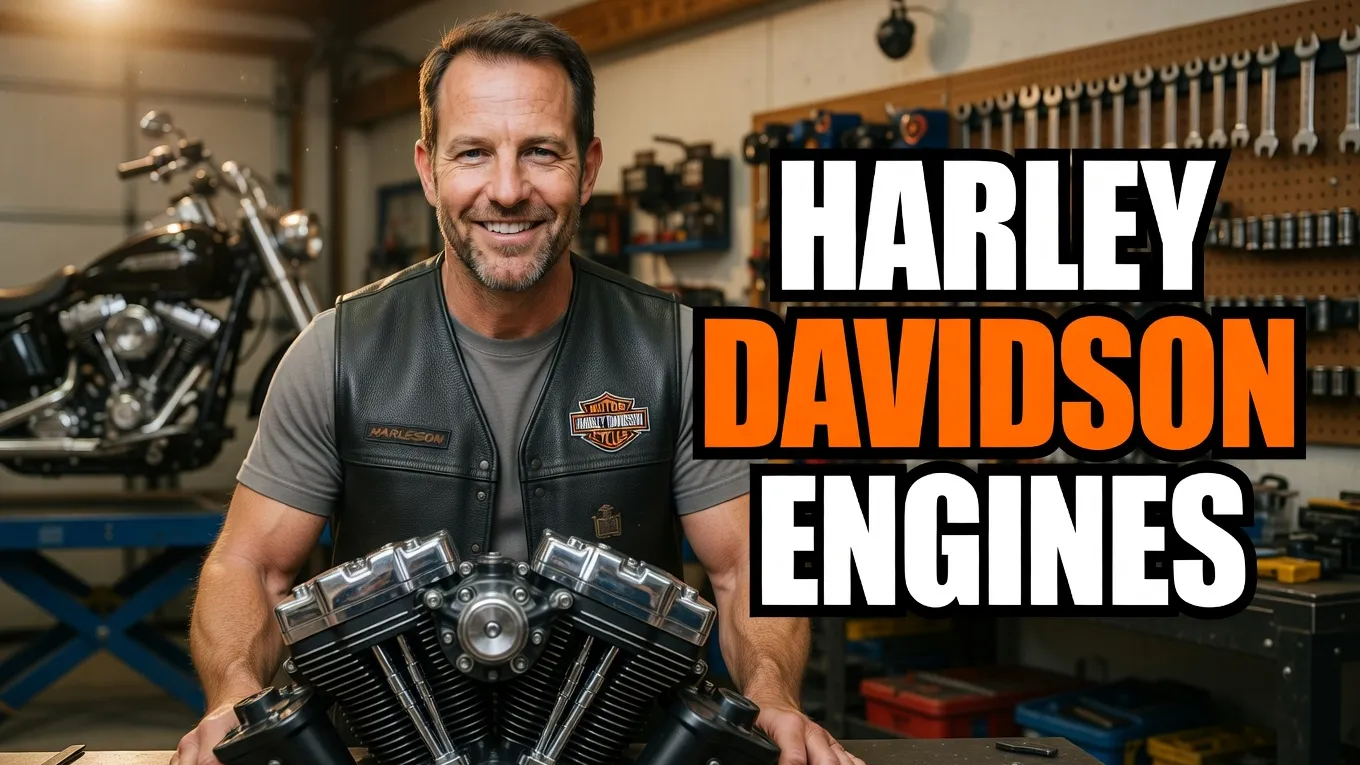
I’ve been riding Harleys for over fifteen years, and the one thing that never gets old is the unmistakable rumble of a V-Twin engine firing up. Harley Davidson engines aren’t just powerplants—they’re the beating heart of American motorcycling culture.
From the early Flatheads to today’s liquid-cooled Milwaukee-Eight monsters, these engines have evolved dramatically while maintaining that signature character we all love. I’ve personally owned bikes with Evolution, Twin Cam, and Milwaukee-Eight engines, and each generation brings its own personality to the road.
In this guide, I’ll walk you through everything I’ve learned about Harley engines—the good, the bad, and the absolutely legendary. Whether you’re shopping for your first Harley or you’re a seasoned rider considering an upgrade, understanding these powerplants is crucial to making the right choice.
- Harley’s V-Twin engines have evolved from Flatheads (1929) to modern Milwaukee-Eight (2016-present) with continuous improvements in power and reliability
- The Evolution engine (1984-1999) remains the most reliable platform, while Milwaukee-Eight offers the best performance and refinement
- Engine choice dramatically affects riding experience—Sportster engines are nimble and responsive, while Big Twins deliver torque and highway cruising comfort
- Regular maintenance, especially using quality oil and proper cooling, is critical for longevity regardless of which engine you choose
The Iconic V-Twin Configuration
Every Harley Davidson engine I’ve ridden shares one fundamental characteristic: the 45-degree V-Twin layout. This isn’t just a design choice—it’s the architectural foundation that creates everything we associate with Harley performance.
The V-Twin design places two cylinders at a 45-degree angle, creating an inherently unbalanced firing order. This produces that famous “potato-potato” exhaust note that makes heads turn at every stoplight. I’ve ridden metric cruisers with V-Twins, and trust me, they don’t sound anything like a Harley.
This configuration also creates unique vibration characteristics. Earlier engines transmitted significant vibration to the rider, which some folks loved and others found fatiguing on long rides. Modern Harleys use rubber-mounted engines and counterbalancers to smooth things out while retaining that essential character.
Evolution Through the Decades
The Flathead Era (1929-1973)
I’ve never owned a Flathead myself, but I’ve ridden a few at vintage rallies. These side-valve engines were workhorses—simple, tough, and easy to repair with basic tools. They powered Harleys through the Depression, World War II, and beyond.
Flatheads got their name from the flat cylinder head design. The valves sat beside the cylinder rather than overhead, which limited breathing and performance but made them incredibly reliable. Maximum output was modest by modern standards—around 40-50 horsepower—but torque was respectable for the era.
The Shovelhead (1966-1984)
The Shovelhead marked Harley’s transition to overhead valve design. The rocker covers looked like upside-down shovels, hence the nickname. These engines were a significant step forward in power, producing 60-65 horsepower in stock form.
I rode a friend’s 1979 FLH with a Shovelhead last summer, and the experience was raw and mechanical in the best way. These engines require attention and regular maintenance, but they reward you with character and that unmistakable Harley soul.
The Evolution Engine (1984-1999)
This is where Harley really hit its stride. The Evolution (Evo) engine literally saved the company from bankruptcy. I bought my first Harley, a 1995 Softail with an Evo, specifically because of this engine’s reputation for reliability.
The Evo introduced aluminum heads and cylinders, dramatically improving cooling and reducing weight. Oil leaks—a notorious Harley problem—became far less common. Power jumped to around 70 horsepower for Big Twins, with excellent torque delivery throughout the rev range.
In my experience, Evo engines are nearly bulletproof if you maintain them properly. Mine had over 80,000 miles when I sold it, and it ran as strong as the day it left the factory. Using the best oil for a harley davidson motorcycle makes a massive difference in longevity with these engines.
The Twin Cam (1999-2017)
Harley’s Twin Cam engine replaced the beloved Evo with bigger displacement and more power. I currently own a 2007 Road King with the 96 cubic inch Twin Cam, and it’s been mostly excellent.
Twin Cam engines use two camshafts (hence the name) and initially came in 88 cubic inch displacement, later growing to 96, 103, and 110 cubic inches. Power ranges from 80 to over 100 horsemaker depending on displacement and configuration.
These engines run hotter than Evos, which caused some issues with early models. The cam chain tensioners were also problematic on 1999-2006 models—I upgraded mine to hydraulic tensioners as preventative maintenance. Despite these quirks, Twin Cams deliver strong, modern performance.
The Milwaukee-Eight (2016-Present)
I test-rode a 2023 Road Glide with the Milwaukee-Eight 114, and I was genuinely impressed. This is Harley’s most refined engine yet, available in 107 and 114 cubic inch displacements (117 cubic inches in CVO models).
The Milwaukee-Eight features four valves per cylinder instead of two, dramatically improving breathing and power delivery. It runs cooler than the Twin Cam thanks to liquid cooling for the cylinder heads (air-cooled versions are also available). Vibration is minimal, yet the engine retains authentic Harley character.
Power output ranges from roughly 90 horsepower in the 107 to over 100 in the 114 and 117 variants. More importantly, torque is abundant everywhere—these engines pull hard from idle to redline. If I were buying new today, Milwaukee-Eight would be my choice without question.
Sportster Engines: The Nimble Alternative
While Big Twin engines get most of the attention, I’ve also owned two Sportsters, and these smaller V-Twins deserve respect. Sportster engines have their own evolution separate from Big Twins.
The Evolution Sportster engine (1986-present) started at 883cc and grew to 1200cc. These engines are lighter, rev higher, and feel more responsive than Big Twins. I loved my 1200 Custom for urban riding and twisty backroads where the lighter weight was a real advantage.
Modern Revolution Max engines in the new Sportster S represent a complete departure from traditional Harley architecture. I’ve ridden one, and it’s shockingly good—liquid-cooled, 121 horsepower, and smooth as silk. It doesn’t sound like a traditional Harley, but the performance is undeniable.
Performance and Modifications
One reason I love Harley engines is the enormous aftermarket support. I’ve modified every Harley I’ve owned, and the transformation potential is incredible.
Stage 1 upgrades (exhaust, air cleaner, and tuning) are practically mandatory in my book. Fitting bes motorcycle exhaust brands for harley davidson completely transforms throttle response and sound. I typically see 10-15% power gains with proper tuning.
Big bore kits can increase displacement significantly. I upgraded my Twin Cam 96 to 103 cubic inches with a Screamin’ Eagle kit, and the difference in torque was immediately noticeable. More displacement means more air and fuel, which means more power—it’s simple physics.
Cams, Heads, and Bottom End Work
Camshaft upgrades deliver substantial performance improvements. I installed Andrews cams in my Evo Softail, and it transformed the power delivery. You can tailor cam profiles for low-end grunt, mid-range punch, or top-end power depending on your riding style.
Cylinder head porting and larger valves improve breathing dramatically. CNC-ported heads from companies like S&S or Zipper’s Performance can add 20-30 horsepower when combined with proper supporting modifications.
If you’re going deep into engine building, stroker kits increase displacement by lengthening piston stroke. I helped a friend build a 124 cubic inch monster from a 103 Twin Cam. The result was over 120 horsepower and torque that could break the rear tire loose at will.
Maintenance Essentials
I cannot stress enough how critical proper maintenance is for Harley engines. These aren’t Honda Gold Wings—they demand attention and reward good care with decades of reliable service.
Oil changes are absolutely non-negotiable. I change mine every 3,000 miles religiously, using quality synthetic oil. Choosing what is the best oil for a harley davidson motorcycle for your specific engine is crucial—different engines have different requirements.
Primary and transmission fluids also need regular changes. I follow Harley’s service intervals religiously—every 10,000 miles for these fluids. Fresh fluids prevent excessive wear and keep everything shifting smoothly.
Gaskets, Seals, and Prevention
Harley engines have a reputation for oil leaks, though modern engines are much better. I still check for seepage regularly and address any leaks immediately. Using quality best gasket for motorcycle engines during any tear-down prevents future problems.
Cam chain tensioners on early Twin Cams need monitoring. I upgraded mine at 40,000 miles as preventative maintenance, which cost about $400 but potentially saved my engine from catastrophic damage.
Motor mounts wear over time, especially on older bikes. I replaced the best motor mount for 1985 fxrt harley davidson evo motorcycle on a vintage FXRT project, and the improvement in vibration and handling was remarkable. Don’t overlook these wear items.
Cooling and Heat Management
Air-cooled engines get hot—there’s no way around it. I’ve been stuck in summer traffic on my Twin Cam, and the heat radiating off those cylinders is intense. This is just part of the air-cooled experience.
Heat is actually the enemy of longevity. Excessive heat breaks down oil faster, causes gaskets to fail, and can warp components. I’m meticulous about cooling system maintenance on my Milwaukee-Eight equipped bikes.
Oil coolers are worthwhile additions for air-cooled engines, especially in hot climates. I added one to my Twin Cam, and oil temperatures dropped by 20-30 degrees in traffic. This simple modification can significantly extend engine life.
Choosing the Right Engine for Your Needs
After years of riding different Harley engines, I’ve developed strong opinions about which engine suits which rider. There’s no universal “best” engine—it depends entirely on your priorities.
For reliability and simplicity, I still recommend Evolution engines. They’re old-school, easy to work on, and proven over millions of miles. Parts are readily available, and any competent mechanic can service them. If you’re buying used, an Evo is a safe bet.
For modern performance and refinement, Milwaukee-Eight is unbeatable. The power delivery is smooth yet strong, cooling is excellent, and reliability has been solid so far. If you’re buying new or recent used, this is the engine I’d choose.
Displacement Considerations
Bigger isn’t always better, despite what some riders claim. I’ve owned 88, 96, and 103 cubic inch engines, and the differences are noticeable but not revolutionary.
For solo riding and occasional two-up, 96-103 cubic inches is plenty. My 96 Twin Cam never feels underpowered, even fully loaded for touring. The bike cruises effortlessly at highway speeds with power in reserve for passing.
If you regularly ride two-up with luggage or pull a trailer, 107-117 cubic inches makes sense. The extra torque is welcome when you’re hauling weight up mountain grades or fighting headwinds on the interstate.
Common Issues and Solutions
Every Harley engine generation has its quirks. I’ve dealt with most of them personally, and knowledge is your best defense against expensive surprises.
Twin Cam cam chain tensioners fail, period. Early models used spring-loaded tensioners that wore out quickly. The fix is upgrading to hydraulic tensioners, which I did preventatively. This costs $300-500 but prevents potential engine destruction.
Milwaukee-Eight cam chain issues affected some 2017-2020 models. Harley issued a recall and extended warranty coverage. If you’re buying used, verify this recall was completed. I checked this religiously when shopping for my current bike.
Heat and Oil Pressure
Air-cooled engines run hot, especially in traffic. Oil pressure can drop when oil gets too hot. I installed an oil temperature gauge on my Twin Cam to monitor this. If temps exceed 250°F, I find a place to pull over and let things cool down.
Using synthetic oil with the proper viscosity helps maintain pressure when hot. I run 20W-50 synthetic in summer and have never had pressure issues, even in brutal heat.
The Sound and Soul Factor
Let’s be honest—technical specifications only tell part of the story. Harley engines have something intangible that connects with riders on an emotional level.
I’ve ridden Japanese cruisers with more power, better fuel economy, and superior reliability. Yet I always come back to Harley because of how these engines make me feel. The vibration, the sound, the torque delivery—it all adds up to an experience that’s greater than the sum of its parts.
When I crack the throttle on my Twin Cam and feel that surge of torque accompanied by that unmistakable rumble, I’m reminded why I fell in love with motorcycling in the first place. That’s something no dyno chart can quantify.
Future of Harley Engines
Harley is expanding beyond traditional V-Twins with electric LiveWire models and the Revolution Max platform. I’ve ridden both, and while impressive, they’re fundamentally different machines.
The LiveWire is shockingly fast and handles brilliantly, but it’s silent. That removes a core part of what makes a Harley a Harley in my opinion. I appreciate the technology, but I’m not ready to give up my V-Twin.
Revolution Max engines in the Sportster S and Pan America represent a middle ground—still internal combustion, but thoroughly modern. I could see myself owning one as a second bike, but my primary Harley will always have a traditional V-Twin.
Final Thoughts on Harley Power
After fifteen years and countless miles on various Harley engines, I remain convinced these are some of the most characterful powerplants ever created. They’re not perfect—they run hot, they vibrate, they require maintenance—but they reward engagement and proper care with an experience that’s utterly unique.
Whether you choose an Evolution for bulletproof reliability, a Twin Cam for strong performance, or a Milwaukee-Eight for modern refinement, you’re getting an engine with deep heritage and proven capability. Understand what you’re buying, maintain it properly, and any Harley engine will serve you well for years to come.
I’ve never regretted choosing Harley Davidson engines, quirks and all. The combination of torque, sound, and visceral character creates a riding experience that keeps me coming back, ride after ride. That’s the real magic of these engines—they’re not just mechanical devices, they’re the foundation of a lifestyle and a passion that millions of riders share worldwide.
Frequently Asked Questions
What is the most reliable Harley Davidson engine?
The Evolution (Evo) engine is widely considered the most reliable Harley engine. Produced from 1984-1999, it offered excellent durability and easier maintenance than earlier models.
How long do Harley Davidson engines last?
With proper maintenance and regular oil changes, Harley engines typically last 100,000-150,000 miles. Some Milwaukee-Eight and Twin Cam engines have exceeded 200,000 miles with meticulous care.
What makes Harley Davidson engines sound different?
The distinctive potato-potato sound comes from Harley’s 45-degree V-Twin configuration and uneven firing intervals. This creates the iconic rumble that defines the brand.
Which Harley engine has the most power?
The Milwaukee-Eight 131 factory performance engine produces the most power, delivering 131 cubic inches (2147cc) and approximately 126 ft-lbs of torque straight from the factory.

Related Articles
7 Best Batteries for Motorcycles I’ve Tested and Trust in 2026
I've tested dozens of motorcycle batteries to find the best performers. From AGM to lithium, here are my top picks…
Jake Miller
15 min read

The Perfect Battery for Your Harley Davidson Softail: A Rider’s Complete Guide
Discover the perfect battery for your Harley Davidson Softail. I've tested multiple options and share real-world performance data, maintenance tips,…
Jake Miller
14 min read

The Best Battery for Your Harley Davidson: My Complete Guide After Years of Testing
Discover which battery truly performs best for Harley Davidson motorcycles. Real rider experience with AGM, lithium, and OEM options to…
Jake Miller
12 min read