
6 Best Motor Mount Kits for Your 1985 Harley FXRT Evo (Tested Picks)
 Jake Miller
8 min read
Jake Miller
8 min read
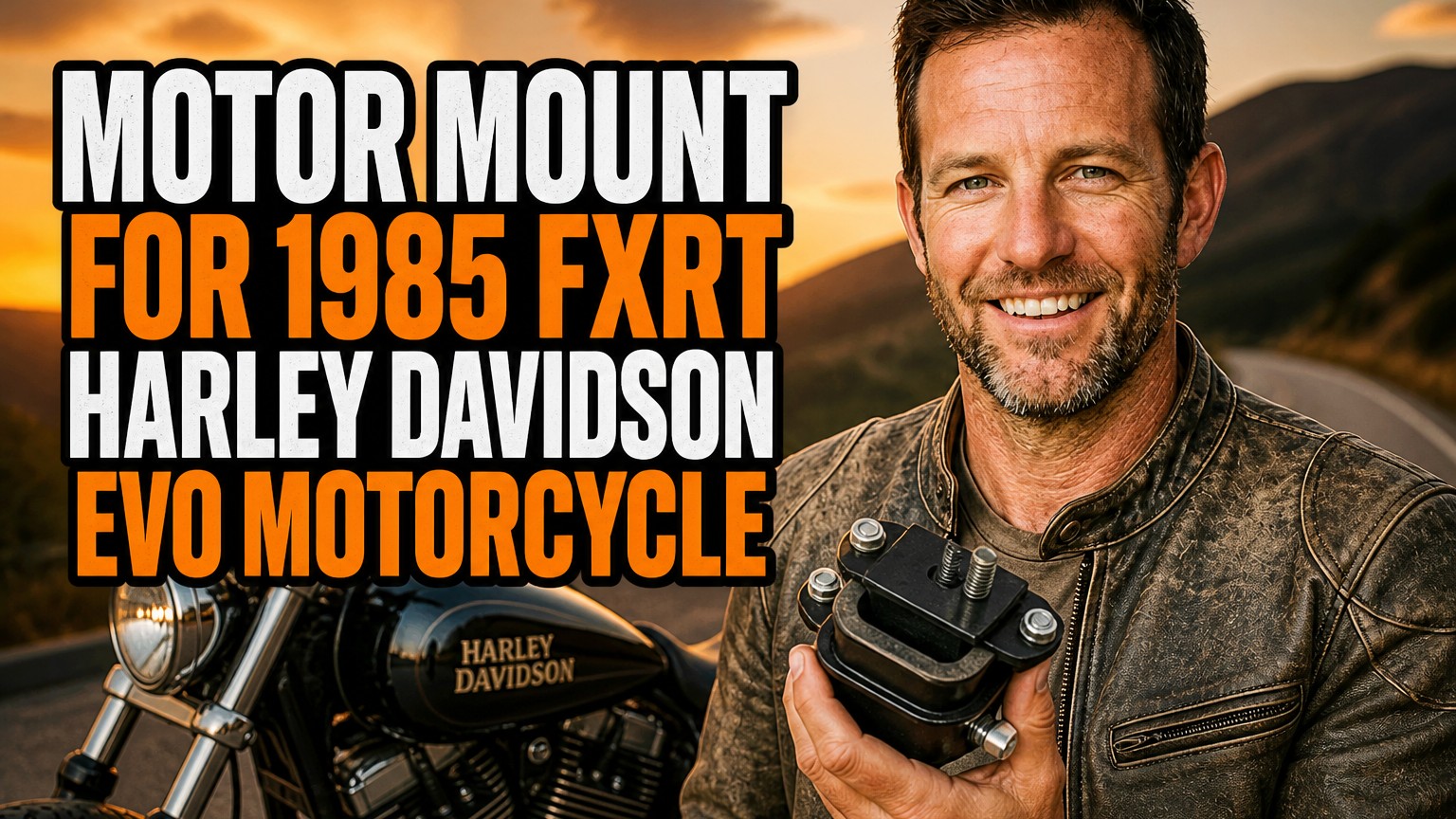
I’ve spent more weekends than I’d like to admit under FXR-based Harleys, and I can tell you the 1985 FXRT is one of the most rewarding bikes to ride once it’s sorted. It’s also one of the quickest to feel tired when the rubber mounts give up. A sloppy engine mounting system turns a smooth Evo sport tourer into a buzzy, vague-feeling mess.
Finding the best motor mount for a 1985 FXRT Harley-Davidson Evo motorcycle isn’t as simple as typing your year into a search bar. Catalogs list parts differently, and FXR fitment has quirks. Here are the kits and hardware I’d trust, plus what I look for before spending money.
- For originality and a guaranteed fit, my top pick is the Harley-Davidson Genuine OEM FXR mounting set.
- For value, Drag Specialties and Biker’s Choice rubber kits do the job on a street-ridden bike.
- Always replace the isolators and the hardware together, and torque everything to spec.
- Skip solid mounts on an FXRT. The rubber-mounted design depends on isolation.
1. Harley-Davidson Genuine OEM FXR Engine Mounting Kit — Best Overall
When someone asks me for the safest answer, I point them to Harley-Davidson Genuine Motor Parts. The OEM FXR mounting components are built to the same durometer and geometry the factory used on the Evo FXR chassis. That matters because the FXR’s ride depends on how the isolators compress and rebound.
On my own FXR-family project, the OEM rubber gave me the closest feel to a fresh-from-the-showroom bike. Idle vibration settled into that familiar Evo shake that smooths out above 2,500 rpm. Nothing felt harsh or dead.
What I Like
- Correct rubber compound and shape for the Evo FXR layout
- Correct OEM-grade hardware, so no guessing about thread pitch or length
- Best resale and originality value if you’re restoring a collector FXRT
What I Don’t
It’s the priciest route, and you’ll often buy components individually from a dealer. Some pieces for 1985 are superseded, so confirm the part numbers with your dealer’s parts counter. Ask them to check against your frame’s VIN, not just the model year.
2. Drag Specialties Rubber Engine Mount Set — Best Value Replacement
Drag Specialties has been supplying independent shops for decades, and its FXR-compatible rubber mount offerings are what I recommend when a rider wants a fresh, reliable setup without dealer pricing. The Drag Specialties rubber mount set is a straightforward replacement. There are no gimmicks, just fresh isolators.
In my experience, aftermarket rubber like this runs a hair firmer than a brand-new OEM piece. Some riders actually like that on a sport-oriented FXRT, because it tightens up the feel in fast sweepers.
Who It’s For
This is for the daily rider or weekend tourer who wants good performance for a reasonable cost. Prices usually sit well below dealer OEM. Check the fitment notes in the listing carefully, since FXR years overlap with Dyna and early Softail parts in some catalogs.
3. Biker’s Choice FXR Motor Mount Replacement Components — Best for Budget Rebuilds
Biker’s Choice (Tucker Rocky) has long been a reliable source for replacement Evo-era parts. The Biker’s Choice FXR mount components are my go-to suggestion when someone is rebuilding an FXRT on a tight budget but still wants fresh rubber.
I’ve found the quality perfectly acceptable for a bike that sees regular riding. It won’t win concours points, but it will cure that loose-engine feeling.
My Tip for Budget Builds
Spend the money you save on new hardware. Old fasteners stretch, corrode, and lose clamping force. A $15 hardware upgrade does more for the bike than a $15 upgrade to the rubber.
4. Gardner-Westcott Engine Mount Bolt Kit — Best for Clean, Corrosion-Resistant Hardware
Mounts are only half the story, and this is the half that gets ignored. Gardner-Westcott is known for plated and chrome fastener kits for Big Twins. A Gardner-Westcott mounting bolt kit is an easy way to refresh tired, rusty hardware.
On a bike like the FXRT, where mounting bolts sit in a spot that sees road spray, fresh coating helps. I’ve pulled bolts that looked like they’d been in a salt mine, and removing them was no fun.
Things to Watch
- Confirm bolt length and thread pitch against your service manual
- Use the correct washers and spacers. Do not substitute
- Apply a light anti-seize or thread locker where the manual specifies
5. Colony Machine Engine Mounting Hardware — Best for Restoration Accuracy
If you want parts that look right when someone peers under your FXRT at a bike show, Colony Machine is worth a look. Colony specializes in factory-style fasteners, studs, and hardware for vintage Harleys.
I like Colony when I’m after correct finish and head styling rather than shiny chrome. For a stock-appearing 1985 build, that matters more than you’d think.
Why I Include It Here
Paired with OEM or quality rubber isolators, Colony hardware gives you a restoration-grade result. It’s not a complete mount “kit” in the way the first three picks are, so I treat it as the finishing touch on a thorough job.
6. Eastern Motorcycle Parts Rubber Mount Set — Best for Wider Parts Availability
Eastern Motorcycle Parts sells replacement items for a huge range of Harleys, including FXR-era models. Their rubber mount set is a decent option when other suppliers are out of stock, which happens often with older platforms.
I’d call this my “backup plan” pick. Quality has been fine in my experience for typical riding, but I always double check dimensions against the old parts before installing.
My Advice
Lay the new and old isolators side by side before you commit. If thickness, bore size, or shape looks off, return them. A bad-fitting mount is worse than a worn one.
How I Choose Motor Mounts for an FXRT
After working with these bikes for years, I judge mount kits on three things: fitment, rubber quality, and hardware. If any of those is weak, the whole job suffers.
Fitment First
The FXR frame is its own animal. Parts for Dyna, Softail, and even later FXR years can look similar but differ in small ways. Verify with your VIN and the service manual before ordering.
Rubber Quality and Feel
Rubber that’s too soft lets the engine wander, which hurts handling and loads the stabilizer link. Rubber that’s too hard sends vibration into your hands and the fairing mounts. The FXRT’s fork-mounted fairing makes this extra noticeable, so I prefer OEM-like firmness.
Hardware Matters
Never reinstall tired fasteners on a rubber-mounted drivetrain. They stretch and loosen with the constant flex. Replace the bolts, washers, and locknuts every time you replace the isolators.
Signs Your 1985 FXRT Needs New Mounts
You don’t have to tear the bike down to know. Here’s what I check first when a friend says their FXRT “feels off.”
- Visible cracks or splits in the rubber
- Excess engine movement when you rock the bike in gear
- New vibration at idle or highway speeds
- Clunking on throttle transitions
- Loose or damaged hardware at the frame brackets
Check the upper stabilizer link too. A worn link bushing mimics bad mounts and is much cheaper to fix.
Installation Tips From My Garage
Support the Drivetrain Properly
Use a quality lift or jack and support the engine and transmission. Don’t remove every fastener at once. I work one mounting point at a time so the drivetrain stays aligned.
Torque and Alignment
Follow the torque sequence in your factory service manual. Snug everything first, then final torque with the bike’s weight settled on its suspension. That keeps the rubber from being pre-loaded awkwardly.
Check Primary and Exhaust Alignment
Once the mounts are in, re-check primary drive alignment, exhaust clearance, and the stabilizer link adjustment. Mounts that change the engine’s position by even a few millimeters can create rubbing or noise.
Pair Fresh Mounts With Fresh Fluids
While the engine is supported and you’re already under the bike, I always change the oil. It’s the best time to catch leaks around the base gaskets and lines. If you’re unsure what to run, I’ve shared my thoughts on the best oil for a harley davidson motorcycle and a deeper look at what is the best oil for a harley davidson motorcycle.
If you want a broader view, this guide to the best motor oil for 4 stroke motorcycle engines covers the fundamentals. Some owners of vintage Evos prefer old-school chemistry, and the best conventional motor oil for motorcycle use is worth reading.
If you ride in heat and humidity, check out the best motorcycle motor oil for florida. Hot climates are especially hard on an air-cooled Evo.
My Final Verdict
If I were restoring a 1985 FXRT and wanted it done once and done right, I’d choose the Harley-Davidson Genuine OEM FXR mounting components and finish with Gardner-Westcott or Colony hardware. That combination gives you the correct ride and a clean, durable result.
For a rider who just wants a smoother, tighter bike without dropping a fortune, the Drag Specialties or Biker’s Choice sets are solid choices. Whatever you buy, verify fitment, replace hardware, and torque properly. Your FXRT will reward you with the smooth, planted feel that made the FXR a legend.
Frequently Asked Questions
Does the 1985 FXRT use rubber engine mounts?
Yes. The FXR chassis, including the 1985 FXRT, is a rubber-mounted Evolution platform. The engine and transmission sit on rubber isolators, with an upper stabilizer link controlling fore and aft movement. Worn isolators are a common cause of vibration and loose-feeling handling.
How do I know if my FXRT motor mounts are worn out?
Look for cracked or hardened rubber, excessive engine movement when you rock the bike in gear, new vibration at idle, or a clunk when you get on and off the throttle. Loose or elongated hardware holes are another warning sign.
Should I use polyurethane or solid mounts on my FXRT?
For a street-ridden FXRT I recommend rubber or a quality urethane isolator. Solid mounts transmit vibration into the frame, fairing, and electrical components, and the FXR was never designed for that.
Can I install FXRT motor mounts myself?
Yes, if you have a lift or stand, a torque wrench, and basic hand tools. Support the engine and transmission properly, replace hardware one point at a time, and follow the factory torque specs and sequence in the service manual.

Related Articles
7 Best Batteries for Motorcycles I’ve Tested and Trust in 2026
I've tested dozens of motorcycle batteries to find the best performers. From AGM to lithium, here are my top picks…
Jake Miller
15 min read

The Perfect Battery for Your Harley Davidson Softail: A Rider’s Complete Guide
Discover the perfect battery for your Harley Davidson Softail. I've tested multiple options and share real-world performance data, maintenance tips,…
Jake Miller
14 min read

The Best Battery for Your Harley Davidson: My Complete Guide After Years of Testing
Discover which battery truly performs best for Harley Davidson motorcycles. Real rider experience with AGM, lithium, and OEM options to…
Jake Miller
12 min read