
Best Oil for Your Harley-Davidson: My Real-World Picks for Every Engine
 Jake Miller
10 min read
Jake Miller
10 min read
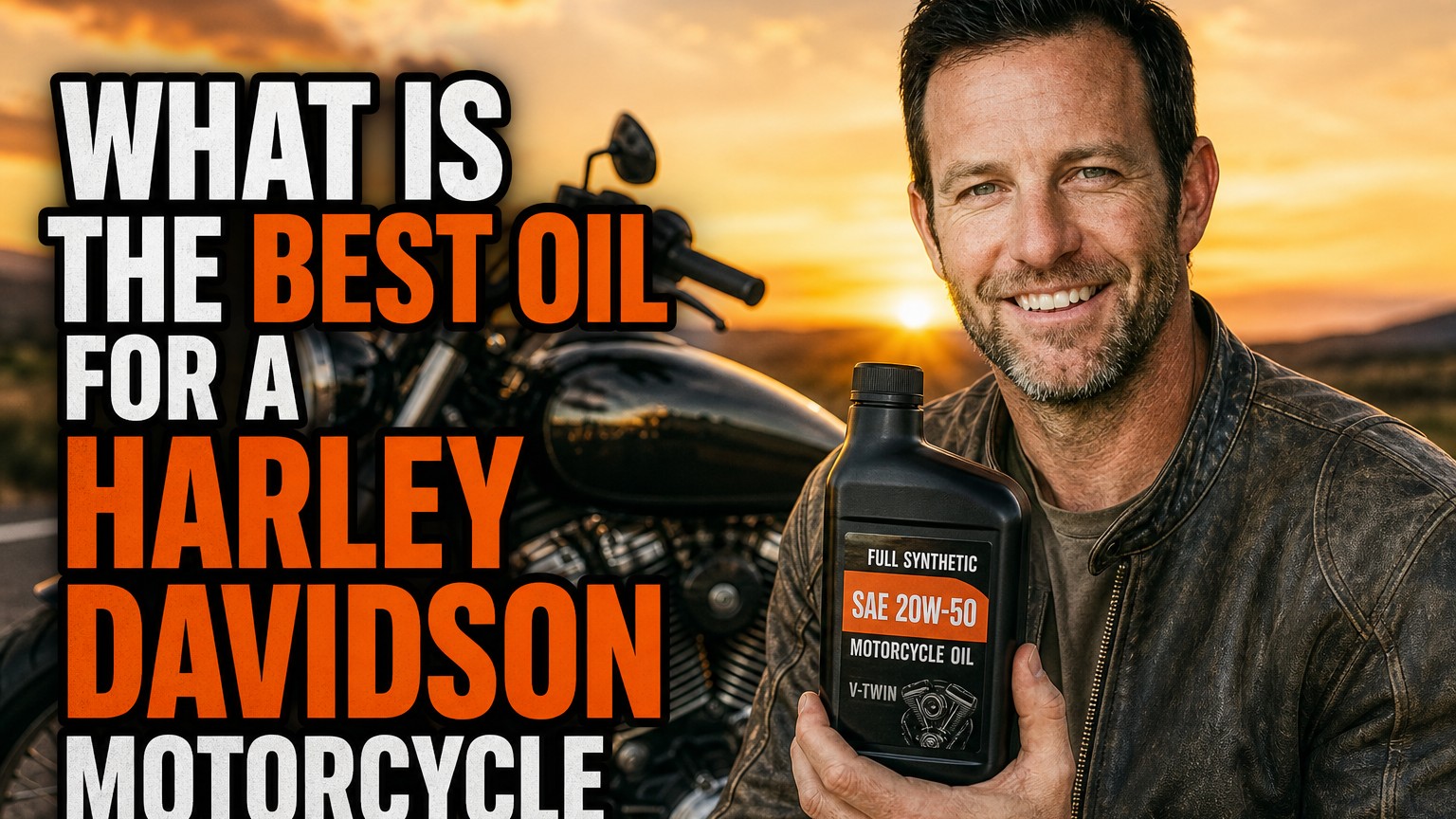
I still remember the first time I stood in the oil aisle with my first Harley, staring at a wall of bottles. Every label promised “maximum protection,” and every guy at the counter had a different opinion. I left with the wrong oil, and I’ve been paying attention ever since.
After years of riding, wrenching, and swapping notes with other riders, I’ve got a clear sense of what works. In this guide I’ll share what I look for, what I run in my own bike, and how to match oil to your specific Harley. No fluff, just what’s worked on the road for me.
- For most air-cooled V-twins, a quality full synthetic 20W-50 is my top pick.
- Harley’s own SYN3 is a safe default, and Amsoil, Mobil 1 V-Twin, and Red Line are excellent alternatives.
- Always check your manual, since engine, primary, and transmission fluids can differ by model.
- Skip regular car oil, which can cause clutch problems and lacks what a V-twin needs.
- Change oil about every 5,000 miles, or sooner if you ride hard in the heat.
Why Oil Matters More on a Harley Than You Think
A Harley isn’t a typical motorcycle engine. Most of them are big, air-cooled (or partly oil-cooled) V-twins that run hot, especially when you’re crawling through summer traffic. That heat puts serious stress on your oil.
Oil does more than lubricate. It also carries heat away, protects bearings, and keeps your valvetrain happy. On an engine with this much displacement and this little airflow at idle, the oil is doing a lot of heavy lifting.
That’s why I treat oil choice as one of the cheapest and most important decisions I make for my bike. A bottle costs a fraction of an engine rebuild.
The Heat Problem With Air-Cooled Engines
Water-cooled engines hold a steady temperature. Air-cooled Harleys don’t. Cylinder head temperatures can swing wildly depending on speed, ambient temperature, and traffic.
When oil gets too hot, it thins out and breaks down faster. That’s where a good synthetic earns its price. In my experience, the difference is most obvious on long summer rides.
Understanding Oil Basics Before You Buy
Before I get to my picks, let me quickly cover the three things I check on every bottle. Once you know these, the wall of oil at the store becomes a lot less intimidating.
Viscosity: Why 20W-50 Is the Usual Answer
Viscosity is just how thick the oil is. The first number (with the “W”) tells you how it flows when cold. The second number tells you how it behaves at operating temperature.
Most air-cooled Harleys, including Evolution, Twin Cam, and Milwaukee-Eight engines, call for 20W-50 in typical conditions. It’s thick enough to protect at high temperatures but still flows well enough on startup.
In very cold climates, I’ve seen riders go lighter for easier winter starts. In extreme heat, some stick with 20W-50 or a heat-focused synthetic. Your owner’s manual has a temperature chart, so use it.
Synthetic vs. Conventional vs. Synthetic Blend
Conventional oil is refined from crude and works fine if you change it often. It’s the budget choice, and it’s what many older Harleys were designed around.
Synthetic blends mix the two for a middle-ground price and performance. They’re a decent upgrade if you’re not ready to go full synthetic.
Full synthetic is engineered for consistency. It resists heat breakdown, flows better when cold, and holds its viscosity longer. For a hot-running V-twin, this is where I put my money.
Wet Clutch Compatibility and JASO Ratings
Here’s something many new riders miss. Many Harleys share oil between parts of the drivetrain or have a wet clutch running in oil. Car oils often contain friction modifiers that make the clutch slip.
Look for a JASO MA or MA2 rating on the bottle when the oil touches the clutch. That tells you it’s been tested to work with wet clutches. If you’re ever unsure, stick to motorcycle-specific oil.
My Top Oil Picks for a Harley-Davidson
Now for the part you came for. These are the oils I trust, based on my own riding and what I’ve seen work for other riders. I’ll explain why each one earns a spot.
Best Overall: Harley-Davidson Screamin’ Eagle SYN3 20W-50
When I want zero guesswork, I reach for Harley’s own SYN3 full synthetic 20W-50. It’s formulated specifically for these engines, and it keeps your warranty paperwork worry-free.
It’s not the cheapest option, but it’s consistent and easy to find at any dealer. For a new bike still under warranty, this is the pick I’d make.
Best Premium Aftermarket: Amsoil V-Twin Synthetic
If I’m riding hard or long distances, I like Amsoil’s V-Twin synthetic 20W-50. It’s built for high-heat applications, and many riders swear by its staying power.
It costs more per quart, but I find it holds up well in summer heat. It’s a great choice for riders who care about squeezing out every bit of protection.
Best Value Synthetic: Mobil 1 V-Twin 20W-50
Mobil 1 V-Twin is the one I recommend when friends want synthetic without a premium price. It’s widely available, trusted, and designed for exactly this type of engine.
I’ve found it to be a reliable everyday oil for commuters and weekend riders. It’s hard to beat the balance of cost and quality.
Best for Performance Builds: Red Line 20W-50
If your Harley has been tuned, bored out, or fitted with a big cam, Red Line is worth a look. It’s known for strong film strength under heavy loads.
I’d only go this route for modified bikes or hard riding. For a stock cruiser, the other options are plenty.
Best Budget Option: Harley-Davidson 360 or a Quality Conventional
If you ride a vintage Harley or change oil frequently, a good conventional 20W-50 works fine. Harley’s own 360 oil is a classic choice.
The catch is that conventional oil breaks down faster in the heat. If you go this route, don’t stretch your change intervals.
Matching Oil to Your Specific Harley
Not every Harley has the same needs. Here’s how I think about it by engine type, though I always tell people to double-check their manual.
Milwaukee-Eight (Touring and Softail)
Milwaukee-Eight engines run hotter than older designs, especially the air/oil-cooled versions. I lean toward a full synthetic 20W-50 here, and I don’t skimp.
Many of these bikes use separate fluids for the engine, primary, and transmission. Check which fluid goes where, because mixing them up is an easy mistake.
Twin Cam and Evolution
These are the classics, and they’re forgiving. Either a quality synthetic or conventional 20W-50 will do the job.
On my older-style bikes, I’ve noticed synthetic helps with heat and oil consumption. If the engine has high mileage, it’s still a good idea to monitor oil levels regularly.
Sportster
Classic air-cooled Sportsters are often fine with 20W-50 too, and some older models share oil between the engine and other parts. Read your manual carefully for your model year.
Revolution Max (Pan America, Sportster S, Nightster)
These liquid-cooled engines are a different animal. They often call for a different synthetic grade than the traditional 20W-50, so don’t assume.
For these bikes, I stick with the oil that Harley specifies or one that clearly meets the same spec. It’s not the place to experiment.
Oil Change Tips From My Own Garage
Good oil only works if you change it on time. Here are the habits that have served me well.
How Often I Change It
Many modern Harleys call for changes around 5,000 miles, or once a year. I stick close to that, but I go sooner if I’ve been riding in extreme heat, towing, or doing lots of stop-and-go.
If a bike sits for months, the oil still ages. Don’t skip the annual change just because the odometer didn’t move much.
Always Replace the Filter
A fresh filter matters as much as fresh oil. I never skip it, because old filters can clog and reduce flow.
Harley filters are well made and easy to find. Pick a quality one and don’t try to save a few dollars here.
Check the Level the Right Way
Checking oil on a Harley can be a little different from other bikes. Some models want a warm engine and the bike upright, while others specify a different procedure.
I always follow the manual. An incorrect reading is one of the most common ways riders overfill or underfill their engines.
A Quick Note on Overfilling
More oil is not better. Overfilling can cause foaming, leaks, and extra heat. I measure carefully and recheck after the first ride.
Common Mistakes I See Riders Make
I’ve made a few of these myself, and I’ve seen plenty of others do the same. Avoid these and you’ll save yourself trouble.
Using Car Oil to Save Money
It’s tempting, but I don’t do it. Car oils can contain friction modifiers that cause clutch slip, and they aren’t designed for the heat and shear of a V-twin.
Mixing Up Engine, Primary, and Transmission Fluids
Many Harleys use different fluids in different compartments. Putting the wrong one in the wrong place can cause real problems.
When in doubt, label your bottles and keep a service log. It sounds simple, but it prevents expensive errors.
Ignoring Climate
Riding in Arizona in July isn’t the same as riding in Minnesota in April. Match your oil to your conditions, and be willing to adjust if your riding changes.
Where This Fits in the Bigger Oil Picture
Harley engines are unique, but the general rules of good oil carry over to other bikes. If you’re curious about how oil choice works across other bikes, I found this guide on the best motor oil for 4 stroke motorcycle helpful for the basics.
If you want a wider comparison beyond V-twins, check out this list of the top engine oil for 4 stroke motorcycle options. It’s a good way to understand how different brands stack up.
For a broader overview, this breakdown of the best engine oil for motorcycle models is worth a read. And if you ever ride abroad or have friends in other markets, the guide to the best engine oil for 4 stroke motorcycle in india shows how oil needs shift with climate and riding style.
What About Two-Stroke Bikes?
Harleys are four-stroke machines, so you’ll never pour two-stroke oil into one. But if you also own a dirt bike or a vintage ride, I’d point you to this piece on what is the best 2 cycle oil for a motorcycle engine. It’s a totally different world of lubrication.
My Final Take
If you want my short answer, it’s this. For most air-cooled Harleys, I run a full synthetic 20W-50 made for V-twins, and I change it on schedule with a fresh filter every time.
Harley’s SYN3 is the easy, safe choice. Amsoil, Mobil 1 V-Twin, and Red Line are all excellent alternatives depending on your budget and riding style.
Most of all, trust your manual and your riding conditions. A little attention here pays off in smoother rides, a happier engine, and a Harley that keeps running for years to come.
Now get out there, check that dipstick, and enjoy the ride. Your engine will thank you.
Frequently Asked Questions
What weight oil does a Harley-Davidson use?
Most air-cooled and Twin-Cooled Harleys, including Evolution, Twin Cam, and Milwaukee-Eight engines, call for 20W-50 in normal temperatures. Liquid-cooled Revolution Max models often use a different grade, so always confirm in your owner’s manual.
Is synthetic oil better for a Harley?
In my experience, yes. Full synthetic resists heat breakdown better, which matters in air-cooled V-twins that run hot in traffic. It usually costs more, but it holds up longer and protects better.
Can I use car oil in my Harley-Davidson?
I don’t recommend it. Many modern car oils contain friction modifiers that can cause clutch slip, and they may lack the additive package that motorcycle engines need. Choose a motorcycle-specific oil.
How often should I change the oil in my Harley?
Many modern Harleys call for an oil change roughly every 5,000 miles, or once a year. If you ride hard, tow, or sit in summer traffic a lot, I change it sooner. Check your manual for the exact interval.

Related Articles

7 Best Batteries for Motorcycles I’ve Tested and Trust in 2026
I've tested dozens of motorcycle batteries to find the best performers. From AGM to lithium, here are my top picks…
Jake Miller
15 min read

7 Best Motorcycle Batteries for Honda Magna (V30, V45, V65)
I've tested the best motorcycle batteries for Honda Magna models. From AGM to lithium options, find the perfect power source…
Jake Miller
14 min read

7 Best Battery Brands for Motorcycles That Actually Start Every Time
I've tested dozens of motorcycle batteries over the years. These 7 brands deliver reliable starts, long life, and real value—from…
Jake Miller
15 min read