
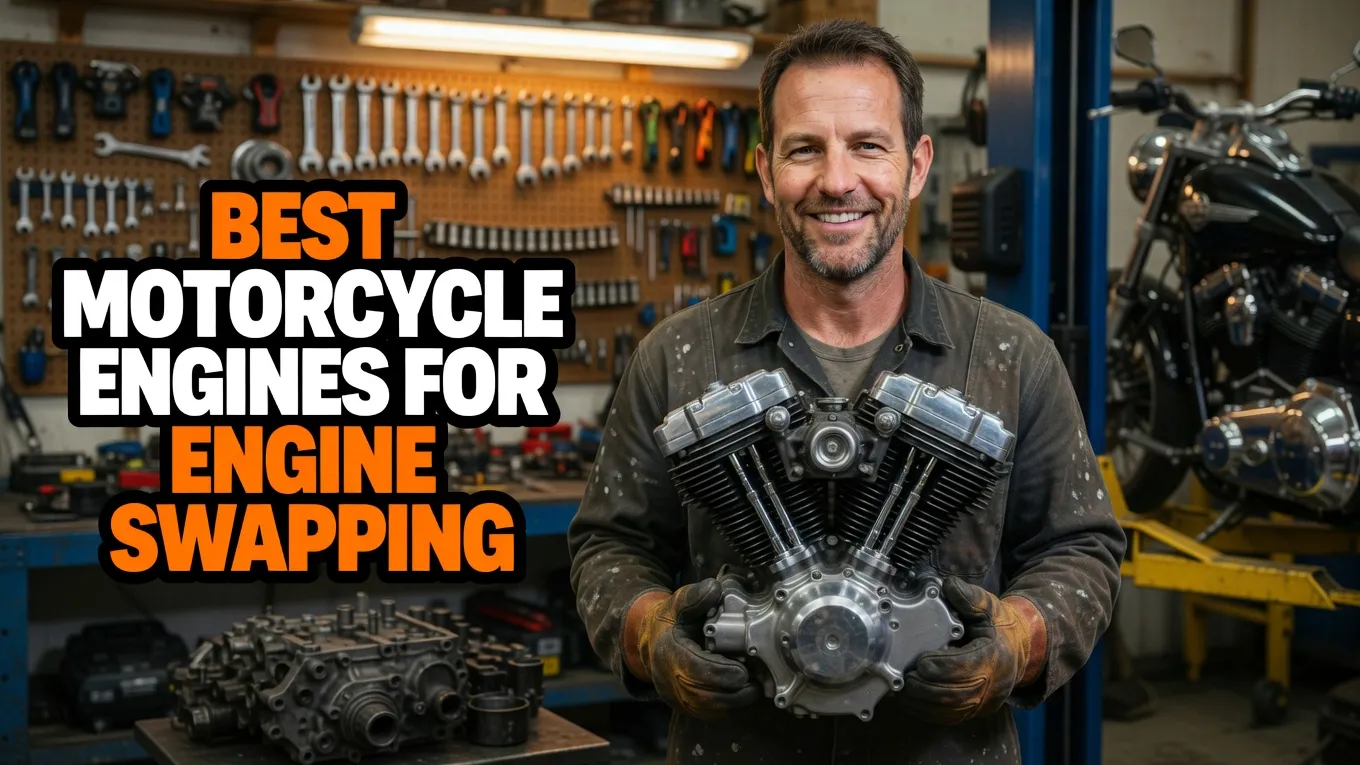
I’ve been building custom motorcycles for over a decade, and engine swaps remain one of the most rewarding (and challenging) projects you can tackle. Whether you’re breathing new life into a vintage frame or creating a one-of-a-kind cafe racer, choosing the right donor engine makes all the difference.
The best swap engines balance availability, reliability, and performance with reasonable modification requirements. I’ve personally worked with most of the engines on this list, and I’ve seen what works in real-world builds versus what looks good on paper but becomes a nightmare in practice.
- Honda CB750 remains the gold standard for vintage swaps due to parts availability and proven reliability
- Modern sport bike engines like the Yamaha R6 offer incredible power-to-weight ratios but require more fabrication
- Parallel twins (like the Kawasaki W650) provide excellent torque and fit narrow frames better than inline fours
- Always budget extra for custom mounts, wiring harnesses, and machine work beyond the engine cost itself
- Consider fuel delivery systems carefully; carbureted engines are simpler but EFI offers better performance and reliability
1. Honda CB750 SOHC — Best Overall Swap Engine for Vintage Builds
The Honda CB750 SOHC (1969-1978) is my go-to recommendation for anyone’s first engine swap. I’ve used this powerplant in at least a dozen builds, and it never disappoints. The inline-four configuration produces smooth, reliable power across the rev range, and the bulletproof engineering means these engines run forever with basic maintenance.
What makes the CB750 SOHC special is the sheer volume of aftermarket support. You can find literally everything from best gasket for motorcycle engines to performance cams without breaking a sweat. Parts availability is unmatched, and you’ll find rebuild kits, upgraded electrical components, and bolt-on performance upgrades everywhere.
The engine weighs around 200 pounds fully dressed, which sounds heavy but distributes well in most frames. Mounting is straightforward since the engine was designed as a stressed member in the original CB750 frame. I typically spend 15-20 hours fabricating custom mounts, depending on the donor frame.
Power output sits around 67 horsepower stock, but simple mods like pod filters, a four-into-one exhaust, and rejetting can push that to 75-80 hp. That’s plenty for a lightweight custom build. The five-speed transmission is robust and has good gear spacing for street riding.
Price-wise, you can find running CB750 SOHC engines for $500-$1,200 depending on condition and location. That’s incredibly affordable for what you get. Just make sure you’re using quality best engine oil for motorcycle applications during your rebuild to protect these vintage components.
2. Yamaha R6 (2006-2016) — Best Modern Sport Engine for Performance Swaps
If you want absolutely screaming performance in a compact package, the Yamaha R6 engine from the 2006-2016 generation is my top choice. This 599cc inline-four produces 118 horsepower at 14,500 RPM and weighs just 130 pounds. The power-to-weight ratio is phenomenal for custom builds.
I’ve swapped R6 engines into everything from vintage Honda frames to custom streetfighter projects. The fuel injection system is sophisticated but manageable once you understand it. You’ll need to retain the stock ECU, throttle bodies, and all the sensors, which means more complex wiring than a carbureted engine.
The engine’s compact dimensions make it surprisingly versatile. It’s narrower than older inline-fours, which helps with ground clearance and lean angle in custom chassis. The six-speed transmission has tight ratios perfect for aggressive riding.
Fabrication requirements are moderate to advanced. You’ll definitely need custom motor mounts welded to your frame, and you might need to modify the oil pan or pickup for ground clearance. I always mock everything up carefully before committing to final welding.
Expect to pay $1,500-$3,000 for a good used R6 engine with low miles. The ECU and wiring harness typically add another $300-500 if purchased separately. Before installation, I recommend a thorough cleaning with best cleaner for motorcycle engine products to assess the engine’s true condition.
3. Kawasaki W650 Parallel Twin — Best Engine for Narrow Custom Frames
The Kawasaki W650 engine (1999-2008) is an absolute gem for classic-styled builds. This 675cc parallel twin produces around 50 horsepower, which sounds modest but delivers fantastic low-end torque that makes riding feel effortless. I’ve built three cafe racers around this engine, and it perfectly captures that vintage British twin character.
The narrow 360-degree crank design means the engine fits beautifully in slim frames where inline-fours would never work. It’s only about 18 inches wide at the cylinders, compared to 24+ inches for most inline-fours. This makes it ideal for minimalist bobbers and cafe racers where you want clean lines.
Mechanically, the W650 is dead simple. It uses pushrod valve actuation, basic carburetors, and straightforward wiring. If you can work on a 1970s motorcycle, you can maintain this engine. The five-speed transmission shifts smoothly and has good gear spacing for both city riding and highway cruising.
Weight is reasonable at around 175 pounds complete. Mounting isn’t too complex since the engine has decent mounting points on both the front and rear cases. I usually fabricate simple cradle-style mounts that bolt to existing frame tubes.
Finding W650 engines requires patience since they weren’t huge sellers, but expect $800-$1,800 when you locate one. The air-cooled design means no radiator or coolant routing to worry about, which simplifies installation tremendously. Just remember to use proper best gasket for motorcycle engines during reassembly to prevent oil leaks.
4. Suzuki SV650 V-Twin — Best Budget-Friendly Modern Swap
The Suzuki SV650 engine (1999-present) offers unbeatable value for modern engine swaps. This 645cc 90-degree V-twin produces around 75 horsepower with fantastic torque delivery throughout the rev range. I’ve swapped SV650 engines into everything from vintage frames to purpose-built streetfighters with excellent results every time.
What I love about the SV650 is how the engine itself serves as a stressed frame member. The design includes integrated mounting points that make fabrication more straightforward than many other engines. The compact V-twin configuration also provides excellent ground clearance and fits well in a variety of frame geometries.
The fuel injection system is reliable and relatively simple compared to high-strung sport bike engines. You’ll need to keep the stock ECU, fuel pump, and injectors, but the wiring harness can be simplified by removing unnecessary components like the stock bike’s gauge cluster and accessories.
These engines are incredibly common in salvage yards since Suzuki sold SV650s in huge numbers for over two decades. That means parts availability is excellent and prices are reasonable. Expect to find complete running engines for $600-$1,500 depending on mileage and generation.
The six-speed transmission is smooth and durable. I’ve seen these engines go well over 50,000 miles with just basic maintenance. Before installation, run best engine flush for motorcycle through it if you’re unsure about the previous owner’s maintenance habits.
5. Honda CB550 SOHC — Best Compact Four-Cylinder for Lightweight Builds
The Honda CB550 SOHC (1974-1978) is the little brother to the CB750 but offers some distinct advantages for certain builds. At 544cc, this inline-four produces around 50 horsepower while weighing significantly less than its bigger sibling. I particularly love this engine for smaller-framed cafe racers where weight distribution is critical.
The engine shares much of the CB750’s legendary reliability but in a more compact, lighter package. It’s about 20-30 pounds lighter fully dressed, which makes a noticeable difference in handling. The shorter stroke means it revs freely and has a sporty character despite the modest displacement.
Parts availability is nearly as good as the CB750, though slightly more expensive since fewer CB550s were produced. The aftermarket still offers comprehensive support with performance upgrades, electrical components, and maintenance parts readily available. Rebuild kits are plentiful and affordable.
I find the CB550 easier to work with in tight engine bays since it’s dimensionally smaller. The five-speed transmission is well-suited to the engine’s power characteristics, and the gear ratios work well for both city and highway riding.
Pricing runs $400-$1,000 for decent running engines, making it one of the most affordable swaps available. The lower power output isn’t a disadvantage in lightweight builds where the goal is balanced performance rather than outright speed. Make sure you inspect and replace the best gasket for motorcycle engines during any rebuild to ensure reliability.
6. Triumph Bonneville 865/900cc Parallel Twin — Best for British-Style Builds
The modern Triumph Bonneville parallel twin (2001-2015, in both 865cc and 900cc configurations) offers authentic British character with modern reliability. I’ve swapped these into custom builds where authenticity matters, and they deliver that classic twin-cylinder thump with fuel injection dependability. The 865cc version produces around 67 horsepower while the 900cc puts out about 68 hp.
These engines capture the aesthetic and sound of classic British twins while incorporating fuel injection, modern metallurgy, and contemporary engineering standards. The 270-degree firing order creates that characteristic off-beat exhaust note that makes people turn their heads.
The engine design uses the cases as a stressed member, which actually simplifies mounting in many applications. The narrow profile works beautifully in classic frame geometries, and the weight distribution is excellent for handling. I’ve found the vibration character adds to the riding experience without becoming uncomfortable on longer rides.
Fuel injection means you’ll need to retain the ECU, throttle bodies, and associated sensors, but the system is straightforward and reliable. The five-speed transmission shifts positively and has good gear spacing for a wide variety of riding conditions.
Expect to pay $2,000-$3,500 for these engines since Triumph parts generally command premium prices. The higher cost reflects both the modern engineering and the desirability for authentic British-styled builds. Before any swap, clean everything thoroughly with best degreaser for motorcycle engine to properly inspect for leaks or damage.
7. Harley-Davidson Sportster 883/1200 Evolution — Best V-Twin for Cruiser-Style Swaps
The Harley-Davidson Sportster Evolution engine (1986-2003, in both 883cc and 1200cc displacements) is my top choice for cruiser-style customs and bobbers. These air-cooled 45-degree V-twins produce massive low-end torque and that unmistakable Harley rumble. I’ve built several bobbers around Sportster engines, and they absolutely nail the American V-twin aesthetic.
The 883cc version produces around 46 horsepower while the 1200cc bumps that to approximately 60 hp. Power delivery is all about torque rather than high-RPM horsepower, which suits cruiser builds perfectly. The engine pulls strong from idle and doesn’t need to be revved hard to feel fast.
Sportster engines were designed to be easily removed from the frame, which actually helps with swap installations. The rubber-mounted design reduces vibration transmitted to the frame, and the mounting points are straightforward. I typically fabricate simple frame cradles that support both the front and rear engine mounts.
Parts availability is phenomenal since Harley has been building Sportsters forever. You can find literally any part you need, from performance upgrades to maintenance items. The aftermarket is equally robust with companies offering everything from big-bore kits to complete custom build solutions.
These engines are heavy at around 225-250 pounds complete, so keep that in mind for your frame design. Weight distribution is biased toward the front, which affects handling characteristics. Prices range from $1,000-$2,500 depending on displacement and condition.
The four-speed transmission is a bit dated compared to modern six-speeds, but it works fine for cruiser applications where you’re not hunting for gears constantly. Make sure you service it properly with quality best engine oil for motorcycle to keep everything running smoothly for thousands of miles.
Frequently Asked Questions
What is the easiest motorcycle engine to swap?
In my experience, the Honda CB series engines (especially CB750 and CB550) are the easiest to swap due to their simple design, bolt-on transmissions, and massive aftermarket support. They’re also readily available and affordable.
How much does a motorcycle engine swap cost?
A basic swap can cost $1,500 to $3,000 for the engine plus mounting hardware. Custom fabrication, wiring harnesses, and machine work can push costs to $5,000 or more depending on complexity.
Can you put any engine in a motorcycle frame?
Not directly. You’ll need to consider frame geometry, mounting points, weight distribution, and clearances. Some engines are dimensionally similar to stock and swap easier, while others require significant fabrication and modification.
What should I look for in a donor engine for swapping?
I always check compression, listen for unusual noises, verify the transmission shifts smoothly, and inspect for oil leaks. Low mileage is great, but a well-maintained higher-mileage engine often beats a neglected low-mileage one.

Related Articles
7 Best Batteries for Motorcycles I’ve Tested and Trust in 2026
I've tested dozens of motorcycle batteries to find the best performers. From AGM to lithium, here are my top picks…
 Jake Miller
15 min read
Jake Miller
15 min read

The Perfect Battery for Your Harley Davidson Softail: A Rider’s Complete Guide
Discover the perfect battery for your Harley Davidson Softail. I've tested multiple options and share real-world performance data, maintenance tips,…
Jake Miller
14 min read

The Best Battery for Your Harley Davidson: My Complete Guide After Years of Testing
Discover which battery truly performs best for Harley Davidson motorcycles. Real rider experience with AGM, lithium, and OEM options to…
Jake Miller
12 min read