
7 Best Tuner Tools for Motorcycles I’ve Actually Used and Trust
 Jake Miller
11 min read
Jake Miller
11 min read
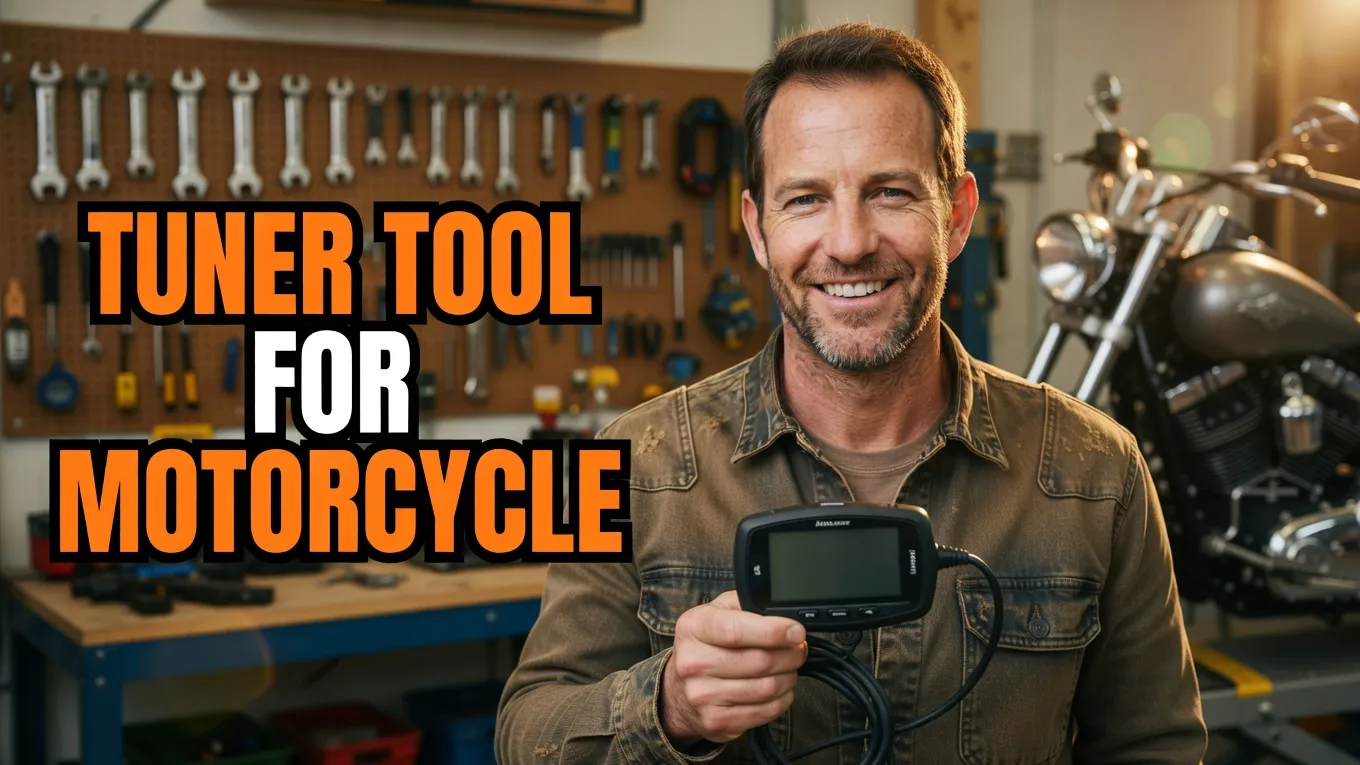
I’ve spent the last eight years tweaking, tuning, and occasionally cursing at motorcycle ECUs. After installing everything from slip-on exhausts to full race systems on my bikes, I’ve learned that the right tuner tool makes the difference between a bike that runs well and one that truly sings.
Modern fuel-injected motorcycles are amazing machines, but their stock ECU maps are designed for emissions compliance and lowest-common-denominator riding. The moment you change your exhaust or intake, you need to retune. I’ve tested dozens of tuning solutions over the years, and I’m sharing the ones that actually deliver.
- Dynojet Power Vision 4 offers the most user-friendly interface with thousands of pre-loaded maps
- Bazzaz Z-Fi TC is my pick for riders who want traction control without complex ECU flashing
- TuneECU provides free PC-based tuning for many European bikes but requires technical knowledge
- Budget options like the Booster Plug work well for mild modifications without full ECU reprogramming
- Always datalog and verify your tune after installation — I’ve caught dangerous lean conditions this way
1. Dynojet Power Vision 4 — Best Overall Tuner for Most Riders
The Dynojet Power Vision 4 has been my go-to recommendation for years, and for good reason. This handheld touchscreen tuner works with Harley-Davidson, Indian, Victory, Ducati, and most metric cruisers. I’ve used it on three different bikes, and the experience is consistently excellent.
What sets the Power Vision 4 apart is its massive library of pre-loaded maps. When I installed a Two Brothers exhaust on my Scout, I simply selected my bike model, my exhaust brand, and whether I had an air filter. The tuner uploaded the perfect map in under ten minutes.
The device lets you monitor live sensor data while riding, which helped me diagnose a fueling issue on a long highway trip. I could see my air-fuel ratio going lean at cruise, so I adjusted the map on the spot using the built-in AutoTune feature. This kind of real-time feedback is invaluable.
At around $400-500, it’s not cheap. But considering it replaces a $300 dyno session and gives you unlimited map changes, I’ve more than paid for mine. Just like choosing the best engine oil for motorcycle maintenance, investing in quality tuning tools protects your engine investment.
2. Bazzaz Z-Fi TC — Best for Adding Traction Control
The Bazzaz Z-Fi TC is a piggyback system that I’ve installed on two sportbikes. Unlike reflash tuners, this one intercepts your fuel injector signals and modifies them in real-time. The real magic is the built-in traction control system that actually works.
I tested the traction control extensively on wet roads and trackdays. It genuinely saved me from a highside when I got too aggressive with the throttle exiting a damp corner at Thunderhill. The intervention was smooth and didn’t kill power abruptly like some OEM systems do.
Installation took me about two hours in my garage. You’re essentially wiring the Z-Fi unit in between your ECU and injectors, plus mounting a small GPS sensor. Bazzaz provides bike-specific maps you download from their website, and you can fine-tune using their free PC software.
The Z-Fi TC costs around $700-900 depending on your bike. That’s premium pricing, but you’re getting fuel management plus traction control. For track riders or anyone in rainy climates, this combo is hard to beat.
3. Woolich Racing Tuned — Best for Advanced DIY Tuners
If you want complete control over every fuel and ignition table, Woolich Racing Tuned is where serious tuners live. I’ll be honest: this isn’t for beginners. But if you’re willing to learn, it unlocks capabilities no handheld tuner can match.
Woolich supports an enormous range of bikes from Kawasaki, Suzuki, Yamaha, Honda, BMW, and more. The software runs on Windows and connects via a bike-specific cable (usually $200-400). I’ve used it primarily on my ZX-10R, where I needed to adjust individual cylinder trims for a big-bore kit.
The learning curve is steep. You’re working with raw fuel tables, ignition timing maps, and rev limiters. I spent weeks studying before I felt comfortable making changes, and I still cross-reference with dyno operators when possible. But the power to eliminate flat spots, smooth throttle transitions, and extract every bit of performance is unmatched.
One feature I love: Woolich lets you enable or disable features hidden in your ECU. On some bikes, you can activate quick-shifter support, modify ABS behavior, or remove speed limiters. Just like finding best motor oil for 4 stroke motorcycle requires research, mastering Woolich takes patience but pays dividends.
4. TuneECU — Best Free Option for European Bikes
TuneECU is free software that works with many Triumph, Aprilia, Ducati, and BMW motorcycles. Yes, free. You only need a compatible OBD cable (around $30-50 on Amazon). I’ve used TuneECU extensively on my Street Triple, and it’s remarkable what you can do without spending hundreds.
The interface is dated and not particularly intuitive, but the functionality is solid. You can read and clear fault codes, adjust fuel maps, modify ignition timing, and datalog sensor values. I once diagnosed a faulty throttle position sensor using TuneECU’s live data readout, saving myself a $150 dealer diagnostic fee.
The community support is excellent. Forums are full of riders sharing map files and troubleshooting tips. I downloaded a well-reviewed map for my bike with an Arrow exhaust, flashed it in my garage, and immediately felt the improvement in throttle response.
The catch? TuneECU doesn’t support Japanese bikes or most American V-twins. And you need basic computer skills. But for European bike owners on a budget, this is an absolute no-brainer. The money you save can go toward top engine oil for 4 stroke motorcycle that keeps your tuned engine running perfectly.
5. Vance & Hines FP4 — Best Plug-and-Play for Harleys
For Harley riders who want simplicity, the Vance & Hines FP4 is tough to beat. I’ve installed this on my friend’s Road Glide, and we had it tuned in under 30 minutes. It literally plugs into your bike’s data port under the seat — no wire splicing, no technical knowledge required.
The FP4 comes preloaded with maps for various Vance & Hines exhaust systems, but you can also download maps for other popular brands through the FP4 app. The smartphone interface is dead simple. You select your modifications, hit upload, and you’re done.
What impressed me most was the AutoTune feature (sold separately for about $200). It uses a wideband O2 sensor to continuously optimize your fuel map while you ride. After a few tanks of gas, the bike ran noticeably smoother with better throttle response at all RPM ranges.
The FP4 runs around $400, and it’s specifically designed for Harley-Davidson touring and cruiser models. If you ride a Sportster, Softail, or bagger and you’re not a tech person, this is the tuner I’d recommend without hesitation.
6. Rapid Bike Racing Module — Best for Aggressive Performance Builds
The Rapid Bike Racing is an Italian piggyback system I installed on my Ducati after going to a full Akrapovic system. This isn’t a budget option (expect $600-800), but the level of control and real-time adjustment is exceptional.
Rapid Bike intercepts injector signals and modifies pulse width based on engine load, throttle position, and RPM. What makes it special is the self-adaptive mapping. As you ride, the system learns your engine’s characteristics and continuously refines the fuel delivery. No dyno required, though I still recommend one for final verification.
Installation is more involved than plug-and-play options. You’re splicing into injector wires and mounting sensors. I’m comfortable with wiring, so it took me about three hours. The included PC software lets you adjust fuel curves for each cylinder independently, which was crucial for balancing my desmo engine.
I’ve put over 10,000 miles on this setup, including multiple track days. The bike pulls harder everywhere, throttle response is instant, and I haven’t seen a single fault code. For serious performance applications, Rapid Bike delivers professional-grade results.
7. Booster Plug — Best Budget Option for Mild Modifications
Sometimes you don’t need a full ECU tune. The Booster Plug is a simple resistor-based device that tricks your ECU into richening the fuel mixture slightly. I’ve tested this on bikes with just a slip-on exhaust or air filter, and it works surprisingly well for under $150.
Installation is literally plug-and-play. You unplug your air temperature sensor and plug the Booster Plug inline. That’s it. No programming, no software, no technical knowledge. I installed one on my Ninja 650 in about five minutes.
The results are subtle but noticeable. My bike had a slight hesitation off idle with the stock tune and a Yoshimura pipe. The Booster Plug smoothed that out and eliminated some popping on deceleration. It’s not going to add 10 horsepower, but it fixes the lean running condition that most stock bikes suffer from.
The limitation is obvious: you can’t customize anything. You get one level of enrichment, and that’s it. But for riders who just want their bike to run properly without diving into tuning software, this is a smart, affordable fix. Just remember to pair it with quality maintenance practices like using best engine oil for 4 stroke motorcycle in india or your region’s top-rated oil.
Why Basic Enrichment Works
Modern bikes run lean from the factory due to emissions regulations. Adding a Booster Plug restores a more optimal air-fuel ratio, especially in the low and mid-range where you spend most of your time. It’s not a replacement for a proper tune on heavily modified bikes, but it’s perfect for bolt-on modifications.
How I Choose and Use Tuning Tools
After years of tuning motorcycles, I’ve developed a systematic approach. First, I consider my modification level. A slip-on exhaust needs less tuning intervention than a full race system with velocity stacks. Match your tuner complexity to your build complexity.
Second, I always datalog before and after tuning. Most modern tuners include datalogging features. I watch my air-fuel ratio, throttle position, and intake air temperature across different riding conditions. This helps me verify the tune is actually working and catches dangerous lean conditions that could damage the engine.
I also believe in professional dyno verification for major builds. While AutoTune features and self-learning systems are impressive, nothing replaces a few hours on a dyno with an experienced tuner. I’ve caught issues with my DIY tunes that only showed up under sustained load on the dyno.
The Maintenance Connection
Proper tuning and maintenance go hand in hand. A perfectly tuned bike running the wrong oil or with dirty filters won’t perform as expected. I always ensure I’m using what is the best engine oil for 4 stroke motorcycle for my specific application before I even start tuning.
I’ve seen riders spend $500 on a tuner but skimp on oil changes. That’s backwards. Your engine needs both proper fuel delivery AND proper lubrication to make power safely and reliably.
Common Tuning Mistakes I’ve Made (So You Don’t Have To)
Early in my tuning journey, I got cocky and added too much fuel across the entire map. More fuel equals more power, right? Wrong. I ended up with a bike that fouled plugs, smelled like a gas station, and made less power than stock. Leaner isn’t always better, but neither is richer.
I’ve also learned not to trust generic “universal” maps downloaded from random forum posts. Every bike is slightly different due to manufacturing tolerances, altitude, temperature, and wear. A map that works perfectly on someone’s bike in Florida might run terribly on yours in Colorado.
Another mistake: ignoring ignition timing. Many riders focus only on fuel, but timing adjustments can unlock significant power and smoothness. Just be conservative. Too much advance and you risk detonation, which can destroy pistons in seconds. I start with small timing changes and monitor for knock using an audio knock sensor or careful listening.
My Final Tuning Philosophy
The best tuner tool for your motorcycle depends on your technical comfort level, budget, and modification plans. I recommend starting conservative and working your way up. A plug-and-play option like the Vance & Hines FP4 or Dynojet Power Vision 4 makes sense for most riders.
If you’re mechanically inclined and want deeper control, Woolich or TuneECU (for supported bikes) opens up unlimited possibilities. Just take your time learning and don’t be afraid to ask for help in online communities. I’ve learned more from experienced tuners on forums than from any manual.
Above all, remember that tuning is iterative. Your first map won’t be perfect. You’ll refine it over weeks or months as you learn your bike’s behavior. Document your changes, save your base maps, and enjoy the process of making your motorcycle truly yours.
The satisfaction of nailing a tune — feeling that perfect throttle response and hearing your engine rev cleanly to redline — is one of the best parts of motorcycle ownership for me. With the right tuner tool and some patience, you’ll get there too.
Frequently Asked Questions
Do I need a tuner tool for my motorcycle?
If you’ve added aftermarket exhaust or air intake, a tuner tool helps optimize your air-fuel ratio and prevents lean running conditions that can damage your engine.
Can a motorcycle tuner increase horsepower?
Yes. In my experience, a good tuner can add 5-15% more horsepower depending on your bike and modifications, plus smoother throttle response and better fuel efficiency.
Will using a tuner void my motorcycle warranty?
Most manufacturers will void your warranty if they detect ECU modifications. However, many tuners like the Dynojet Power Vision allow you to restore stock settings before service.
What’s the difference between a piggyback tuner and a flash tuner?
A piggyback tuner intercepts sensor signals without rewriting your ECU, while a flash tuner permanently modifies your ECU’s firmware for deeper customization and performance gains.

Related Articles
7 Best Batteries for Motorcycles I’ve Tested and Trust in 2026
I've tested dozens of motorcycle batteries to find the best performers. From AGM to lithium, here are my top picks…
Jake Miller
15 min read

The Perfect Battery for Your Harley Davidson Softail: A Rider’s Complete Guide
Discover the perfect battery for your Harley Davidson Softail. I've tested multiple options and share real-world performance data, maintenance tips,…
Jake Miller
14 min read

The Best Battery for Your Harley Davidson: My Complete Guide After Years of Testing
Discover which battery truly performs best for Harley Davidson motorcycles. Real rider experience with AGM, lithium, and OEM options to…
Jake Miller
12 min read