
7 Best Gaskets and Sealants for Motorcycle Engines I Trust in My Garage
 Jake Miller
9 min read
Jake Miller
9 min read
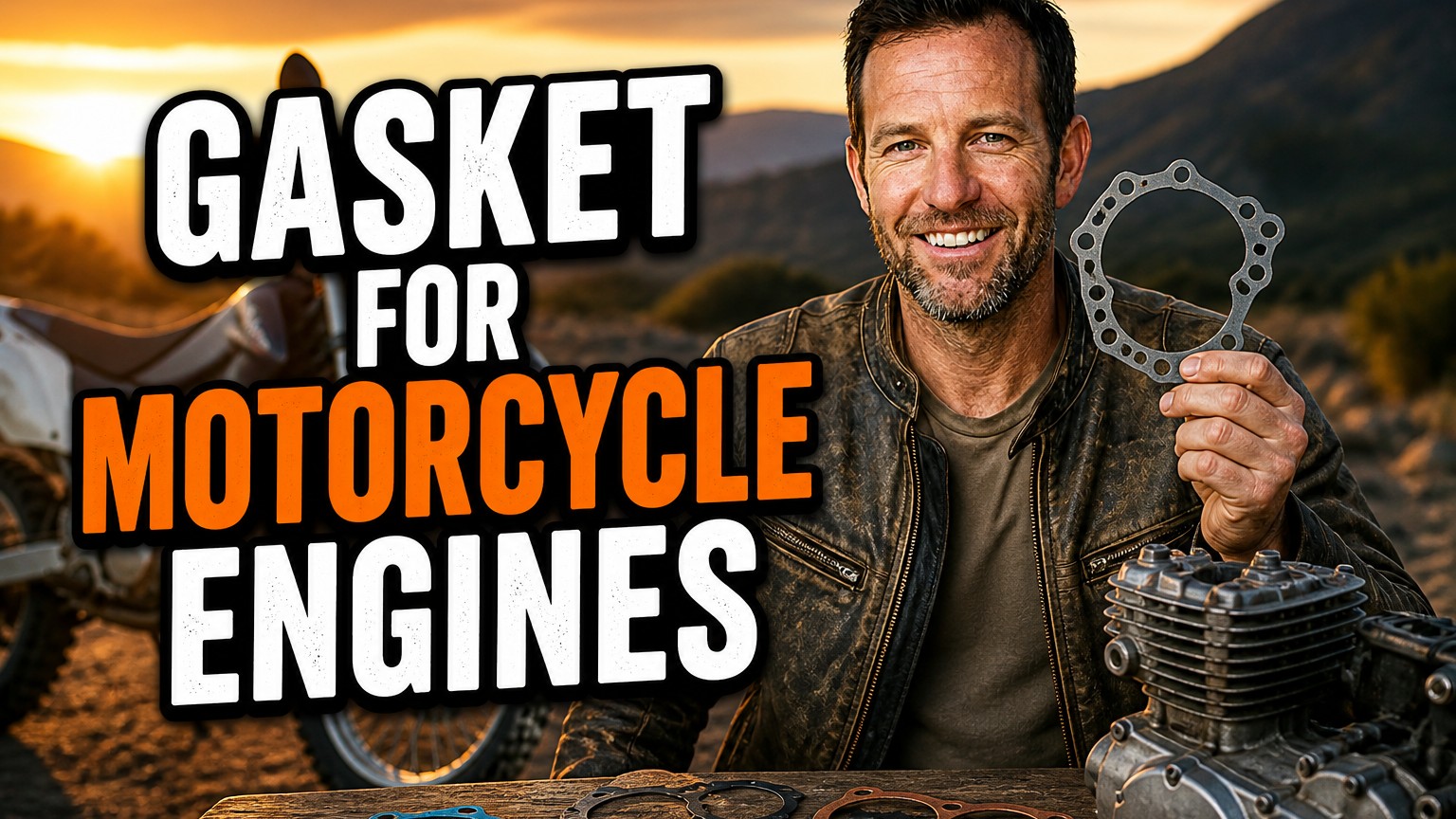
I’ve lost count of how many weekends I’ve spent hunched over a half-torn-down engine, staring at a leaking cover and wondering why I didn’t spend ten more dollars on a better gasket. A cheap gasket is the most expensive part you can buy. It sits quietly for a few hundred miles, then starts weeping oil on your boots.
Over the years I’ve rebuilt everything from tired air-cooled singles to high-revving liquid-cooled fours. I’ve learned which gasket brands and sealants earn their place on my workbench. This is my honest list of what I actually use and trust.
Some entries are full gasket kits and some are liquid sealants. In a real rebuild you’ll often need both, so I’ve covered each side.
- My top pick for performance and high-heat builds is the Cometic MLS head gasket, thanks to its multi-layer steel construction.
- For complete rebuilds on a budget, Athena and Vesrah gasket kits give you the most parts for the money.
- Harley riders should look at James Gasket for primary, cam, and cover seals.
- Yamabond 4, Permatex Ultra Black, and ThreeBond 1215 are my go-to sealants for case halves and covers.
- Surface prep and correct torque matter as much as the gasket you buy.
How I Choose a Gasket Before I Spend a Dime
Before the list, here’s the quick checklist I run through. It keeps me from buying the wrong thing at 9 p.m. on a Saturday.
Material Matters
Paper and fiber gaskets are cheap and fine for low-pressure covers. Rubber and silicone-coated ones handle heat cycles better. Multi-layer steel (MLS) is the gold standard for head gaskets under real cylinder pressure.
Fitment and Engine Specs
Bore size, piston compression height, and model year all change which gasket you need. I always confirm the exact bore before ordering, especially if the bike has had a big-bore kit.
Dry Install or Sealant?
Some gaskets are designed to go on dry. Others need a thin bead of sealant at corners or joints. Always check the service manual first. Adding sealant where it doesn’t belong can actually cause leaks.
1. Cometic MLS Head Gasket — Best Overall for Performance and Durability
When I want a head gasket I never have to think about again, I reach for a Cometic MLS head gasket. Cometic builds these from stacked layers of embossed stainless steel, often with a coating to help the surface seal against the head and cylinder.
I’ve run a Cometic MLS head gasket on a built engine that saw regular track days. It held through heat cycle after heat cycle with no weeping and no seepage. The embossed beads around the combustion opening are what keep the seal tight under pressure.
Why I Like It
Cometic offers different thicknesses, so you can fine-tune compression ratio and piston-to-head clearance. That’s a huge advantage if you’ve changed pistons or milled the head. A Cometic MLS head gasket usually costs somewhere between $40 and $150, depending on the application.
If your bike is liquid-cooled, pair the new gasket with fresh coolant. I wrote up my thoughts on the best antifreeze for aluminum motorcycle engines, which matters because the wrong coolant can corrode the very surfaces your gasket needs to seal.
Things to Watch
MLS gaskets want clean, flat, smooth surfaces. If your deck is warped or pitted, even the best Cometic MLS head gasket won’t save you. I always have the head checked for flatness on a rebuild.
2. Athena Top End Gasket Kit — Best Value for Complete Rebuilds
If I’m freshening a top end and don’t want to hunt down five separate parts, the Athena Top End Gasket Kit is where I start. Athena has been supplying European and Japanese bike owners for decades, and the kits cover a huge range of models.
A typical Athena Top End Gasket Kit includes the head gasket, base gasket, O-rings, and often exhaust gaskets. Most land in the $30 to $100 range. That’s seriously good value compared to buying each piece separately.
Where It Shines
I like Athena for older and less common bikes where OEM gaskets are discontinued or wildly overpriced. I’ve also used Athena kits on two-stroke projects. If you’re rebuilding a two-stroke, don’t skimp on lubrication either; check out my picks for the best 2 cycle oil for air cooled motorcycle engines before you fire it up.
My Honest Take
The Athena Top End Gasket Kit isn’t a race-spec product. But for a street bike or a weekend cruiser, it does exactly what it should, and it does it affordably.
3. Vesrah Complete Gasket Set — Best for Full Engine Rebuilds
When the whole engine is coming apart, I want every gasket and seal in one box. That’s the Vesrah Complete Gasket Set. Vesrah is well regarded for OEM-style fit, and the sets cover most of the common Japanese models.
A full Vesrah Complete Gasket Set typically includes top-end, side cover, clutch cover, and stator cover gaskets, plus the various seals. It saves me from the dreaded mid-rebuild trip to the parts counter.
Perfect for Older Bikes
I used a Vesrah Complete Gasket Set on a tired 1980s inline-four I was bringing back to life. Everything lined up properly, which is not something I can say about every budget kit I’ve tried.
If you’re reviving a vintage engine, you’ll also want to think about what goes inside it afterward. I put together a guide on the best oil for old motorcycle engines that pairs nicely with a rebuild like this.
4. James Gasket Primary Cover Gasket — Best for Harley-Davidson Riders
V-twin owners know the pain of a leaking primary. The James Gasket Primary Cover Gasket is my pick for Harley-Davidson Big Twin and Sportster work. James has been making Harley gaskets for a long time, and the company offers a wide catalog covering primary, cam cover, rocker box, and more.
I like that a James Gasket Primary Cover Gasket is available in several materials and configurations, depending on your model. Prices are usually modest, often under $30 for a single cover gasket.
Fit and Finish
The cut quality is consistent, and the bolt holes line up cleanly. That matters on a primary cover with a lot of fasteners. A misaligned hole means a cover that never sits flat.
Don’t Forget the Oil
Harley engines run hot, and heat is a gasket’s enemy. Good oil keeps temperatures in check and protects seals. See my write-up on the best oil for air cooled motorcycle engines if your V-twin relies on air for cooling.
5. Yamabond 4 — Best OEM-Style Liquid Gasket for Crankcases
Yamabond 4 is the semi-drying liquid sealant Yamaha has used on its engines for years. I keep a tube on my shelf even when I’m not working on a Yamaha. It’s designed for crankcase mating surfaces and stays slightly pliable after curing.
That non-hardening nature is what I love about Yamabond 4. It tolerates the tiny movements and thermal expansion of aluminum cases without cracking. A tube costs roughly $10 to $25 depending on the seller.
How I Apply It
I clean both surfaces thoroughly, then lay down a thin, even bead with a gloved finger or small roller. Too much sealant squeezes into oil passages, so less is more.
Proper prep makes a big difference. If your engine is grimy before you open it up, my guide on what is the best cleaner for black motorcycle engines covers how to degrease without damaging the finish.
6. Permatex Ultra Black Maxi RTV Silicone Gasket Maker — Best Versatile RTV
The Permatex Ultra Black Maxi RTV Silicone Gasket Maker is a workhorse. It’s an oil-resistant silicone that handles a wide temperature range, rated for intermittent exposure up to roughly 500°F. You’ll find it at nearly any auto parts store for about $8 to $15 a tube.
I use Permatex Ultra Black on oil pans, valve covers, and some timing covers where the manual allows RTV. It forms a flexible seal that tolerates vibration well, which is important on a motorcycle.
Cautions I Always Share
Wet clutch engines need care. Excess RTV can break off and travel through the oil system. I keep the bead thin and let it set to the manufacturer’s recommended time before adding oil.
Also, never use RTV where a dry-fit gasket is specified. More sealant is not more sealing.
7. ThreeBond 1215 — Best Semi-Drying Sealant for Case Halves
Mechanics who work on Japanese bikes often swear by ThreeBond 1215. It’s a gray, semi-drying liquid gasket commonly used on engine case split lines. It’s similar in spirit to Yamabond 4, and I often choose between them based on what’s in my toolbox.
ThreeBond 1215 spreads smoothly and cures into a thin, durable film that resists oil, gasoline, and heat. A tube usually runs $15 to $25.
Why It Earns a Spot
I’ve used ThreeBond 1215 on case halves where a leak would mean a full teardown to fix. I trust it because it flows predictably and doesn’t turn into a gummy mess. For high-stakes joints, that confidence is worth a few extra dollars.
My Installation Tips for Any Gasket
A great gasket still fails if it’s installed badly. These are the habits that have saved me the most headaches.
Clean Surfaces Like You Mean It
Remove every trace of old gasket material with a plastic scraper or a gasket-removal disc used gently. Avoid gouging aluminum. Finish with brake cleaner or a similar residue-free solvent.
Torque in Sequence
Tighten fasteners in the order and stages the manual specifies. Skipping this step is the most common reason I see head gaskets fail early. Use a real torque wrench, not a feel-and-hope approach.
Check for Warpage
Lay a straightedge across the head and cases, then check with feeler gauges. A few thousandths of warp can doom a gasket. If in doubt, have a machine shop resurface the part.
Let It Settle
After the first heat cycle, I re-check for leaks and, where the manual allows, re-torque. A quick inspection after the first ride has caught more than one slow weep for me.
Final Thoughts From My Garage
If I had to choose just one, I’d go with the Cometic MLS head gasket for anything performance-oriented. For a straightforward top-end refresh, the Athena Top End Gasket Kit is hard to beat on price. For a full teardown, the Vesrah Complete Gasket Set keeps everything in one box.
Pair the right gasket with a good sealant like Yamabond 4, Permatex Ultra Black, or ThreeBond 1215, and you’ve covered nearly every joint on the engine. Harley riders, don’t overlook the James Gasket Primary Cover Gasket for those notorious primary leaks.
Take your time, prep your surfaces, and follow the manual. Do that, and the only thing dripping after your rebuild will be sweat from the first long ride.
Frequently Asked Questions
Can I reuse a motorcycle head gasket?
I don’t recommend it. Most head gaskets crush and conform to the mating surfaces the first time they are torqued. A reused gasket rarely reseals properly, so always fit a new one whenever the head comes off.
Should I use gasket sealant on every motorcycle gasket?
No. Many gaskets, especially multi-layer steel head gaskets and rubber-coated ones, are designed to be installed dry. Use sealant only where the service manual calls for it, such as case split lines, corners, and some cover joints.
What is the difference between a gasket and a liquid gasket?
A gasket is a pre-cut sealing part, often paper, rubber, graphite, or metal. A liquid gasket is a paste or silicone that cures or semi-cures between two surfaces. Many engines use both, with a gasket in one spot and a bead of sealant in another.
How do I know which gasket kit fits my motorcycle?
Match your bike’s exact make, model, year, and engine displacement, and check for any big-bore or piston size differences. Cross-reference the part number against your service manual or the manufacturer’s fitment guide before you order.

Related Articles
7 Best Batteries for Motorcycles I’ve Tested and Trust in 2026
I've tested dozens of motorcycle batteries to find the best performers. From AGM to lithium, here are my top picks…
Jake Miller
15 min read

The Perfect Battery for Your Harley Davidson Softail: A Rider’s Complete Guide
Discover the perfect battery for your Harley Davidson Softail. I've tested multiple options and share real-world performance data, maintenance tips,…
Jake Miller
14 min read

The Best Battery for Your Harley Davidson: My Complete Guide After Years of Testing
Discover which battery truly performs best for Harley Davidson motorcycles. Real rider experience with AGM, lithium, and OEM options to…
Jake Miller
12 min read