
Can You Overfill a Motorcycle Gas Tank? The Real Risks and Costs I’ve Learned the Hard Way
 Jake Miller
9 min read
Jake Miller
9 min read
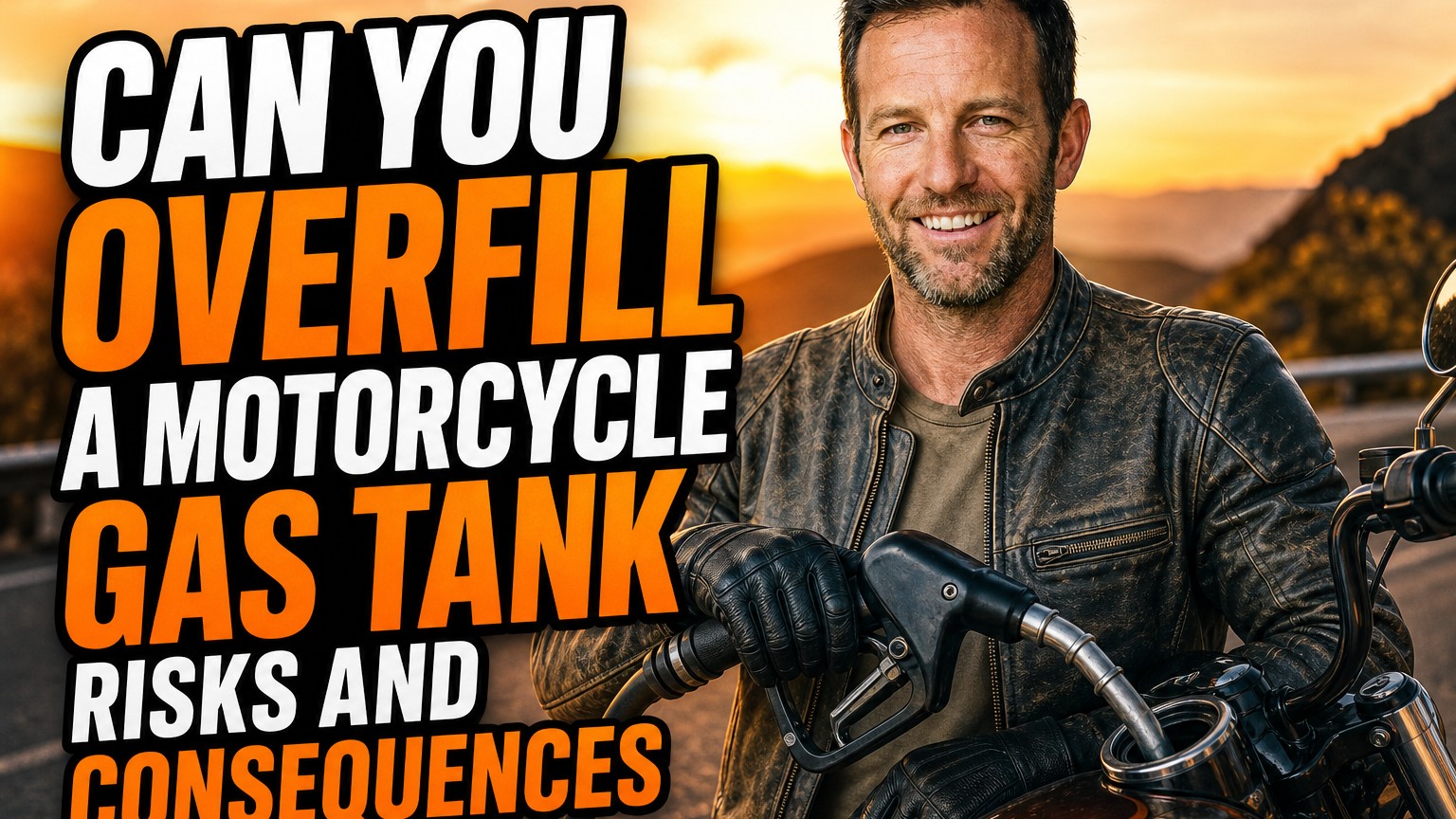
I’ll admit it: I used to be the guy who squeezed the pump handle until fuel kissed the rim of the filler neck. I wanted every last mile out of that tank. Then one hot afternoon I came out of a coffee shop to find a shiny trail of gasoline running down my tank, over my engine cases, and onto the pavement.
That little lesson changed how I fuel up. So, can you actually overfill a motorcycle gas tank? Yes, you can, and the consequences are bigger than most riders realize. Let me walk you through what I’ve learned from my own mistakes and from years of wrenching on my bikes.
- Yes, you can overfill a motorcycle tank, and heat makes it worse because fuel expands.
- Risks include fuel spills, paint damage, fire hazards, reduced tire grip, and a flooded charcoal canister.
- Stop filling at the bottom of the filler neck, or when the pump first clicks off.
- Never “top off” after the nozzle shuts off, especially in warm weather.
So, Can You Really Overfill a Motorcycle Tank?
The short answer is yes. A motorcycle tank has a defined capacity, but the filler neck above that capacity is not meant to hold fuel. It’s an air gap that gives gasoline room to expand and gives vapor somewhere to go.
When you push fuel up into that neck, you’re eating the safety margin your bike’s designers built in. The fuel has nowhere to go once it warms up, so it finds the nearest exit.
Why the Filler Neck Matters
Most tanks have a funnel-shaped well around the cap, plus a drain tube that routes spilled fuel away from the bike. That tube is for rain and small drips, not for a tank full to the brim.
On many bikes I’ve owned, the neck is where expansion happens. Fill past the neck’s base, and you’ve used up that buffer completely.
Thermal Expansion: The Sneaky Culprit
Gasoline expands as it warms. Fill up in the cool morning at a gas station with underground (cold) fuel, then park in the afternoon sun, and that fuel will want more space.
A tank that looks perfectly full at 8 a.m. can be dripping by lunchtime. That’s exactly what happened to me.
The Real Risks and Consequences of Overfilling
Let’s get into what can actually go wrong. Some of these are minor annoyances. Others can be genuinely dangerous.
1. Fuel Spills and Paint Damage
Gasoline is a solvent. It can dull clear coat, stain matte finishes, and lift decals if it sits long enough.
I’ve seen a gorgeous matte black tank develop permanent glossy streaks from a single overflow. Matte paint is especially unforgiving, and a repaint is not cheap.
2. Fire Hazard
This is the one that should make every rider pause. Fuel running down onto a hot engine, exhaust header, or muffler can ignite or at least produce flammable vapor around your bike.
Even if nothing ignites, the smell alone is a warning sign. I never park a bike indoors if I suspect any fuel has spilled on it.
3. Fuel on Your Tires and the Road
Gas that drips onto your tires or pools on the ground below your bike is a traction nightmare. Rubber and fuel do not play well together, and a slippery tire is the last thing you want when leaning into a corner.
If you ever spill fuel at a stop, wipe down the tires and the area around the tank before riding off. I carry a small rag for exactly this reason.
4. Flooding the EVAP System and Charcoal Canister
Many modern bikes, especially in markets with strict emissions rules, have an evaporative emissions system. A charcoal canister captures fuel vapor instead of letting it escape.
When you overfill, liquid fuel can get pushed into the vent lines and into that canister. The canister is designed to handle vapor, not liquid gasoline.
Symptoms of a Soaked Canister
- Rough idle or stalling after refueling
- Hard starting when the engine is warm
- Strong fuel odor around the bike
- Check engine light or fault codes on newer models
- Failed emissions inspection where applicable
Replacing a canister or cleaning out vent hoses can run from modest to quite pricey, depending on the model. It’s an expensive way to save a few ounces of fuel.
5. Fuel Leaking from the Breather or Vent
Even bikes without a full EVAP setup have a tank breather hose. Overfilling can send liquid fuel down that hose, where it dribbles out under the bike.
That’s usually how riders discover they’ve overfilled: a puddle under the bike and a confusing “is my tank leaking?” moment.
6. Fuel Injection and Carburetor Issues
On carbureted bikes, extra fuel pressure from a brimming tank can contribute to float bowl overflow in some situations, particularly if a needle valve is already worn. I’ve seen it show up as flooding after a long park.
On fuel-injected bikes, the impact is usually indirect, through the vapor system. Either way, it’s not something you want to gamble on.
What Overfilling Does to Your Wallet
Let’s talk about cost, because that’s what usually convinces people. The wasted fuel is trivial, but the follow-on problems add up.
- Repainting a tank: often several hundred dollars or more
- Replacing a charcoal canister: parts plus labor can climb quickly
- Replacing damaged tires: if fuel degraded the rubber or caused a crash
- Cleaning up a garage spill: time, ventilation, and potentially safety concerns
To me, squeezing in one extra gulp of gas is never worth that risk.
How I Fill My Tank the Right Way
After my coffee-shop incident, I developed a simple routine. It takes about ten extra seconds and has saved me headaches ever since.
My Step-by-Step Fueling Routine
- Turn off the engine and let the bike sit upright on a level surface, not leaning heavily on the sidestand if I can help it.
- Touch the pump nozzle to the tank opening to discharge static, and keep it in contact while filling.
- Fill slowly at a low flow rate so I can see the level rise.
- Stop at the first click or when fuel reaches the bottom of the filler neck.
- Do not top off. No extra squeezes, no “one more bit.”
- Wipe any drips and make sure the cap is fully closed and locked.
The Sidestand Trick
A bike leaning on its sidestand will show a different fuel level than one standing upright. Fuel can pool on the low side and appear full while the high side still has room.
Alternatively, a bike held upright on a centerstand will take a bit more fuel than one on a sidestand. Either way, if you fill on the stand, don’t assume that level will hold once you roll off.
Special Situations Where Overfilling Is Even Riskier
Hot Weather
On a scorching day, fuel expansion is at its peak. I leave a bit more room in summer and stop a little earlier than I would in cooler months.
Rides Down a Hill or Over Rough Terrain
If you’re heading down a mountain pass or riding a dual-sport off-road, a full tank can slosh and push fuel through the breather. Leaving that small gap really helps here.
Long-Term Storage
For storage, I fill the tank most of the way to limit condensation, but not to the brim. I also add stabilizer, and it’s a good time to refresh the oil. If you’re picking one, my go-to reads include the guide on the best engine oil for motorcycle engines of all types.
Fuel and Oil: Keeping the Rest of Your Bike Healthy
Since we’re talking about maintenance, I’d be remiss not to mention oil. Spilled or excess fuel is only one part of keeping your engine happy. The other is fresh, correct oil.
If you ride a four-stroke, I recommend reading up on the best motor oil for 4 stroke motorcycle options. For a deeper comparison, this look at the top engine oil for 4 stroke motorcycle picks is a helpful starting point.
Riders in warmer, dustier climates may like this breakdown of the best engine oil for 4 stroke motorcycle in india. And if you simply want a straightforward answer to what is the best engine oil for 4 stroke motorcycle setups, that article covers it well.
Why This Matters for Fuel Habits
Fuel that leaks past the wrong seals or into the crankcase can dilute oil in some failure scenarios, particularly on bikes with stuck carb needles. I check my oil level and smell the dipstick any time I suspect fuel trouble.
Good habits at the pump and good oil in the sump work together to keep an engine running for the long haul.
What to Do If You’ve Already Overfilled
It happens to everyone eventually. Here’s how I handle it calmly.
Immediate Steps
- Don’t start the engine if fuel is pooled on or near hot parts.
- Wipe up spilled fuel with a rag or absorbent pad right away.
- Rinse the area lightly with water if paint is affected, then dry it.
- Check tires for fuel contamination and wipe them down.
- Dispose of fuel-soaked rags safely, not in an enclosed bin.
When to Take It to a Shop
If your bike runs rough after refueling, stalls at idle, or throws a warning light, a flooded canister or vent line may be to blame. I’d have a mechanic check it sooner rather than later.
Ignoring that can turn a simple vent-line cleanout into a larger repair bill.
Common Myths About Filling a Motorcycle Tank
Myth: “A Fuller Tank Is Always Better”
A sensibly full tank is great, since it reduces condensation. A brimming tank is just a spill waiting to happen.
Myth: “The Overflow Tube Will Handle It”
The overflow tube is a backup, not a feature to rely on. Treat it like a seatbelt, not a steering wheel.
Myth: “My Bike Never Leaks, So I’m Fine”
Maybe you’ve been lucky. A cool day, a short ride, or a lower fuel temperature can hide the problem until the weather changes.
My Final Thoughts
So, can you overfill a motorcycle gas tank? Absolutely, and the consequences range from a stained tank to a fire hazard to an expensive emissions repair. In my experience, the fix is incredibly simple: stop filling when the pump clicks, and resist the urge to top off.
I haven’t had a single fuel-trickle incident since adopting that habit. Your paint, your tires, your wallet, and your safety will all thank you. Ride safe, and keep that tank filled just right.
Frequently Asked Questions
Can you overfill a motorcycle gas tank?
Yes. While the tank itself can only hold so much, you can fill fuel into the filler neck, which has no room for expansion. This can cause fuel to spill, vent out of the breather, or flood the evaporative system as the fuel warms up.
What happens if I fill my motorcycle tank to the very top?
Fuel can expand with heat and leak out of the cap vent or overflow tube, running down onto your engine, tires, and paint. On bikes with an EVAP system, liquid fuel can also soak the charcoal canister and cause rough running or a failed emissions check.
Is it dangerous to overfill a motorcycle gas tank?
It can be. Spilled fuel on a hot engine or exhaust is a fire risk, and fuel on the tires or pavement beneath you can reduce traction and cause a slide.
How full should I fill my motorcycle gas tank?
Stop filling when fuel reaches the bottom of the filler neck, or just when the pump clicks off the first time. Do not top it off, and leave a little space for thermal expansion, especially on hot days.

Related Articles
7 Best Batteries for Motorcycles I’ve Tested and Trust in 2026
I've tested dozens of motorcycle batteries to find the best performers. From AGM to lithium, here are my top picks…
Jake Miller
15 min read

The Perfect Battery for Your Harley Davidson Softail: A Rider’s Complete Guide
Discover the perfect battery for your Harley Davidson Softail. I've tested multiple options and share real-world performance data, maintenance tips,…
Jake Miller
14 min read

The Best Battery for Your Harley Davidson: My Complete Guide After Years of Testing
Discover which battery truly performs best for Harley Davidson motorcycles. Real rider experience with AGM, lithium, and OEM options to…
Jake Miller
12 min read