
6 Best Motorcycle Oil Filters I Trust for Street, Track, and Dirt
 Jake Miller
9 min read
Jake Miller
9 min read
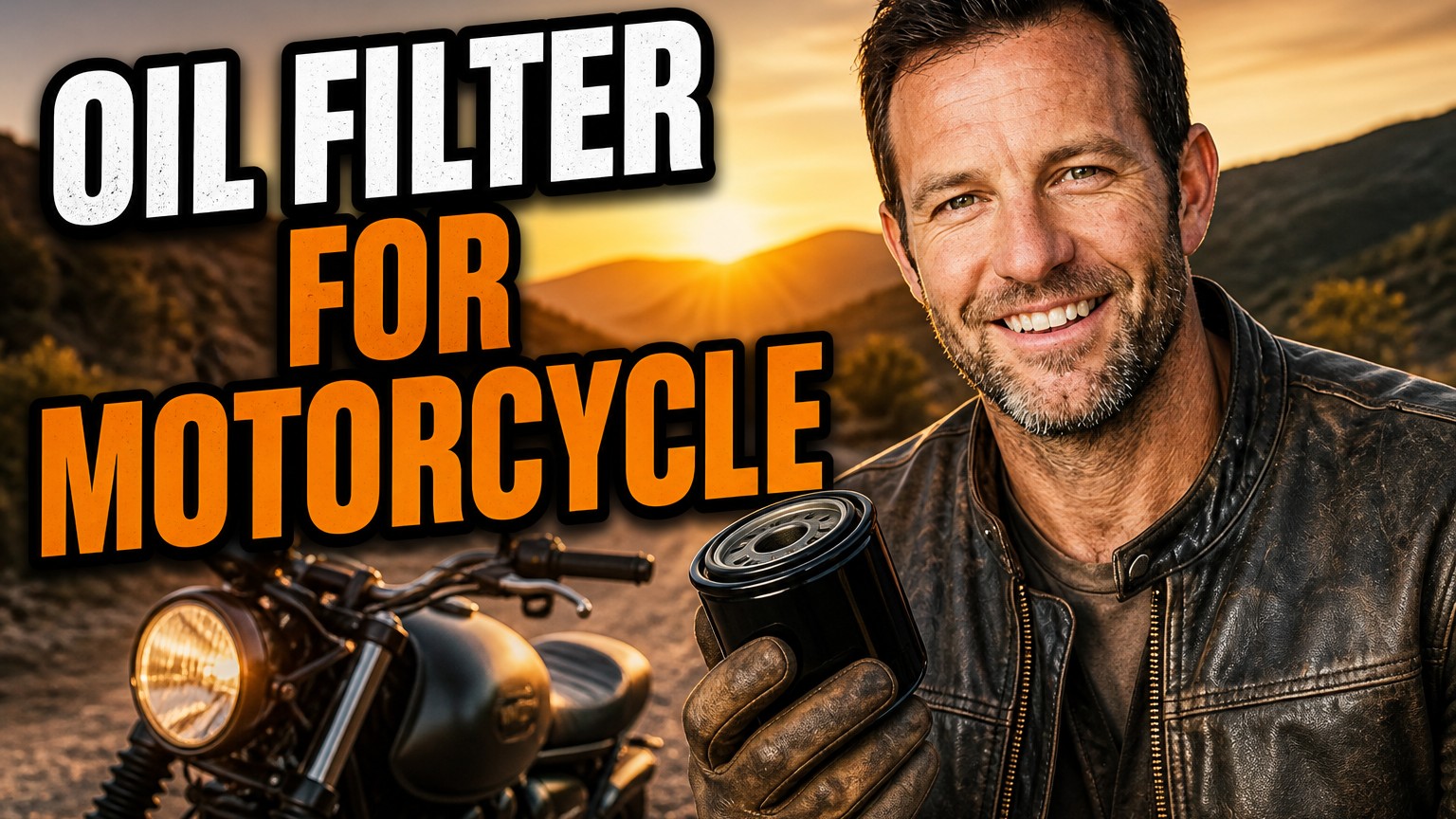
I’ve been wrenching on my own bikes for years, and if there’s one lesson that stuck, it’s that the humble oil filter is the cheapest insurance your engine will ever have. It costs less than a tank of fuel, yet it traps the metal particles, carbon, and grit that would otherwise chew through bearings and cam surfaces.
Choosing the right one isn’t complicated, but it does take a little care. Fitment, filter media, valve quality, and build strength all matter. In this guide I’m sharing the six filters I’d actually put on my own bikes, and why.
- My top all-rounder is the K&N KN-204 for a huge range of Japanese sportbikes and standards.
- For budget and dirt bikes, the Hiflofiltro HF303 and HF138 deliver excellent value.
- Harley riders should look at the K&N KN-171B, and Yamaha owners can’t go wrong with the genuine OEM filter.
- Always verify fitment for your exact model and year, and change the filter with every oil change.
How I Chose These Filters
I didn’t want a list of random part numbers. Every filter here is a real, widely available product that I’ve either used myself or researched heavily through rider communities and manufacturer specs.
What I Looked For
I focused on four things: build quality, filtration performance, fitment reliability, and price. I also paid attention to features like the nut or hex on the end cap, which makes installation far easier.
Finally, I considered how each filter suits a particular type of riding. A track bike has very different needs from a commuter or a trail machine.
1. K&N KN-204 — Best Overall Oil Filter
If someone asked me for one filter to recommend without knowing much about their bike, the K&N KN-204 would be near the top. It’s a cartridge-style, spin-on filter with a sturdy steel canister and a 17mm hex nut welded to the end. That nut means you can use a normal socket instead of fighting a slippery filter wrench.
The KN-204 fits a long list of Japanese middleweight and liter-class sportbikes and standards from Honda, Kawasaki, Yamaha, and Triumph. Always check K&N’s application guide for your exact model and year before ordering.
Why I Like It
The KN-204 uses high-quality wet-laid synthetic-blend filter media with a solid anti-drainback valve. In my experience, it gives you a clean, no-drama oil change every time.
The canister is thicker than many cheap alternatives, and I’ve never had a leak when installed with a lightly oiled gasket. It typically sells for about $12 to $18.
Who It’s For
Street riders, weekend canyon carvers, and anyone who wants a dependable filter they can grab off the shelf. If you also want to dial in your oil choice, I’ve covered the best engine oil for motorcycle applications in a separate guide.
2. Hiflofiltro HF204RC Racing — Best for Track Days
The Hiflofiltro HF204RC is the filter I’d choose for a bike that sees regular track time. It shares fitment with the standard HF204, but the “RC” version adds a machined hex nut and a pre-drilled safety wire arrangement that suits racing rules.
The red-anodized finish also makes it easy to spot at tech inspection. It’s built to handle higher pressures and constant heat cycling.
Real-World Notes
The HF204RC uses premium filter media with a high flow rate, so oil pressure stays stable at high rpm. That’s important when you’re hammering a four-cylinder engine near redline for 20 minutes.
Expect to pay around $15 to $22. It’s slightly more than a standard filter, but for a track bike, the extra peace of mind is worth it.
Who It’s For
Track-day riders, racers, and spirited sport riders who want a filter that meets safety wiring requirements. Pair it with a quality synthetic. My best motor oil for 4 stroke motorcycle roundup is a good starting point.
3. K&N KN-171B — Best for Harley-Davidson Twin Cam Models
Harley riders tend to care about looks as much as performance, and the K&N KN-171B delivers both. It’s a spin-on filter in a black finish that blends in with Twin Cam engines, rather than the chrome look some riders prefer to avoid.
It’s engineered for Harley-Davidson Touring, Softail, and Dyna models using the Twin Cam platform. As always, check the application chart for your year and model.
Why It Works
The KN-171B has a wrench-friendly hex nut on the end, which is a lifesaver in the tight spaces around a V-twin’s oil filter location. The media is built for the high operating temperatures that air-cooled V-twins produce.
It usually retails for $14 to $20. I like that it’s a clean, no-fuss upgrade over generic parts-counter filters.
Who It’s For
Cruiser and touring riders who rack up long highway miles and want a tough filter that looks right on the bike. If you ride in warm climates, pay extra attention to oil quality too.
4. Hiflofiltro HF303 — Best Budget Filter for Dirt Bikes
Off-road riding is brutal on oil. Dust, mud, and constant clutch use mean oil gets dirty fast, so I change dirt bike oil and filters more often than on the street. That’s why I love the Hiflofiltro HF303.
It’s inexpensive, usually $7 to $12, and it fits a wide range of Honda CRF models and several other four-stroke off-road bikes. Confirm your exact fitment with Hiflofiltro’s lookup tool.
What Stands Out
The HF303 has a sturdy steel canister and a hex-shaped end cap that works with a standard wrench. The filter media is rated to trap fine contaminants while still flowing well in cold starts.
Because it’s affordable, I don’t feel guilty swapping it every single oil change. That habit saves engines far more than any premium feature.
Who It’s For
Trail riders, motocross racers, and anyone running a small-displacement four-stroke who wants good filtration without overspending. If you ride in India or similar dusty conditions, check out my guide to the best engine oil for 4 stroke motorcycle in india as well.
5. Yamaha Genuine OEM Oil Filter 5GH-13440-60 — Best OEM Option
Sometimes the smartest choice is simply the original. The Yamaha 5GH-13440-60 is the genuine oil filter used on a range of modern Yamaha bikes, including popular models like the MT-07 and MT-09. Confirm the part number in your manual before buying.
It’s engineered to the exact specs Yamaha’s engineers set for oil pressure, flow, and valve behavior. That’s a major advantage on bikes still under warranty.
Why I’d Choose OEM
With a genuine filter, you remove all doubt about fitment and valve specs. The thread, gasket, and bypass pressure are all matched to the engine.
It’s typically priced around $10 to $16, so you aren’t paying much of a premium. For warranty peace of mind, that’s a bargain.
Who It’s For
Yamaha owners with newer bikes, anyone who wants the simplest possible maintenance, and riders who prefer to stick with factory parts. You can pair it with a high-quality oil, and my top engine oil for 4 stroke motorcycle picks are a good place to start.
6. Hiflofiltro HF138 — Best Value for Kawasaki and Suzuki Middleweights
The Hiflofiltro HF138 is the filter I recommend to friends with Kawasaki and Suzuki middleweights. It’s widely used on bikes like the Ninja 650 and Versys 650, along with various Suzuki models. Verify your exact application using the brand’s fitment tool.
It’s an affordable, reliable choice that has been a favorite of independent shops and DIY riders for years.
What I Like
The HF138 features a strong steel casing, a reliable anti-drainback valve, and quality filter paper that holds up well between changes. It also has a built-in hex for easy removal.
At roughly $8 to $13, it’s among the best value filters I’ve come across. I keep a spare on my shelf for quick weekend oil changes.
Who It’s For
Commuters, new riders, and budget-conscious owners who still want proper filtration. It’s the ideal choice if you do your own maintenance and want to keep costs low.
What to Know Before You Buy
Choosing the right filter is about more than picking a brand. Here are the factors I always consider before I order one for any bike.
Fitment Comes First
Never buy based on a “close enough” match. Thread size, gasket diameter, and height all need to be correct. Use the manufacturer’s lookup tool or your owner’s manual to confirm the part number.
A filter that fits poorly can leak or starve your engine of oil. It’s a risk that isn’t worth taking.
Cartridge vs. Spin-On
Most bikes use either a spin-on canister or a cartridge element inside a housing. You can’t swap one type for the other, so know which one your bike uses. All six filters here are spin-on designs.
Valves and Media
An anti-drainback valve keeps oil in the filter when the engine is off, which reduces dry starts. A bypass valve ensures oil still flows if the filter clogs or the oil is cold and thick.
Better media traps smaller particles without restricting flow. Cheap no-name filters often skimp here.
Wet Clutch Considerations
Most motorcycles share oil between the engine, gearbox, and clutch. That means your oil choice and filter work together. If you’re unsure which oil suits your bike, my breakdown of what is the best engine oil for 4 stroke motorcycle models will help you choose.
My Oil Filter Change Tips
A good filter only works if you install it properly. These are the habits I’ve built over the years.
Prep and Install
- Warm the engine for a few minutes so the oil drains fully.
- Lightly oil the gasket with fresh oil before installing.
- Hand-tighten until the gasket seats, then follow the torque spec. Overtightening can damage the filter or the housing.
- Replace the drain plug washer if it looks worn.
After the Change
Run the engine for a minute, then shut it off and check for leaks. After a short wait, recheck the oil level through the sight glass or dipstick and top up if needed.
I also write the date and mileage on a small piece of tape near the frame. It keeps my maintenance schedule honest.
Final Thoughts
You don’t need to overthink this. The K&N KN-204 is my top all-rounder, while the Hiflofiltro HF303 and HF138 are fantastic value picks. Harley riders will love the KN-171B, and Yamaha owners can rely on the genuine OEM filter.
Whatever you choose, fitment and regular changes matter most. Pick the right filter for your bike, pair it with quality oil, and your engine will reward you with many happy miles.
Frequently Asked Questions
How often should I change my motorcycle oil filter?
For most riders, every oil change is the safest rule. That usually means every 3,000 to 6,000 miles on the street, or sooner for hard track or off-road use. Always follow your owner’s manual interval as a baseline.
Are aftermarket motorcycle oil filters as good as OEM?
Quality aftermarket filters from brands like K&N and Hiflofiltro can match or beat OEM filters in filtration and build quality. Confirm fitment for your exact model and year, and check that the filter has a proper anti-drainback valve and bypass valve.
Can I use a car oil filter on my motorcycle?
Some riders do, but I don’t recommend it unless the filter is confirmed to match your bike’s thread, gasket size, and valve pressure specs. Motorcycle filters are designed for the vibration, heat, and wet clutch environment of a bike engine, so a motorcycle-specific filter is the safer choice.
Does a more expensive oil filter make my engine last longer?
Not always. Correct fitment, fresh oil, and regular changes matter far more than price. A properly made budget filter changed on schedule will protect your engine better than a premium filter left in too long.

Related Articles
7 Best Batteries for Motorcycles I’ve Tested and Trust in 2026
I've tested dozens of motorcycle batteries to find the best performers. From AGM to lithium, here are my top picks…
Jake Miller
15 min read

The Perfect Battery for Your Harley Davidson Softail: A Rider’s Complete Guide
Discover the perfect battery for your Harley Davidson Softail. I've tested multiple options and share real-world performance data, maintenance tips,…
Jake Miller
14 min read

The Best Battery for Your Harley Davidson: My Complete Guide After Years of Testing
Discover which battery truly performs best for Harley Davidson motorcycles. Real rider experience with AGM, lithium, and OEM options to…
Jake Miller
12 min read