
7 Best Castrol Motorcycle Oils for Every Bike and Riding Style
 Jake Miller
9 min read
Jake Miller
9 min read
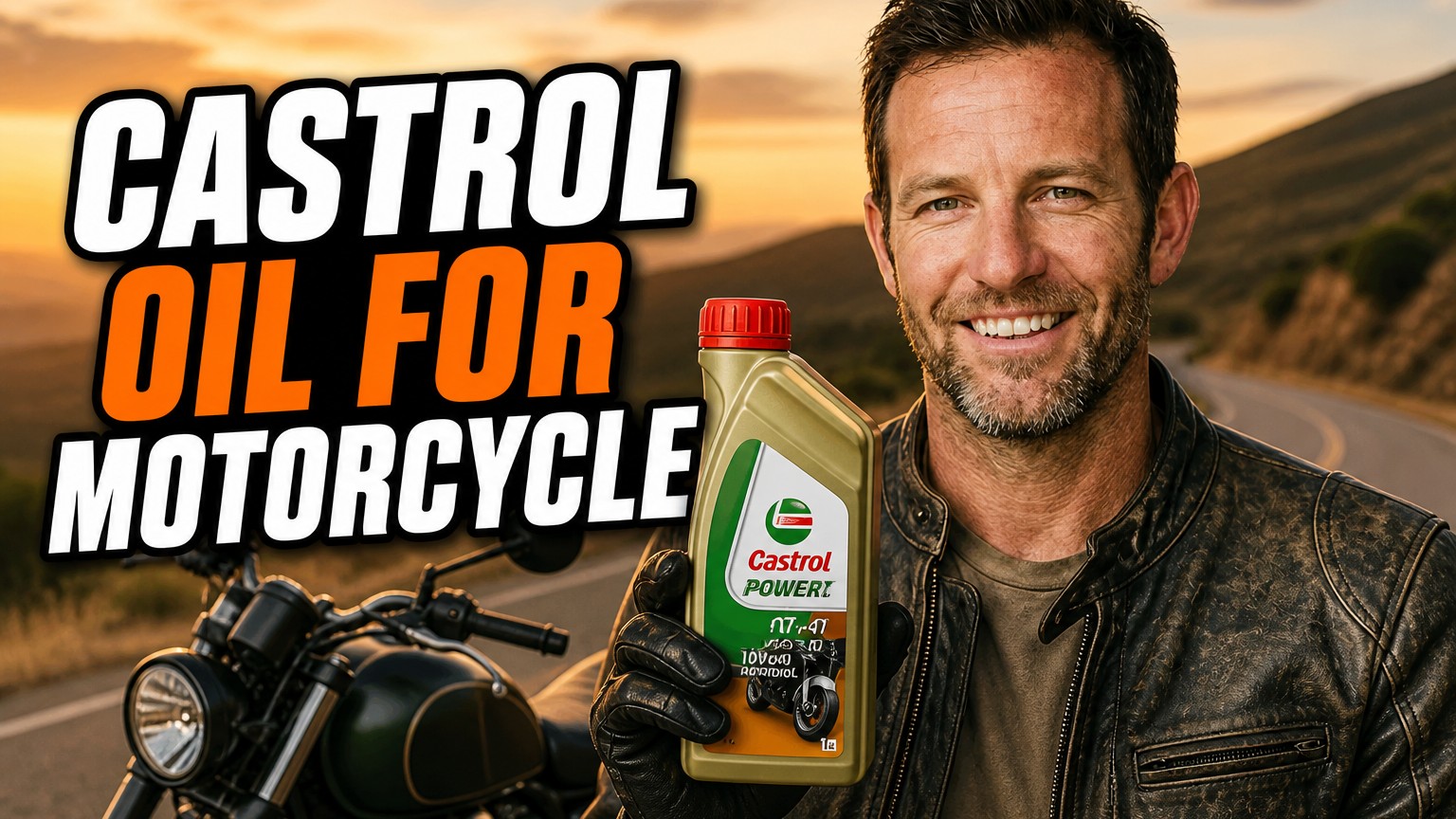
I’ve been wrenching on my own bikes for years, and oil is the one topic that starts the most arguments in riding groups. Everyone has a favorite, and everyone swears the others are junk. Castrol keeps coming up in those debates, and for good reason.
Castrol has a deep motorcycle range, from commuter-friendly mineral oils to race-bred full synthetics. In this guide I walk through the seven Castrol oils I’d actually pour into a bike, and who each one suits best. I’ll also share what I look for before choosing.
- My top all-rounder is Castrol POWER1 4T 10W-40, a great fit for most street bikes.
- Hard riders and track-day fans should look at POWER1 Racing 4T in 10W-50 or 5W-40.
- Commuters on a budget will do well with Castrol Actevo 4T 20W-40.
- Always match the viscosity and JASO rating to your owner’s manual, not to hype.
How I Choose a Castrol Oil for a Motorcycle
Before the list, here’s the quick checklist I use. It saves me from buying the wrong bottle at the shop counter.
Check the JASO rating first
Most motorcycles share oil between the engine, gearbox, and wet clutch. That’s why I always look for JASO MA or MA2 on the label. It tells me the oil won’t make the clutch slip.
Match the viscosity to your manual
Your manufacturer picked a viscosity range for a reason. I treat 10W-40 as the common modern default and move to 20W-50 only when the manual or the climate calls for it.
Think about how you ride
Stop-and-go traffic in hot weather is tougher on oil than most people realize. Spirited canyon riding is tough in a different way. I pick synthetic for heat and revs, and a simpler oil for easy daily miles.
If you want a broader comparison beyond one brand, I’ve also read up on the best engine oil for motorcycle options. And if you’re curious how Castrol stacks up against rivals, this rundown of the best motorcycle engine oil brand choices is a helpful read.
1. Castrol POWER1 4T 10W-40 — Best Overall Castrol Oil
If I could only keep one Castrol bottle on my garage shelf, it would be Castrol POWER1 4T 10W-40. It’s the oil I recommend first when a friend asks, “What should I put in my bike?”
Why I like it
POWER1 4T 10W-40 is a synthetic-technology oil, formulated for wet-clutch engines and rated JASO MA2. It’s designed to give smooth clutch engagement and consistent protection in the gearbox. In my experience, shifts feel crisp and the engine sounds a little happier after a fresh change.
It suits everything from 250 cc singles to 1000 cc inline-fours. Expect to pay roughly $12 to $18 per liter in the US, depending on the retailer.
Things to keep in mind
- Pros: Wide availability, JASO MA2, great for mixed riding.
- Cons: Not a dedicated racing oil, so extreme track use may call for something stronger.
For riders comparing options across brands, this guide to the best motor oil for 4 stroke motorcycle riders can buy is worth a look alongside this pick.
2. Castrol POWER1 Racing 4T 10W-50 — Best for Sport Bikes and Hot Climates
When I’m riding a high-revving sport bike or spending a summer in 38°C heat, I reach for Castrol POWER1 Racing 4T 10W-50. It’s fully synthetic and made for engines that run hot and rev hard.
What stands out
The thicker hot viscosity (the “50”) helps maintain an oil film when temperatures climb. It’s JASO MA2 rated, so it’s safe for wet clutches. I noticed it holds up nicely in traffic when my engine temperature gauge starts creeping up.
It usually costs a bit more, often $15 to $22 per liter. For a performance bike, I consider that cheap insurance.
Who should skip it
If your manual calls for a thinner oil like 10W-30, don’t just swap to a 50 weight because it sounds tougher. Check first. Some modern engines are tuned tightly around specific viscosities.
3. Castrol POWER1 Racing 4T 5W-40 — Best for Cold Starts and Modern High-Revvers
The Castrol POWER1 Racing 4T 5W-40 is the one I look at for modern, tight-tolerance engines. Think middleweight triples, parallel twins, and superbike-class machines that like thinner oil at startup.
Why 5W-40 works
The “5W” means the oil flows more easily when cold. That helps it reach critical parts faster on chilly mornings, and most engine wear happens in those first seconds. I notice smoother cold starts with this grade in winter.
It’s a fully synthetic oil and carries a JASO MA2 rating. Many riders in cooler regions swear by it for year-round use.
Quick tip: check that 5W-40 is an approved grade in your manual. Many modern bikes list it, but not all do.
4. Castrol POWER1 Cruiser 4T 20W-50 — Best for Cruisers and V-Twins
Air-cooled V-twins run hot, and they’re often happiest with a heavier oil. That’s where Castrol POWER1 Cruiser 4T 20W-50 comes in, and it’s the one I choose for relaxed highway cruising.
Built for big, hot engines
This is a semi-synthetic 20W-50 designed for the heat and torque of large-displacement cruisers. It carries a JASO MA2 rating, so it plays well with wet clutches. I like it for long, loaded touring days when the engine is working steadily.
The thicker oil can also reduce that tired, clattery sound some older V-twins make when they’re warmed up. It’s no miracle cure, but I do notice a calmer engine feel.
Good to know
- Best for: Cruisers, bar-and-shield V-twins, and air-cooled big bores.
- Not ideal for: Modern liquid-cooled bikes that specify 10W-40 or thinner.
5. Castrol Actevo 4T 20W-40 — Best for Daily Commuters
Not everyone needs racing-grade oil. For the daily commute on a 125 to 200 cc bike, I think Castrol Actevo 4T 20W-40 hits a sweet spot between price and protection.
Why it works for everyday riding
Actevo is made for the stop-start reality of city riding, with a focus on keeping engine internals clean and the clutch smooth. It’s a JASO MA2 oil and common across Asian markets. I’ve found it to be a dependable, no-drama choice.
It’s also easy on the wallet. Prices are typically low, and it’s easy to find at any shop or service center.
India-focused note
Actevo is hugely popular with Indian commuter riders, where 20W-40 and 10W-30 grades are common. If that’s where you ride, take a look at this guide to the best engine oil for 4 stroke motorcycle in india for more local context.
6. Castrol Classic XL 20W-50 — Best for Vintage and Classic Bikes
Old engines are a different animal. Flat-tappet cams, looser tolerances, and older seal materials all benefit from oil designed for them, and that’s the idea behind Castrol Classic XL 20W-50.
What it brings to older engines
Classic XL 20W-50 is a mineral-based oil made for classic motorcycles and cars. The heavier grade suits the larger clearances of older engines. I like it for keeping that period-correct character without using a modern oil formulated for tight tolerances.
One caution: many classic bikes share oil with a separate gearbox or primary chaincase. Check your workshop manual to see whether this applies to your machine.
Best uses
- British twins and singles, like older Triumphs, BSAs, and Royal Enfields.
- Weekend bikes that don’t see many miles.
- Engines whose manuals call for a straight 50 or 20W-50 oil.
7. Castrol POWER1 2T — Best for Two-Stroke Bikes
Two-strokes are still alive and fun, and they need proper two-stroke oil. Castrol POWER1 2T is the one I pick for road-going two-strokes and small premix or injector-fed machines.
Why I trust it
It’s formulated to burn cleanly, which helps limit spark plug fouling and exhaust port deposits. I’ve noticed less smoke compared with some bargain oils. It’s also semi-synthetic, so it gives a good balance of protection and cost.
Check the label for the JASO grade and the recommended mixing ratio for your engine. Ratios vary, so don’t guess. Follow the bike manufacturer’s recommendation.
Castrol POWER1 vs. Actevo: Which Family Should You Pick?
I get this question a lot, so here’s my simple take. POWER1 is the performance-oriented family, built for riders who care about heat resistance, throttle response, and high-rev stability.
Actevo is the everyday family. It’s aimed at commuters who want dependable protection at a friendlier price. Neither is “bad”, they just solve different problems.
If you’re still comparing across different makers, my notes on the top engine oil for 4 stroke motorcycle options might help you narrow things down.
Mistakes I See Riders Make With Engine Oil
Using car oil because it’s cheaper
Many car oils contain friction modifiers designed to save fuel. In a motorcycle with a shared sump, those can lead to clutch slip. It’s an easy mistake and an expensive one.
Ignoring the oil change interval
Even the best oil wears out. Shearing, fuel dilution, and heat all take a toll. I change mine on schedule, and sooner if I’ve been riding hard or in dusty conditions.
Overfilling or underfilling
Check your level on a level surface, following your manual’s procedure. Some bikes want the check with the bike upright, others with a warm engine. A few millimeters either way matters more than you’d think.
Chasing the thickest oil
Thicker doesn’t automatically mean better. The wrong viscosity can starve parts of oil on cold starts or increase drag. I stick to the grade my manufacturer recommends, then adjust only for specific needs.
My Final Thoughts on Choosing Castrol Oil
After years of riding different bikes, my overall pick is still Castrol POWER1 4T 10W-40. It’s versatile, easy to find, and works well across most modern four-stroke machines.
If you ride hard or in hot weather, step up to POWER1 Racing 4T. If you commute on a budget, Actevo 4T 20W-40 will serve you well. And for vintage or two-stroke machines, Classic XL 20W-50 and POWER1 2T are solid, purpose-made choices.
Whatever you choose, read your manual, match the JASO rating, and change your oil on time. That’s the real secret to a long-lived engine. Ride safe, and keep that oil fresh.
Frequently Asked Questions
Which Castrol oil is best for most motorcycles?
For most modern four-stroke bikes with a wet clutch, Castrol POWER1 4T 10W-40 is the best all-rounder. It is JASO MA2 rated, widely available, and suits commuters, sport-tourers, and naked bikes alike.
Can I use Castrol car oil in my motorcycle?
I would not. Most car oils contain friction modifiers that can make a wet clutch slip. Use a motorcycle-specific oil with a JASO MA or MA2 rating, such as Castrol POWER1 or Actevo.
How often should I change Castrol motorcycle oil?
Follow your owner’s manual first. As a rule of thumb, I change semi-synthetic and synthetic oils every 4,000 to 6,000 km (2,500 to 3,700 miles) and mineral oils sooner, around 2,000 to 3,000 km.
Is fully synthetic Castrol oil worth the extra money?
If you ride hard, ride in hot traffic, or own a high-revving engine, yes. Synthetics like Castrol POWER1 Racing resist heat breakdown better. For a relaxed commuter, a quality semi-synthetic or mineral oil is usually enough.

Related Articles
7 Best Batteries for Motorcycles I’ve Tested and Trust in 2026
I've tested dozens of motorcycle batteries to find the best performers. From AGM to lithium, here are my top picks…
Jake Miller
15 min read

The Perfect Battery for Your Harley Davidson Softail: A Rider’s Complete Guide
Discover the perfect battery for your Harley Davidson Softail. I've tested multiple options and share real-world performance data, maintenance tips,…
Jake Miller
14 min read

The Best Battery for Your Harley Davidson: My Complete Guide After Years of Testing
Discover which battery truly performs best for Harley Davidson motorcycles. Real rider experience with AGM, lithium, and OEM options to…
Jake Miller
12 min read