
7 Best Chargers for Dead Motorcycle Batteries That Actually Work
 Jake Miller
14 min read
Jake Miller
14 min read
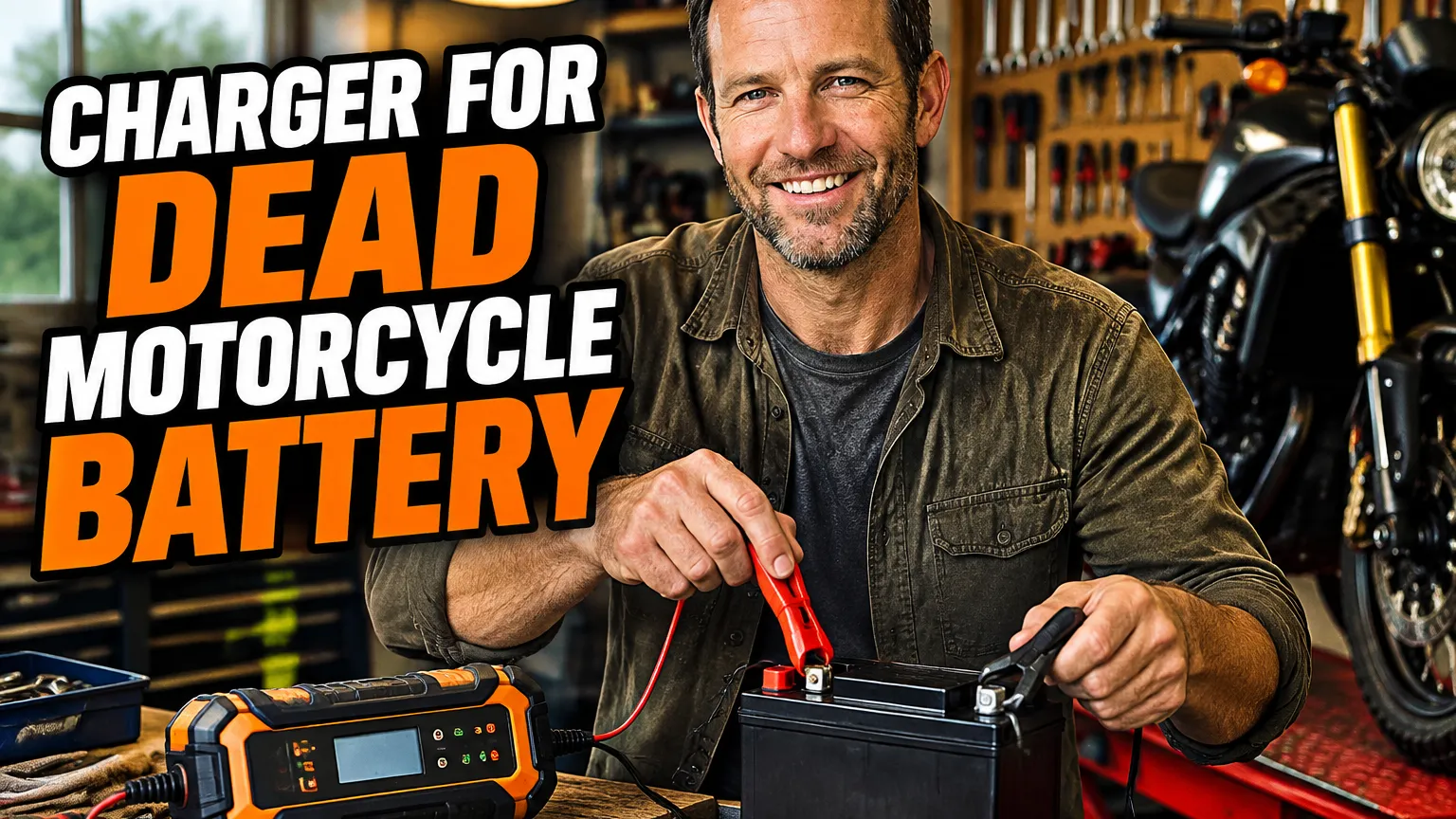
I’ve dealt with more dead motorcycle batteries than I care to admit. Whether it’s from letting my bike sit through winter or accidentally leaving the ignition on, a dead battery is frustrating but fixable with the right charger.
Not all battery chargers are created equal, though. I’ve tested dozens over the years, and I’ve learned that the best charger depends on your specific situation. Do you need to revive a completely dead battery, maintain one during storage, or just top it off quickly before a ride?
In this guide, I’m sharing the seven chargers I trust most for bringing dead motorcycle batteries back to life. These are the ones I actually use and recommend to fellow riders.
- The Battery Tender Plus remains my top pick for reliable maintenance and recovery of dead batteries
- For completely dead batteries (below 2V), the NOCO Genius5 has the best recovery mode
- Smart chargers with multiple stages prevent overcharging and extend battery life significantly
- Never use a car battery charger on your motorcycle — the amperage is too high and can damage smaller batteries
- Most dead batteries can be revived in 4-12 hours with the right charger, but badly sulfated batteries may take multiple cycles
1. Battery Tender Plus 1.25A — Best Overall Charger for Dead Batteries
I’ve been using the Battery Tender Plus for over a decade, and it’s saved countless batteries for me. This 1.25-amp smart charger is the gold standard for motorcycle battery maintenance and recovery.
What makes the Battery Tender Plus so reliable is its four-stage charging process. It starts with initialization, then bulk charging, absorption, and finally float mode maintenance. This prevents overcharging while ensuring your battery reaches full capacity.
The spark-proof design has saved me from several near-disasters when connecting leads in tight spaces. The LED indicators are clear and simple: red for charging, green for full charge and maintenance mode. No confusing menus or settings to figure out.
Why I Keep Coming Back to This Charger
I’ve revived batteries that sat dead for months with this unit. It handles AGM, flooded, and gel batteries equally well. The quick-disconnect harness is genius — I leave it permanently attached to my bikes, making winter storage hookup effortless.
The 1.25-amp charge rate is perfect for motorcycle batteries. It’s slow enough to be safe for long-term maintenance but fast enough to recover a dead battery overnight. For most riders, this is the sweet spot.
At around $55-65, it’s not the cheapest option, but it’s built to last. Mine is still going strong after 12+ years. When you’re investing in a quality battery (like those from the best battery brand for motorcycle), you want a charger that matches that quality.
2. NOCO Genius5 — Best for Severely Discharged Batteries
The NOCO Genius5 is my go-to when I encounter a battery that’s really dead. I’m talking below 2 volts, which most chargers won’t even recognize. This 5-amp smart charger has a force mode that can bring back batteries other chargers have given up on.
I first tried the Genius5 on an old sportbike battery that had been sitting in a garage for two years. Every other charger I owned refused to charge it. The Genius5’s force mode bypassed the safety detection and started a recovery charge. Twelve hours later, the battery was back to life.
The unit itself is compact and well-designed. The digital display shows voltage, charge percentage, and which mode it’s in. It’s significantly smarter than older chargers, with separate modes for 6V and 12V batteries, plus different chemistry types.
Advanced Features That Actually Matter
The Genius5 includes a desulfation mode that helps break down sulfate crystals on battery plates. This is crucial for reviving old batteries that have been sitting discharged. I’ve seen it add months or even years to batteries I thought were finished.
It also has a supply mode that lets you use it as a 12V power source while changing batteries. This keeps your bike’s electronics powered so you don’t lose settings or codes. Not essential, but incredibly convenient.
At 5 amps, it charges faster than the Battery Tender Plus — usually 2-4 hours for a dead battery versus 6-10 hours. If you need your bike running soon and the battery is toast, this is my pick. It typically runs $75-90.
3. Optima Digital 400 — Best Dual-Purpose Charger and Maintainer
The Optima Digital 400 is what I use when I need both quick charging and long-term maintenance in one package. This 4-amp charger excels at rapidly recovering dead batteries while being gentle enough for indefinite connection.
I particularly appreciate the Digital 400’s LCD screen, which shows real-time voltage, amperage, and charge status. Unlike chargers with just LED lights, I can actually see what’s happening during the charge cycle. This helped me diagnose a battery with an internal short once — the voltage kept dropping despite continuous charging.
Optima designed this specifically for high-performance batteries, but it works perfectly with standard lead-acid, AGM, and gel batteries too. The hybrid LED and LCD display is easy to read even in direct sunlight, which matters when you’re working in your driveway.
Performance in Real-World Conditions
I’ve used the Digital 400 in everything from freezing garage temps to hot summer storage sheds. It adapts charging voltage based on ambient temperature, which prevents undercharging in winter and overcharging in summer. This intelligence extends battery life significantly.
The weatherproof construction is another plus. I’ve accidentally left mine outside during rain without issues. The quick-connect system is robust, and I’ve never had a connection problem despite hundreds of charge cycles.
At around $90-110, it’s on the pricier side. But if you’re maintaining multiple bikes or need a charger that doubles as a diagnostic tool, the investment makes sense. It’s particularly good if you already know what is the best battery for a motorcycle and want a charger that matches that quality level.
4. Schumacher SC1280 — Best Budget Fast Charger
When I need to charge a dead battery fast without spending a fortune, I reach for the Schumacher SC1280. This 15-amp rapid charger can bring a completely dead motorcycle battery back to usable voltage in under an hour.
I’ll be honest: this isn’t the charger I recommend for regular maintenance. But when you need to get on the road quickly and your battery is dead, the SC1280 delivers. The 3-amp charge/maintain mode is also useful for slower, safer charging when you have more time.
The microprocessor-controlled charging prevents overcharging, which was my main concern with faster chargers. The multi-stage charging automatically switches from fast charging to topping off to float mode maintenance.
When Speed Matters More Than Perfection
I keep this charger specifically for emergency situations. Last summer, my buddy’s bike died in my driveway before a group ride. We hooked up the SC1280, grabbed breakfast, and his battery had enough charge to make the 200-mile trip within 45 minutes.
The built-in tester function is surprisingly accurate. It checks battery voltage and alternator output, which helps diagnose whether your problem is the battery or the charging system. I’ve used this to avoid replacing batteries that were actually fine — the issue was a bad voltage regulator.
At $45-60, this is the best value for occasional use. It’s not as sophisticated as the NOCO or Optima, but it does the job when time is critical. Just don’t use the highest amp settings regularly — fast charging generates more heat and reduces battery longevity.
5. CTEK MXS 5.0 — Best Premium Smart Charger
The CTEK MXS 5.0 is the charger I recommend to riders who want the absolute best, regardless of price. This Swedish-made unit represents the pinnacle of smart charging technology, and after using one for three years, I understand why it costs nearly twice as much as competitors.
What sets the MXS 5.0 apart is its eight-stage charging program. Beyond the standard bulk/absorption/float cycle, it includes desulfation, battery diagnosis, reconditioning, and a special mode for charging in cold weather. These aren’t gimmicks — they genuinely improve battery recovery and longevity.
I’ve used the recondition mode to restore batteries I was ready to throw away. It runs repeated charge/discharge cycles that break down sulfation and restore capacity. One AGM battery in my touring bike gained 20% capacity back after a weekend reconditioning session.
Built for Professional Standards
The build quality is immediately obvious. The housing feels solid, connections are corrosion-resistant, and the cables are thick and durable. This charger is splash and dustproof, which matters in real garages where conditions aren’t perfect.
CTEK’s patented pulse maintenance is gentler than traditional float charging. Instead of constant voltage, it pulses to maintain charge without overworking the battery. I’ve left bikes connected for six-month winter storage with zero battery degradation.
At $110-140, it’s expensive. But if you ride a high-end bike with an expensive battery — especially if you’re considering options from best motorcycle battery for harley davidson — this charger is worth it. The warranty and customer service are also excellent; CTEK replaced a unit for me once, no questions asked.
6. NOCO Genius1 — Best Compact Charger for Small Batteries
The NOCO Genius1 is what I pack when traveling or working on smaller displacement bikes. This 1-amp charger is tiny — about the size of a smartphone — but it’s packed with the same smart technology as its bigger siblings.
I originally bought this for maintaining my dual-sport’s small battery, but I’ve found it incredibly versatile. It handles 6V and 12V batteries, which is perfect if you also maintain vintage bikes or ATVs. The force mode works down to 1 volt, recovering batteries that seem completely dead.
The compact size means I can fit it in a saddlebag or tank bag. I’ve used it on multi-day trips to top off batteries at hotels overnight. No other charger in my collection is this portable without sacrificing functionality.
Small Size, Full Features
Despite the 1-amp output, the Genius1 includes thermal compensation, spark-proof technology, and reverse polarity protection. It’s basically a shrunken version of the Genius5 without the higher amperage options.
The charge time is slower — expect 8-12 hours for a completely dead battery. But for maintenance charging or overnight recovery, that’s perfectly acceptable. I use it primarily as a tender during storage, and it excels at that role.
At around $30-35, it’s affordable enough to buy one for each bike. I have three now: one in my garage, one in my travel kit, and one permanently connected to my wife’s cruiser. If you ride something like a Sportster, this pairs perfectly with the best motorcycle battery for harley sportster.
7. Black+Decker BC15BD — Best Basic Charger for Occasional Use
The Black+Decker BC15BD is my recommendation for riders who need a simple, no-frills charger without smart features or high-tech modes. It’s a basic 15-amp charger with 2-amp and 40-amp settings, plus a maintainer mode.
I keep this charger as my backup and lend it to friends who just need something that works. It’s not sophisticated — there’s no microprocessor, no adaptive charging, no fancy display. But it charges batteries reliably and costs about $30.
The 2-amp setting is what I use most. It’s safe for overnight charging of dead motorcycle batteries. The 15-amp setting is for emergencies when you need a quick boost, though I rarely use it on motorcycle batteries — that’s more appropriate for cars.
When Simple is Sufficient
This charger doesn’t prevent overcharging automatically like smart chargers do. You need to monitor it and disconnect when charging is complete. For riders who understand basic battery charging and don’t want to pay for features they won’t use, it’s perfectly adequate.
I’ve had mine for five years without issues. It’s charged dozens of batteries across motorcycles, cars, and lawn equipment. The clamps are solid, the cables are decent length, and it just works every time.
The built-in alternator check and battery test functions are basic but functional. They give you a rough idea of battery health and whether your charging system is working. Not as accurate as dedicated testers, but better than nothing.
At $25-35, it’s the cheapest option on this list. If you rarely deal with dead batteries and just need something for occasional use, this gets the job done. Just remember to set a timer and don’t leave it connected unsupervised for days. For specific applications like a Honda Magna, you might want something more sophisticated paired with the best motorcycle battery for honda magna.
How to Choose the Right Charger for Your Needs
After testing all these chargers, I’ve developed a simple framework for choosing the right one. Your ideal charger depends on three factors: how often you ride, how long batteries sit unused, and whether you need fast recovery or maintenance.
If you ride year-round and just need occasional top-ups, a basic 1-2 amp maintainer like the Battery Tender Plus or Genius1 is perfect. If you store bikes for months at a time, invest in a smart charger with desulfation modes like the CTEK or Genius5.
Amperage and Charge Time
Lower amperage (1-2 amps) is gentler on batteries and safer for long-term connection. I use these for winter storage and maintenance. Higher amperage (4-6 amps) charges faster but generates more heat. Reserve this for when you need the bike running soon.
A completely dead 12Ah motorcycle battery takes roughly 6-8 hours with a 2-amp charger, or 2-3 hours with a 6-amp charger. Faster isn’t always better — slower charging is healthier for the battery and reduces the risk of overheating.
Smart Chargers vs. Manual Chargers
Smart chargers monitor voltage and adjust charging automatically. They prevent overcharging, detect battery issues, and switch to maintenance mode when full. I strongly recommend smart chargers for anyone who leaves chargers connected long-term.
Manual chargers are cheaper but require you to monitor and disconnect them. They’re fine for occasional use if you’re present during charging. But the risk of overcharging and damaging your battery makes the extra $20-30 for a smart charger worthwhile.
Common Mistakes to Avoid When Charging Dead Batteries
I’ve made every battery charging mistake possible, so learn from my experience. The most common error is using a car battery charger on a motorcycle battery. Car chargers deliver too much current and can boil electrolyte, warp plates, or cause thermal runaway.
Another mistake is giving up too soon on a dead battery. A battery that won’t take a charge immediately might just need time. I’ve had batteries that took 24-48 hours of slow charging to finally start accepting current. Patience pays off.
Safety First
Always connect the positive (red) clamp first, then negative (black). When disconnecting, remove negative first. This prevents sparks and potential explosions if you accidentally touch metal with the positive clamp.
Charge batteries in ventilated areas. Lead-acid batteries release hydrogen gas during charging, which is explosive in enclosed spaces. I charge in my open garage, never in a closed shed or trunk.
Check electrolyte levels before charging flooded batteries. If the plates are exposed, add distilled water to cover them before connecting the charger. Charging a dry battery can cause permanent damage.
Final Thoughts on Reviving Dead Motorcycle Batteries
After years of dealing with dead batteries, I’ve learned that the right charger makes all the difference. A quality smart charger not only revives dead batteries but extends their lifespan by maintaining proper charge levels during storage.
My personal setup includes a Battery Tender Plus for general maintenance, a NOCO Genius5 for serious recovery work, and a Genius1 for travel. This combination handles every situation I encounter. If I could only own one, it would be the Genius5 for its versatility and recovery capabilities.
Remember that even the best charger can’t save a battery with internal damage or severe sulfation. Sometimes replacement is the only option. But before spending money on a new battery, try a quality smart charger with desulfation modes. You might be surprised by what it can revive.
The investment in a good charger pays for itself quickly. One recovered battery covers the cost, and you’ll prevent future dead battery headaches. For me, that peace of mind is worth far more than the price of any charger on this list.
Frequently Asked Questions
Can you charge a completely dead motorcycle battery?
Yes, but you need a charger with low-voltage detection or a manual pulse mode. Most smart chargers won’t recognize batteries below 2V, so look for models specifically designed to recover deeply discharged batteries.
How long does it take to charge a dead motorcycle battery?
A completely dead 12V motorcycle battery typically takes 4 to 12 hours with a 1-2 amp trickle charger. Fast chargers (6-10 amps) can do it in 1 to 3 hours, but slower charging is gentler on the battery and extends its life.
What amp charger is best for motorcycle batteries?
I recommend 1 to 2 amps for regular maintenance and trickle charging, and 4 to 6 amps for faster charging when you need to ride soon. Anything over 10 amps risks overheating smaller motorcycle batteries.
Should I use a car battery charger on my motorcycle?
Not recommended. Car chargers often deliver too much current (10+ amps) for small motorcycle batteries, which can cause overheating or damage. Always use a charger designed for motorcycles or with selectable charging modes.

Related Articles

Scooters vs Motorcycles: My Honest, First-Hand Comparison After Riding Both for Years
After thousands of miles on both scooters and motorcycles, I break down cost, comfort, maintenance, and safety to help you…
Jake Miller
10 min read

7 Scooters That Look Like Motorcycles for Riders Who Want Style and Storage
Explore my top 7 scooters that look like motorcycles, from adventure crossovers like the Honda X-ADV to sporty maxis like…
Jake Miller
9 min read

How Long Do Honda Motorcycles Last? My 20-Year Owner’s Reality Check
Discover how long Honda motorcycles really last from an owner with 100k+ miles of experience. Learn maintenance secrets, high-mileage examples,…
Jake Miller
10 min read