
8 Best Conventional Oils for Your Motorcycle Engine, Tested and Ranked by a Rider
 Jake Miller
9 min read
Jake Miller
9 min read
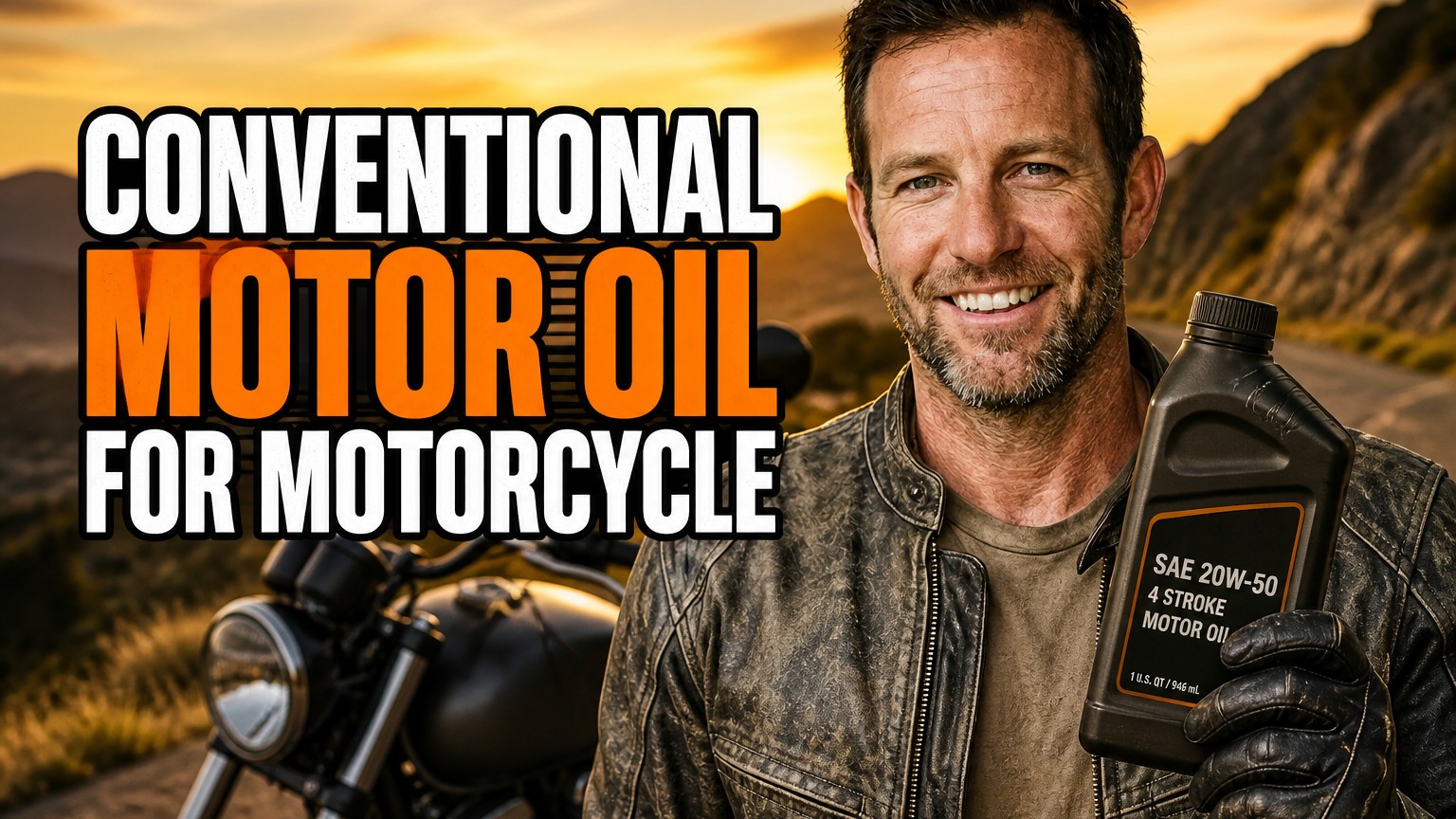
I’ve been wrenching on my own bikes for years, and I’ll say it plainly: conventional oil still has a place in a modern garage. It’s affordable, it’s easy to find, and in the right engine it does exactly what it needs to do.
If you ride an air-cooled commuter, a vintage standard, or a cruiser you change oil in often, mineral oil makes a lot of sense. The trick is choosing the right one. Not every bottle on the shelf is safe for a wet clutch, and not every one suits your climate.
Below are the eight conventional oils I’d actually pour into my own bikes, along with who each one suits best.
- My overall pick is Castrol Activ 4T 20W-40 for its balance of price, availability, and proven protection.
- Always match your oil to your manual’s viscosity and make sure it carries a JASO MA or MA2 rating for wet clutches.
- Honda GN4 and Yamalube 4 are my picks if you want OEM-matched mineral oil.
- Conventional oil needs shorter change intervals than synthetic, so plan on about 2,000 to 3,000 miles.
How I Pick a Mineral Oil for a Motorcycle
Before the list, here’s the short version of what I look for. These are the same checks I run every time I stand in the oil aisle.
JASO Rating Comes First
Most motorcycles share oil between the engine, gearbox, and wet clutch. That means I only buy oil rated JASO MA or MA2. These ratings tell me the oil won’t make the clutch slip.
Oils marked JASO MB are meant for scooters with automatic transmissions. I avoid those in a bike with a manual clutch.
Viscosity Matching My Climate and Engine
Grades like 10W-30, 10W-40, and 20W-50 aren’t interchangeable. I always start with the number in my owner’s manual, then adjust slightly for heat. Hot-climate riders often lean toward thicker grades, which is something I dug into in my guide to the best motorcycle motor oil for florida.
Change Intervals Matter More Than Brand
Fresh conventional oil beats old synthetic every time. Mineral oil breaks down faster under heat and shear, so I stay disciplined about changes. That habit is worth more than any label claim.
1. Castrol Activ 4T 20W-40 — Best Overall Conventional Oil
When a friend asks me what to put in a commuter bike, Castrol Activ 4T 20W-40 is my default answer. It’s a mineral-based oil built for everyday four-stroke engines, and it’s available almost everywhere.
Why I Like It
Castrol Activ 4T carries an API SL rating and JASO MA2 certification. That means it’s safe for wet clutches and gives consistent clutch feel. In my experience, shifting stays smooth even in stop-and-go traffic.
Castrol’s “Active Cleaning” additive package helps limit sludge, which is a real concern with mineral oil. A 1-liter bottle typically costs about $8 to $14 depending on where you shop.
Where It Falls Short
It’s not the oil I’d use in a high-revving sportbike. For air-cooled singles and parallel twins, though, Castrol Activ 4T is hard to beat for the price.
2. Valvoline 4-Stroke Motorcycle Oil 20W-50 — Best for Hot Weather and Big Twins
If you ride a V-twin cruiser or an air-cooled bike in summer heat, Valvoline 4-Stroke Motorcycle Oil 20W-50 is a great pick. The conventional version is formulated specifically for motorcycles, not repurposed from a car line.
What Stands Out
The 20W-50 grade holds a thicker film at high temperatures, which I appreciate in a big air-cooled engine. Valvoline includes added zinc and phosphorus anti-wear additives, a staple in motorcycle oils.
It meets JASO MA2 and works with wet clutches. A quart usually runs around $9 to $13, so it’s friendly to the wallet.
My Take
I ran this in an older cruiser through a hot summer and noticed less oil temperature drift on long rides. Just don’t use 20W-50 in cold starts below freezing, since it flows slower.
3. Motul 3000 4T 10W-40 — Best Premium Mineral Oil
Motul is known for its synthetics, but Motul 3000 4T 10W-40 is a purely mineral oil that punches above its price. It’s the one I recommend to riders who want a “nicer” conventional oil.
Specs and Feel
This oil meets API SL and JASO MA2. Motul markets it as a “Technosyn” blend in some regions, but the 3000 series is positioned as its mineral line. I’d check the label on your bottle for your market’s formula.
On my own bike, Motul 3000 4T felt especially smooth shifting through the gearbox. Pricing is generally $10 to $16 per liter, a small step up from the budget brands.
Best For
Naked bikes and mid-weight standards that see spirited riding but don’t need full synthetic. It’s also a good choice if you like the Motul brand and want to stay in the family.
4. Honda GN4 4-Stroke Oil 10W-30 — Best OEM-Matched Option for Honda Owners
When I owned a Honda, I never second-guessed Honda GN4 4-Stroke Oil 10W-30. It’s a petroleum-based oil designed for Honda engines and gearboxes, and it’s what the dealer puts in the bike.
Why It Works
Honda GN4 is formulated for wet clutches and meets JASO MA. It’s a simple, no-frills oil. It doesn’t promise miracle gains, but it does exactly what Honda engineers intended.
Price is usually in the $8 to $12 per quart range. For anyone riding a CB, Rebel, or similar Honda, it’s a sensible choice.
A Quick Note
If you ride a non-Honda, you can still use it, provided the viscosity matches your manual. For a broader look at how I choose across brands, my rundown of the best engine oil for motorcycle engines covers more ground.
5. Yamalube 4 10W-40 — Best for Yamaha Bikes
Yamalube 4 10W-40 is Yamaha’s own mineral-based four-stroke oil. I’ve used it in a Yamaha commuter, and it behaved exactly the way I’d hope: quiet, predictable, and clutch-friendly.
What You Get
Yamalube 4 is designed for JASO MA performance and tuned for Yamaha’s engine and transmission combo. It’s a straightforward conventional oil with solid anti-wear protection for everyday use.
Expect to pay roughly $8 to $12 per quart. It’s ideal if you want to keep warranty paperwork simple with an OEM-branded product.
Who Should Skip It
If you ride hard on track days, step up to a synthetic. For commuting and weekend rides, Yamalube 4 is a trustworthy and affordable pick.
6. Shell Advance 4T AX3 15W-40 — Best for Heavy Commuting
I include Shell Advance 4T AX3 15W-40 because it’s a stalwart for commuter bikes, especially in warmer regions. It’s a mineral oil with a thicker cold rating, which suits engines that run hot in traffic.
Real-World Performance
Shell Advance AX3 meets API SL and JASO MA2. It’s engineered to deliver stable viscosity in stop-and-go riding, and it keeps clutch engagement consistent.
It’s especially popular across Asia, and I’ve covered similar choices in my piece on the best engine oil for 4 stroke motorcycle in india. Pricing is typically very low, often under $10 per liter.
Watch Out For
15W-40 is thicker on cold mornings. If you live somewhere that dips near freezing, I’d choose a 10W grade instead.
7. Liqui Moly Motorbike 4T 10W-40 Basic Street — Best European Budget Pick
Liqui Moly is a respected German brand, and Liqui Moly Motorbike 4T 10W-40 Basic Street is its entry-level mineral oil for motorcycles. I like it because it feels a bit more refined than its price suggests.
Key Details
This oil is formulated for street bikes and meets JASO MA2. It’s made for four-stroke engines with wet clutches and shared gearboxes. Prices run about $10 to $15 per liter.
Liqui Moly adds a detergent package that helps keep engines clean over time. On my older standard, I noticed a slightly cleaner dipstick after a few thousand miles.
Ideal Rider
If you ride a European bike or simply like the brand, it’s a nice step above the cheapest bottles without costing synthetic money.
8. Maxima Premium4 20W-50 — Best for Vintage and Air-Cooled Engines
Maxima Premium4 20W-50 is the oil I reach for when I’m working on older or air-cooled machines. It’s a petroleum-based four-stroke oil from a motorcycle-focused company, not a car oil brand.
Why It Fits Older Bikes
Maxima formulates Premium4 with a robust additive pack, including zinc, to protect flat-tappet cams and older valvetrains. It’s JASO MA2 rated and meant for wet-clutch systems.
Expect to pay a little more, around $12 to $16 per quart. Honestly, that’s a fair price for oil designed around classic engine metallurgy.
Final Thoughts on This One
I’d pick Maxima Premium4 for vintage Triumphs, old Harleys, and air-cooled Japanese classics. It’s a great match for hot summers and long rides.
Quick Comparison of My Eight Picks
Which One for Which Rider?
- Everyday commuter: Castrol Activ 4T 20W-40
- Hot-weather cruiser: Valvoline 4-Stroke Motorcycle 20W-50
- Spirited naked bike: Motul 3000 4T 10W-40
- Honda owner: Honda GN4 10W-30
- Yamaha owner: Yamalube 4 10W-40
- Heavy traffic: Shell Advance 4T AX3 15W-40
- European street bike: Liqui Moly Basic Street 10W-40
- Vintage or air-cooled: Maxima Premium4 20W-50
Conventional vs. Synthetic: How I Decide
I’m not anti-synthetic. I use it on my higher-revving bikes. But for plenty of engines, mineral oil with frequent changes is a smart, economical choice.
When Conventional Makes Sense
I stick to mineral oil for older engines, low-compression commuters, and bikes I change oil on often. It’s also the safest way to follow a manufacturer’s recommendation if the manual specifically calls for it.
When I Upgrade
I switch to synthetic or semi-synthetic for track riding, extreme heat, or long service intervals. If you want a broader overview, my guide to the best motor oil for 4 stroke motorcycle engines walks through all three types. I also compare formulas in my list of the top engine oil for 4 stroke motorcycle options.
Oil Change Tips I Swear By
Warm It Up First
I run the engine for a few minutes before draining. Warm oil flows out faster and carries more contaminants with it.
Replace the Filter Every Time
A fresh filter costs a few dollars and protects the whole system. With conventional oil, I never skip this step.
Check the Level on Level Ground
I always check the sight glass or dipstick with the bike upright. Overfilling is just as harmful as running low.
My Simple Schedule
I change conventional oil every 2,000 to 3,000 miles or once a year. If I ride in dusty or extremely hot conditions, I shorten that interval.
Final Thoughts
You don’t need to overspend to protect your engine. Castrol Activ 4T 20W-40 is my top pick for most riders, while Honda GN4, Yamalube 4, and Maxima Premium4 shine for specific use cases.
Check your manual, match the viscosity, confirm the JASO rating, and stay on top of changes. Do that, and a good conventional oil will keep your bike running strong for many miles.
Frequently Asked Questions
Is conventional oil good enough for my motorcycle?
Yes, for most air-cooled, older, or lower-output engines, conventional oil is perfectly adequate if you change it on schedule. Just make sure it meets the viscosity and JASO MA or MA2 rating your owner’s manual calls for.
Can I use car engine oil in my motorcycle?
Usually not if your engine shares oil with a wet clutch. Many car oils contain friction modifiers that can cause clutch slip, so look for a JASO MA or MA2 rated motorcycle oil instead.
How often should I change conventional motorcycle oil?
I change mine every 2,000 to 3,000 miles (3,000 to 5,000 km) or once a year, whichever comes first. Always check your manual, since some bikes and riding conditions call for shorter intervals.
Can I switch from conventional to synthetic oil later?
Yes. You can switch between conventional, semi-synthetic, and full synthetic without any special flush, as long as the viscosity and JASO rating match what your manufacturer specifies.

Related Articles
7 Best Batteries for Motorcycles I’ve Tested and Trust in 2026
I've tested dozens of motorcycle batteries to find the best performers. From AGM to lithium, here are my top picks…
Jake Miller
15 min read

The Perfect Battery for Your Harley Davidson Softail: A Rider’s Complete Guide
Discover the perfect battery for your Harley Davidson Softail. I've tested multiple options and share real-world performance data, maintenance tips,…
Jake Miller
14 min read

The Best Battery for Your Harley Davidson: My Complete Guide After Years of Testing
Discover which battery truly performs best for Harley Davidson motorcycles. Real rider experience with AGM, lithium, and OEM options to…
Jake Miller
12 min read