
Do Motorcycle Batteries Charge Themselves? The Complete Truth Every Rider Needs to Know
 Jake Miller
14 min read
Jake Miller
14 min read
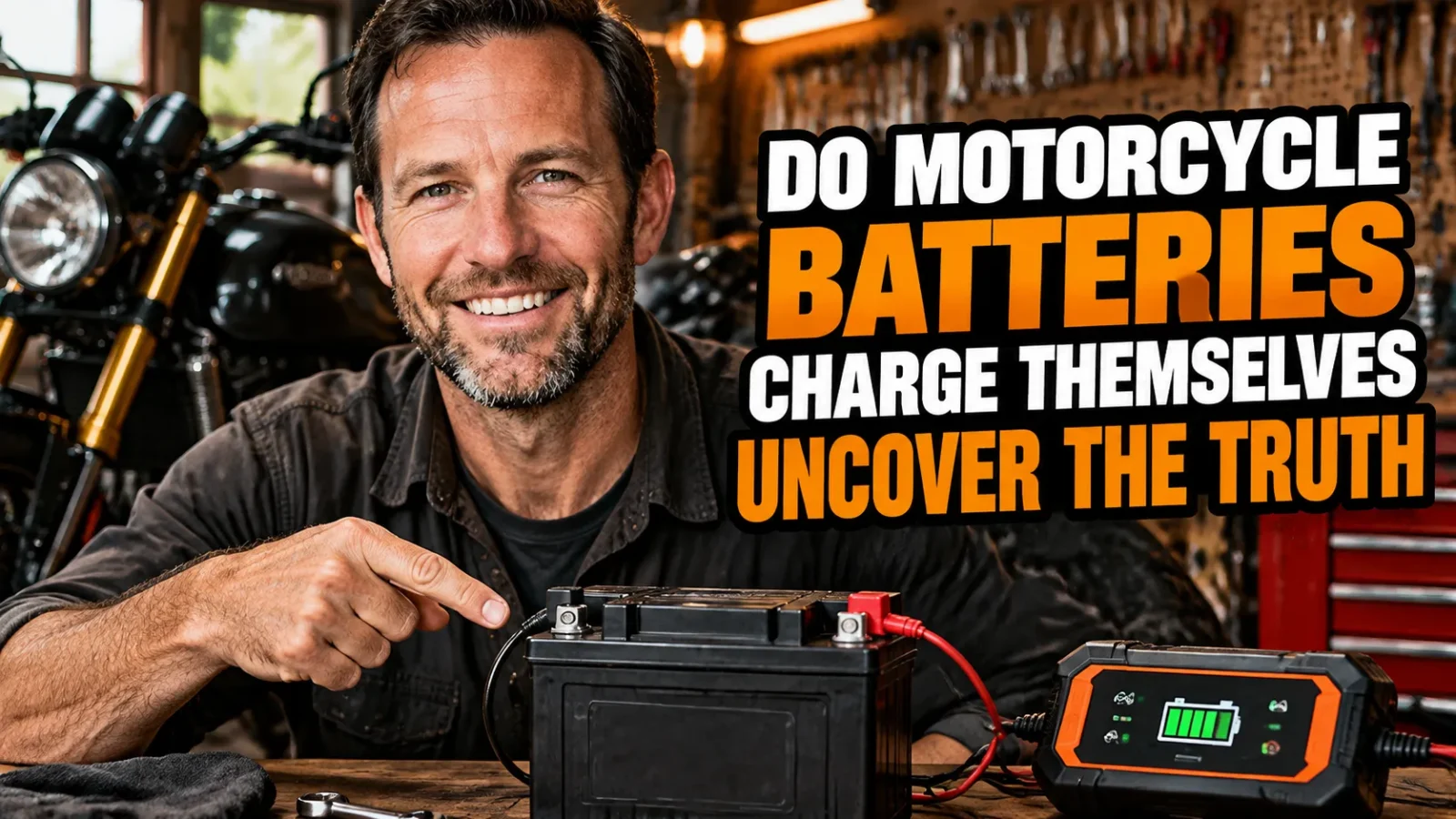
I’ve been riding motorcycles for over a decade, and one question I hear constantly from new riders and experienced ones alike is whether motorcycle batteries actually charge themselves. It’s a fair question—after all, you don’t plug your bike into the wall every night like your phone, right?
The short answer is yes, but with important conditions. Your motorcycle battery does charge itself while you ride, but it’s not some magical self-sustaining power source. There’s a complete electrical system working behind the scenes, and understanding how it works has saved me from being stranded more times than I can count.
In my experience, most battery problems come from riders not understanding this charging process. I’ve seen people replace perfectly good batteries when the real issue was their charging system, and I’ve watched others destroy new batteries through neglect.
- Motorcycle batteries charge themselves while riding through the alternator/stator system, not from sitting idle
- You need 30-60 minutes of riding at moderate RPMs for meaningful charging to occur
- A failing charging system, corroded connections, or parasitic drain can prevent proper charging
- Short trips, extended storage, and cold weather prevent batteries from maintaining proper charge levels
- Testing your voltage regulator and stator annually prevents unexpected failures
How Motorcycle Batteries Actually Charge While Riding
Let me break down what’s really happening when you fire up your bike. Your motorcycle has a charging system that consists of three main components: the stator (or alternator), the voltage regulator/rectifier, and the battery itself.
When your engine runs, the stator spins and generates alternating current (AC) electricity. If you’re wondering about the specifics of are motorcycle batteries ac or dc unveiling the truth, the battery stores DC power, but the stator produces AC that must be converted.
The voltage regulator/rectifier converts that AC power into direct current (DC) and regulates it to approximately 13.5-14.5 volts. This regulated DC power flows back to the battery, recharging it while also powering your bike’s electrical systems—lights, ignition, fuel injection, and everything else.
The RPM Factor Most Riders Ignore
Here’s something I learned the hard way: your charging system’s output depends heavily on engine RPM. At idle, most motorcycles produce minimal charging current—sometimes not even enough to power the headlight and ignition simultaneously.
I’ve measured this on my own bikes. At idle (around 1,000-1,200 RPM), my charging voltage often sits at 12.5-13.2 volts—barely above battery voltage. But once I’m cruising at 3,000+ RPM, it jumps to a healthy 13.8-14.2 volts.
This means sitting in traffic or doing lots of slow-speed city riding won’t charge your battery as effectively as highway miles. I make it a point to take my bikes on longer rides periodically, especially after short commutes.
What Prevents Your Motorcycle Battery From Charging
Over the years, I’ve diagnosed dozens of charging problems—on my bikes and friends’ bikes. The battery gets blamed most often, but it’s rarely the actual culprit when charging issues arise.
Failing Stator or Alternator
The stator is the heart of your charging system, and when it fails, nothing charges. I’ve had a stator fail on my old Suzuki, and the symptoms were subtle at first—dimming lights at idle, sluggish starting, then eventually a completely dead battery.
Stators fail from heat, vibration, and age. The windings inside break down, and once they’re gone, you’re not generating electricity anymore. Testing is simple: disconnect the stator and measure the AC voltage output while the engine runs. If you’re getting less than specified in your service manual (usually 20-80 volts AC depending on the bike), the stator is toast.
Dead or Dying Voltage Regulator
I’ve also experienced a failed voltage regulator on my Kawasaki. This component can fail in two ways: it stops regulating (allowing too much voltage through and boiling your battery), or it stops passing voltage entirely (preventing any charging).
A regulator failure that allows overcharging is actually more dangerous. I once helped a rider whose battery was literally steaming because a bad regulator was pushing 18+ volts into it. That’s a fire hazard waiting to happen.
Corroded or Loose Connections
This is the most common problem I see, and it’s entirely preventable. Corroded battery terminals, loose ground connections, or oxidized connectors in the charging circuit create resistance that prevents proper charging.
I make it a habit to clean and inspect all electrical connections during oil changes. A little dielectric grease on terminals goes a long way toward preventing corrosion, especially if you ride in wet conditions or near the ocean.
The Truth About Battery Voltage Standards
Most riders don’t realize that not all motorcycle batteries operate at the same voltage. While the vast majority of modern bikes use 12-volt systems, some older motorcycles and small scooters use 6-volt systems.
If you’re working on a vintage bike or unusual model, you should definitely check whether are motorcycle batteries 12v or 6v for your specific application. Installing the wrong voltage battery will cause all sorts of electrical problems and won’t charge properly.
I learned this lesson when I bought an old Honda CB350. I assumed it was 12V like everything else I’d owned, but it was actually a 6V system. Installing a 12V battery would have fried the charging system and every electrical component on the bike.
When Your Battery Won’t Hold a Charge
Sometimes the charging system works perfectly, but the battery still dies. I’ve encountered this frustrating scenario multiple times, and it usually comes down to battery health or parasitic drain.
Battery Age and Sulfation
Motorcycle batteries typically last 3-5 years with proper care. As they age, the lead plates inside develop sulfation—crystalized lead sulfate deposits that reduce capacity and prevent proper charging.
I’ve tried desulfation chargers with mixed results. Sometimes they help revive a moderately sulfated battery, but once the damage is severe, replacement is the only real solution. The type of battery matters too—best lead acid batteries for motorcycle applications vary depending on your riding style and climate.
In my experience, AGM (Absorbed Glass Mat) batteries handle charging and discharging cycles better than conventional flooded batteries. They’re sealed, maintenance-free, and more resistant to vibration damage.
Parasitic Electrical Drain
Modern motorcycles have computers, clocks, alarm systems, and other electronics that draw small amounts of current even when the bike is off. This is called parasitic drain, and it’s normal—to a point.
I test for parasitic drain by connecting an ammeter in series with the battery’s negative terminal when everything is off. A healthy bike should draw less than 50 milliamps (0.05 amps). Anything higher indicates a problem—maybe a faulty accessory, a stuck relay, or a short circuit somewhere.
I once spent hours tracking down a 200mA drain on my bike that turned out to be an aftermarket USB charger with a faulty switch. Removing it solved the dead battery problem instantly.
How Long Does Riding Actually Charge Your Battery?
This is where theory meets real-world riding. In my testing and experience, a moderately discharged battery (around 12.2-12.4 volts resting voltage) takes about 30-60 minutes of highway riding to reach full charge.
However, a completely dead battery is a different story. If your battery is below 12 volts, it might take several hours of riding to fully recharge it—if the charging system can do it at all. Most motorcycle charging systems are designed to maintain a battery, not rescue a deeply discharged one.
I always recommend using an external battery tender or charger if your battery has been sitting or is significantly discharged. Relying solely on the bike’s charging system to recover a dead battery often leads to incomplete charging and shortened battery life.
The Cold Weather Challenge
Cold weather compounds charging problems significantly. I live in a region with harsh winters, and I’ve learned that batteries lose about 35% of their capacity at 32°F and up to 60% at 0°F.
Meanwhile, cold engines require more cranking power to start, and the charging system is less efficient when everything is cold. This creates a perfect storm—higher demand, lower capacity, and reduced charging efficiency.
During winter, I keep my bikes on battery tenders in the garage. It’s a small investment that has extended my battery life dramatically compared to letting them sit unused for months.
Testing Your Charging System Like a Pro
I’ve developed a simple testing routine that catches charging problems before they leave me stranded. You don’t need expensive equipment—just a basic multimeter that costs about $20.
The Three-Point Voltage Test
First, I measure battery voltage with the engine off. A healthy, fully charged battery should read 12.6-12.8 volts. Anything below 12.4 volts indicates the battery is partially discharged.
Next, I start the engine and measure voltage at idle. It should be at least 13.0 volts, though 13.5+ is better. If it’s below 12.8 volts at idle, something in the charging system isn’t working properly.
Finally, I bring the engine to 3,000-4,000 RPM and measure again. Voltage should stabilize between 13.8-14.5 volts. This confirms the charging system is operating at capacity. If voltage exceeds 15 volts, the regulator is failing and allowing overcharging.
Load Testing Matters Too
I also test the battery under load by turning on the headlight, heated grips, and any other accessories while checking voltage. The charging system should maintain 13.5+ volts even with everything running. If voltage drops significantly, the charging system is underpowered or failing.
Battery Types and Charging Characteristics
Different battery chemistries have different charging requirements and characteristics. Understanding these differences has helped me choose the right battery for each of my bikes.
Conventional flooded lead-acid batteries are the cheapest but require the most maintenance. They need periodic electrolyte level checks and can leak if tipped over. They also self-discharge faster than other types.
AGM batteries are my go-to recommendation for most riders. They’re sealed, vibration-resistant, and charge more efficiently than flooded batteries. I’ve had AGM batteries last 5+ years with minimal maintenance beyond keeping them charged.
Gel batteries are another option, and some riders swear by them. If you’re curious about the pros and cons, I’ve researched whether are gel motorcycle batteries better for various applications. They handle deep discharges well but can be finicky about charging rates.
Lithium-ion batteries are becoming popular for their light weight and high power output. However, they require special charging considerations and don’t tolerate overcharging or extremely cold temperatures well.
My Recommendations for Specific Riding Scenarios
After years of riding different bikes in various conditions, I’ve learned that battery and charging needs vary significantly based on how you ride.
Sport Bikes and High-Performance Applications
For sport bikes with high-compression engines and lots of electronics, I always recommend high-quality AGM batteries with strong cold cranking amps (CCA) ratings. These bikes demand a lot from the electrical system, especially during starting.
If you’re building a high-performance V-twin, like an S&S-powered custom, choosing the right battery is critical. I’ve researched Best Rated Motorcycle Batteries for S&S 124 engines specifically, and the consensus is clear: don’t cheap out on the battery when you’ve invested thousands in the motor.
Touring and Adventure Bikes
Touring bikes with heated gear, GPS units, intercoms, and other accessories need robust charging systems and high-capacity batteries. I always test my charging system’s surplus capacity before adding accessories.
The math is simple: add up the amp draw of all your accessories and make sure your charging system produces at least 5-10 amps more than that at typical cruising RPM. Otherwise, you’ll slowly drain the battery even while riding.
Vintage and Classic Motorcycles
Older bikes often have marginal charging systems by modern standards. I’ve owned several vintage motorcycles, and keeping the battery charged required more attention than my modern bikes.
The key with vintage bikes is managing electrical loads carefully. I avoid running the headlight during daytime when possible, and I’ve converted some bikes to LED lighting to reduce draw. I also keep these bikes on battery tenders religiously.
Common Myths About Motorcycle Battery Charging
Let me bust some common misconceptions I hear repeatedly from riders.
Myth: Letting your bike idle charges the battery just as well as riding. False. As I explained earlier, idle RPM produces minimal charging current. You need higher RPM for effective charging.
Myth: Jump-starting from a car is fine as long as the car isn’t running. Partially true, but risky. Even with the car off, a car battery’s higher capacity can surge current into your motorcycle’s electrical system. I’ve seen regulators fried this way. If you must jump-start, use a portable jump pack designed for motorcycles instead.
Myth: New batteries come fully charged. Rarely true. Most new batteries arrive at 70-80% charge and need a full charge cycle before installation. I always charge new batteries overnight before putting them in a bike.
Myth: If the battery is bad, the bike won’t run. False. Once started, most bikes run fine on the charging system alone, even with a dead battery. However, this is hard on the charging system and can cause voltage spikes that damage electronics.
Practical Maintenance Tips I Actually Use
Theory is great, but here’s what I actually do to keep my batteries and charging systems healthy:
I ride my bikes regularly—at least once every two weeks, preferably once a week. Short rides are better than nothing, but I aim for 30+ minute rides when possible.
Every bike that sits for more than a week gets connected to a battery tender. These smart chargers maintain optimal charge without overcharging. I have one tender for every bike I own, and it’s the best $30-per-bike investment I’ve made.
I clean battery terminals twice a year—spring and fall. A wire brush, some baking soda solution, and dielectric grease keep connections clean and corrosion-free.
I test charging system voltage annually, usually during spring prep. It takes five minutes and catches problems before they leave me stranded.
I replace batteries proactively at 4-5 years, even if they’re still working. The cost of a new battery is way less than being stranded or dealing with a dead battery on a road trip.
What to Do When You’re Already Stranded
Despite best efforts, I’ve been stranded with a dead battery a few times. Here’s what I do:
First, I try bump-starting if the bike has a manual transmission. Roll the bike, pop it into second gear, release the clutch, and the engine’s compression will spin the motor. This works even with a completely dead battery on most bikes.
If bump-starting isn’t an option, I look for a jump. I carry a small portable jump pack in my touring bag now—they’re about the size of a phone and can jump-start a motorcycle 10+ times on a single charge.
If neither option works, I call for a tow or a friend with a truck. There’s no shame in getting help when you’re truly stuck.
The Bottom Line on Self-Charging Batteries
So, do motorcycle batteries charge themselves? Yes, but only while the engine is running at sufficient RPM and only if the charging system is functioning properly.
Your battery isn’t a perpetual motion machine. It needs the mechanical energy from your engine converted to electrical energy by the charging system. Break any link in that chain—stator, regulator, connections, or the battery itself—and charging stops.
In my experience, most battery problems are preventable with basic maintenance and understanding. Test your charging system annually, keep connections clean, ride regularly, and use a battery tender during storage. Do these things, and you’ll rarely face unexpected battery issues.
The riders who end up stranded are usually the ones who ignore warning signs—slow cranking, dimming lights, difficulty starting—until it’s too late. Don’t be that rider. Pay attention to your electrical system, and it’ll keep you on the road for years.
Frequently Asked Questions
Can a motorcycle battery charge itself while riding?
Yes, your motorcycle battery charges itself while the engine runs through the alternator or stator system, which converts mechanical energy into electrical energy to replenish the battery.
How long does it take for a motorcycle battery to charge while riding?
Typically, 30-60 minutes of highway riding can significantly charge a depleted battery, though a completely dead battery may need 2-3 hours of riding or an external charger.
Will my motorcycle battery charge at idle?
Yes, but very slowly. Most charging systems produce minimal output at idle RPMs, so you need higher engine speeds (above 2,000-3,000 RPM) for effective charging.
What causes a motorcycle battery to not charge while riding?
Common causes include a failing stator or alternator, damaged voltage regulator, corroded connections, blown fuses, or worn drive belts on belt-driven systems.

Related Articles

Scooters vs Motorcycles: My Honest, First-Hand Comparison After Riding Both for Years
After thousands of miles on both scooters and motorcycles, I break down cost, comfort, maintenance, and safety to help you…
Jake Miller
10 min read

7 Scooters That Look Like Motorcycles for Riders Who Want Style and Storage
Explore my top 7 scooters that look like motorcycles, from adventure crossovers like the Honda X-ADV to sporty maxis like…
Jake Miller
9 min read

How Long Do Honda Motorcycles Last? My 20-Year Owner’s Reality Check
Discover how long Honda motorcycles really last from an owner with 100k+ miles of experience. Learn maintenance secrets, high-mileage examples,…
Jake Miller
10 min read