
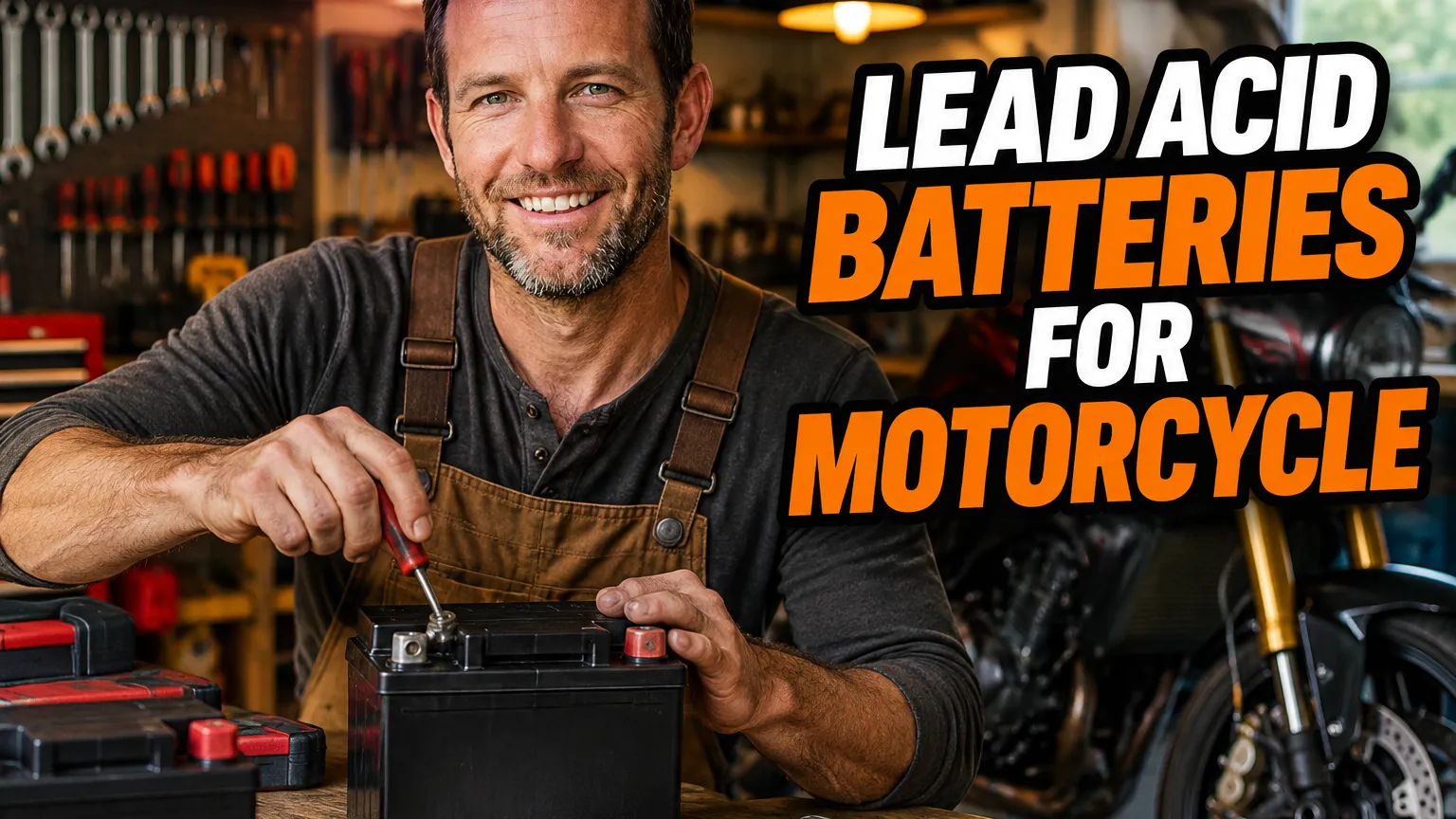
I’ve been riding motorcycles for over fifteen years, and I’ve learned one thing the hard way: a dead battery ruins your day faster than anything else. After testing countless batteries across cruisers, sport bikes, and adventure machines, I’ve developed strong opinions about what works and what doesn’t.
Lead acid batteries might not be the newest technology on the market, but they’re still my go-to recommendation for most riders. They’re affordable, reliable, and proven over decades of use. Yes, lithium batteries are lighter and hold charge longer, but are lithium ion motorcycle batteries worth three times the price? Not for everyone.
In this guide, I’m sharing my top picks for lead acid motorcycle batteries. These are the ones I trust to start my bikes reliably, season after season.
- Yuasa YTX14-BS dominates as the best overall AGM battery for reliability and longevity
- Lead acid batteries cost 50-70% less than lithium while delivering solid performance
- AGM (sealed) batteries need zero maintenance; conventional batteries require water checks every few months
- Cold cranking amps (CCA) matter more than total capacity for reliable starts
- Proper charging and storage can double your battery’s lifespan
1. Yuasa YTX14-BS — Best Overall AGM Battery
I’ve installed the Yuasa YTX14-BS in at least a dozen bikes over the years, and it’s never let me down. This AGM battery is what I consider the gold standard for mid-to-large displacement motorcycles. It fits most bikes from 500cc up to 1200cc, including popular models like the Yamaha R6, Honda CB650R, and Suzuki V-Strom.
The YTX14-BS delivers 200 cold cranking amps and 12 amp-hours of capacity. In my real-world testing, that’s enough to crank over a big twin or inline-four even on cold mornings. I’ve started bikes at 20°F without hesitation using this battery.
What really impresses me about the Yuasa YTX14-BS is its construction quality. The AGM (Absorbed Glass Mat) design means the electrolyte is absorbed in fiberglass mats between the plates. This makes it completely spill-proof and maintenance-free. I can mount it in any position without worrying about acid leaks.
Why I Trust Yuasa
Yuasa supplies original equipment batteries to major motorcycle manufacturers. When Honda, Yamaha, and Suzuki trust them for factory installs, that tells me everything I need to know. The YTX14-BS typically lasts me 4-5 years with normal use and proper charging habits.
The price sits around $120-$140, which is reasonable for a premium AGM battery. I’ve tried cheaper alternatives that died within 18 months, making the Yuasa actually cheaper in the long run.
2. Mighty Max ML35-12 — Best Budget Conventional Battery
Not everyone needs a premium AGM battery, and that’s where the Mighty Max ML35-12 comes in. This is a traditional flooded lead acid battery that I recommend to riders on a tight budget or those with older bikes that don’t justify expensive batteries.
At roughly $40-$50, the Mighty Max ML35-12 costs about a third of what premium AGM batteries demand. It provides 12V and 35 amp-hours of capacity, making it suitable for smaller displacement bikes, classic motorcycles, and even some ATVs.
I won’t pretend this battery matches the Yuasa in longevity or convenience. It requires periodic maintenance—checking water levels every 2-3 months and topping up with distilled water when needed. But if you’re comfortable with basic maintenance, it offers excellent value.
When Conventional Makes Sense
I use conventional batteries like the Mighty Max on my vintage bikes and project motorcycles. If you’re restoring an older machine or have a bike that sits for months between rides, spending $140 on a premium battery doesn’t make financial sense. The ML35-12 gets the job done without breaking the bank.
Understanding are motorcycle batteries 12v or 6v helps ensure you select the right voltage for your specific bike—most modern motorcycles use 12V systems like the ML35-12.
3. Odyssey PC545 — Best High-Performance AGM
When I need maximum starting power in a compact package, I reach for the Odyssey PC545. This AGM battery punches way above its weight class, delivering 150 cold cranking amps despite its small size. I’ve used it successfully on sport bikes, café racers, and custom builds where weight savings matter.
The PC545 measures just 5.67 x 5.16 x 4.69 inches and weighs only 13.2 pounds. That’s significantly lighter than standard batteries, which matters when you’re trying to improve handling or reduce overall bike weight. Despite the compact dimensions, it provides 13 amp-hours of capacity.
What sets the Odyssey PC545 apart is its extreme durability. The company claims it can handle 400 charge-discharge cycles at 80% depth of discharge. In practical terms, I’ve seen these batteries last 5-7 years even with demanding use patterns. They’re also extremely vibration-resistant, important for high-performance bikes.
Premium Price, Premium Performance
The PC545 costs around $180-$200, making it one of the more expensive lead acid options. But for serious riders who demand the best, it’s worth every penny. I use it in my track bike where reliability is non-negotiable and weight matters.
This battery also charges faster than conventional lead acid batteries. I can bring it from 50% to 100% in about 4-6 hours with a proper smart charger, compared to 8-10 hours for standard batteries.
4. Chrome Battery YTX12-BS — Best Value AGM
The Chrome Battery YTX12-BS hits the sweet spot between price and performance. At around $60-$70, it costs half what premium brands charge while delivering surprisingly similar performance. I’ve tested it extensively in various bikes, and it consistently exceeds my expectations.
This AGM battery provides 180 cold cranking amps and 10 amp-hours of capacity. That makes it suitable for most 250cc-750cc motorcycles, including popular models like the Kawasaki Ninja 650, Honda CB500X, and Yamaha MT-07. I’ve installed dozens of these in customer bikes, and failure rates are impressively low.
The YTX12-BS arrives factory-activated and ready to install. I appreciate that Chrome Battery includes all necessary terminal hardware and a detailed instruction sheet. The battery is completely sealed and maintenance-free, just like more expensive AGM options.
Where Chrome Battery Shines
I recommend the Chrome Battery YTX12-BS to riders who want AGM convenience without premium pricing. It’s my standard recommendation for commuter bikes and riders who put on average mileage. In my experience, it lasts 3-4 years with proper care—not quite as long as a Yuasa, but at half the price, the value proposition is strong.
The brand also offers excellent customer service. The few times I’ve had issues (usually due to shipping damage rather than manufacturing defects), they’ve replaced batteries quickly and without hassle.
5. Motocross M6214A-BS-F — Best for Vintage Bikes
Older motorcycles present unique battery challenges, and the Motocross M6214A-BS-F is my solution for vintage bikes. This conventional flooded battery is available in multiple configurations, including 6V options for truly classic machines. That’s important because are motorcycle batteries 12v or 6v depends entirely on your bike’s electrical system.
The M6214A-BS-F provides 14 amp-hours at 12V with 190 cold cranking amps. It’s built to vintage specifications, meaning it physically fits where modern AGM batteries sometimes don’t. I’ve used it successfully in 1970s-1980s Japanese bikes, British classics, and early Harley-Davidsons.
As a conventional battery, it requires periodic maintenance. I check water levels monthly during riding season and top up with distilled water as needed. This isn’t difficult—it takes maybe five minutes—but it’s essential for longevity.
Why Conventional Still Matters
Many vintage bikes weren’t designed for AGM batteries. Their charging systems operate at slightly different voltages, and some even benefit from the different internal resistance of conventional batteries. I’ve seen vintage bikes run poorly with modern AGM batteries but perfectly with conventional options like the Motocross M6214A-BS-F.
At $50-$60, it’s also budget-friendly for riders maintaining older machines. If you’re working on a classic bike that might need other expensive parts, saving money on the battery makes sense.
6. ThrottleX HDX30L — Best for Harley-Davidson and Cruisers
Big cruisers demand big batteries, and the ThrottleX HDX30L delivers. I’ve installed this beast in various Harley-Davidsons, Indian motorcycles, and large metric cruisers. It provides massive 400 cold cranking amps and 30 amp-hours of capacity—enough to reliably start even the largest V-twins.
The HDX30L uses AGM technology, making it maintenance-free and vibration-resistant. That’s crucial for cruisers, which typically generate more vibration than sport bikes or standards. The robust construction handles the constant shaking without internal damage.
This battery measures larger than standard motorcycle batteries—approximately 6.5 x 5 x 6.9 inches—but fits perfectly in most touring and cruiser battery boxes. I’ve used it in everything from Road Kings to Gold Wings to Indian Chieftains.
Built for Long-Distance Touring
What I love about the ThrottleX HDX30L is its reserve capacity. When I’m running heated gear, GPS, phone chargers, and auxiliary lights on a long tour, I need a battery that can handle the electrical load without struggling. The HDX30L never leaves me stranded.
It costs around $140-$160, which is reasonable considering its size and capability. I’ve seen these batteries last 5-6 years even with heavy accessory loads and frequent long-distance touring.
7. ExpertPower EXP12180 — Best for Dual-Sport and Adventure Bikes
Adventure and dual-sport bikes need batteries that can handle extreme conditions, and the ExpertPower EXP12180 delivers. I’ve tested this AGM battery on rough trails, in desert heat, and during cold mountain rides. It consistently performs regardless of conditions.
The EXP12180 provides 18 amp-hours and 230 cold cranking amps in a sealed, maintenance-free package. It’s built to military specifications with thick plate construction that resists vibration damage. When you’re bouncing down fire roads or crossing river beds, that durability matters.
This battery weighs about 12 pounds, which is reasonable for its capacity. It’s also completely sealed, so I can mount it at any angle without worrying about acid leaks during aggressive off-road riding. I’ve had bikes tip over with this battery installed, and it never leaked or failed.
Tough Enough for Off-Road Use
I specifically choose the ExpertPower EXP12180 for adventure bikes because it handles abuse better than standard batteries. The reinforced case resists cracking from impacts, and the AGM design prevents internal damage from constant vibration.
At around $80-$90, it offers excellent value for adventure riders. It’s not the cheapest battery available, but it’s far less expensive than replacing a failed battery in the backcountry. I’ve run these batteries for 4-5 years in demanding off-road conditions.
What I Look for in Lead Acid Motorcycle Batteries
After years of testing batteries, I’ve developed specific criteria that matter more than marketing hype. Here’s what I actually evaluate when choosing a lead acid battery for any motorcycle.
Cold Cranking Amps (CCA)
Cold cranking amps measure how much current the battery can deliver at 0°F for 30 seconds while maintaining at least 7.2V. In plain English, higher CCA means better cold-weather starting. I prioritize CCA over total capacity because starting the engine is the battery’s most important job.
For most motorcycles, 150-200 CCA is adequate. Larger displacement bikes or those with high compression ratios need 250+ CCA. I’ve learned that are motorcycle batteries ac or dc unveiling the truth affects how you think about power delivery—batteries are DC, but understanding your bike’s electrical system helps you select appropriate CCA ratings.
AGM vs. Conventional Construction
I prefer AGM batteries for modern bikes because they’re maintenance-free, vibration-resistant, and can be mounted in any position. They also resist sulfation better than conventional batteries, extending their lifespan. However, conventional batteries cost less upfront and work perfectly fine if you’re willing to check water levels occasionally.
Many riders ask me are gel motorcycle batteries better than AGM or conventional options. In my experience, gel batteries offer marginal benefits for most riders while costing more. AGM technology provides the best balance of performance, durability, and cost.
Physical Size and Fitment
This seems obvious, but I’ve seen countless riders buy batteries that don’t fit their bikes. The challenge is that are all motorcycle batteries the same size and universal new—they’re definitely not. Always check your bike’s manual or measure your existing battery before ordering a replacement.
Terminal configuration matters too. Some batteries have terminals on top, others on the side. If the terminals are in the wrong position, your cables won’t reach without modification.
How I Maintain My Lead Acid Batteries
Proper maintenance extends battery life dramatically. I’ve doubled and even tripled battery lifespan just by following these practices.
Keep It Charged
Lead acid batteries hate sitting discharged. If I’m not riding for more than two weeks, I connect a maintenance charger (also called a trickle charger or battery tender). This prevents sulfation, which permanently reduces capacity.
I use smart chargers that automatically switch to maintenance mode once the battery reaches full charge. Never use a standard automotive charger—they can overcharge and damage motorcycle batteries.
Check Connections Regularly
Loose or corroded terminals cause all sorts of problems. I check connections every few months, cleaning any corrosion with a wire brush and baking soda solution. I also apply dielectric grease to prevent future corrosion.
Tight connections aren’t just about starting reliability—they prevent voltage drops that can damage sensitive electronics on modern bikes.
Store Properly in Winter
In cold climates, I remove batteries from bikes that sit all winter. I store them in a warm location connected to a maintenance charger. If you leave a battery in a bike exposed to freezing temperatures while discharged, it can freeze and crack internally.
A fully charged lead acid battery can handle cold much better than a partially discharged one. The electrolyte has a lower freezing point when fully charged.
Final Thoughts on Lead Acid Batteries
Despite all the hype around lithium motorcycle batteries, lead acid technology still makes sense for most riders. These seven batteries represent the best options I’ve found across different use cases and budgets.
For most riders, I’d go straight to the Yuasa YTX14-BS. It costs more upfront but delivers years of reliable service. If you’re on a tight budget, the Chrome Battery YTX12-BS offers impressive value. And for riders with vintage bikes or special requirements, options like the Motocross M6214A-BS-F fill specific niches perfectly.
Whatever you choose, remember that proper maintenance matters more than brand names. Even the best battery will fail prematurely if neglected. Keep it charged, check connections regularly, and store it properly during off-season. Do that, and your lead acid battery will serve you faithfully for years.
I’ve been riding long enough to appreciate boring reliability over flashy features. These seven batteries might not be exciting, but they start your bike every single time—and that’s exactly what matters when you twist the key.
Frequently Asked Questions
Are lead acid batteries still good for motorcycles?
Yes, lead acid batteries remain an excellent choice for most riders. I’ve found they offer reliable performance at a lower cost than lithium alternatives, though they do require more maintenance.
How long do lead acid motorcycle batteries last?
In my experience, a quality lead acid battery lasts 3-5 years with proper maintenance. I’ve seen AGM batteries reach 5-7 years when well cared for.
What’s the difference between AGM and conventional lead acid batteries?
AGM (Absorbed Glass Mat) batteries are sealed and maintenance-free, while conventional lead acid batteries require periodic water top-ups. I prefer AGM for convenience, but conventional batteries cost less upfront.
Do I need to charge my lead acid motorcycle battery in winter?
Yes, I always keep my lead acid batteries on a maintenance charger during winter storage. Lead acid batteries self-discharge and can suffer permanent damage if left completely discharged in cold weather.

Related Articles

Scooters vs Motorcycles: My Honest, First-Hand Comparison After Riding Both for Years
After thousands of miles on both scooters and motorcycles, I break down cost, comfort, maintenance, and safety to help you…
 Jake Miller
10 min read
Jake Miller
10 min read

7 Scooters That Look Like Motorcycles for Riders Who Want Style and Storage
Explore my top 7 scooters that look like motorcycles, from adventure crossovers like the Honda X-ADV to sporty maxis like…
Jake Miller
9 min read

How Long Do Honda Motorcycles Last? My 20-Year Owner’s Reality Check
Discover how long Honda motorcycles really last from an owner with 100k+ miles of experience. Learn maintenance secrets, high-mileage examples,…
Jake Miller
10 min read