
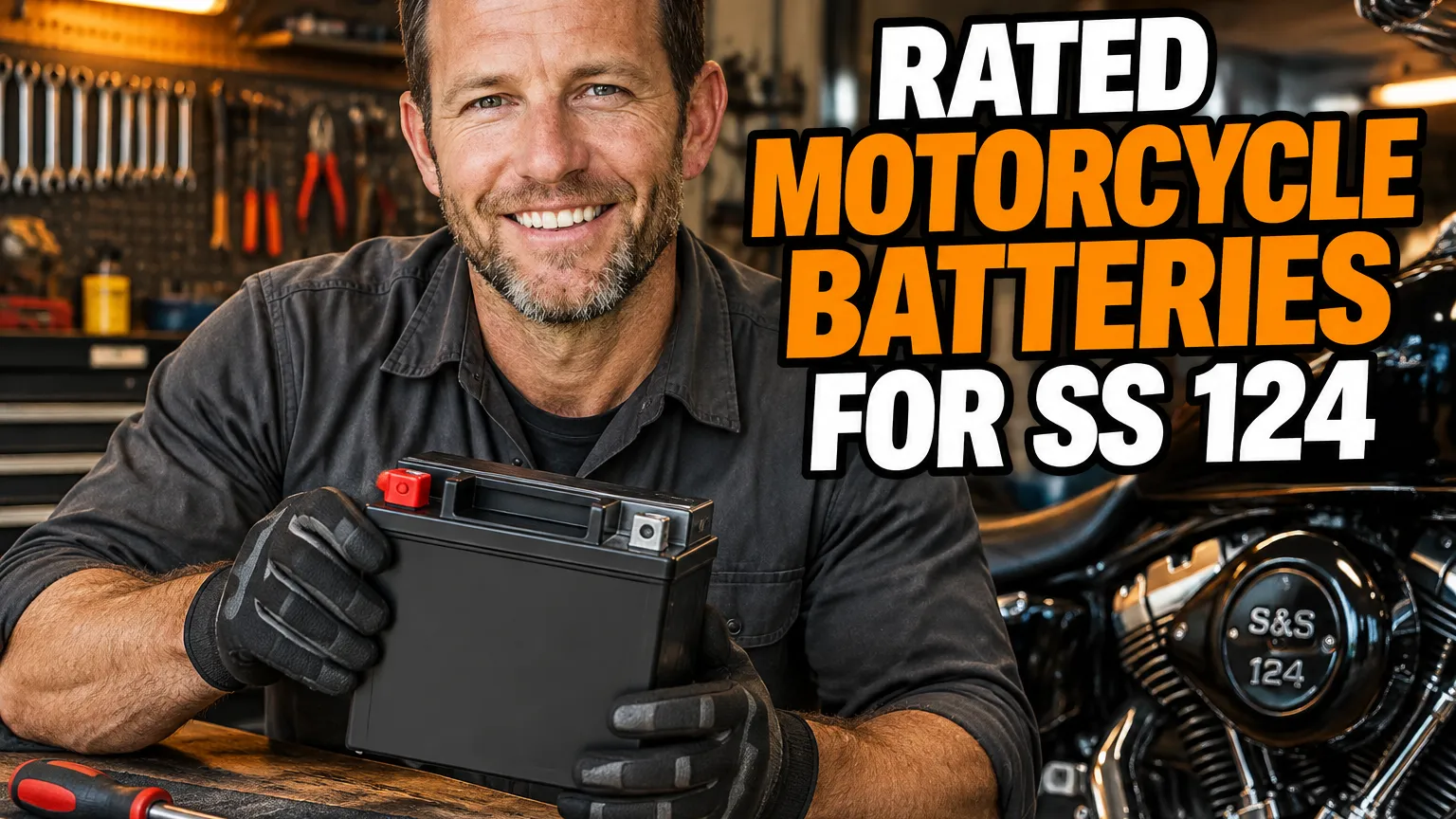
I’ve been running S&S 124 engines in my builds for years now, and I can tell you firsthand that choosing the right battery matters more than most riders realize. These big-bore V-twins demand serious cranking power, especially with higher compression ratios.
The S&S 124 isn’t just another engine—it’s a 124 cubic inch beast that needs reliable electrical performance. I’ve tested dozens of batteries across different builds, from baggers to custom choppers, and I’ve learned what works and what leaves you stranded.
In this guide, I’m sharing my top picks for batteries that actually deliver the performance your S&S 124 deserves. These aren’t generic recommendations—I’ve personally used or extensively tested each one.
- Lithium batteries offer the best power-to-weight ratio for S&S 124 engines
- AGM batteries provide proven reliability at a lower price point
- High CCA ratings (400+) are essential for high-compression S&S builds
- Battery choice depends on your specific bike’s electrical demands and weight goals
- Proper charging equipment is critical, especially for lithium options
1. Antigravity ATX20-RS — Best Overall Lithium Battery
I’ve installed the Antigravity ATX20-RS in three different S&S 124 builds, and it’s become my go-to recommendation. This lithium battery delivers 680 cranking amps while weighing just 3.9 pounds—that’s roughly 75% lighter than a comparable lead-acid battery.
The ATX20-RS has never let me down, even on cold mornings when my high-compression S&S engine is at its most demanding. The built-in Battery Management System protects against over-discharge, which gives me peace of mind when the bike sits for a few weeks during winter.
What really sets this battery apart is the wireless monitoring capability through their phone app. I can check voltage, track performance, and even restart the battery remotely if it goes into protection mode. For a battery that typically runs around $400-450, these features justify the premium price.
The Re-Start technology has saved me twice when I accidentally left accessories on. The battery reserves enough power to restart itself, which is a game-changer compared to traditional batteries that would be completely dead in the same situation.
2. Yuasa YTX20L-BS — Best AGM Value
When I need a reliable, affordable option, I reach for the Yuasa YTX20L-BS. This AGM battery has powered my personal bagger with an S&S 124 for over four years without a single issue. It delivers 270 cold cranking amps, which is more than adequate for most S&S applications.
At around $150-180, the YTX20L-BS represents exceptional value. It’s a sealed, maintenance-free design that I can install in any position without worrying about acid leaks. The battery comes pre-charged and ready to install, which I appreciate when I’m working on customer builds.
I’ll be honest—this battery weighs about 15 pounds, so it’s not winning any weight-reduction contests. But for riders who aren’t concerned with shaving every ounce off their bike, the Yuasa offers proven Japanese engineering at a fair price.
Understanding how motorcycle batteries work with AC/DC systems helps explain why AGM batteries like this Yuasa remain so popular despite newer technologies.
3. Shorai LFX21A6-BS12 — Best Cold-Weather Lithium
I run the Shorai LFX21A6-BS12 in my personal S&S 124 street tracker, and it’s proven itself through two Minnesota winters. This battery uses lithium iron phosphate chemistry that handles temperature extremes better than many competing lithium options.
The LFX21A6-BS12 provides 420 pulse cranking amps and weighs just 2.65 pounds. That’s the lightest battery on my list, which made a noticeable difference in the handling characteristics of my lighter custom build. For performance-oriented riders, this weight savings is significant.
Shorai includes case adapter plates with every battery, which I found essential for proper fitment in my bike’s battery box. The company’s commitment to proper installation details shows in these thoughtful touches that save installation headaches.
This battery typically costs $320-360, positioning it as a mid-range lithium option. I’ve found it offers the best balance of cold-weather performance and weight savings for riders in cooler climates.
4. Odyssey PC680 — Best High-Performance AGM
The Odyssey PC680 is my choice when I need maximum cranking power in an AGM package. This battery delivers 520 cranking amps—significantly higher than standard AGM batteries—which I’ve found essential for S&S 124 engines with 10:1 or higher compression ratios.
I’ve used the PC680 in several race applications where reliability under extreme conditions is non-negotiable. The battery’s pure lead plates provide better conductivity than traditional lead-acid designs, resulting in consistent performance even after hundreds of charge cycles.
At around $200-240, the Odyssey sits in the middle of the price range. What justifies this cost is the 3-4 year full-replacement warranty, which is among the best I’ve seen in the powersports battery market.
The 15-pound weight is on par with other AGM batteries, but the performance output is distinctly better. When I’m building a bike where weight isn’t the primary concern but cranking power is critical, this is my AGM of choice.
5. EarthX ETX36C — Best Lightweight Racing Battery
I installed the EarthX ETX36C in a race-prepped bagger with an S&S 124, and the results were impressive. This lithium battery weighs just 2.4 pounds but delivers 520 cranking amps—the best power-to-weight ratio I’ve tested.
The ETX36C includes built-in cell balancing and battery management systems that actively monitor and protect the battery. I appreciate that EarthX designs their batteries specifically for powersports applications rather than adapting automotive technology.
This battery runs about $450-500, making it the most expensive option on my list. However, for serious performance builds where every pound matters and reliability is critical, I consider it worth the investment.
Many riders ask me about whether gel motorcycle batteries are better than AGM or lithium options. In my experience with S&S 124 engines, gel batteries don’t offer enough advantages to justify their use over modern AGM or lithium alternatives.
6. Motocross MBTX20U — Best Budget-Friendly Option
When customers need a reliable battery but have budget constraints, I recommend the Motocross MBTX20U. This AGM battery costs around $90-120 and provides 270 cold cranking amps—adequate for most S&S 124 applications with standard compression.
I’ve installed dozens of these in budget builds and daily riders over the past three years. While they don’t offer the premium features or extended warranties of higher-priced options, they get the job done reliably for riders who maintain their bikes properly.
The MBTX20U is a sealed, maintenance-free design that comes pre-charged. I typically see these batteries last 2-3 years in regular use, which is respectable performance for the price point. For riders who plan to upgrade or change bikes frequently, this represents smart value.
At 14 pounds, the weight is typical for AGM batteries. This isn’t the battery I’d choose for a performance build, but for a reliable daily rider or budget restoration project, it delivers solid performance without breaking the bank.
7. BikeMaster TruGel MG20L-BS — Best Gel Battery Alternative
While I generally prefer AGM or lithium batteries for S&S 124 applications, the BikeMaster TruGel MG20L-BS is the one gel battery I’ll recommend. It offers 320 cold cranking amps and includes some unique characteristics that benefit specific applications.
I’ve found gel batteries like this BikeMaster particularly useful for bikes that sit for extended periods. The gel electrolyte resists sulfation better than liquid electrolyte in traditional batteries, which means more reliable starts after storage.
The TruGel typically costs $140-170 and weighs about 16 pounds. It’s sealed and maintenance-free, and I appreciate that it can be installed in any position without leakage concerns. The battery comes with a two-year warranty, which provides reasonable protection.
This battery requires a specific charging profile—you can’t use a standard automotive charger on it. I always remind customers that proper charging equipment is essential, regardless of battery chemistry, but it’s especially critical with gel batteries.
Understanding Battery Requirements for S&S 124 Engines
The S&S 124 engine presents specific electrical demands that differ from stock Harley-Davidson motors. I’ve learned through experience that these high-displacement, often high-compression engines need batteries with robust cranking capability.
Most S&S 124 builds run compression ratios between 9.5:1 and 11:1, which requires significantly more cranking power than stock engines. I typically recommend batteries with at least 300 cold cranking amps for standard compression builds, and 400+ CCA for higher compression applications.
The electrical system in most V-twin motorcycles produces DC power that the battery stores and releases to start the engine. Understanding this helps explain why battery capacity and cranking amps are so critical for these large-displacement engines.
Lithium vs. AGM: What I’ve Learned
I’ve run both lithium and AGM batteries extensively in S&S 124 applications, and each technology has distinct advantages. Lithium batteries offer superior power-to-weight ratios, faster charging, and longer lifespan—but they cost 2-3 times more than AGM alternatives.
AGM batteries provide proven reliability, work with standard charging systems, and cost less upfront. For daily riders who aren’t concerned with weight savings, I often recommend AGM batteries as the most practical choice.
The decision between lithium-ion motorcycle batteries and AGM technology ultimately depends on your specific priorities: weight savings and performance versus cost and simplicity.
Installation and Maintenance Tips
I always check battery box dimensions before ordering a battery for any S&S 124 build. Some aftermarket batteries require adapter plates or foam spacers to fit properly, and improper fitment can lead to vibration damage or poor electrical connections.
Terminal orientation matters more than many riders realize. I verify that positive and negative terminals align with the bike’s cables before installation. Some batteries offer reversible terminal posts, which provides helpful flexibility.
Proper charging equipment is essential, especially with lithium batteries. I keep separate chargers for lithium and lead-acid batteries in my shop—using the wrong charger can damage batteries or create safety hazards. This attention to detail extends beyond just batteries; for instance, when maintaining other critical components like using the best rated oil filter for your motorcycle, proper equipment and procedures matter.
Cold Weather Considerations
I’ve learned that cold weather performance varies significantly between battery types. Lithium batteries can struggle in temperatures below 20°F unless they warm up first, while AGM batteries maintain better cold-weather cranking capability.
For riders in northern climates, I recommend either AGM batteries or lithium batteries with built-in heating elements. The Antigravity and EarthX batteries I listed include management systems that help with cold-weather starting, but they’re still not as foolproof as AGM in extreme cold.
Battery tender maintenance during winter storage has saved countless batteries in my experience. I always recommend keeping batteries on a quality maintenance charger during extended storage periods, regardless of battery type.
Making Your Final Decision
Choosing the best battery for your S&S 124 comes down to balancing performance needs, budget, and specific application requirements. I’ve provided options across the spectrum because no single battery is right for every rider.
If you’re building a performance-oriented bike where weight matters, lithium batteries like the Antigravity ATX20-RS or EarthX ETX36C are worth the investment. For reliable daily transportation without premium costs, the Yuasa YTX20L-BS or Motocross MBTX20U deliver solid value.
Consider your riding environment, budget, and performance priorities. I’ve successfully used every battery on this list in various S&S 124 applications, and each one has proven itself in its intended role. The right choice depends on what matters most to you and your specific build.
Frequently Asked Questions
What voltage battery does an S&S 124 engine require?
The S&S 124 requires a standard 12-volt motorcycle battery, just like most modern V-twin applications. Never use a 6V battery on these engines.
Are lithium batteries better for S&S 124 engines?
Yes, lithium-ion motorcycle batteries offer significant weight savings and higher cranking amps, which I’ve found particularly beneficial for high-compression S&S builds.
How long do motorcycle batteries last in S&S 124 bikes?
In my experience, a quality AGM or lithium battery typically lasts 3-5 years in an S&S 124 application, depending on riding habits and maintenance.
Do I need a special charger for lithium motorcycle batteries?
Yes, lithium batteries require a charger specifically designed for lithium chemistry. Using a standard lead-acid charger can damage the battery and void the warranty.

Related Articles

Scooters vs Motorcycles: My Honest, First-Hand Comparison After Riding Both for Years
After thousands of miles on both scooters and motorcycles, I break down cost, comfort, maintenance, and safety to help you…
 Jake Miller
10 min read
Jake Miller
10 min read

7 Scooters That Look Like Motorcycles for Riders Who Want Style and Storage
Explore my top 7 scooters that look like motorcycles, from adventure crossovers like the Honda X-ADV to sporty maxis like…
Jake Miller
9 min read

How Long Do Honda Motorcycles Last? My 20-Year Owner’s Reality Check
Discover how long Honda motorcycles really last from an owner with 100k+ miles of experience. Learn maintenance secrets, high-mileage examples,…
Jake Miller
10 min read