
8 Best Engine Oils for Honda Motorcycles: Top GN4 and Worthy Alternatives
 Jake Miller
9 min read
Jake Miller
9 min read
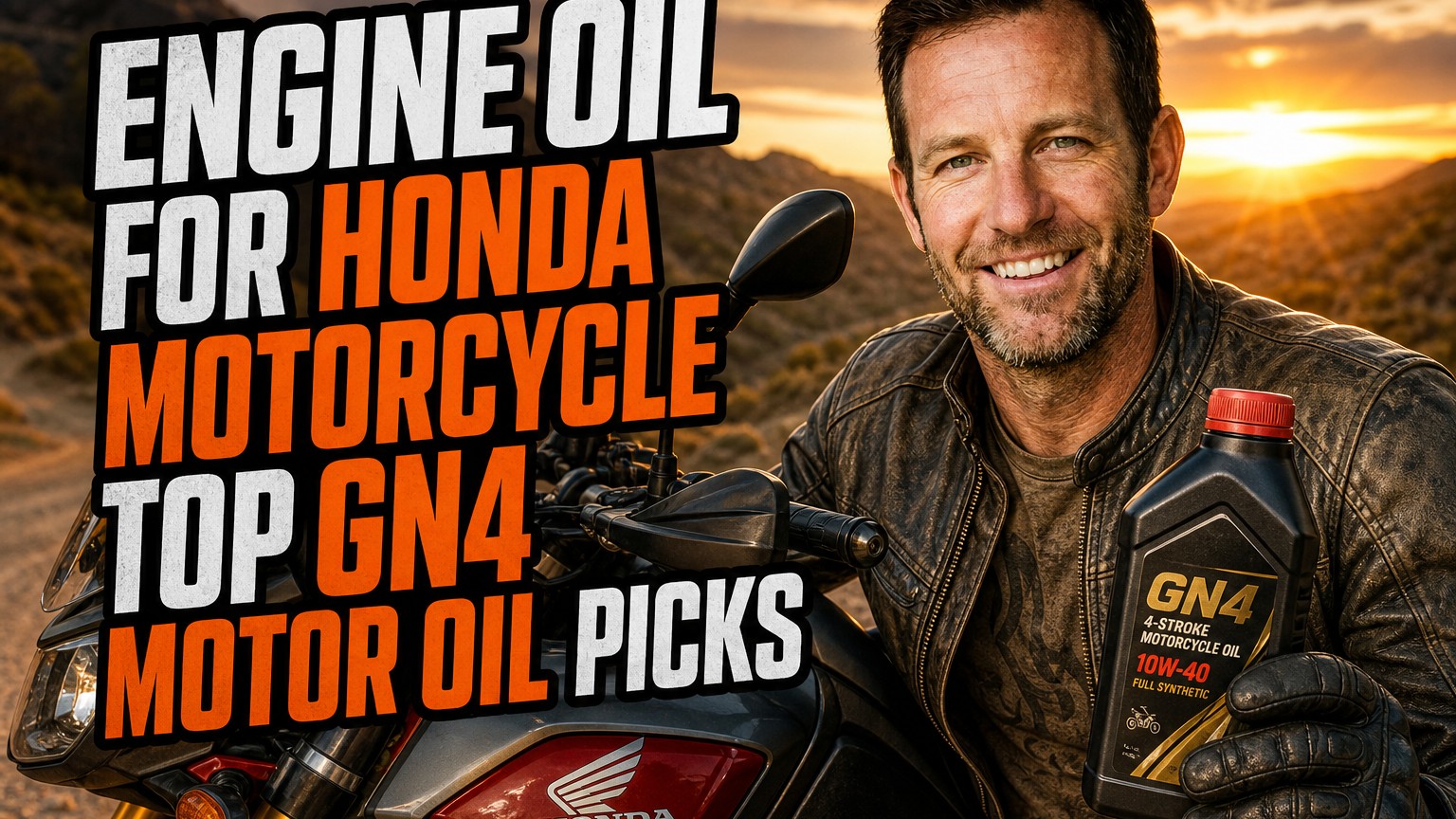
I’ve been wrenching on and riding Honda motorcycles for years. If there’s one question that lands in my inbox more than any other, it’s “What oil should I put in this thing?” The answer isn’t as simple as grabbing whatever is cheapest on the shelf at the auto parts store.
Honda’s own GN4 oil is where most riders start, and for good reason. But it isn’t the only option. I’ve run GN4 and a bunch of alternatives in my own bikes, and I’m sharing what I actually think of each.
- Honda GN4 is my pick for most stock Honda bikes: cheap, wet-clutch safe, and made for your engine.
- If you ride hard or in heat, I’d step up to Honda HP4S, Motul 7100, or Mobil1 Racing 4T.
- Always look for a JASO MA or MA2 rating and match the viscosity in your owner’s manual.
- Changing your oil on time matters more than which premium brand you choose.
How I Picked These Oils
I didn’t just copy a list off a retailer’s website. I looked at the oils I’ve personally used, the ones I’ve seen in friends’ bikes at high mileage, and the specs on each bottle.
What I Looked For
First, every oil had to be wet-clutch compatible. Most Honda motorcycles share oil between the engine, gearbox, and clutch, so car oil with friction modifiers is a gamble I won’t take.
Second, I looked at base oil type, heat stability, availability, and price per quart. Finally, I asked whether I’d happily pour it in my own bike. If not, it didn’t make the list.
A Quick Word on JASO and Viscosity
The JASO MA/MA2 rating tells you the oil is friendly to wet clutches. It’s the single most important label on the bottle for a Honda rider.
Viscosity, like 10W-30 or 10W-40, is your next check. Your owner’s manual has the final word, so follow it before you follow anyone’s blog, mine included.
1. Honda GN4 10W-40 — Best Overall for Stock Hondas
I’ll be upfront: Honda GN4 is the oil I reach for most often on stock Honda bikes. It’s the company’s own 4-stroke motorcycle oil, formulated for Honda engines and wet clutches. It’s also widely available at dealers and online.
GN4 comes in a few viscosities, including 10W-30, 10W-40, and 20W-50. I use the 10W-40 in my older commuter, and it shifts smoothly and keeps the clutch from slipping. Expect to pay roughly $8 to $12 a quart.
Why I Like It
It’s affordable, easy to find, and exactly what Honda designed these engines around. Using it also keeps warranty paperwork simple.
It’s a conventional-style oil, so it won’t match a full synthetic under extreme heat. For regular riding on a normal change schedule, I’ve never had a complaint.
Best For
Daily commuters, new riders, and anyone with a Honda that’s still under warranty. If you want one oil you never have to second-guess, this is it.
2. Pro Honda HP4M 10W-40 — Best Step-Up from GN4
The Pro Honda HP4M is a synthetic blend that sits right above GN4 in Honda’s lineup. When a friend asks me for a bit more protection without a big price jump, this is where I point them.
The blend of synthetic and conventional base oils gives it better heat resistance than plain GN4. Typical pricing is around $10 to $14 a quart, so it’s a modest upgrade in cost.
My Experience
I ran HP4M in a CB-series bike through a hot summer of two-up riding. Oil temps felt more stable, and the gearbox stayed crisp. It’s a no-drama oil.
If you’re curious how it stacks up against the broader field, my guide to the best engine oil for motorcycle riders covers more brands.
3. Pro Honda HP4S Full Synthetic 10W-40 — Best Honda-Branded Synthetic
If you want full synthetic and still prefer a Honda-labeled bottle, the Pro Honda HP4S is the one. It’s built for riders who push their bikes harder, such as sport-touring or frequent highway miles.
Full synthetic base oils hold viscosity longer and resist breakdown at high temps. You’ll pay more, usually in the $14 to $18 per quart range, but you get extra thermal stability.
Who Should Buy It
I’d pick HP4S for a CBR or CB500-style bike that sees spirited rides or hot climates. It’s also nice for owners who stretch toward the longer end of their change interval.
For a bike that putters to work and back, honestly, it’s overkill. Save your money and buy GN4.
4. Motul 7100 4T 10W-40 — Best Premium Ester Synthetic
The Motul 7100 4T is one of my favorite oils, period. It’s a 100% synthetic ester-based oil with a JASO MA2 rating, so it’s fully wet-clutch safe. It runs about $14 to $20 a quart depending on where you shop.
What stands out to me is how smooth the engine feels. Shifts get a little slicker, and the engine seems to spin more freely at high rpm.
Why It’s Worth the Money
Ester technology clings to metal surfaces, which helps with protection at startup. That’s when most engine wear happens.
It’s a great fit for riders who want the best motor oil for 4 stroke motorcycle use without going into race-only territory. I dive deeper into that in my best motor oil for 4 stroke motorcycle breakdown.
5. Castrol Power1 4T 10W-40 — Best Value Semi-Synthetic
The Castrol Power1 4T 10W-40 is a partial synthetic that I consider the sweet spot for budget-minded riders. It’s JASO MA2 certified and typically sells for $9 to $13 a quart.
Castrol has a long motorcycle racing heritage, and the Power1 line reflects it. The oil is formulated to resist shear, so viscosity stays steadier between changes.
Where It Shines
I’ve seen this oil in plenty of friends’ Hondas, from Hornets to Shadows. It delivers consistent shifting and a quiet engine at a fair price.
It’s easy to find too. Most bike shops and big-box stores carry it, which matters when you need an oil change this weekend.
6. Mobil1 Racing 4T 10W-40 — Best for Hard Riding
When I’m doing track days or spirited canyon runs, I like the Mobil1 Racing 4T 10W-40. It’s a full synthetic built for high-revving motorcycle engines, with JASO MA2 certification.
It’s priced around $12 to $18 a quart. You get strong film strength and good heat handling, and I’ve had no clutch slip even after repeated hard launches.
A Note on Change Intervals
Even with premium synthetic, don’t push your luck if you ride aggressively. I change oil more often on bikes that see track use.
Fresh oil is the cheapest engine insurance there is. A few extra quarts beat a rebuild every time.
7. Liqui Moly Motorbike 4T Synth 10W-40 Street Race — Best Imported Option
The Liqui Moly Motorbike 4T Synth 10W-40 Street Race is a German-made synthetic that’s popular with riders who want something a little different. It’s JASO MA2 rated and wet-clutch friendly.
It usually costs $14 to $20 a quart. I like how it behaves on cold starts, since the oil flows quickly and gets to the top end fast.
Things to Consider
It’s not always on local shelves, so you might need to order online. That’s the main drawback in my experience.
If you enjoy comparing labels, my overview of the best motorcycle engine oil brand options might help you pick a favorite.
8. Shell Advance Ultra 4 10W-40 — Best for Daily Riders on Synthetic
The Shell Advance Ultra 4 10W-40 is a fully synthetic oil that’s very popular outside the US and increasingly easy to find here. It’s JASO MA2 certified and typically runs $12 to $17 per quart.
Shell uses its PurePlus gas-to-liquid technology for the base oil. That gives a clean-burning, stable formula that I find works nicely in daily-ridden bikes.
My Take
It’s a quiet, smooth oil with strong protection against deposits. I’d happily run it in a commuter Honda that sees a lot of stop-and-go traffic.
If you’re researching more, I also wrote about the top engine oil for 4 stroke motorcycle models, which pairs well with this pick.
How to Choose the Right Oil for Your Honda
With this many good options, picking can feel overwhelming. I keep it simple with a short checklist.
Start With Your Owner’s Manual
Your manual lists the recommended viscosity and spec. Honda’s engineers tested your bike with those numbers, so I treat them as the baseline.
Riding in extreme heat or cold? Then you might adjust slightly, such as 10W-30 for cold climates or 20W-50 for very hot ones. Check the manual before you do.
Match Oil to How You Ride
For commuting and easy weekend rides, GN4 or Castrol Power1 is plenty. For touring and spirited riding, I like HP4S, Motul 7100, or Shell Advance Ultra 4.
For track days, Mobil1 Racing 4T is my go-to. Match the oil to the job, not to the price tag.
Don’t Forget the Filter
A great oil in a bad filter is wasted money. I always swap in a fresh filter, ideally a Honda OEM or a quality equivalent, at every change.
Common Oil Mistakes I See Riders Make
I’ve made a few of these myself, so no judgment here. They’re easy to avoid once you know about them.
Using Car Oil
Many passenger-car oils are labeled “energy conserving,” which means friction modifiers. In a shared-sump motorcycle, those can cause clutch slip. Stick to JASO MA or MA2.
Overfilling or Underfilling
Too much oil can foam and rob power, and too little starves the engine. Check the level with the bike upright on level ground, and follow the sight-glass or dipstick procedure in your manual.
Stretching Intervals
Old oil loses its additives and traps contaminants. I’d rather change early than push to the limit, especially on bikes that sit for long stretches.
Final Thoughts: My Recommendation
If I had to pick one oil for most Honda riders, it’d be Honda GN4. It’s affordable, designed for your engine, and proven over decades. For a bit more protection, step up to HP4M or HP4S.
If you want a premium non-Honda option, my favorites are the Motul 7100 and Mobil1 Racing 4T. Whichever you choose, change it on time, use the right viscosity, and enjoy the ride.
I hope this helps you settle the oil question once and for all. Now go check your dipstick, and get out there and ride.
Frequently Asked Questions
Is Honda GN4 oil good for all Honda motorcycles?
GN4 is a solid, wet-clutch-safe oil for most air-cooled and liquid-cooled Honda 4-stroke bikes. Always check your owner’s manual for the correct viscosity, because some models (like the Rebel or Gold Wing) have specific recommendations.
Can I use car oil in my Honda motorcycle?
I don’t recommend it. Many car oils contain friction modifiers that can make a shared-sump wet clutch slip. Look for a JASO MA or MA2 rating on the bottle instead.
How often should I change the oil in my Honda motorcycle?
Most Honda bikes call for a change every 4,000 to 8,000 miles, or at least once a year. Check your manual for the interval on your model, and shorten it if you ride hard, in heat, or in stop-and-go traffic.
Is synthetic oil better than GN4 for my Honda?
Synthetic oil resists heat and shear better, so it can be a good upgrade for hard riding or hot climates. For a stock commuter on regular change intervals, GN4 does the job well and costs less.

Related Articles
7 Best Batteries for Motorcycles I’ve Tested and Trust in 2026
I've tested dozens of motorcycle batteries to find the best performers. From AGM to lithium, here are my top picks…
Jake Miller
15 min read

The Perfect Battery for Your Harley Davidson Softail: A Rider’s Complete Guide
Discover the perfect battery for your Harley Davidson Softail. I've tested multiple options and share real-world performance data, maintenance tips,…
Jake Miller
14 min read

The Best Battery for Your Harley Davidson: My Complete Guide After Years of Testing
Discover which battery truly performs best for Harley Davidson motorcycles. Real rider experience with AGM, lithium, and OEM options to…
Jake Miller
12 min read