
7 Best 2-Cycle Oils for Air-Cooled Vintage Motorcycle Engines (Rider Tested)
 Jake Miller
10 min read
Jake Miller
10 min read
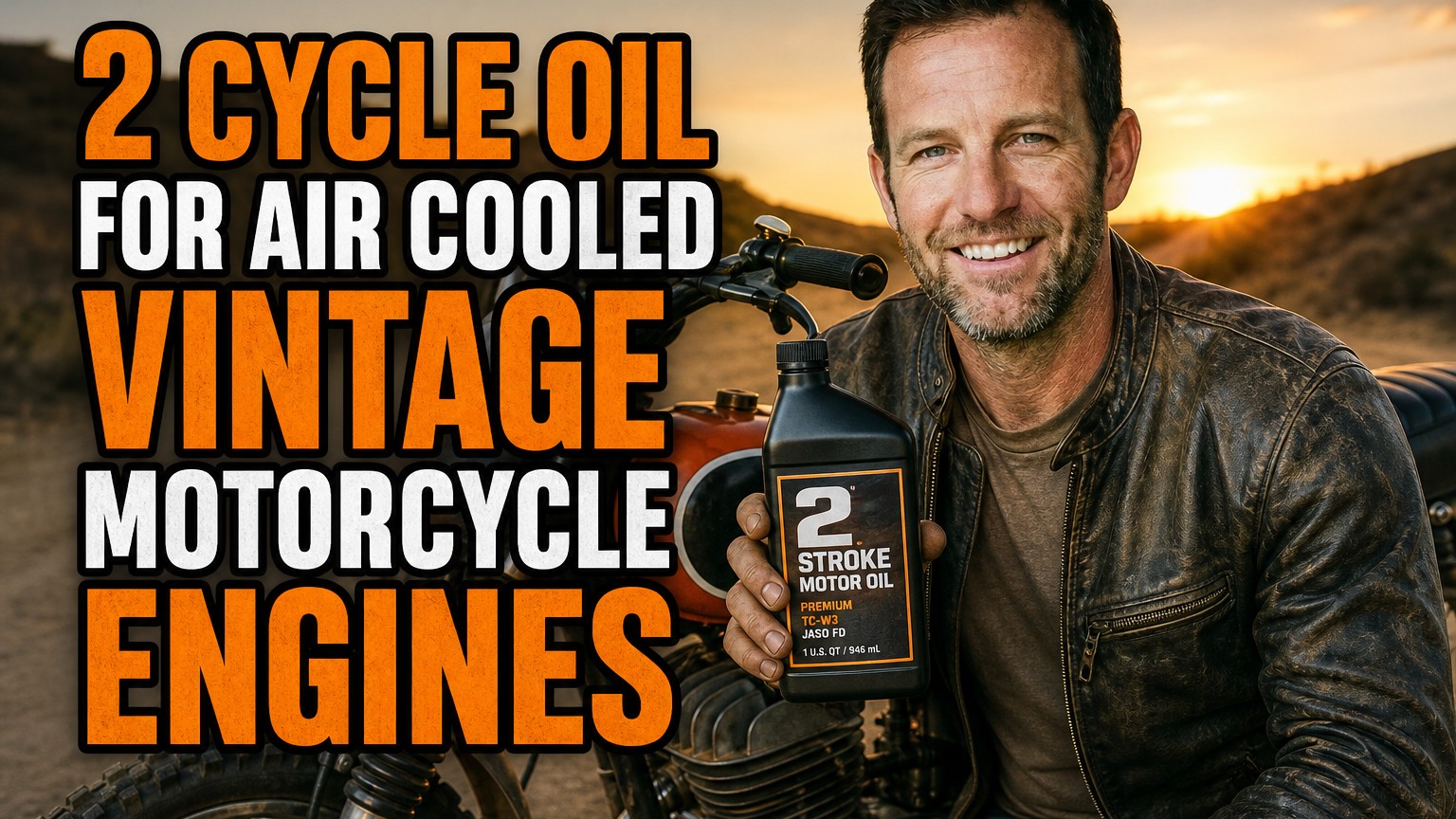
I’ve spent a lot of weekends with a spark plug wrench in one hand and a smoky, slightly oil-stained rag in the other. Air-cooled two-strokes have a charm nothing modern can match, but they are fussy about what goes into the tank. Pick the wrong oil and you’ll know it quickly, usually with a seized piston.
Over the years I’ve run a bunch of different oils in my vintage air-cooled bikes. Those include a tired old single, a little trail bike, and a street twin I keep far too clean. This list covers the ones I actually trust, plus how I choose between them.
- My top all-around pick is Motul 710 2T: full ester synthetic with excellent heat protection.
- For classic feel and old-school protection, Castrol A747 and Maxima Castor 927 are hard to beat.
- On a budget, Lucas Semi-Synthetic 2-Cycle Oil and Bel-Ray EXP do the job well.
- Air-cooled engines run hot, so I mix a little richer than the bottle’s minimum.
What I Look For in an Oil for Air-Cooled Two-Strokes
An air-cooled engine has no radiator and no coolant to soak up heat. The cylinder fins and passing air do all the work. That puts far more stress on the oil film between the piston and the cylinder wall.
Heat Resistance and Film Strength
This is my number one criterion. The oil has to hold a film at high cylinder temperatures, especially when you’re stuck in traffic or climbing a long grade. Ester synthetics and castor blends are the best at this.
Clean Burning and Deposit Control
Old ports and exhausts clog easily. A cleaner-burning oil means less carbon on the piston crown, fewer fouled plugs, and a pipe that doesn’t fill with sludge. I look for modern oils rated JASO FC or FD where possible.
Mixing and Compatibility
Premix is what most vintage owners use, so the oil needs to blend easily with pump gas, even cold. If your bike has an oil injection system, you also need an oil that flows well through those thin lines. I’ll flag which oils suit each setup below.
If you want a broader rundown beyond vintage machines, I’ve also written about the best 2 cycle oil for air cooled motorcycle engines in general.
1. Motul 710 2T — Best Overall for Vintage Air-Cooled Engines
If I could only keep one bottle on my shelf, it would be Motul 710 2T. It’s a 100% synthetic, ester-based oil built for high-performance two-strokes, and it handles the heat of air-cooled cylinders better than almost anything I’ve tried.
Why I Like It
The film strength is excellent. After a long day of riding, my plug color stays consistent and the piston looks clean on inspection. Motul 710 2T also has a pleasant, fruity smell that beats the burnt-toast aroma of cheap oils.
It mixes well in cold fuel and works in both premix and injection systems. I typically run it a touch richer than Motul’s leanest suggested ratio on a vintage air-cooled engine.
Downsides
It’s pricey, usually among the more expensive bottles in the aisle. For a garage queen that sees 200 miles a year, it’s probably overkill. For a bike I ride hard, I think it’s worth every penny.
2. Castrol A747 — Best Classic Castor-Based Racing Oil
Nothing says “vintage two-stroke” like that sweet, rich castor smell. Castrol A747 is a castor-based racing oil that’s been around for decades, and it’s still a favorite among classic racers and period-correct restorers.
Why I Like It
Castor oil clings to hot metal surfaces unusually well. On an air-cooled engine that gets thrashed, that’s an advantage. When I ran Castrol A747 in my old twin on a spirited weekend ride, it felt happy at high revs.
It also adds a nostalgia factor you can’t buy any other way. Pull up behind a bike running it and you’ll know exactly what I mean.
Downsides
Castor leaves varnish and gummy residue if you don’t use the engine regularly. I clean the exhaust more often and never let a castor-filled tank sit for months. It’s not my choice for a bike that gets ridden twice a year.
3. Maxima Castor 927 — Best Castor Synthetic Blend
Maxima Castor 927 is for riders who like castor’s protection but want better manners. It blends castor with synthetic esters, which helps reduce the heavy deposits of straight castor while keeping that classic character.
Why I Like It
I think of Maxima Castor 927 as the best compromise between old-school and modern. It gives you strong lubrication at high temperatures, and the smell is pure vintage racing. In my experience it leaves less gunk than a straight castor oil.
Downsides
It’s still a racing-style oil, so it’s not a set-and-forget choice. Plan on periodic top-end inspections and exhaust cleaning. It also isn’t designed for oil injection tanks, so I only use it in premix applications.
4. Bel-Ray EXP Synthetic Blend 2-Stroke — Best Value for Everyday Vintage Riding
Bel-Ray EXP Synthetic Blend is a bottle I recommend to friends who want solid protection without the premium price. It’s a synthetic blend designed for modern and older two-strokes, and it burns clean in most engines.
Why I Like It
I’ve run Bel-Ray EXP in a small air-cooled trail bike for years with no complaints. Plugs stay clean, the exhaust note stays crisp, and the oil mixes quickly. It’s also widely available at powersports shops, which matters when you need a bottle on a Saturday.
Downsides
It doesn’t have the extreme heat protection of a full ester oil like Motul 710. For hard riding in hot weather, I’d move up. For casual riding and weekend cruising, it’s a great fit.
5. Amsoil Saber Professional — Best for Oil-Injected Vintage Bikes
Some vintage bikes, like certain Yamaha and Suzuki street models, used factory oil injection. For those, I like Amsoil Saber Professional. It’s a fully synthetic two-stroke oil designed to flow reliably and burn cleanly, and it mixes well at a range of ratios.
Why I Like It
It flows well through injection lines, even on cooler mornings. Amsoil Saber Professional also leaves very little carbon behind, which helps keep old ports and rings in good shape. I’ve seen noticeably cleaner pistons after a season with it.
Downsides
It’s sold through Amsoil dealers and online rather than your corner shop, so I stock up ahead of time. It also supports very lean ratios, but on vintage air-cooled engines I don’t push that. I stay on the richer side for safety.
6. Lucas Semi-Synthetic 2-Cycle Oil — Best Budget Pick
Not every bike needs a boutique oil. Lucas Semi-Synthetic 2-Cycle Oil is affordable, easy to find, and a good fit for lower-stress duty such as mopeds, small-displacement bikes, and bikes that see gentle use.
Why I Like It
I keep a bottle around for my yard-use machines. Lucas Semi-Synthetic provides decent protection and reasonably clean burn at a price that’s easy on the wallet. It mixes easily at typical ratios, and I haven’t had any plug fouling issues when using it properly.
Downsides
It isn’t what I’d pick for a high-revving air-cooled twin on a hot day. Think of it as a dependable everyday oil, not a racing product. Know your engine’s demands before choosing it.
7. Red Line Two-Cycle Racing Oil — Best for Hard-Ridden Air-Cooled Bikes
Red Line Two-Cycle Racing Oil is an ester-based synthetic with a strong reputation among racers. If you push your vintage bike hard on the track or on spirited canyon rides, this is the one I’d reach for after Motul.
Why I Like It
It gives very strong protection under heat and load. With Red Line Two-Cycle Racing Oil, I notice crisp throttle response and consistently clean piston skirts. It also burns cleanly, which is a blessing on older engines prone to carbon buildup.
Downsides
It’s priced at the premium end and can be harder to find locally. I’d also say it’s more oil than a mild-mannered commuter needs. But for a bike I enjoy riding hard, it’s money well spent.
How I Choose the Right Oil for My Bike
Here’s the quick logic I follow when picking from this list.
Match the Oil to the Riding
- Hard riding, hot weather: Motul 710 2T or Red Line Two-Cycle Racing Oil.
- Period-correct classic feel: Castrol A747 or Maxima Castor 927.
- Everyday weekend rides: Bel-Ray EXP Synthetic Blend.
- Oil-injected bikes: Amsoil Saber Professional.
- Budget or light duty: Lucas Semi-Synthetic 2-Cycle Oil.
Respect the Manual First
Your bike’s factory manual or a trusted marque club is the best source for ratios. Many older engines were designed around 20:1 to 32:1 with the oils of the era. Modern oils allow leaner mixes, but I never go leaner than I’m comfortable with on an air-cooled engine.
Mixing Tips I’ve Learned the Hard Way
Measure Precisely
Use a proper mixing bottle or graduated cup. Eyeballing the oil is how you end up with a fouled plug or, worse, a lean seizure. I mix in a separate can, then pour it into the tank.
Add Oil First
I pour the oil into the can first, then add fuel on top. This helps it blend better, especially in cold weather. A quick swirl before filling the tank finishes the job.
Don’t Let Premix Sit Too Long
Pump fuel with ethanol can go stale quickly. I try to use mixed fuel within a month or so, and I drain the tank before long storage. If you’re storing a castor-filled bike, run it a bit before parking it so it doesn’t sit with varnish forming inside.
A Quick Word on Four-Stroke Oils
Lots of vintage collectors own both two-strokes and four-strokes. Don’t mix them up: four-stroke oil does not belong in a premix tank. If you also ride a four-stroke classic, take a look at my guides on the best oil for air cooled motorcycle engines and the best motor oil for 4 stroke motorcycle options.
You can also see my breakdown of the top engine oil for 4 stroke motorcycle picks if you’re comparing viscosity grades for a different bike in the garage.
Common Mistakes I See with Vintage Two-Strokes
Running Too Lean
Lean mixtures are the number one killer of air-cooled two-strokes. Even if the bottle says 100:1 is fine, an old air-cooled engine with a worn bore will appreciate extra lubrication. I’ve never regretted going a bit rich.
Mixing Oils Carelessly
Castor and synthetic oils don’t always play well together. Some blends are compatible, but straight castor and some synthetics can form sludge when combined. I stick with one oil per tank and flush the system when switching types.
Ignoring the Spark Plug
Your plug tells the story. A light tan color means things are right, while heavy black fouling suggests too much oil or a poor burn. I read my plugs after every few rides, especially after changing oil brands.
Final Thoughts From My Garage
If you want one simple answer to what is the best 2 cycle oil for a motorcycle engine, I’d say it depends on how you ride. For most vintage air-cooled bikes, Motul 710 2T is the safest high-quality bet.
If you love the smell and spirit of the old days, Castrol A747 or Maxima Castor 927 will make your ride feel authentic. And if you’re keeping costs down, Bel-Ray EXP and Lucas Semi-Synthetic will keep things running happily.
Whatever you pick, mix carefully, stay a bit rich, and check your plugs. Do that, and your vintage air-cooled two-stroke should keep smoking, screaming, and putting a grin on your face for many more seasons.
Frequently Asked Questions
What is the best 2-cycle oil for an air-cooled vintage motorcycle?
For most riders I recommend Motul 710 2T for all-around protection, or Castrol A747 if you want classic castor-based lubrication on a bike that mostly sees short, spirited rides. Always check your manual’s recommended ratio first.
Can I use modern synthetic 2-stroke oil in an old air-cooled engine?
Yes, in most cases. Modern ester-based and synthetic blends clean up better and resist heat well. Just make sure the oil mixes properly with your fuel and that you run a ratio your engine’s builder recommends.
What mix ratio should I run in a vintage air-cooled two-stroke?
Many older bikes were designed around 20:1 to 32:1 ratios with the oils of their day. Modern oils often allow 40:1 to 50:1, but I stay a little richer on air-cooled engines because they run hotter and have no coolant to help.
Is castor oil bad for a vintage two-stroke?
Castor oil is not bad, but it needs more upkeep. It protects well under heat, yet it can leave varnish and gummy deposits if the engine sits unused. If you ride often and clean the engine regularly, it’s a great option.

Related Articles
7 Best Batteries for Motorcycles I’ve Tested and Trust in 2026
I've tested dozens of motorcycle batteries to find the best performers. From AGM to lithium, here are my top picks…
Jake Miller
15 min read

The Perfect Battery for Your Harley Davidson Softail: A Rider’s Complete Guide
Discover the perfect battery for your Harley Davidson Softail. I've tested multiple options and share real-world performance data, maintenance tips,…
Jake Miller
14 min read

The Best Battery for Your Harley Davidson: My Complete Guide After Years of Testing
Discover which battery truly performs best for Harley Davidson motorcycles. Real rider experience with AGM, lithium, and OEM options to…
Jake Miller
12 min read