
8 Best Racing Oils for Motorcycles: What I Trust on Track Days
 Jake Miller
8 min read
Jake Miller
8 min read
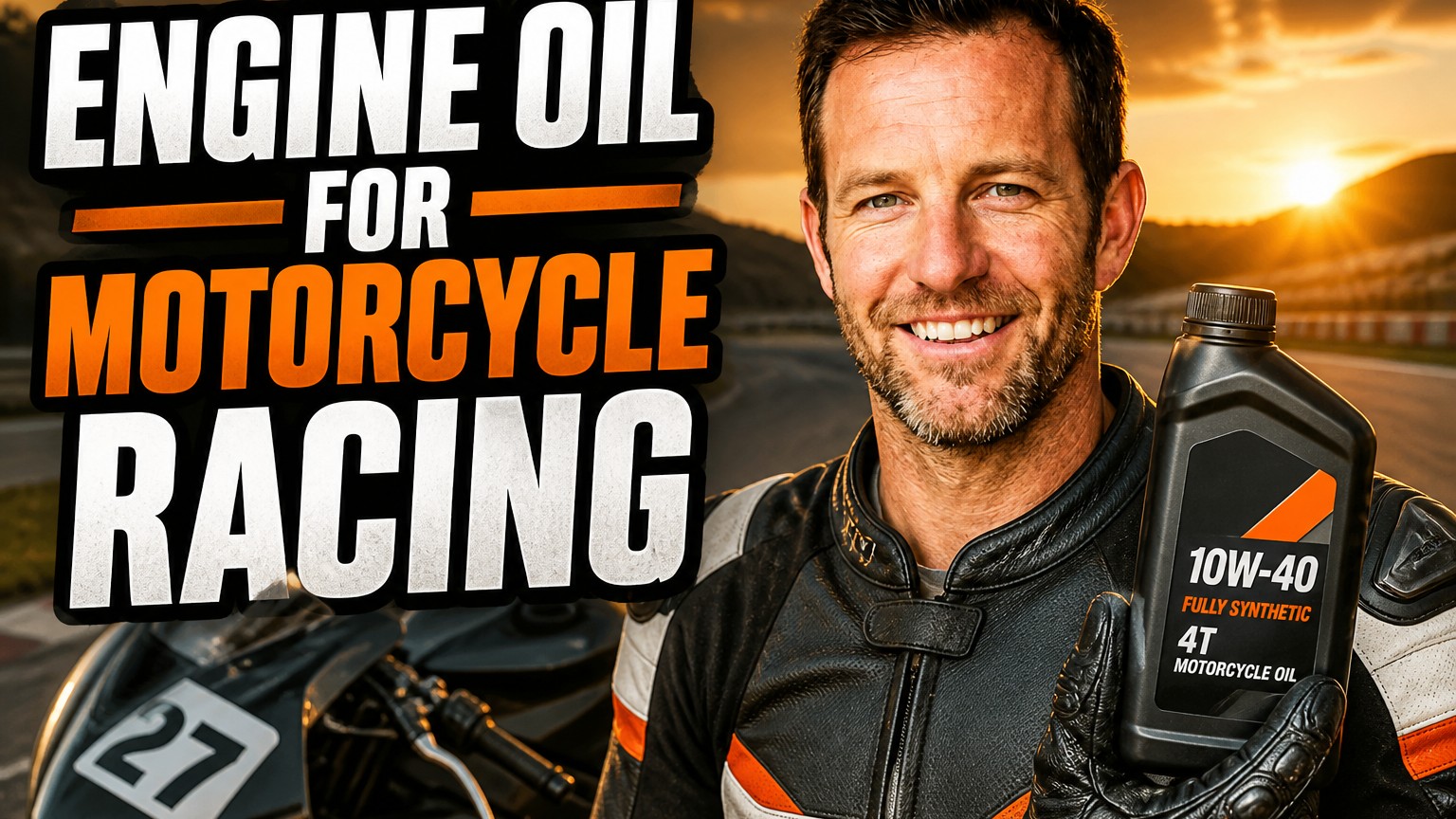
I’ve spent a lot of weekends at track days and club races, and I can tell you the oil in your sump matters more than most riders think. A race engine lives at high revs, high temperatures, and sustained load. The wrong oil can cost you power, clutch feel, and eventually the motor itself.
Over the years I’ve run most of the big names through my own bikes. Some I loved, some I wouldn’t buy again. Below are the eight oils I actually trust when I’m heading to the circuit, along with the details that helped me choose them.
- My top overall pick is Motul 300V Factory Line, an ester-based oil built for serious track use.
- For value, Motul 7100 10W-40 and Castrol Power1 Racing give strong protection without the premium price.
- Always look for JASO MA2 so your wet clutch doesn’t slip, and follow your manual’s viscosity range.
- Change oil often on a race bike. Fresh oil is the cheapest engine insurance I know.
What I Look for in a Racing Oil
Before the list, here’s how I judge an oil. I’m not interested in marketing claims. I care about how the oil behaves after a hot, hard session, and what it looks like when I drain it.
Viscosity and Heat Stability
Most modern sport bikes call for 10W-40 or 10W-50, and I stay inside what my manual allows. The key is how well the oil holds its film strength when temperatures spike. Shear stability is what keeps that film from thinning out lap after lap.
Wet Clutch Compatibility
Most motorcycles share oil between the engine, gearbox, and clutch. That’s why I only use oils rated JASO MA or MA2. A slipping clutch at corner exit is not something I want to discover mid-race.
Base Oil Technology
Ester-based synthetics tend to cling to metal surfaces and handle heat better. That’s why many of my favorites below use them. If you want a broader overview beyond racing, my guide to the best engine oil for motorcycle covers street riding too.
1. Motul 300V Factory Line Road Racing 10W-40 — Best Overall
When I want zero compromises, I reach for Motul 300V Factory Line. It uses Motul’s Ester Core technology, a 100% synthetic double ester formula, and it’s JASO MA2 approved. It’s also available in 5W-40, 10W-40, 10W-50, 15W-50, and more.
On my own bike, the gearbox felt crisper on hard downshifts, and the oil still looked healthy after a full day of sessions. The clutch stayed consistent from the first session to the last.
Why I Rate It
- Ester-based formula with excellent film strength
- Wide viscosity range to match different climates and engines
- Used widely in professional racing paddocks
Things to Consider
It’s pricey, usually around $15 to $20 per liter. For a weekend warrior it might be overkill, but for competitive riding I think it earns its price.
2. Castrol Power1 Racing 4T 10W-40 — Best Value for Race Use
Castrol Power1 Racing 4T 10W-40 is the oil I recommend when a friend wants track-ready protection without a huge bill. It’s formulated for high-revving four-strokes and carries a JASO MA2 rating. You’ll find it at most bike shops for roughly $12 to $16 per liter.
I used Castrol Power1 Racing through a full summer of club days. The clutch felt consistent, and engine temperatures never gave me anything to worry about. It’s an easy oil to live with.
If you’re still comparing brands, my breakdown of the best motorcycle engine oil brand options explains why Castrol and Motul keep showing up on my shelf.
3. Motul 7100 10W-40 — Best for Street and Track Crossover
Not every bike I own is a dedicated race machine. For my road-and-track bike, Motul 7100 10W-40 is my go-to. It’s a 100% synthetic ester oil with JASO MA2 approval, and it costs less than the 300V.
The 7100 is designed for performance riding, so it handles spirited road use and the occasional track day with ease. I’ve found shifting smooth and engine noise nicely reduced.
Who It’s For
If you ride hard on the street and do four to six track days a year, this is the sweet spot. For full-season racing, I’d step up to the 300V.
4. Liqui Moly Motorbike 4T Synth 10W-40 Street Race — Best European Alternative
Liqui Moly Motorbike 4T Synth 10W-40 Street Race is a fully synthetic oil that’s JASO MA2 certified. It’s built to keep the clutch stable under hard use. Price usually lands around $14 to $18 per liter.
I tried it in a naked bike that I ride hard, and I was impressed by the shift quality and how little the oil darkened between changes. The Street Race name is fitting, since it targets high-performance engines.
It’s also a smart choice if you want a different formula from the usual Japanese or American stuff on the shelf. Many European riders swear by it.
5. Bel-Ray EXS Full Synthetic Ester 4T 10W-40 — Best for Heat and Abuse
Bel-Ray EXS Full Synthetic Ester 4T 10W-40 has a strong reputation among motocross and road racers alike. It uses ester technology and is JASO MA2 rated. It’s marketed for extreme heat and shear conditions.
I ran Bel-Ray EXS during a very hot summer weekend, and I was happy with how consistent the bike felt. Oil temperatures stayed predictable, and the clutch held up well through repeated hard launches.
If you also dabble in strip riding, check out my notes on the best motorcycle oil for drag racing. Ester oils like this one are often a good fit there too.
6. Red Line 10W-40 Motorcycle Oil — Best for Extreme Load
Red Line 10W-40 Motorcycle Oil is a favorite among riders who push their engines hard. It’s a synthetic, ester-based formula designed for wet clutch applications. Expect to pay around $14 to $18 per quart.
What I notice most with Red Line is the sense of solidity. High-rpm pulls feel smooth, and the oil keeps its composure when the heat builds. It’s a great option for turbocharged or heavily tuned builds.
My Only Complaint
Availability can be spotty depending on where you live. I usually order it online ahead of a race weekend.
7. Silkolene Pro 4 10W-40 XP — Best for Club Racers
Silkolene Pro 4 10W-40 XP is a fully synthetic ester oil that’s popular in British club racing. It carries a JASO MA2 rating and is built for high-performance four-stroke motorcycles. Pricing generally runs about $15 to $20 per liter.
I used it on a trackday-prepped sport bike and noticed a clean, positive feel in the gearbox. It also resisted breakdown well across several sessions.
Looking for something specific to your engine type? My pick of the top engine oil for 4 stroke motorcycle applications covers more of the technical side.
8. Mobil 1 Racing 4T 10W-40 — Best Widely Available Option
Mobil 1 Racing 4T 10W-40 is a full synthetic oil designed for high-performance motorcycles, and it’s JASO MA2 approved. Mobil 1 is easy to find, and a bottle usually costs about $12 to $16 per liter.
I like it as my emergency oil. If I’m on the road and need a change before a track day, I can pick it up almost anywhere and feel confident about it.
It may not have the ester-heavy reputation of Motul or Bel-Ray, but it delivers dependable protection at a sensible price.
How I Choose Between These Oils
If you’re asking which engine oil is best for motorcycle racing, my honest answer is that it depends on your budget, your bike, and how often you ride hard. There isn’t one winner for everyone.
If You Race Competitively
I’d go with Motul 300V, Bel-Ray EXS, or Silkolene Pro 4 XP. They’re all ester-based and built to take abuse. Change them every race weekend if you can.
If You Do Occasional Track Days
Castrol Power1 Racing, Motul 7100, or Mobil 1 Racing 4T will protect your engine without wrecking your wallet. I’d still change the oil after every two to three track days.
If You Ride Hard in Hot Weather
Look at a thicker grade such as 15W-50, but only if your manual allows it. I’ve found Red Line and Motul 300V are especially good in the heat.
Mistakes I See at the Track
I’ve watched riders make the same oil mistakes again and again. Avoiding them can save you real money.
- Using car oil: Friction modifiers can cause clutch slip.
- Stretching change intervals: Race conditions wear oil out quickly.
- Mixing random brands: I prefer to stick with one oil per bike so I know what to expect.
- Ignoring the manual: Viscosity recommendations exist for a reason.
Final Thoughts
Racing oil is one of the cheapest upgrades you can make. A fresh bottle of Motul 300V or Castrol Power1 Racing costs far less than a rebuilt engine. After years of testing, I’m confident that any oil on this list will serve you well.
Pick the one that matches your riding, change it regularly, and keep an eye on the color and smell when you drain it. Your engine will thank you, and so will your lap times.
Frequently Asked Questions
Can I use car racing oil in my motorcycle?
I’d avoid it in most cases. Many car oils contain friction modifiers that can make a wet clutch slip. Look for a JASO MA or MA2 rating on the bottle, which confirms it is safe for shared engine, gearbox, and clutch systems.
How often should I change oil on a race bike?
In my experience, race bikes need fresh oil far more often than street bikes. Many riders change it every race weekend or every 2 to 4 track days. High heat and shear break down oil quickly, so shorter intervals are cheap insurance.
Is 10W-40 or 15W-50 better for racing?
It depends on your engine, climate, and what the manufacturer allows. 10W-40 is the common choice for modern sport bikes, while 15W-50 can help in very hot conditions or on tired, high-mileage engines. Always check your manual first.
Is full synthetic oil worth the extra money for racing?
Yes. Full synthetic and ester-based oils resist heat, shear, and breakdown better than mineral oils. For a bike that regularly sees high revs and sustained heat, the extra cost is small compared to an engine rebuild.

Related Articles
7 Best Batteries for Motorcycles I’ve Tested and Trust in 2026
I've tested dozens of motorcycle batteries to find the best performers. From AGM to lithium, here are my top picks…
Jake Miller
15 min read

The Perfect Battery for Your Harley Davidson Softail: A Rider’s Complete Guide
Discover the perfect battery for your Harley Davidson Softail. I've tested multiple options and share real-world performance data, maintenance tips,…
Jake Miller
14 min read

The Best Battery for Your Harley Davidson: My Complete Guide After Years of Testing
Discover which battery truly performs best for Harley Davidson motorcycles. Real rider experience with AGM, lithium, and OEM options to…
Jake Miller
12 min read