
7 Best Engine Oils for Switching Your Motorcycle From Conventional to Synthetic
 Jake Miller
9 min read
Jake Miller
9 min read
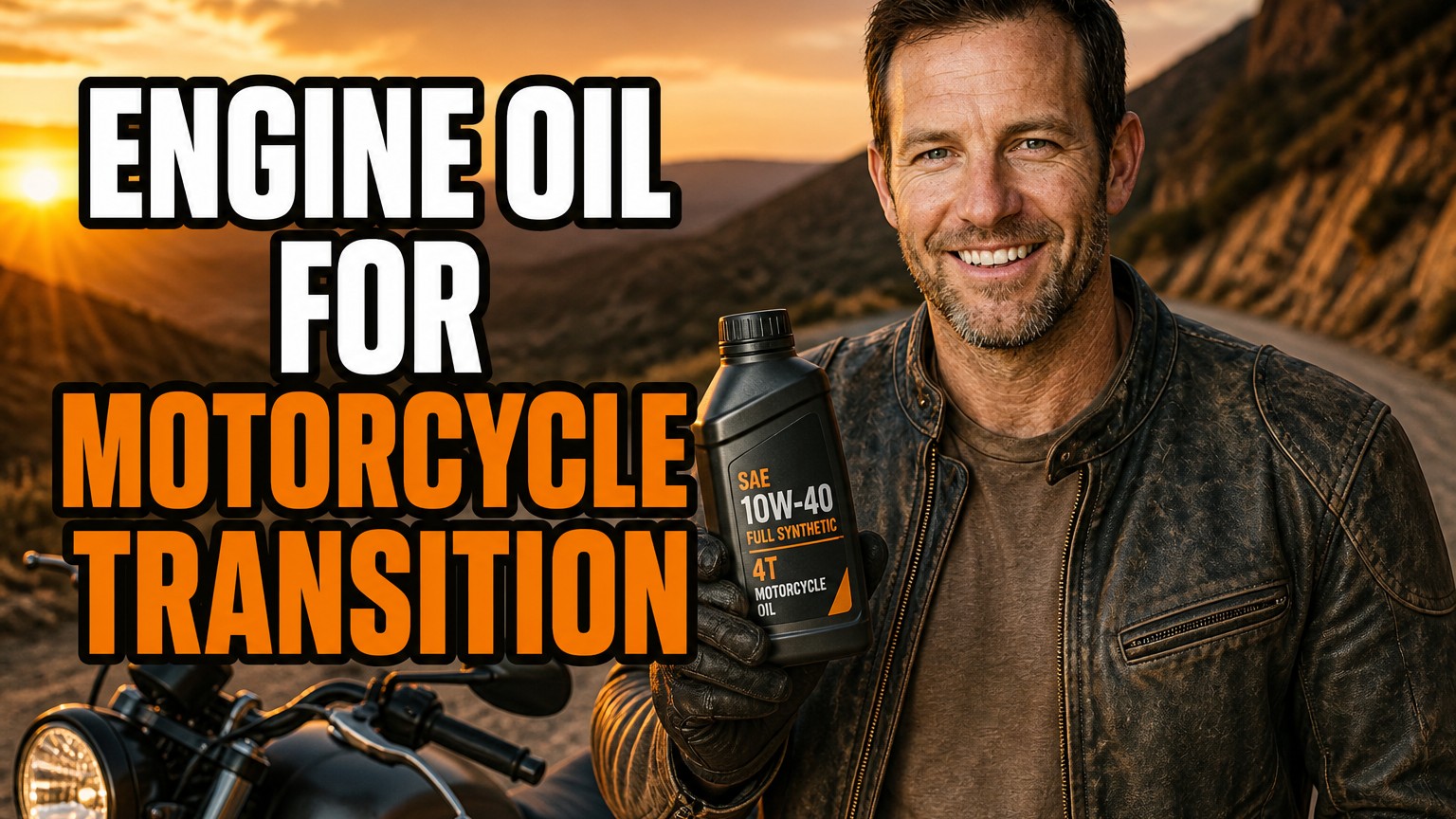
I’ve been changing my own oil for more than a decade, and the question I get asked most at the garage is simple: “Is it safe to switch to synthetic?” I’ve made that jump on a commuter, a naked middleweight and a big air-cooled twin. Each time I learned something new.
The short answer is yes, and the oil you pick for the switch matters. In this guide I share seven oils I’ve used or seriously researched for the transition. I’ll also cover what to watch for so you don’t end up with a slipping clutch or a worried mind.
- Switching from conventional to synthetic is safe. Always pick an oil with a JASO MA/MA2 rating for wet clutches.
- For a gentle transition, I like semi-synthetics such as Motul 5100 and Castrol Power1 4T. For maximum protection, go for Motul 7100 or Amsoil.
- Match the viscosity in your owner’s manual, and change the filter at the same time as the oil.
- Check for seepage over the first few hundred miles, especially on older bikes.
Why I Think the Switch to Synthetic Is Worth It
Motorcycle engines are tough on oil. The same sump lubricates the engine, the gearbox and often a wet clutch, and everything runs hot and revs high. Synthetic base oils resist shear and heat breakdown far better than conventional ones.
In my experience, the benefits show up quickly. Gear changes feel a touch smoother, the engine runs a little cooler in traffic, and the oil stays cleaner between changes. Those gains are small but real.
The Myths I Hear Constantly
The biggest myth is that synthetic oil causes leaks. It doesn’t. It can clean away old sludge that was plugging a tired seal, which makes an existing problem visible.
The second myth is that you must flush the engine first. I never have, and I’ve never had an issue. A regular drain and a new filter do the job.
What I Check Before Choosing
- JASO rating: MA or MA2 for wet clutches.
- Viscosity: whatever your manual specifies, usually 10W-40 or 20W-50.
- API rating: SL or higher is typical for modern bikes.
- Your bike’s age and mileage: this decides whether I go straight to full synthetic or use a blend first.
1. Motul 5100 4T 10W-40 — Best Gentle Step Into Synthetics
When someone asks me to recommend a first synthetic-leaning oil, Motul 5100 4T 10W-40 is usually where I start. It’s a blend of synthetic esters and conventional base stock, which Motul calls “Technosynthese.” That mix makes it a natural bridge between the two worlds.
I ran Motul 5100 in my older 600cc roadster through a whole season of commuting. The gearbox felt noticeably crisper on cold mornings. The oil is JASO MA2 certified, so I never had clutch concerns.
Why It Works for the Transition
The ester content gives you real film strength without a dramatic change in formulation. If your engine has some age on it, this is a low-drama option. It typically costs about $15 to $20 per liter.
I also like that Motul 5100 comes in several grades, including 15W-50 and 10W-50. That gives you room to tweak for hotter climates or heavier loads.
2. Motul 7100 4T 10W-40 — Best Full Synthetic Upgrade
If your engine is healthy and you want the full jump, Motul 7100 4T 10W-40 is my favorite. It’s a 100% synthetic ester oil, and it’s one of the most popular full synthetics among riders I know. It also carries JASO MA2 approval.
I switched my naked middleweight to Motul 7100 after about 8,000 miles on conventional oil. The engine felt smoother at high revs, and the oil still looked healthy at the end of the interval. It runs roughly $18 to $25 per liter.
Who It Suits Best
It shines on bikes that see spirited riding, track days or long hot rides. If you ride hard, I’d also read my notes on the best engine oil for motorcycle racing, because the demands change once you push the engine harder.
For a mostly commuting bike, 7100 may be more than you strictly need. But the extra protection is cheap insurance.
3. Castrol Power1 4T 10W-40 — Best Widely Available Pick
Sometimes I’m on a road trip and need oil now. That’s where Castrol Power1 4T 10W-40 earns its place. It’s easy to find in auto parts stores, and it’s a part-synthetic formula designed for motorcycles with wet clutches.
I’ve used Castrol Power1 4T in a friend’s old sport-tourer that he was nervous about converting. It went in without drama and he reported smoother shifts after a few hundred miles. It’s usually priced around $12 to $18 per liter.
What I Like and Don’t Like
I like the consistent availability and the solid shear stability. It’s a dependable all-rounder for daily riding.
What I don’t love is that it’s not a full synthetic. If you’re after the top tier of protection, step up to something like Motul 7100.
4. Valvoline 4-Stroke Motorcycle Synthetic Blend 10W-40 — Best Budget Transition Oil
On a tight budget, Valvoline 4-Stroke Motorcycle Synthetic Blend 10W-40 is a smart choice. It’s formulated specifically for motorcycles, with a JASO MA2 rating and added detergent and anti-wear additives.
I used this in a small-displacement commuter I keep for errands. It’s often under $12 per quart, and it did exactly what I wanted. The engine stayed quiet and the clutch never complained.
The Best Use Case
It’s ideal if you’re moving an older, lower-cost bike from conventional oil and don’t want to overspend. Think of it as a gentle, affordable first step.
Keep in mind that blends are made to be changed on a regular schedule. I stick to the manual’s interval, and I’d suggest you do the same.
5. Shell Advance 4T AX7 10W-40 — Best for Daily Commuters
Shell Advance 4T AX7 10W-40 is a semi-synthetic oil I’ve seen recommended by many mechanics for everyday bikes. It’s built with Shell’s “Active Cleansing” technology, and it’s JASO MA2 certified. That makes it clutch-friendly across most motorcycle types.
I tried it in a mid-size commuter that sees stop-and-go traffic daily. The oil handled heat soak well, and the engine ran quietly. It’s a solid choice if you want reliable and unfussy.
Why It’s Good for the Switch
Because it’s a semi-synthetic, it mixes happily with whatever conventional oil is left in the engine. That removes any worry about compatibility.
Shell is also a major brand, so I never worry about counterfeit or poorly stored bottles. If you want more brand comparisons, my roundup of the best motorcycle engine oil brand options covers that in detail.
6. Mobil 1 V-Twin 20W-50 — Best for Air-Cooled Cruisers
Big air-cooled twins run hot, and Mobil 1 V-Twin 20W-50 is built for exactly that. It’s a full synthetic that’s designed for the heat and stress of Harley-style engines and similar cruisers. It also meets JASO MA2 requirements.
I put it in a friend’s cruiser after years of conventional 20W-50. On summer rides, he told me the engine felt less “cooked” at long red lights. It usually sells for about $13 to $18 per quart.
Things to Keep in Mind
Always check your manual. Some cruisers share oil between engine, primary and transmission, while others use separate fluids.
If your bike is very old or has known seepage, I’d watch it closely for the first few hundred miles. That’s true of any switch, not just this one.
7. Amsoil 10W-40 Synthetic Motorcycle Oil — Best for Long-Term Protection
Amsoil 10W-40 Synthetic Motorcycle Oil is a premium full synthetic that I recommend to riders who keep their bikes for years. It carries JASO MA2 approval and is formulated to resist shear and thermal breakdown.
I used it in a long-term tourer that saw lots of highway miles. The oil stayed in grade, and used oil analysis looked healthy. It’s pricier, typically $14 to $18 per quart, but I think it’s worth it for high-mileage touring.
Who Should Choose It
Pick Amsoil if you want the best protection and don’t mind paying for it. It’s great for riders who put on serious miles, tow trailers or ride in extreme temperatures.
It’s also a good option if you’re comparing oils broadly. For a bigger picture, take a look at my guide to the best engine oil for motorcycle use across different bike types.
How I Make the Transition Step by Step
Switching oils is simple, but I like to follow a routine. It keeps the process predictable and lets me spot any issues early.
My Process
- Warm the engine for a few minutes so the old oil drains fully.
- Drain the old oil and replace the crush washer on the drain bolt.
- Swap the filter so you don’t contaminate the new oil.
- Refill to the level in your manual and check the sight glass or dipstick.
- Check for leaks after the first ride, and again after a few hundred miles.
A Quick Tip on Intervals
For the first change after switching, I sometimes shorten the interval a bit. It lets me see how the oil looks and gives me an early read on any engine deposits.
Mistakes I See Riders Make
- Using automotive oil with friction modifiers in a wet-clutch bike.
- Choosing the wrong viscosity because it “sounded better.”
- Skipping the filter change.
- Assuming 2-stroke and 4-stroke oils are interchangeable.
That last one matters. If you ride a two-stroke, the rules are different, and my guide to the best engine oil for 2 stroke motorcycle engines walks through them.
How to Decide Which Oil Is Right for You
Here’s how I narrow it down. If your bike is older or has a lot of miles, start with a semi-synthetic like Motul 5100, Castrol Power1 4T or Shell Advance AX7. If it’s healthy and you ride hard, jump straight to Motul 7100 or Amsoil.
For cruisers, Mobil 1 V-Twin is my go-to. For tight budgets, Valvoline’s synthetic blend does the job well.
If you’re still unsure, my article on which engine oil is best for motorcycle riders in different conditions can help you narrow it down further.
Final Thoughts From My Garage
Switching to synthetic is one of the easiest upgrades I’ve made, and it’s also one of the most rewarding. Pick an oil with the right JASO rating, match the viscosity and keep an eye on your bike for the first few hundred miles.
My personal favorite is Motul 7100 for healthy bikes and Motul 5100 for gentler transitions. Whichever you choose, you’re giving your engine better protection. Happy riding!
Frequently Asked Questions
Can I switch my motorcycle from conventional to synthetic oil at any time?
Yes. Modern synthetic and semi-synthetic oils are fully compatible with conventional oil, so you can switch at any oil change. If your bike is old or high-mileage, a semi-synthetic step first is a gentle way to see how the engine responds.
Will synthetic oil make my motorcycle clutch slip?
Not if you choose an oil with a JASO MA or MA2 rating. Clutch slip usually comes from automotive ‘energy conserving’ oils with friction modifiers, not from synthetics themselves.
Does switching to synthetic oil cause engine leaks?
Synthetic oil does not create leaks. It can reveal a seal that was already failing, because deposits that had been plugging a weak spot may get cleaned away. Check for seepage over the first few hundred miles.
Do I need to flush the engine when changing to synthetic?
In most cases, no. A normal drain, a new oil filter and fresh oil are enough. A chemical flush is rarely needed and can be harsh on older engines.

Related Articles
7 Best Batteries for Motorcycles I’ve Tested and Trust in 2026
I've tested dozens of motorcycle batteries to find the best performers. From AGM to lithium, here are my top picks…
Jake Miller
15 min read

The Perfect Battery for Your Harley Davidson Softail: A Rider’s Complete Guide
Discover the perfect battery for your Harley Davidson Softail. I've tested multiple options and share real-world performance data, maintenance tips,…
Jake Miller
14 min read

The Best Battery for Your Harley Davidson: My Complete Guide After Years of Testing
Discover which battery truly performs best for Harley Davidson motorcycles. Real rider experience with AGM, lithium, and OEM options to…
Jake Miller
12 min read