
8 Best Oils for Vintage and High-Mileage Motorcycle Engines, Picked by a Rider
 Jake Miller
10 min read
Jake Miller
10 min read
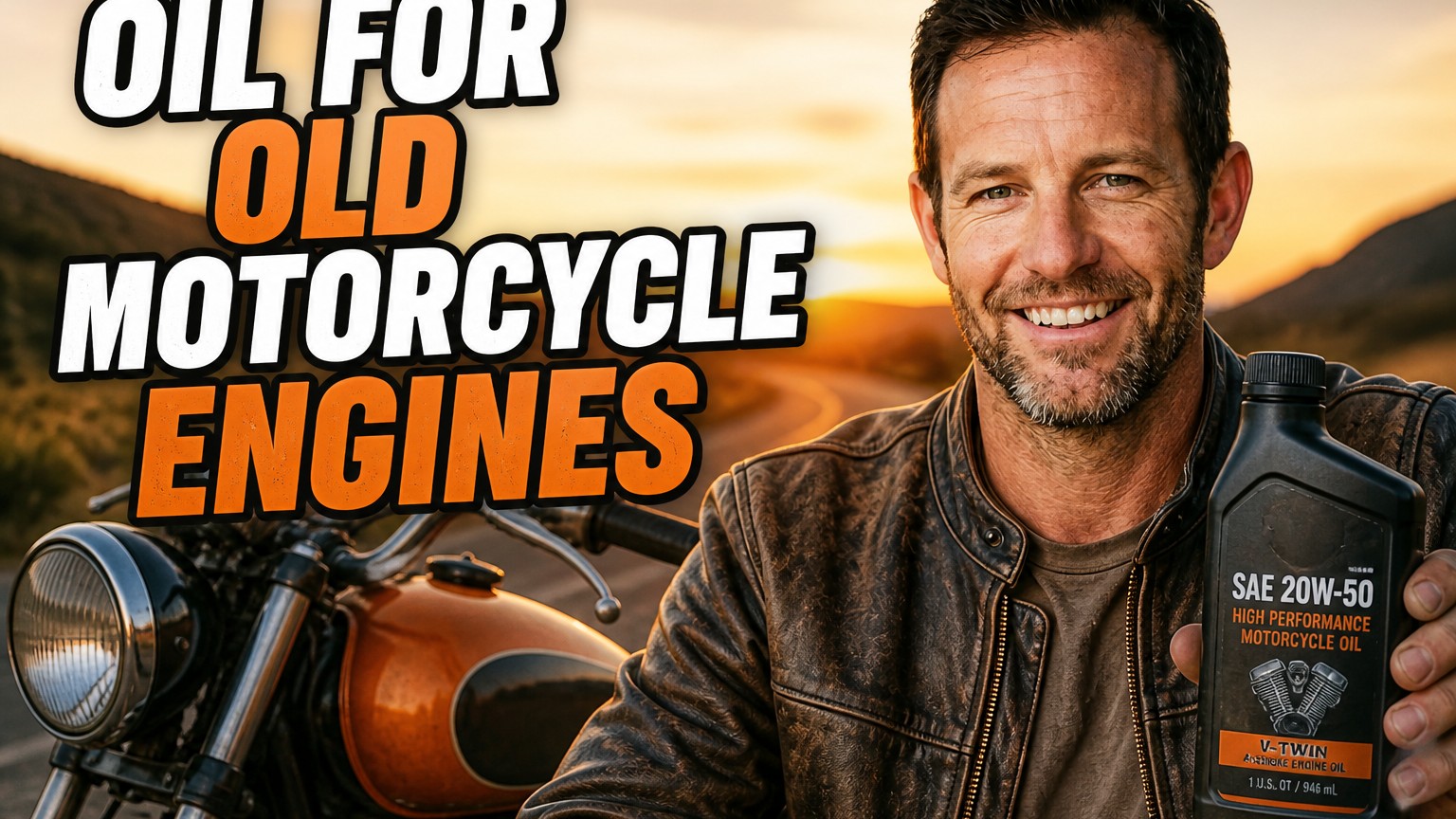
I’ve been wrenching on old bikes for years, and nothing starts an argument in a garage faster than the question of oil. Everyone has a favorite, a horror story, and a cousin who “ran straight 30-weight for 40 years.”
Here’s what I’ve learned. Old engines have different needs from modern ones: looser tolerances, flat-tappet cams, shared engine and gearbox oil, and often a wet clutch that hates the wrong additives. The wrong bottle can mean slipping plates, worn cam lobes, or a puddle under the bike.
Below are the eight oils I trust, or would happily put in my own bikes, for older machines. I’ve covered mineral, semi-synthetic, full synthetic, and a two-stroke option, so there’s something for every vintage ride.
- Look for zinc (ZDDP) content and a JASO MA/MA2 rating if your engine shares oil with a wet clutch.
- Valvoline VR1 Racing 20W-50 and Motul Classic Performance 20W-50 are my top picks for flat-tappet engines.
- Leaky or worn engines usually prefer a mineral or semi-synthetic oil. Healthy ones can enjoy modern synthetics.
- For vintage two-strokes, Motul 710 2T is my go-to.
1. Valvoline VR1 Racing 20W-50 — Best for Cam Protection
If I had to pick one oil for a pushrod twin or an old single with flat tappets, this is it. Valvoline VR1 Racing 20W-50 is a conventional, high-zinc formula with roughly 1,200 to 1,400 ppm of zinc and phosphorus. That’s the stuff that protects cam lobes and followers under heavy spring pressure.
Why I like it
I’ve run VR1 in air-cooled V-twins and classic parallel twins. Oil pressure stays steady when the engine is hot, and the bike feels smooth. A quart usually costs about $9 to $12, so it’s easy on the wallet too.
It’s also easy to find in the US at most auto parts stores, which matters when you’re doing a Sunday-afternoon oil change and realize you’re one quart short.
What to watch out for
VR1 is sold as a racing oil, not a JASO-certified motorcycle oil. Many riders use it in wet-clutch bikes without trouble, but I’d always check how your clutch behaves after the first ride. If it slips, switch to a JASO MA oil.
2. Castrol Classic XL 20W-50 — Best for British and Pre-1970s Bikes
Castrol has a long history with British bikes, so it feels right that Castrol Classic XL 20W-50 is on this list. It’s a mineral-based oil designed for engines from the era of points ignition and cast-iron barrels. It carries the zinc levels those engines were built around.
Why I like it
It’s gentle and traditional, and it suits the lazy, thumpy character of an old twin. If you’re running a Norton, BSA, or Royal Enfield, it’s a safe and historically appropriate choice.
If you’re after more detail on British machines, I’ve written up the best oil for old triumph motorcycle models separately, and Castrol Classic XL comes up there for good reason.
What to watch out for
Availability can be patchy in some regions, and it’s mainly a UK and European staple. Check the label for the exact spec in your market, since formulations vary slightly. It’s also not a long-interval oil, so change it often.
3. Motul Classic Performance 20W-50 — Best Purpose-Built Classic Oil
When I want something designed specifically for vintage engines, I reach for Motul Classic Performance 20W-50. It’s a mineral oil made for pre-1980s four-strokes, with a formulation that includes anti-wear additives suited to older metallurgy.
Why I like it
It’s friendly toward wet clutches, and it holds its viscosity well in warm weather. I like that Motul built it for classic machines instead of just rebadging a modern formula.
Expect to pay around $14 to $20 per liter. That’s a little more than supermarket oils, but I think the peace of mind is worth it on a bike that’s irreplaceable.
What to watch out for
It’s a mineral oil, so it won’t last as long as a synthetic. I stick to short change intervals, and I never leave it sitting in the engine over a long winter.
4. Bel-Ray V-Twin Mineral 20W-50 — Best for Air-Cooled V-Twins
Old Harleys, Indians, and big air-cooled Japanese cruisers run hot, and they need an oil that doesn’t thin out. Bel-Ray V-Twin Mineral 20W-50 is a straightforward conventional oil built for exactly that heat. It’s also formulated for motorcycles, so it’s wet-clutch safe.
Why I like it
It’s dependable, reasonably priced at about $10 to $14 a quart, and it’s easy to find. It also gives me the thick film I want in a bike that’s been through a few summers of traffic.
For a deeper look at heat management, my guide to the best oil for air cooled motorcycle engines covers what separates a good oil from a great one.
What to watch out for
Bel-Ray’s mineral oil is a traditional formula. If your old bike has tight clearances and you ride hard, you may want a semi-synthetic instead.
5. Shell Advance AX7 4T 20W-50 — Best Budget Semi-Synthetic
I keep a bottle of Shell Advance AX7 4T 20W-50 on my shelf for my commuter-grade classics. It’s a semi-synthetic that meets JASO MA2 and API SL, and it’s affordable at roughly $10 to $14 per liter.
Why I like it
It gives you a bit of the cleanliness and heat resistance of a synthetic without the price tag. For a bike with a wet clutch and a fairly healthy engine, it’s a sensible daily-rider oil.
If you’re looking for the best conventional oil for old motorcycle wet clutch setups, I’d compare this against the mineral oils above. For many riders, this is the sweet spot.
What to watch out for
It’s not a high-zinc “classic” formula. For engines with aggressive flat-tappet cams, I’d still prefer VR1 or Motul Classic Performance.
6. Mobil 1 V-Twin 20W-50 — Best Full Synthetic for Healthy Old Engines
Not every old engine needs a mineral oil. If yours has been rebuilt or is mechanically sound, Mobil 1 V-Twin 20W-50 is a superb choice. It’s a full synthetic with JASO MA2 certification and excellent shear stability.
Why I like it
I’ve used it in a restored air-cooled twin that sees long summer rides. The engine runs cooler, shifts are cleaner, and the oil looks cleaner at the end of an interval.
It usually costs about $12 to $16 a quart, which isn’t bad for the protection you get.
What to watch out for
On an engine with worn seals or old gaskets, a thin synthetic can find leaks that mineral oil hid. I’d never switch a tired, oil-weeping engine to synthetic without checking the seals first.
7. Royal Purple Max-Cycle 20W-50 — Best Premium Synthetic for Hard Riding
Royal Purple Max-Cycle 20W-50 is the oil I’d pick for a big, hot-running air-cooled bike that I plan to ride hard. It’s a full synthetic with strong film strength and JASO MA2 compatibility, so it works with a shared sump and wet clutch.
Why I like it
It stays stable in stop-and-go heat, and I’ve noticed smoother gear changes with it. Expect to pay around $14 to $18 per quart.
It also pairs well with riders who keep a bike for long highway miles and want longer drain intervals than a mineral oil would allow.
What to watch out for
Like any synthetic, it’s best in an engine with healthy seals. It’s also a premium price for a premium product, so it might be overkill for a bike that only gets ridden a few times a year.
8. Motul 710 2T — Best for Vintage Two-Strokes
Not every old bike is a four-stroke. For classic Yamahas, Suzukis, and Kawasakis, Motul 710 2T is a full synthetic ester-based two-stroke oil that meets JASO FD. It’s one of my favorites for air-cooled screamers.
Why I like it
It burns cleanly, which means fewer plug fouling issues and less carbon in the exhaust port. It works for both premix and oil injection systems, and it has a castor-bean-like smell that I’ll admit I love.
If you’re choosing between oils, my notes on the best 2 cycle oil for air cooled motorcycle engines explain the differences in more detail. And for older machines specifically, I’ve put together a guide to the best 2 cycle oil for air cooled vintage motorcycle engines.
What to watch out for
It’s a premium oil, usually about $18 to $25 per liter. Always follow your bike’s recommended mix ratio. Don’t assume modern ratios suit old engines.
How I Choose Oil for an Old Bike
After years of trial and error, I’ve settled on a few simple rules. They’ve saved me money and kept my engines healthy.
Start with the manual
Your owner’s manual or a model-specific forum will tell you the original viscosity and oil spec. I treat that as my starting point, not my final answer.
Check zinc content
Flat-tappet cams and rocker arms were designed around oils with plenty of ZDDP. Modern automotive oils have far less because of catalytic converter concerns. That’s why I stick to motorcycle or classic-specific oils for older bikes.
Mind the clutch
Many classics share oil between the engine, gearbox, and clutch. In that case, I always look for JASO MA or MA2 on the label. Avoid oils marked “energy conserving,” since friction modifiers can make a wet clutch slip.
A quick note on viscosity
I like 20W-50 for warm-weather riding in air-cooled engines. If I’m riding in colder weather, I’ll drop to a 10W-40 or 15W-50. Thicker isn’t always better, and cold starts are when most wear happens.
Mineral, semi, or synthetic?
My rule of thumb: mineral for original, leaky, or very old engines; semi-synthetic for solid daily riders; full synthetic for rebuilt or healthy engines that run hot. There’s no universal answer, so match the oil to the engine’s condition.
Oil Change Habits That Keep Old Engines Alive
Even the best oil won’t save a neglected engine. Here’s what I do to keep mine healthy.
Change it more often than you think
I change oil every 1,500 to 2,500 miles or once a year, whichever comes first. Old engines blow more combustion by-products past the rings, and the oil breaks down faster.
Warm the engine first
I always warm the engine for a few minutes before draining. Warm oil flows out faster and carries more contaminants with it.
Replace the filter every time
If your bike has a filter, replace it at every change. If it uses a strainer or a centrifugal trap, clean it thoroughly. Sludge hides there.
Don’t mix and match
I avoid mixing different brands or types of oil. If I’m switching types, I do a full drain and refill, and I often do a short interval for the first change after the switch.
Final Thoughts
The best oil for an old motorcycle depends on the bike, the climate, and how you ride. For most flat-tappet classics, my first choices are Valvoline VR1 Racing 20W-50 and Motul Classic Performance 20W-50. For healthy, hot-running bikes, Mobil 1 V-Twin and Royal Purple Max-Cycle are hard to beat.
Whatever you choose, change it regularly and keep an eye on the clutch and leaks. Look after your old engine, and it’ll keep rewarding you every time you hit the starter.
Frequently Asked Questions
Can I use modern synthetic oil in an old motorcycle engine?
Often yes, but it depends on the engine. Sound, well-sealed engines usually handle synthetic fine. Tired engines with weeping gaskets or old flat-tappet cams may do better on a zinc-rich mineral or semi-synthetic oil. Always check the clutch type and your manual first.
What viscosity is best for a vintage motorcycle?
Many air-cooled classics run happily on 20W-50, especially in warm weather. In cooler climates, 10W-40 or 15W-50 can help with cold starts. Follow your owner’s manual first, then adjust for climate and engine wear.
Does old motorcycle oil need ZDDP?
Engines with flat-tappet cams and high spring pressures benefit from zinc and phosphorus (ZDDP) additives, which protect against cam and lifter wear. Modern car oils have far less of it, so a motorcycle-specific or classic oil is the safer choice.
How often should I change oil in a classic motorcycle?
I change mine every 1,500 to 2,500 miles, or at least once a year, even if the bike barely moves. Old engines blow more combustion by-products into the oil, and moisture builds up during storage.

Related Articles
7 Best Batteries for Motorcycles I’ve Tested and Trust in 2026
I've tested dozens of motorcycle batteries to find the best performers. From AGM to lithium, here are my top picks…
Jake Miller
15 min read

The Perfect Battery for Your Harley Davidson Softail: A Rider’s Complete Guide
Discover the perfect battery for your Harley Davidson Softail. I've tested multiple options and share real-world performance data, maintenance tips,…
Jake Miller
14 min read

The Best Battery for Your Harley Davidson: My Complete Guide After Years of Testing
Discover which battery truly performs best for Harley Davidson motorcycles. Real rider experience with AGM, lithium, and OEM options to…
Jake Miller
12 min read