
How to Dispose of Your Old Motorcycle Battery Safely (And Where to Take It)
 Jake Miller
17 min read
Jake Miller
17 min read
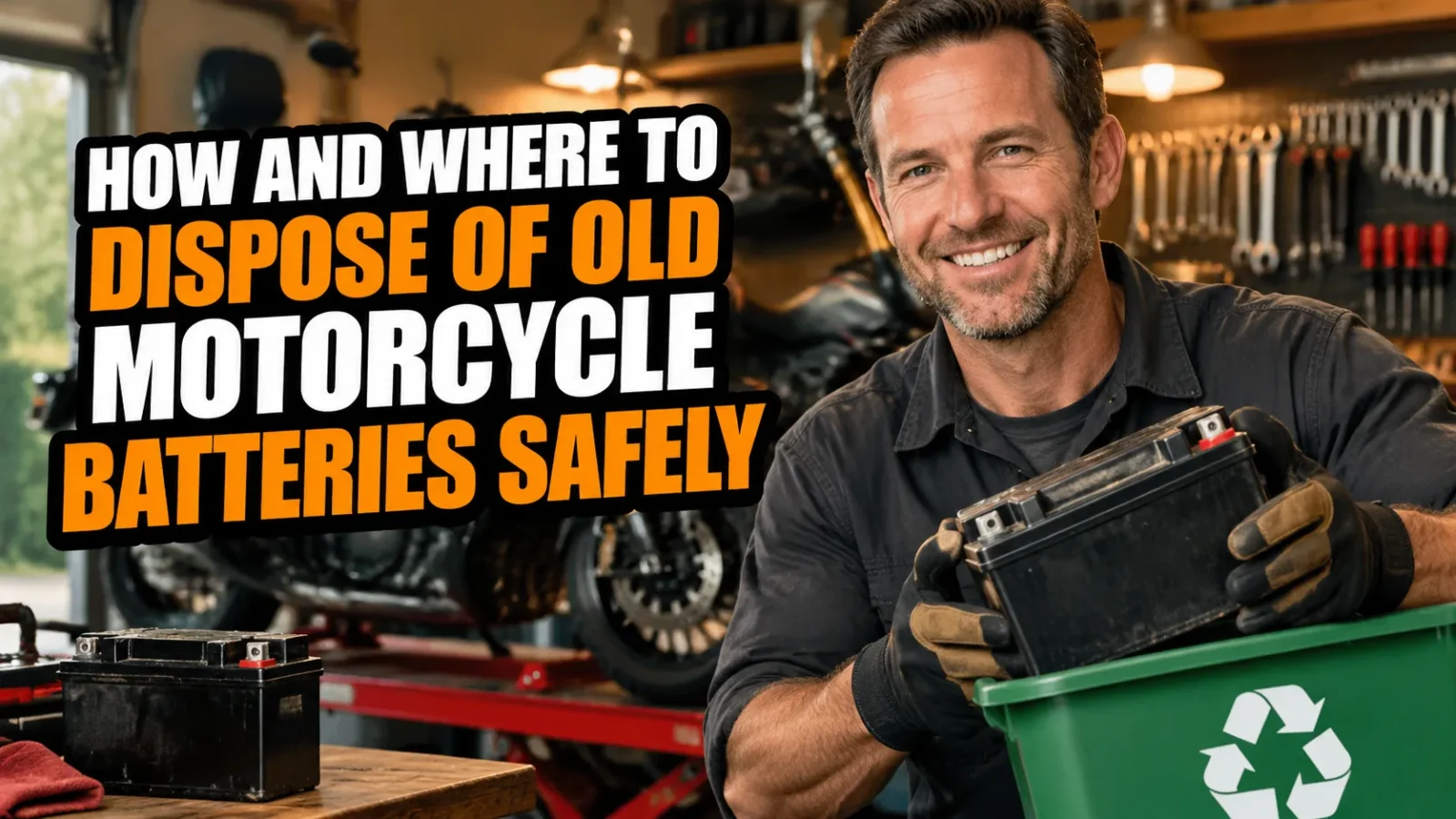
I’ve been riding for over fifteen years, and one thing I’ve learned is that motorcycle maintenance doesn’t end when you replace a worn-out part. When I swapped out my first dead battery years ago, I almost made the mistake of tossing it in the trash. Thankfully, a mechanic friend stopped me just in time and explained why that’s a terrible idea.
Motorcycle batteries contain lead and sulfuric acid—two seriously toxic materials that can contaminate groundwater and soil for decades. The good news? Recycling them is easier than you might think, and in many cases, it’s completely free. I’ve disposed of at least a dozen batteries over the years, and I’ll walk you through exactly how to do it safely.
- Never trash motorcycle batteries—they contain lead and acid that harm the environment
- Free recycling is available at auto parts stores, dealerships, and scrap yards
- Transport batteries upright in a sealed container to prevent leaks
- Many retailers offer core charges or store credit when you recycle
- About 99% of battery materials can be recycled and reused
Why You Can’t Just Throw Motorcycle Batteries Away
Let me start with the scary part: motorcycle batteries are classified as hazardous waste. Each one contains about 18-21 pounds of lead plates and around 1-2 gallons of sulfuric acid electrolyte. When these materials leak into landfills, they seep into the ground and eventually reach our water supply.
I’ve seen firsthand what happens when batteries aren’t disposed of properly. A riding buddy once left an old battery in his garage for months, and it slowly leaked acid onto the concrete floor, leaving permanent stains and corroding nearby metal tools.
Lead is particularly dangerous. Even small amounts can cause neurological damage, especially in children. The Environmental Protection Agency has strict regulations about battery disposal because of these risks. In fact, it’s actually illegal in most states to throw lead-acid batteries in the trash.
But here’s the silver lining: batteries are one of the most recyclable products on the planet. Up to 99% of a lead-acid battery can be recovered and reused, making proper disposal both an environmental and economic win.
Where to Recycle Your Old Motorcycle Battery
I’ve recycled batteries at multiple locations over the years, and I’ve found that you usually have several convenient options nearby. The key is knowing where to look.
Auto Parts Stores (My Go-To Option)
This is where I take most of my old batteries. Major chains like AutoZone, O’Reilly Auto Parts, Advance Auto Parts, and NAPA all accept used motorcycle batteries for free. I’ve never had one turn me away, and the process takes about two minutes.
What I love about this option is that many stores offer a core charge refund or store credit. When you buy a new battery, you typically pay a $5-15 core charge that you get back when you return the old one. Even if you didn’t buy your new battery there, some locations still give you credit toward future purchases.
I usually call ahead to confirm they accept motorcycle batteries specifically, since some smaller locations might only handle car batteries. But in my experience, if they sell motorcycle batteries, they’ll recycle them too.
Motorcycle Dealerships and Repair Shops
Your local motorcycle dealer is another solid choice. I’ve dropped off batteries at both independent shops and brand dealerships like Harley-Davidson, Honda, and Yamaha. They all have recycling programs since they generate plenty of dead batteries from service work.
The advantage here is that motorcycle-specific shops understand the unique considerations of smaller batteries. They’re also more likely to be familiar with the quirks of lithium-ion batteries if you’re running one of those in a newer sport bike.
Some shops might even give you a discount on your next service if you bring in a battery for recycling. It never hurts to ask!
Scrap Metal and Recycling Centers
If you’re near a scrap yard or metal recycling center, they’ll often pay you for old batteries. I’ve gotten anywhere from $5 to $15 per battery, depending on current lead prices. It’s not a fortune, but it’s better than paying a disposal fee.
Call ahead to check their hours and any requirements. Some facilities want you to drain the acid first (I don’t recommend doing this yourself unless you have proper safety equipment), while others accept them as-is.
Household Hazardous Waste Collection Events
Many cities and counties organize special collection days for hazardous materials. I’ve attended a few of these events, and they’re great if you have multiple items to dispose of—old paint, electronics, batteries, etc.
Check your local government website or call your waste management department to find upcoming events. The downside is that these happen infrequently, maybe once or twice a year, so you might be waiting a while.
Battery Retailers and Big-Box Stores
Stores like Walmart, Batteries Plus, and Interstate Batteries also accept used batteries. I’ve had mixed experiences here—some locations are super helpful, while others seem less familiar with the process. But they’re required by law to take them in most states, so it’s a reliable backup option.
How to Safely Prepare Your Battery for Disposal
Before you toss that battery in your truck and head to a recycling center, take a few minutes to prep it properly. I learned this the hard way after nearly spilling acid in my vehicle during my first battery disposal trip.
Inspect for Leaks and Damage
Put on gloves and safety glasses first. Carefully examine the battery casing for cracks, bulges, or signs of acid leakage. If you see white crusty buildup around the terminals, that’s dried acid—don’t touch it with bare hands.
If the battery is actively leaking, place it in a heavy-duty plastic container with a lid. I keep an old paint bucket in my garage specifically for this purpose. Add some baking soda to the container to neutralize any spilled acid.
Keep It Upright During Transport
This is critical. Always transport batteries in an upright position to prevent acid from spilling out of the vents. I once saw someone lay a battery on its side in their trunk, and they ended up with acid burns on their carpet and a nasty chemical smell that lasted for weeks.
If possible, leave the battery in its original packaging or place it in a sturdy cardboard box. Secure it so it won’t tip over when you brake or turn corners.
Protect the Terminals
Cover the battery terminals with electrical tape or place the battery in a sealed plastic bag. This prevents accidental short circuits if the terminals contact metal during transport. I’ve seen sparks fly from batteries touching jumper cables or tools in a trunk—not fun.
Never place metal objects on top of the battery or let the terminals touch each other. Even a “dead” battery can hold enough charge to create a dangerous spark.
Clean Up Any Spills Immediately
If you do spill battery acid, don’t panic. Neutralize it with baking soda (keep a box in your garage), then wipe it up with paper towels. Dispose of the contaminated materials in a sealed plastic bag. Wash your hands thoroughly afterward, even if you wore gloves.
Battery acid can damage paint, metal, and skin, so speed matters. I always keep a small spill kit near my workbench just in case.
Understanding Battery Core Charges and Refunds
When you buy a new motorcycle battery, you’ll notice an extra charge of $5-20 on your receipt—that’s the core charge. Think of it as a deposit that encourages proper recycling. Return your old battery, and you get that money back.
I always factor this into my budget when shopping for batteries. If a battery costs $80 plus a $10 core charge, I know I’m really only spending $80 if I return the old one. It’s basically an interest-free loan that motivates you to recycle.
Some retailers let you return the old battery at a later date if you don’t have it with you when buying the new one. Just keep your receipt and bring it back within the specified time frame (usually 30-90 days).
Pro tip: If you’re buying online, check whether the core charge is included in the shipping price. I’ve saved money by purchasing locally specifically to avoid paying core charges twice.
Special Considerations for Lithium Motorcycle Batteries
More riders are switching to lithium-ion batteries these days for their lighter weight and better performance. I made the switch on my sport bike a few years ago, and while I love the upgrade, disposal is slightly different.
Lithium batteries present different hazards than traditional lead-acid batteries. They can catch fire if damaged or improperly handled, so extra caution is necessary. Never throw them in regular recycling bins or household trash.
Call ahead before taking a lithium battery to an auto parts store. Not all locations have the proper recycling programs for lithium-ion technology. Battery specialty stores like Batteries Plus are usually better equipped to handle them.
Some lithium battery manufacturers offer mail-in recycling programs. Check the manufacturer’s website or contact their customer service. I’ve used this option twice, and it’s surprisingly hassle-free—they send you a prepaid shipping label and a special fireproof box.
What Happens to Your Battery After You Recycle It
I’m always curious about where things go after I drop them off, so I did some research into the battery recycling process. It’s actually pretty fascinating and remarkably efficient.
First, the batteries are sorted and broken apart in a specialized facility called a secondary lead smelter. The plastic casing is separated from the lead plates and acid. Each material follows a different recycling path.
The lead components are melted down in a furnace at extremely high temperatures. Impurities are removed, and the purified lead is formed into ingots. These ingots are sold to battery manufacturers, who use them to make new batteries. About 80% of the lead in your “new” battery probably came from recycled sources.
The plastic casing is cleaned, shredded into small chips, and melted down to create new plastic products—including new battery cases. The polypropylene plastic used in batteries is highly recyclable and valuable.
The sulfuric acid is either neutralized and converted into sodium sulfate (used in detergents, textiles, and glass manufacturing) or cleaned and reused in new batteries. Nothing goes to waste.
This closed-loop system is why battery recycling is so successful. The materials are valuable enough that recyclers actually want your old battery, making proper disposal economically viable.
Common Mistakes to Avoid When Disposing of Batteries
Over the years, I’ve made my share of mistakes and watched others make even worse ones. Here are the most common errors I see riders make when dealing with old batteries.
Letting Batteries Sit Around Too Long
I’m guilty of this one. It’s easy to swap a battery and then let the old one sit in your garage for months (or years). The problem is that batteries deteriorate over time, especially in extreme temperatures. Cases crack, acid leaks, and terminals corrode.
I now make it a point to recycle batteries within a week of removal. It’s just one less thing cluttering up my workspace, and I don’t have to worry about potential acid leaks damaging my stuff.
Mixing Battery Types
Don’t store lithium batteries with lead-acid batteries. They require different handling and recycling processes. Keep them separated to avoid confusion when you’re ready to dispose of them.
If you’re like me and tend to accumulate multiple dead batteries before making a recycling trip, label them clearly so you remember which is which.
Trying to Refurbish Dangerous Batteries
I’ve seen DIY videos about “reconditioning” dead batteries with Epsom salts and other tricks. While some of these methods can temporarily revive a weak battery, they’re often not worth the risk—especially if the battery casing is compromised.
A new battery is relatively inexpensive compared to the potential cost of acid burns, environmental contamination, or electrical fires. If your battery is truly dead, recycle it and buy a replacement. Speaking of maintenance, just like you’d maintain your engine with the best oil for old triumph motorcycle, proper battery care matters too.
Forgetting to Disconnect Properly
Always disconnect the negative terminal first when removing a battery, then the positive. When installing a new one, reverse the order: positive first, then negative. This prevents short circuits and sparks.
I once saw someone skip this step and accidentally touch a wrench across both terminals. The resulting spark singed his glove and left a permanent mark on the wrench. Lesson learned.
Environmental and Legal Reasons to Recycle
Beyond the practical reasons for proper battery disposal, there are serious legal and environmental consequences to consider. I believe we all have a responsibility as riders to minimize our impact on the environment, and battery recycling is a simple way to do that.
In most states, it’s illegal to dispose of lead-acid batteries in landfills or regular trash. The Battery Act of 1996 requires retailers who sell batteries to accept used ones for recycling. Violating these laws can result in fines ranging from hundreds to thousands of dollars.
From an environmental perspective, proper recycling prevents lead and acid from contaminating soil and water. Lead doesn’t break down naturally—it persists in the environment indefinitely, accumulating in plants, animals, and eventually in humans through the food chain.
Every battery you recycle keeps about 18 pounds of lead and a gallon of sulfuric acid out of landfills. Multiply that by the millions of batteries recycled annually, and the impact is substantial.
Plus, recycling reduces the need for mining new lead ore, which is an energy-intensive and environmentally destructive process. By using recycled lead, we reduce mining operations, save energy, and lower overall carbon emissions.
Tips for Maintaining Your Battery to Extend Its Life
While we’re on the topic of batteries, I want to share some maintenance tips that have helped me get more years out of each battery. The longer your battery lasts, the less often you need to deal with disposal.
Keep your battery terminals clean and tight. Corrosion at the terminals increases electrical resistance, forcing the battery to work harder. I check my battery connections every few months and clean them with a wire brush and baking soda solution when needed.
If you store your motorcycle for extended periods, use a battery tender or trickle charger. These devices maintain optimal charge levels without overcharging. I’ve had batteries last 6-7 years with this simple practice, compared to 3-4 years without it.
Check your charging system regularly. A faulty voltage regulator or stator can overcharge or undercharge your battery, drastically reducing its lifespan. If your battery keeps dying prematurely, test your charging system before blaming the battery.
Avoid deep discharges when possible. Running your battery completely dead repeatedly shortens its life. If you’re working on your bike with the ignition on for extended periods, consider hooking up a charger or tender.
Just as you’d choose the best oil for 30 year old motorcycle engines to keep them running smoothly, selecting a quality battery and maintaining it properly pays dividends in the long run.
What to Do If You Have Multiple Old Batteries
If you’re like me and have accumulated several dead batteries over time (maybe from multiple bikes or years of procrastination), you might wonder about the best way to dispose of them all at once.
Most auto parts stores will accept multiple batteries in a single visit. I once brought in four batteries from various projects, and they took them all without question. Just make sure you can safely transport them—don’t overload your vehicle or stack them precariously.
Scrap yards are particularly good for bulk battery disposal. They’ll weigh all your batteries together and pay you based on the total lead content. I made about $40 on my last trip with four batteries, which wasn’t bad for 20 minutes of work.
If you have a large quantity (more than 10-15 batteries), consider contacting a battery recycling company directly. Some will pick up bulk quantities for free, especially if you’re a business or have commercial quantities.
For regular riders who generate multiple batteries per year, establish a relationship with a local recycler. I know a few guys who run motorcycle shops, and they have standing arrangements with recyclers who pick up their accumulated batteries quarterly.
Finding Recycling Centers Near You
If you’re unsure where to start looking for battery recycling in your area, here are some resources I’ve found helpful over the years.
Call2Recycle has an online locator tool where you can enter your zip code and find nearby drop-off locations. While they primarily focus on household batteries, many locations also accept motorcycle batteries.
Earth911 is another excellent resource with a comprehensive recycling database. I’ve used their website numerous times to find specialty recycling for various materials, including batteries, electronics, and even oil filters.
Your county or city waste management website usually lists hazardous waste disposal options. I check mine annually to see if they’ve added new permanent drop-off locations or scheduled collection events.
Don’t overlook your motorcycle community. Local riding groups, forums, and social media pages often share information about the best recycling spots in your area. Fellow riders have given me great tips about places that pay cash or offer the best service.
When in doubt, call your local waste management authority directly. They can point you to the nearest legal disposal option and answer any questions about regulations in your area.
The Bottom Line on Battery Disposal
After years of dealing with dead batteries from multiple motorcycles, I can tell you that proper disposal doesn’t have to be complicated or expensive. In fact, it’s usually free and takes less than 15 minutes from start to finish.
The key is planning ahead. Before you remove that old battery, identify where you’ll take it. Have your safety equipment ready—gloves, safety glasses, and something to contain the battery during transport. Then make the drop-off part of your regular routine, just like you would with maintaining your engine with quality oil.
I make it a point to recycle within a week of removal, treating it as part of the maintenance task rather than a separate chore. This approach has prevented clutter in my garage and ensured I never have to deal with corroded, leaking batteries.
Remember that battery recycling is one of the most successful recycling programs in existence. Nearly every component of your old battery will be reused in new products, making it a genuine example of a circular economy. By taking a few minutes to dispose of your battery properly, you’re participating in a system that genuinely works.
Whether you’re wrenching on a vintage Triumph (and using the best oil for old triumph motorcycle) or just doing routine maintenance, treating all your motorcycle’s components responsibly—from start to finish—is part of being a conscientious rider. And honestly, there’s something satisfying about knowing you did the right thing for the environment while also getting a few bucks back through core charges or scrap value.
Next time you swap out a battery, you’ll know exactly what to do with the old one. No more letting it collect dust in the corner of your garage or wondering if you’re breaking any laws. Just box it up, drop it off, and get back to riding—knowing you did your part to keep our roads, trails, and environment clean.
Frequently Asked Questions
Can I throw my old motorcycle battery in the trash?
No, motorcycle batteries contain lead and sulfuric acid that contaminate soil and groundwater. They must be recycled at designated facilities or retailers.
Where can I recycle my motorcycle battery for free?
Most auto parts stores (AutoZone, O’Reilly, Advance Auto), motorcycle dealers, and local recycling centers accept old batteries at no charge. Some even offer store credit.
How do I prepare a motorcycle battery for disposal?
Keep it upright, check for leaks, place it in a plastic bag or battery box, and transport it carefully. Never tip it on its side during transport.
What happens to recycled motorcycle batteries?
About 99% of battery components are recycled. The lead is melted and reused, plastic cases become new products, and sulfuric acid is neutralized or converted to sodium sulfate.

Related Articles

Scooters vs Motorcycles: My Honest, First-Hand Comparison After Riding Both for Years
After thousands of miles on both scooters and motorcycles, I break down cost, comfort, maintenance, and safety to help you…
Jake Miller
10 min read

7 Scooters That Look Like Motorcycles for Riders Who Want Style and Storage
Explore my top 7 scooters that look like motorcycles, from adventure crossovers like the Honda X-ADV to sporty maxis like…
Jake Miller
9 min read

How Long Do Honda Motorcycles Last? My 20-Year Owner’s Reality Check
Discover how long Honda motorcycles really last from an owner with 100k+ miles of experience. Learn maintenance secrets, high-mileage examples,…
Jake Miller
10 min read