
8 Best Oils for Old Triumph Motorcycles: Proven Picks for Classic Twins and Triples
 Jake Miller
10 min read
Jake Miller
10 min read
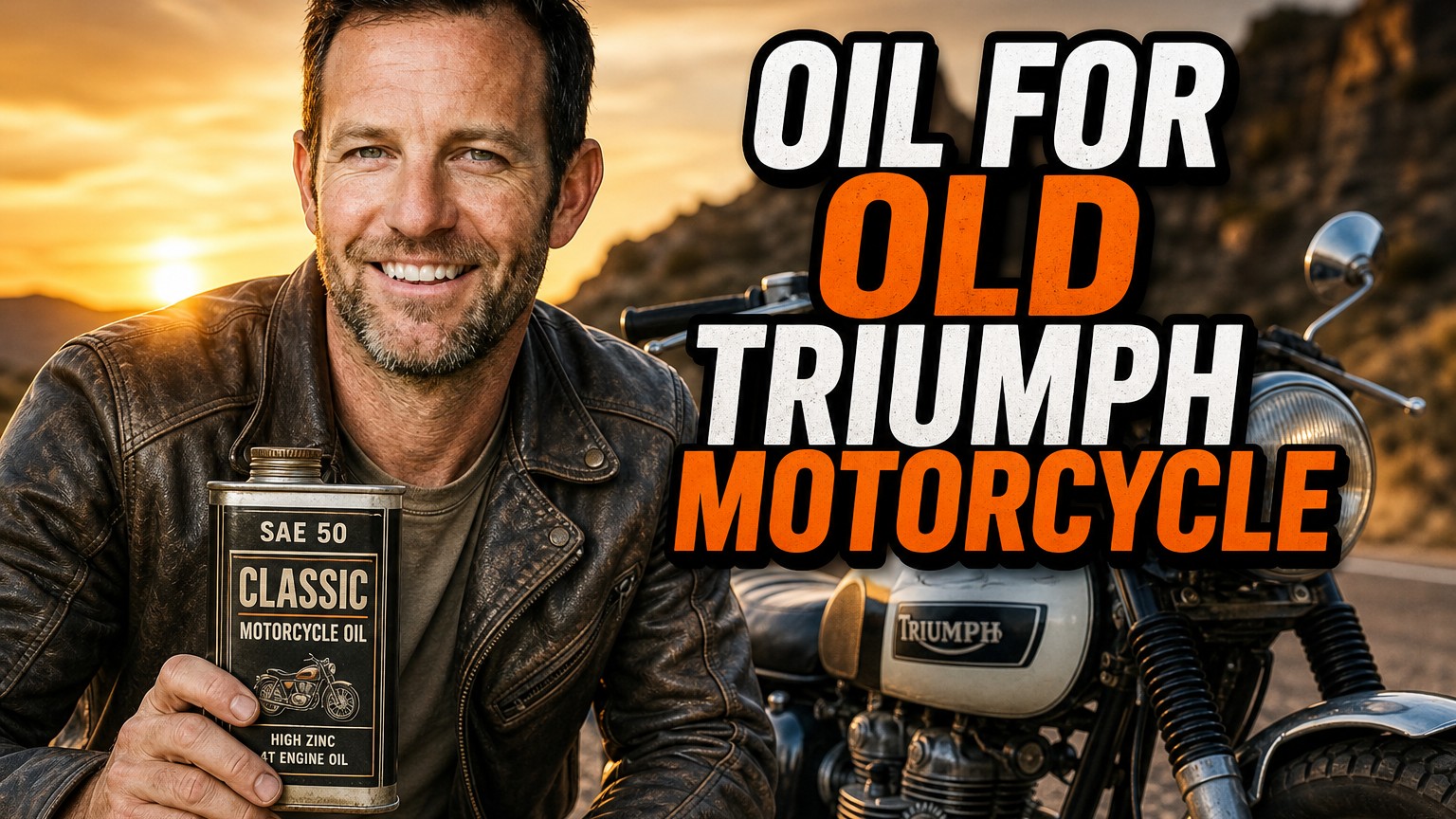
I’ve been wrenching on and riding old Triumphs for years, and if there’s one question I get asked at every bike night, it’s “What oil should I put in it?” The honest answer is that it depends on the bike’s age, condition and how you ride it. But there are some clear winners.
Old Triumph engines are wonderful, simple, characterful things. They’re also fussy about lubrication, with dry-sump oil tanks, separate primary and gearbox oils, and metallurgy from an era when oil chemistry was very different. In this guide, I walk you through the eight oils I trust and explain exactly where each one fits.
- For most 1950s-70s Triumph twins, my overall pick is Castrol Classic XL 20W-50.
- Look for oils with healthy ZDDP (zinc) levels and a viscosity of 20W-50 or SAE 50 for warm-weather riding.
- Hinckley-era Triumphs from the 1990s and 2000s do better with a modern 10W-40 such as Castrol Power1 4T.
- Always check the separate gearbox and primary chaincase oil requirements, because they are not the same as engine oil.
How I Choose Oil for a Vintage Triumph
Before I get to the list, I want to explain my criteria. It keeps the recommendations honest and helps you choose if your bike doesn’t quite match my examples. I judge every oil on four things.
Viscosity That Suits the Engine and Climate
Old Triumph engines were built with generous clearances. That’s why 20W-50 and SAE 50 monograde have been the go-to choices for decades. A thicker film helps maintain oil pressure when the engine is hot and worn.
If you live somewhere cold, a 10W-40 or 15W-50 helps with cold starts. Remember that on a dry-sump bike, the oil sits in the tank and drains down into the sump overnight, so startup flow matters.
Zinc (ZDDP) Content
Many classic Triumph engines use cams and followers that rely on anti-wear additives. Modern car oils have reduced zinc to protect catalytic converters, which isn’t ideal for a 1968 T120. I always favor oils that are specifically labeled for classic or air-cooled use.
Wet Clutch Compatibility
Most Triumphs use a wet clutch, so I steer clear of oils with friction modifiers like those found in some “energy conserving” car oils. A motorcycle-specific oil avoids slipping clutches and soggy gear changes.
Availability and Value
An oil is only useful if you can actually buy it. I like products that are easy to find in a pinch, because a classic Triumph is meant to be ridden, not babied in the garage.
If you want a broader overview of oil types beyond classics, my best engine oil for motorcycle guide is a good companion read.
1. Castrol Classic XL 20W-50 — Best Overall for Unit and Pre-Unit Twins
If I could only stock one oil in my workshop, it would be Castrol Classic XL 20W-50. It’s a mineral-based oil developed for older engines, and it has been a staple for British bike owners for a very long time. I’ve run it in a 650 Bonneville and a Tiger 100 without a single complaint.
What I like about Castrol Classic XL 20W-50 is that it’s designed for the sort of engine that wants a thick, protective film and plenty of anti-wear additives. It also holds up well in air-cooled engines that get hot in traffic.
Why It Works for Me
- Mineral base that’s gentle on older gaskets and seals.
- 20W-50 viscosity suitable for typical British summer and warm-climate riding.
- Also available in SAE 30, 40 and 50 monogrades if you prefer a traditional approach.
- Typically priced reasonably, and widely stocked at classic bike suppliers.
If you’re not sure where to start, I’d say start here. It’s the safe, proven answer for most pre-1980 Triumphs.
2. Millers Oils Classic Sport 20W-50 — Best for Spirited Classic Riding
Millers Oils is a British company with a deep classic-vehicle heritage, and Millers Classic Sport 20W-50 is formulated for engines that get ridden with some enthusiasm. When I take my Trident out for a fast Sunday blast, this is the sort of oil I like having in the tank.
The Classic Sport range is designed for older engines that need modern additive protection without losing the correct viscosity. I find the engine feels a touch smoother when warm, and oil pressure holds up nicely.
Things to Know
Check the label and data sheet for the current formulation and whether it’s marketed as wet-clutch friendly for your use. Millers is typically a premium-priced option, but I think it’s worth it for a bike I’ve spent real money restoring.
3. Valvoline VR1 Racing 20W-50 — Best High-Zinc Option
When people ask me about zinc, I point them straight to Valvoline VR1 Racing 20W-50. It’s a high-performance oil with a generous anti-wear additive package, popular with owners of classic and air-cooled engines in general.
I’ve used Valvoline VR1 in an engine with a mildly tuned cam, and I was happy with the way it kept things quiet and consistent. It’s a conventional-type racing oil, so it suits engines built to expect a traditional formulation.
My Cautions
- It’s marketed as a racing oil, so I wouldn’t leave it in for very long intervals.
- It’s not designed specifically as a motorcycle oil, so I keep an eye on clutch behavior. In my old Triumph with a dry clutch conversion it was no problem, but I’d watch a wet clutch carefully.
- Priced about $10 to $15 per quart, depending on where you buy.
For a rebuilt engine with modified internals, this is one of my favorites.
4. Motul 7100 4T 20W-50 — Best Full Synthetic for Rebuilt Engines
I’m not a purist about mineral oil. If I’ve rebuilt an engine with fresh seals, good gaskets and clean oil passages, I’m happy to use a high-quality synthetic, and Motul 7100 4T 20W-50 is my pick.
Motul 7100 is a 100% synthetic ester-based oil, JASO MA2 rated, which means it’s friendly to wet clutches. In my rebuilt 750 Bonneville, I noticed a smoother feel and cleaner oil at changes.
Is Synthetic Right for Your Old Triumph?
Be cautious if your engine is leaky or tired. Synthetic oils can find their way past worn seals and gaskets. I recommend starting with a semi-synthetic if you aren’t sure about the engine’s condition.
If your bike is in good order, though, Motul 7100 20W-50 is excellent. Expect to pay about $15 to $20 per liter.
5. Motul 3000 4T 20W-50 — Best Mineral Value
If you like Motul but don’t want the full synthetic price tag, Motul 3000 4T 20W-50 is a mineral-based motorcycle oil that I think offers great value. It’s JASO MA2 rated, so it plays nicely with wet clutches.
I’ve put Motul 3000 into a few friends’ older Triumph twins, and it’s a solid, straightforward choice. It won’t win any awards for glamour, but it protects well and costs less than most of the premium options.
Who Should Buy It
- Riders who change oil frequently and want a sensible price.
- Owners of engines with some mileage and a bit of seepage.
- Anyone who wants an easy-to-find mineral 20W-50 designed for motorcycles.
For more options across many bike types, my guide to the best motor oil for 4 stroke motorcycle shows how different oils compare.
6. Red Line 20W-50 Motorcycle Oil — Best for Hot Climates and Hard Use
When the temperature climbs, air-cooled Triumphs suffer. That’s where Red Line 20W-50 Motorcycle Oil comes in. It’s a synthetic oil with strong high-temperature stability, and it’s designed specifically for motorcycles.
I used it on a summer touring trip through some seriously hot country with an old Tiger, and I was impressed with how well the oil held up. Oil temperatures on air-cooled engines can really spike in stop-start traffic, and Red Line kept its composure.
Good to Know
Red Line is a premium product, typically around $13 to $16 per quart. It’s also a synthetic, so my earlier advice about leaky engines applies. For a sealed, healthy engine, it’s a fantastic option.
7. Mobil 1 V-Twin 20W-50 — Best Widely Available Synthetic
Sometimes you need oil and you need it now. Mobil 1 V-Twin 20W-50 is a full synthetic designed for air-cooled V-twins, and it’s easy to find in many auto and motorcycle shops. While it’s built with Harley-style engines in mind, it suits air-cooled Triumph twins well because of the similar heat and loading.
I keep a bottle on the shelf for emergencies and for friends who turn up with a dipstick reading low. It’s a high-quality oil that I trust, and it’s JASO MA2 certified for wet clutch use.
My Take
Mobil 1 V-Twin isn’t specifically a “classic” oil, so I’d choose it for a bike with sound seals. It’s priced around $12 to $15 per quart, and a handy fallback when you can’t find Castrol or Millers.
If you’re comparing a lot of products, my write-up of the top engine oil for 4 stroke motorcycle will help you decide.
8. Castrol Power1 4T 10W-40 — Best for 1990s and 2000s Hinckley Triumphs
Not every “old” Triumph is a 1960s British twin. If you own a 1990s Trident, Thunderbird or early fuel-injected Bonneville, you’re looking at a modern liquid-cooled or air-cooled engine with different needs. For those bikes, I recommend Castrol Power1 4T 10W-40.
Castrol Power1 is a partly synthetic motorcycle oil that’s JASO MA2 rated, and it suits the tighter tolerances and shared engine-gearbox-clutch lubrication of Hinckley-era engines. I used it in a friend’s Triumph Thunderbird and it shifted beautifully.
Why It’s a Good Fit
- 10W-40 viscosity matches what many modern Triumph manuals call for.
- Wet-clutch safe and designed for shared-sump motorcycle engines.
- Available almost anywhere, usually for around $10 to $14 per liter.
Always check your manual first, as specifications vary between models and years.
Don’t Forget the Gearbox and Primary Chaincase
This is the part many new classic owners miss. On many old Triumphs, the engine, gearbox and primary chaincase have separate oil supplies. Putting engine oil into the wrong place can cause problems.
Typically, the gearbox uses a gear oil such as EP90 or a recommended engine oil, depending on the model. The primary chaincase often takes a light oil or ATF. I always check the workshop manual for my specific bike before topping up anything.
My Simple Checklist
- Engine (oil tank): classic 20W-50 or SAE 50.
- Gearbox: check manual, often EP90 or engine oil.
- Primary chaincase: check manual, often ATF or light engine oil.
Mineral vs Semi vs Full Synthetic: My Honest Advice
I get asked a lot whether you should “upgrade” to synthetic. My answer is that it depends on the engine, not the age of the bike. A freshly rebuilt, leak-free engine is a good candidate. A tired old engine that weeps from every joint is not.
If you’re unsure, a mineral or semi-synthetic oil is the safest place to start. You can move to full synthetic later once you’ve confirmed everything is sealed and healthy. For a deeper look at brand differences, I’d read up on the best motorcycle engine oil brand options.
A Quick Note for Riders Outside the UK and US
Climate and availability matter. If you ride a classic in a hot, dusty region, a slightly thicker oil and more frequent changes make sense. I’ve compared notes with riders in warmer markets, and this guide to the best engine oil for 4 stroke motorcycle in india offers helpful local context.
Final Thoughts: My Recommendation
If you want one simple answer, I’d put Castrol Classic XL 20W-50 in almost any pre-1980 Triumph twin. It’s proven, affordable and designed for engines like yours. For a rebuilt engine, I’d step up to Motul 7100 20W-50 or Red Line 20W-50.
For 1990s and 2000s Hinckley bikes, I’d go with Castrol Power1 4T 10W-40 and follow the manual. Whatever you choose, change it often, check your levels before every ride, and enjoy the bike. That’s what these old Triumphs are for.
Frequently Asked Questions
What viscosity oil should I use in an old Triumph motorcycle?
Most air-cooled Triumph twins from the 1950s to the 1970s run happily on 20W-50 in warm weather, or SAE 50 monograde in hot climates. In colder conditions, a 10W-40 or 15W-50 can make starting easier. Always check your workshop manual for your specific model and year.
Do old Triumphs need high-zinc (ZDDP) oil?
Older Triumphs with flat-tappet-style cam and follower arrangements benefit from oils that retain a healthy level of ZDDP anti-wear additive. Classic-specific oils and racing-grade oils such as Valvoline VR1 are formulated with this in mind, while many modern car oils have reduced zinc levels.
Can I use synthetic oil in a vintage Triumph?
Yes, in most cases, provided the engine is in good condition and not leaking badly. Synthetic oil is thinner at startup and can find weak seals, so I recommend starting with a semi-synthetic or checking seals and gaskets first. Many owners of rebuilt engines happily run full synthetics such as Motul 7100 20W-50.
How often should I change the oil in an old Triumph?
I change mine every 1,500 to 2,000 miles or at least once a year, whichever comes first. Classic engines have simple filtration and no modern oil control, so fresh oil is cheap insurance. Remember to also check the gearbox and primary chaincase oil, which are separate on many classic Triumphs.

Related Articles
7 Best Batteries for Motorcycles I’ve Tested and Trust in 2026
I've tested dozens of motorcycle batteries to find the best performers. From AGM to lithium, here are my top picks…
Jake Miller
15 min read

The Perfect Battery for Your Harley Davidson Softail: A Rider’s Complete Guide
Discover the perfect battery for your Harley Davidson Softail. I've tested multiple options and share real-world performance data, maintenance tips,…
Jake Miller
14 min read

The Best Battery for Your Harley Davidson: My Complete Guide After Years of Testing
Discover which battery truly performs best for Harley Davidson motorcycles. Real rider experience with AGM, lithium, and OEM options to…
Jake Miller
12 min read