
8 Best Engine Oils to Keep a 30-Year-Old Motorcycle Running Strong
 Jake Miller
9 min read
Jake Miller
9 min read
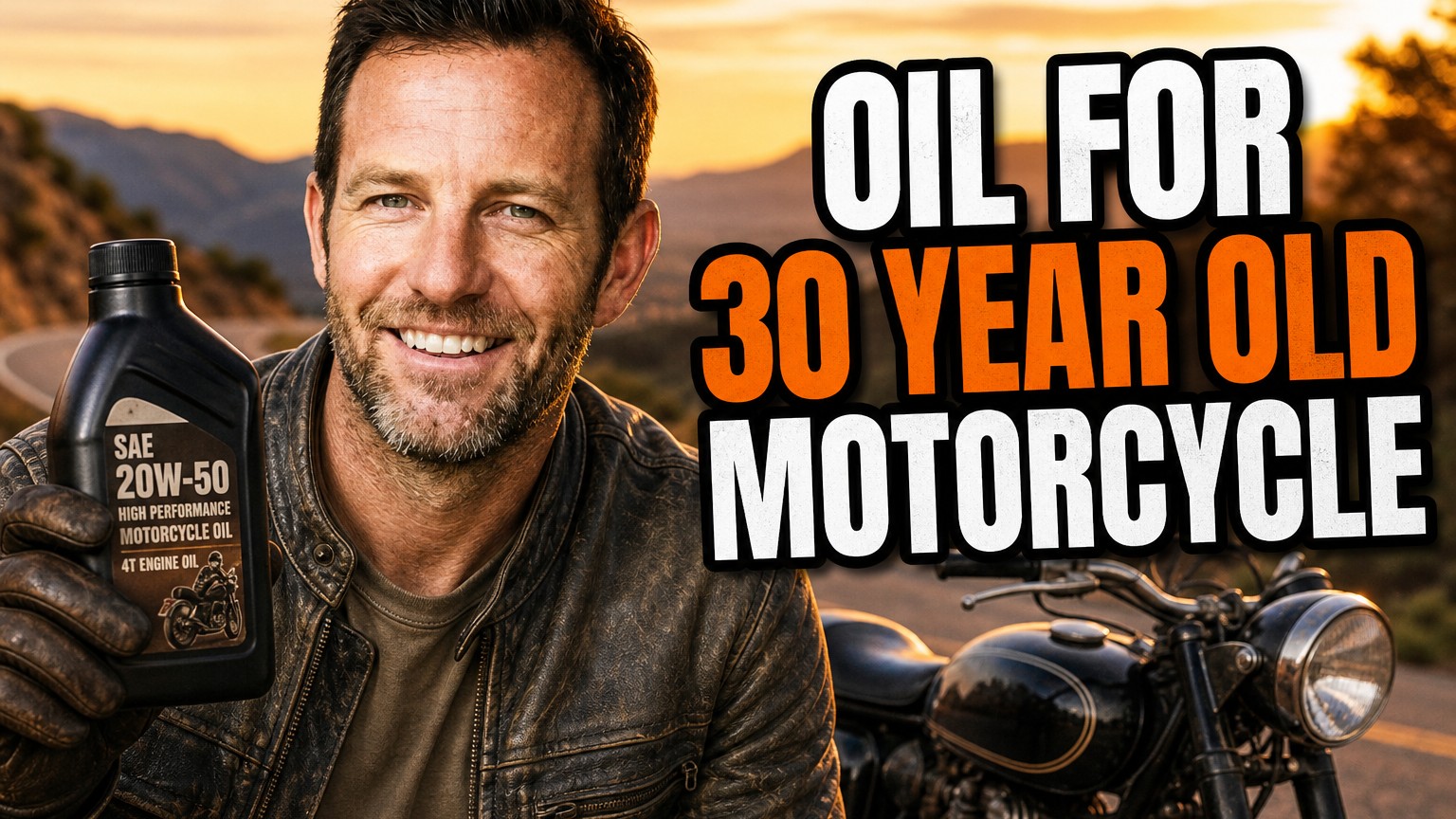
I’ve been wrenching on my own older bikes for years, and the question I get asked most is simple: what do I pour into an engine that’s older than some of the riders on the road? A 30-year-old motorcycle is not a modern machine. It has different metallurgy, looser tolerances, and often a shared engine and gearbox sump.
The wrong oil can make a clutch slip, starve a cam of protection, or turn a minor weep into a puddle. The right one keeps your classic smooth and quiet. If you’re also comparing options for newer machines, my guide to the best motor oil for 4 stroke motorcycle is a good companion read.
Below are the eight oils I trust, or would trust, for a bike from the early-to-mid 1990s. I’ve explained what each one does best and who it suits.
- My overall pick is Castrol Classic XL 20W-50, a mineral oil built for vintage engines with the right zinc levels.
- Choose a JASO MA/MA2 oil if your engine and gearbox share a sump with a wet clutch. Skip car oils labeled “Energy Conserving.”
- Flat-tappet and older cam designs love high-zinc (ZDDP) oils like Valvoline VR1 Racing.
- Switching to synthetic is fine on healthy engines. Just do it gradually and watch the seals.
How I Chose These Oils for Vintage Engines
I didn’t just grab the most popular bottles. I judged each oil on the things that matter most to an aging engine. Some of these I’ve run myself, and others I’ve researched thoroughly or watched friends run for thousands of miles.
What I Looked For
- JASO MA or MA2 rating for wet clutch compatibility.
- Zinc and phosphorus (ZDDP) content for cam and lifter protection.
- Viscosity options that suit air-cooled and older liquid-cooled engines.
- Availability and price, because an oil you can’t find isn’t much use.
What I Avoided
I steered clear of modern automotive oils with friction modifiers. They’re great in a car, but they can make a wet clutch slip. That’s a nasty surprise on a bike that’s already 30 years old.
1. Castrol Classic XL 20W-50 — Best Overall for Vintage Bikes
If I could only keep one bottle on my garage shelf, it would be Castrol Classic XL 20W-50. It’s a straight mineral oil designed specifically for older engines. It carries a healthy dose of anti-wear additives and doesn’t pretend to be something modern.
What I love about Castrol Classic XL is how it suits the way these bikes are actually used. Old engines run warm, sit in garages for weeks, and don’t like thin oils. The 20W-50 grade holds a solid film at temperature and cushions worn components.
It’s also easy to find and typically costs about $12 to $20 per liter, depending on where you shop. Because it’s mineral-based, it’s a natural fit for riders who want something close to what the factory originally specified. For more on this approach, I wrote about the best conventional oil for old motorcycle wet clutch setups.
Best For
Air-cooled Japanese and European bikes from the 80s and 90s, plus anyone who wants a no-fuss, classic-spec oil.
2. Valvoline VR1 Racing 20W-50 — Best High-Zinc Option
Many older engines have flat-tappet cams or sliding cam followers. These wear faster when oil lacks zinc and phosphorus. That’s where Valvoline VR1 Racing 20W-50 shines. Its ZDDP content sits well above what you find in modern passenger-car oils.
I like VR1 for bikes I ride hard, or ones with a known appetite for cam wear. It’s a conventional oil with a racing pedigree, so it tolerates heat and high load well. It typically runs around $8 to $12 per quart.
One Important Caveat
VR1 is marketed mainly for cars, and it isn’t JASO-certified. Many riders run it happily in wet-clutch bikes, but I’d check your clutch behavior closely after the first fill. If you get any slip, switch to a JASO MA2 oil.
3. Motul 3000 4T 20W-50 — Best Mineral Oil for Wet Clutches
When I want a mineral oil that’s explicitly designed for motorcycles, I reach for Motul 3000 4T 20W-50. It meets JASO MA2 specs, so clutch performance stays predictable. That’s a big deal on a bike where the clutch is already past its first youth.
Motul 3000 4T is a mineral-based formula, which makes it an easy swap for a bike that has always run conventional oil. It’s also well priced, usually around $10 to $16 per liter. I find it consistently smooth in older Hondas and Kawasakis.
Why I Like It
It’s stable, widely sold, and gives you motorcycle-specific certification without the cost of a full synthetic. For a daily-ish classic, that’s a sweet spot.
4. Bel-Ray EXL Mineral 4T 20W-50 — Best for Old-School Reliability
Bel-Ray has been making motorcycle lubricants for decades, and Bel-Ray EXL Mineral 4T is a no-nonsense choice for older engines. It’s JASO MA2 certified and formulated to handle shared engine, clutch, and gearbox lubrication.
I like that Bel-Ray doesn’t over-market this one. It does the job, resists shearing in the gearbox, and keeps shifting crisp. If you ride a vintage Japanese four-cylinder or a classic British twin, it’s a strong fit. A British-bike fan may also want to read my take on the best oil for old triumph motorcycle models.
Best For
Riders who want a motorcycle-specific mineral oil from a trusted heritage brand and don’t mind hunting for it online or at a dealer.
5. Shell Advance 4T AX7 10W-40 — Best Semi-Synthetic for Regular Riders
Not every 30-year-old bike lives in a museum. Some of us ride them to work. For those bikes, Shell Advance 4T AX7 10W-40 is a great semi-synthetic compromise. It offers better cold-start flow and heat resistance than a straight mineral oil.
It’s JASO MA2 rated, widely available, and affordable, usually in the $10 to $15 per liter range. In warmer markets it’s especially popular. I’d say it’s one of the best engine oil for 4 stroke motorcycle in india conditions too, where stop-and-go heat is brutal.
Things to Watch
If your engine specifically calls for a thicker 20W-50, I’d stay with the mineral options above. But for moderate climates and regular use, the 10W-40 grade is a smart, easy choice.
6. Motul 7100 4T 10W-40 — Best Full Synthetic Upgrade
Some riders ask whether they should go full synthetic on a classic. My answer: if the engine is healthy, absolutely. Motul 7100 4T 10W-40 is an ester-based, 100% synthetic oil that offers excellent film strength and heat stability.
It’s JASO MA2 approved and has a loyal following among riders who put serious miles on older sportbikes and standards. The price is higher, typically $14 to $22 per liter, but oil life and protection can justify it.
My Advice Before Switching
Do a clean oil change first, and check for weeping seals over the next few hundred miles. Synthetic doesn’t cause leaks, but it can reveal ones that old sludge was quietly plugging. If you want to explore this more, I rounded up my top engine oil for 4 stroke motorcycle picks separately.
7. Maxima V-Twin Mineral 20W-50 — Best for Old Cruisers
If your 30-year-old bike is a big air-cooled V-twin, such as a Harley-Davidson or a Japanese cruiser, Maxima V-Twin Mineral 20W-50 is a very natural fit. It’s designed for the high heat and heavy load these engines generate.
The formula is wet-clutch friendly and keeps primary and transmission components happy. I like how it tolerates long, hot highway rides and stop-and-go summer traffic. Pricing is usually about $12 to $18 per quart.
Best For
Air-cooled big twins, older cruisers, and riders who want a mineral oil formulated for heat-soaked engines.
8. Red Line 20W50 Motorcycle Oil — Best for Hot-Running Air-Cooled Engines
When the weather gets scorching, or I know a ride will involve long climbs, I think of Red Line 20W50 Motorcycle Oil. It’s a synthetic ester-based oil known for strong film strength and resistance to thermal breakdown.
Red Line markets it as wet-clutch safe, and it carries a solid reputation among air-cooled twin and four-cylinder riders. It isn’t the cheapest, usually $15 to $22 per quart, but it’s one of the sturdiest options I know of for demanding use.
Best For
Performance-minded owners of older air-cooled bikes who ride in hot climates or push their machines on long, spirited rides.
Buying Guide: Picking the Right Oil for Your Aging Engine
Even with a list in hand, choosing between these oils can feel daunting. Here’s how I narrow it down when I’m helping a friend pick for their classic.
Start With the Manual
Your owner’s manual is the best starting point. It tells you the viscosity range the factory designed for. If you’ve lost it, a service manual or an owner’s forum for your model will usually fill the gap quickly.
Match Viscosity to Climate
I generally use 20W-50 in warm climates for air-cooled engines and 10W-40 in cooler regions. Thicker oil can help old engines with some wear. But it can also make cold starts harder if the weather is chilly.
Mineral vs. Semi-Synthetic vs. Full Synthetic
Mineral oils are traditional, affordable, and ideal for bikes that sit often. Semi-synthetics give you a bit more heat and cold-start protection. Full synthetics deliver the best film strength and oil life, but cost more.
Don’t Forget the Clutch
If your engine, clutch, and gearbox share oil, look for JASO MA or MA2 on the label. Avoid car oils labeled “Energy Conserving,” because they can cause clutch slip.
Change It More Often Than You Think
Old engines often have more blow-by, and they sit unused for stretches. Both of those contaminate oil faster. I change mine every 2,000 to 3,000 miles or at least once a year, regardless of mileage.
Common Mistakes I See With Vintage Bike Oil
Using Car Oil Without Checking the Label
Modern automotive oils have low zinc and friction modifiers. They can hurt both cam protection and clutch grip. Use a motorcycle-specific oil, or a high-zinc oil you’ve verified works with your clutch.
Mixing Random Oils
Topping off with whatever’s on the shelf is tempting. But mixing wildly different formulations can compromise additives. If you must top up, match viscosity and type as closely as you can.
Ignoring Oil Filter Quality
Great oil in a cheap filter is a waste. I always pair my oil with a quality OEM or reputable aftermarket filter. It’s inexpensive protection for an engine that’s irreplaceable.
Final Thoughts From My Garage
For most riders, I think Castrol Classic XL 20W-50 is the simplest, most reliable answer. If your bike needs extra cam protection, go with Valvoline VR1 Racing. If you want motorcycle-specific certification, Motul 3000 4T and Bel-Ray EXL are excellent choices.
And if your classic is your daily rider, Shell Advance AX7 or Motul 7100 will serve you well. Whatever you choose, change it regularly and listen to your engine. A 30-year-old motorcycle will reward you for the care.
Frequently Asked Questions
Can I use synthetic oil in a 30-year-old motorcycle?
Usually yes. A healthy engine with intact seals can run a quality synthetic like Motul 7100 4T without problems. Seals that already weep may leak a little more once the oil’s cleaning ability improves, so I suggest switching in stages and watching for drips.
What oil viscosity is best for an old air-cooled motorcycle?
Most air-cooled bikes from the late 80s and early 90s do well on 20W-50 in warm climates and 10W-40 in cooler ones. Always check your owner’s manual first, then adjust for your local temperatures.
Do older motorcycles need high-zinc (ZDDP) oil?
Bikes with flat-tappet or sliding cam followers benefit from oils with higher zinc and phosphorus levels. Oils like Valvoline VR1 Racing 20W-50 or Castrol Classic XL 20W-50 are good choices for these engines.
How often should I change oil in a 30-year-old motorcycle?
I change mine every 2,000 to 3,000 miles or once a year, whichever comes first. Old engines often have more blow-by and sit for long periods, so fresh oil is cheap insurance.

Related Articles
7 Best Batteries for Motorcycles I’ve Tested and Trust in 2026
I've tested dozens of motorcycle batteries to find the best performers. From AGM to lithium, here are my top picks…
Jake Miller
15 min read

The Perfect Battery for Your Harley Davidson Softail: A Rider’s Complete Guide
Discover the perfect battery for your Harley Davidson Softail. I've tested multiple options and share real-world performance data, maintenance tips,…
Jake Miller
14 min read

The Best Battery for Your Harley Davidson: My Complete Guide After Years of Testing
Discover which battery truly performs best for Harley Davidson motorcycles. Real rider experience with AGM, lithium, and OEM options to…
Jake Miller
12 min read