
How to Decode Your Kawasaki Engine Serial Number: A Rider’s Complete Guide
 Jake Miller
16 min read
Jake Miller
16 min read
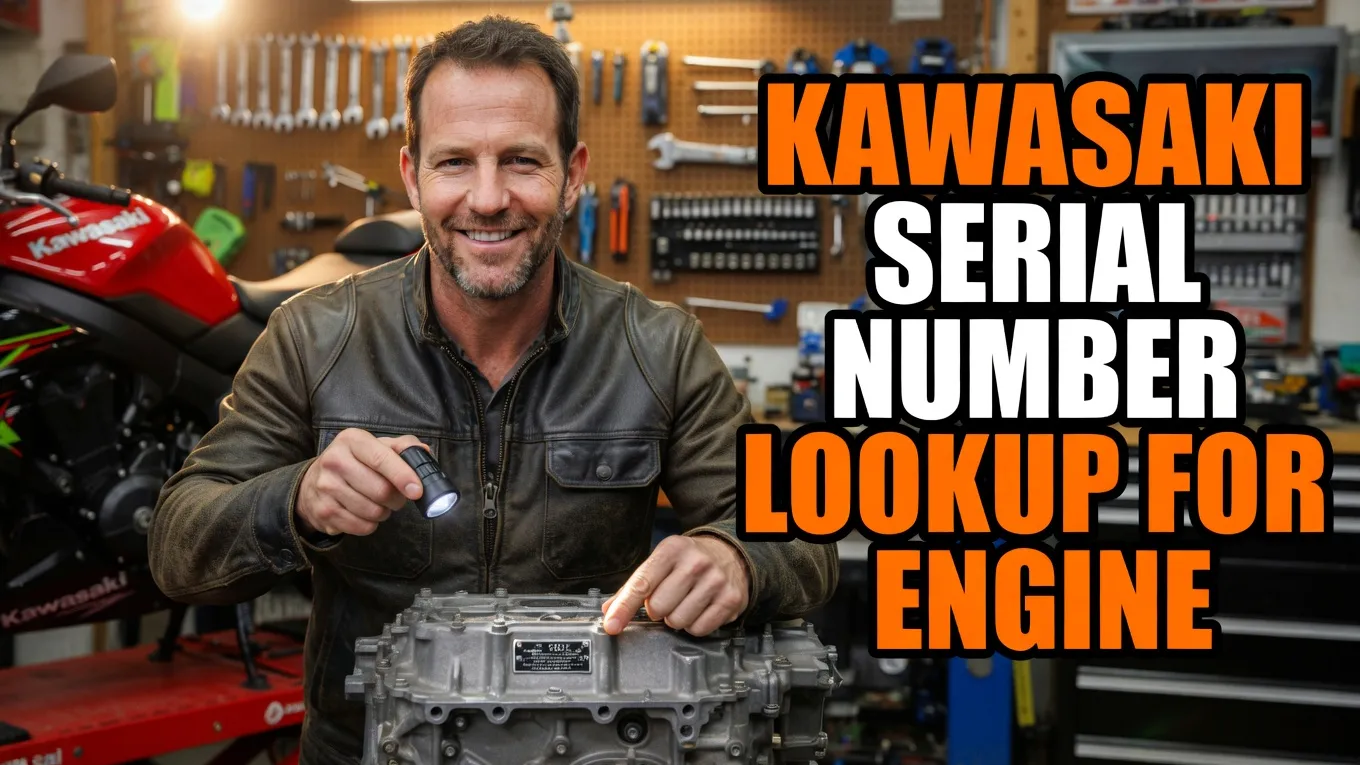
I’ve been wrenching on Kawasaki motorcycles for years, and I can’t tell you how many times I’ve seen riders struggle to find the right parts or service information because they didn’t know how to locate or decode their engine serial number. It’s one of those things that seems mysterious until you understand the system—then it becomes incredibly useful.
Whether you’re ordering parts, doing a rebuild, or just trying to verify what you actually have in your frame, knowing how to perform a Kawasaki serial number lookup for your engine is essential. I’m going to walk you through everything I’ve learned about finding, reading, and using these numbers.
- Kawasaki engine serial numbers are stamped on the crankcase and reveal production date, plant location, and model specifics
- The format varies by model and era, but typically includes letter-number combinations that decode to specific information
- Use Kawasaki’s official parts catalog or authorized dealers for the most accurate serial number lookup
- Your engine serial number ensures you get correct parts, oil specifications, and maintenance procedures
- Mid-year production changes make serial numbers more reliable than model year alone for parts compatibility
Why Your Kawasaki Engine Serial Number Matters
I learned the importance of engine serial numbers the hard way. A few years back, I bought what I thought was a 2015 Ninja 650, but when I tried to order valve shims, the parts didn’t match. Turns out the engine was from a late 2014 production run with different specifications.
The serial number saved me from ordering wrong parts twice more that year. Kawasaki, like most manufacturers, makes running changes during production. Two bikes from the same model year can have different internal engine components depending on when they were actually built.
Here’s what your engine serial number can tell you:
- Exact production date – not just the model year, but when your specific engine was assembled
- Manufacturing plant location – some Kawasaki engines are built in Japan, others in Thailand or the United States
- Model designation – confirms exactly which engine variant you have
- Production sequence – your engine’s place in the manufacturing run, which matters for recall lookups
This information becomes critical when you’re doing serious maintenance. When I’m selecting the best engine oil for motorcycle applications, I always reference the serial number to confirm oil capacity and viscosity recommendations. The manual might say one thing, but mid-year changes can alter specifications.
Where to Find Your Kawasaki Engine Serial Number
I’ve searched for engine numbers on everything from vintage KZ models to modern Ninjas, and the location varies more than you’d think. That said, Kawasaki follows some general patterns that make the search easier once you know what to look for.
Common Locations on Modern Kawasakis
On most modern Kawasaki sportbikes and standard motorcycles, I find the engine serial number stamped on the right side of the crankcase. Look near the clutch cover, on a flat machined surface. You’ll see a series of alphanumeric characters stamped into the metal.
For many parallel-twin engines like those in the Ninja 650 or Z650, the number is on the left side of the crankcase, just above where the oil filter sits. You might need to clean away some road grime first—I always keep a bottle of the best degreaser for motorcycle engine work in my garage for exactly this reason.
Cruiser and Touring Models
On Vulcan and Voyager models, I’ve found the engine number is typically on the left front of the crankcase, near the oil cooler lines. The location is usually more accessible on cruisers since the engine casings are more exposed.
Some larger V-twin engines have the serial number on the rear of the front cylinder’s crankcase. You might need a mirror or your phone camera to see it without removing bodywork.
Vintage and Classic Kawasakis
Older Kawasakis—I’m talking KZ, Z1, and early GPZ models—often have the engine number on the top left of the crankcase, near where the cylinder base meets the cases. On some air-cooled inline-fours, it’s stamped on a boss above the oil filter.
I once spent an hour looking for the number on a 1977 KZ1000 before finding it hidden under years of oily buildup. A thorough cleaning with the best cleaner for motorcycle engine maintenance revealed it perfectly preserved underneath.
Off-Road and Dual-Sport Models
KLR, KLX, and KX models typically have the engine serial number on the right side of the crankcase, forward of the kickstarter mechanism (on models that have one). The stamping is often on a raised pad that’s been machined flat specifically for the serial number.
How to Read and Decode Kawasaki Engine Serial Numbers
Once you’ve located your serial number, understanding what it means is the next challenge. I’ll admit that Kawasaki’s numbering system isn’t the most intuitive at first glance, but it follows a logical structure once you break it down.
Understanding the Format
Kawasaki engine serial numbers typically consist of a combination of letters and numbers, usually 10-12 characters long. The format has evolved over the decades, but modern numbers generally follow this pattern:
[Engine Family Code][Production Plant][Production Date][Sequential Production Number]
For example, a serial number like “ER650EE123456” breaks down as follows: “ER650E” identifies the engine family (in this case, the parallel-twin from the ER-6 series), the next letter indicates the production plant, and the remaining numbers represent the production sequence and date encoding.
Decoding the Engine Family Code
The first letters in your serial number identify the engine family. I’ve worked with enough Kawasakis to recognize common prefixes:
- ER – Parallel-twin engines used in ER-6, Ninja 650, Z650 models
- ZX – High-performance inline-four engines from the Ninja sportbike line
- VN – V-twin engines used in Vulcan cruiser models
- KL – Single-cylinder and twin engines for dual-sport and adventure bikes
- ZR – Engines used in Z-series naked bikes
The numbers following these letters indicate displacement. A “650” following “ER” confirms you have a 649cc parallel-twin, while “1000” after “ZX” indicates a liter-class sportbike engine.
Production Plant and Date Information
In my experience, the middle section of the serial number contains encoded information about where and when the engine was built. Kawasaki uses single letters to designate different manufacturing facilities:
J typically indicates Japanese production at the Akashi or Kobe plants, while T often means Thailand production (which supplies many engines for North American and European markets). U can indicate United States assembly at the Lincoln, Nebraska facility.
The date encoding is less obvious from the serial number alone. Kawasaki doesn’t use a simple year-month format that you can read directly. Instead, the production date is embedded in the sequential numbering system and requires a lookup through Kawasaki’s parts system to decode precisely.
How to Perform a Kawasaki Engine Serial Number Lookup
Now that you know where to find the number and what it generally means, let’s talk about actually looking up specific information. I use several methods depending on what information I need and how detailed I want to get.
Official Kawasaki Resources
The most reliable method I’ve found is using Kawasaki’s official parts catalog system, which many dealers can access online. You can visit a Kawasaki dealer and provide your engine serial number—they can enter it into their parts system and pull up exact specifications, parts supersessions, and service bulletins specific to your engine.
Kawasaki’s customer service line is another option I’ve used successfully. Call with your serial number ready, and they can verify engine specifications and production details. I’ve found their staff knowledgeable and helpful, especially when I’m trying to confirm compatibility before ordering expensive parts.
Online VIN and Serial Number Decoders
Several third-party websites offer VIN and engine serial number lookup services. I’ve had mixed results with these. They work well for basic information like model year and engine family, but they often lack the granular details about mid-year production changes that I actually need.
The best online resource I’ve found is Kawasaki’s own parts diagram system (accessible through many dealer websites). If you can navigate to your model and year, then cross-reference your serial number with the production dates listed in the parts catalog, you can usually confirm exactly which parts revision your engine uses.
Using Owner Communities and Forums
I’m active on several Kawasaki-specific forums, and the collective knowledge there is invaluable. Posting your serial number (with photos showing the stamping) often gets you detailed responses from owners and mechanics who have worked extensively with your specific engine.
Forums like Kawasakiversys.com, Ninja650.org, and ZX-Forums.com have searchable databases where you can often find information about serial number ranges and corresponding specifications. I’ve learned about recalls, common issues, and production changes by searching serial number discussions on these platforms.
Why Serial Numbers Matter for Maintenance and Repairs
Let me share a practical example from my own garage. Last year, I was preparing to do valve maintenance on my 2018 Z900. According to the manual, I needed specific shim sizes and clearances. But when I checked my engine serial number against Kawasaki’s parts system, I discovered my engine was from a late 2017 production run with slightly different valve specifications.
If I hadn’t checked the serial number, I would have ordered wrong shims and potentially set incorrect clearances. That’s a mistake that could have cost me performance, fuel efficiency, and potentially engine longevity.
Oil Specifications and Capacity
Serial number verification becomes especially important when selecting lubricants. While I always start with the best motorcycle oil for Kawasaki recommendations, I verify the exact oil capacity and viscosity requirements using my engine serial number.
Mid-year changes sometimes affect oil capacity by a few hundred milliliters, or Kawasaki might have revised their viscosity recommendations based on real-world feedback. The serial number ensures I’m following the specifications for my actual engine, not just the general model year guidance.
Internal Engine Parts Compatibility
I’ve encountered situations where pistons, rings, bearings, and gaskets changed mid-year. Ordering parts based on model year alone resulted in returns and delays. Now I always reference my engine serial number when ordering internal components.
This is particularly important for older Kawasakis. If you’re rebuilding a vintage KZ or Z1 engine, there were running changes that affect piston specifications, bearing sizes, and gasket thicknesses. The serial number is your roadmap to correct parts compatibility.
Service Interval Verification
Kawasaki occasionally revises service intervals based on long-term durability data. Engines produced after certain serial numbers might have extended service intervals or different maintenance requirements. I always check service bulletins against my serial number to ensure I’m following the most current recommendations.
Before performing any major service—valve adjustment, clutch work, or using an best engine flush for motorcycle maintenance—I verify that the procedure I’m following applies to my specific engine serial number range.
Common Serial Number Lookup Challenges
I won’t pretend that finding and decoding Kawasaki engine serial numbers is always straightforward. I’ve encountered several common obstacles over the years, and I want to share how I’ve worked around them.
Serial Numbers Obscured by Damage or Wear
Road debris, corrosion, and engine case modifications can make serial numbers difficult or impossible to read. I’ve had success using a brass wire brush (never steel—it can damage the soft aluminum) and penetrating oil to gently clean stampings.
For deeply corroded numbers, I’ve used chalk or white grease rubbed over the area, then wiped clean. This fills the stamped characters and makes them more visible. Taking photos with different lighting angles helps too—sometimes the right shadow makes illegible numbers suddenly readable.
Mismatched Engine and Frame Numbers
Engine swaps are common, especially on older bikes. I bought a 1982 KZ750 where the frame VIN indicated one year, but the engine serial number was from a different year entirely. This isn’t necessarily a problem, but it means you need to reference the engine number for parts, not the frame VIN.
Always verify that the engine in your frame is the original. If it’s not, all your parts lookups must use the engine serial number, not the motorcycle’s VIN or the model year on the title.
International Models and Importing
I’ve worked on several imported Kawasakis—bikes originally sold in Japan, Europe, or Australia. Their engine serial numbers follow the same basic format, but regional variations sometimes make lookup more complicated. European-spec engines might have different emission components, while Japanese domestic market engines often have different power outputs.
When dealing with an imported bike, I make sure to specify the market region when doing serial number lookups. Parts that work for a North American engine might not be correct for a JDM equivalent, even if the serial numbers look similar.
Using Your Serial Number for Theft Recovery and Authentication
Beyond maintenance and parts, your engine serial number is a critical security tool. I record the serial numbers of all my bikes’ engines (and frames) in multiple locations—my phone, a password manager, and a physical file at home.
Theft Recovery
If your Kawasaki is stolen, police and insurance companies use the engine serial number (along with the frame VIN) to identify recovered bikes. Thieves can re-stamp frame VINs or swap frames entirely, but engine numbers are harder to alter convincingly.
I’ve helped friends verify recovered stolen bikes by checking that the engine serial number matched their records. In one case, a recovered Ninja had the frame VIN ground off, but the engine serial number was intact and matched my friend’s documentation, proving ownership.
Authentication When Buying Used
Before buying any used Kawasaki, I verify the engine serial number against the seller’s claims about the bike’s model, year, and history. Mismatched numbers can indicate odometer fraud, salvage title washing, or stolen components.
I once walked away from a “low-mileage” ZX-10R when the engine serial number revealed it was three years older than the claimed model year. The frame and bodywork had been updated, but the engine—and likely the actual mileage—told a different story.
Record Keeping and Documentation
I maintain a detailed log for each of my Kawasakis that includes the engine serial number, frame VIN, purchase date, and all major service records. This documentation has proven invaluable for several reasons.
Creating Your Engine Profile
I photograph my engine serial number clearly and store the image in multiple places. I also transcribe it into a spreadsheet with the motorcycle’s other vital information. This creates a permanent record that survives even if the physical stamping becomes unreadable later.
In my service log, I note the serial number at the top of the first page. Every time I reference parts or specifications, I confirm they match my specific serial number range. This habit has prevented several wrong parts orders over the years.
Maintenance History Tied to Serial Number
When I perform maintenance, I note the engine serial number on receipts and in my log. If I ever sell the bike, this documentation proves to buyers that service was performed on this specific engine, not just claimed generically.
This is especially valuable for major work like valve adjustments, top-end rebuilds, or clutch replacements. Future owners can verify the work was done and reference the same serial number for their own parts lookups and maintenance planning.
Advanced Serial Number Techniques
For riders who want to dive deeper into their Kawasaki’s history and specifications, there are some advanced techniques I’ve learned that go beyond basic serial number lookups.
Cross-Referencing with Production Records
Some Kawasaki enthusiast groups maintain databases that correlate serial number ranges with specific production batches. By comparing your serial number to these records, you can sometimes determine the exact week or even day your engine was assembled.
This level of detail matters most for collectors of vintage or limited-edition Kawasakis, but I find it interesting even on modern bikes. Knowing my Z900’s engine was built in the first production month helps me understand why it has certain early-production characteristics.
Identifying Special Editions and Variants
Limited editions, anniversary models, and special variants sometimes have distinct serial number ranges or prefix codes. I’ve used this to authenticate claimed special editions when buying used bikes.
For example, certain Ninja ZX-6R 636 models had unique engine designations that distinguish them from the standard 600cc versions. The serial number confirms which variant you actually have, regardless of what the bodywork or paint suggests.
When Serial Numbers Aren’t Enough
I want to be honest about the limitations of serial number lookups. While they’re incredibly useful, they don’t tell you everything about your engine’s current condition or history.
The serial number shows what your engine was when it left the factory. It doesn’t reveal modifications, damage, or internal wear. I’ve seen engines with correct serial numbers that had been bored oversize, fitted with aftermarket pistons, or had internal damage from previous owners.
Before any major purchase or rebuild decision, I combine serial number verification with physical inspection. Compression tests, leak-down tests, and visual inspection of wear patterns tell you about your engine’s present condition. The serial number tells you about its past and guides you toward correct specifications and parts.
Making Serial Number Lookups Part of Your Routine
I’ve made serial number verification a standard part of my motorcycle maintenance routine. Before any significant work, I double-check the number and confirm my parts compatibility. It takes an extra five minutes but has saved me from countless headaches.
When I’m working on a friend’s Kawasaki or helping someone diagnose an issue online, the first question I ask is “What’s your engine serial number?” It immediately narrows down possibilities and ensures any advice I give applies to their specific engine.
For new Kawasaki owners, I recommend making serial number documentation part of your initial bike setup. Photograph it clearly, transcribe it accurately, and file it somewhere you won’t lose it. That simple step will make every future maintenance decision easier and more confident.
Understanding how to find and decode your Kawasaki engine serial number transforms you from someone who owns a motorcycle into someone who truly knows their machine. It’s a small detail that makes a huge difference in how effectively you can maintain, repair, and enjoy your bike for years to come.
Frequently Asked Questions
Where is the serial number located on a Kawasaki engine?
The engine serial number is typically stamped on the crankcase, either on the right side near the clutch cover or on the left side above the oil filter. Look for a flat machined surface with stamped alphanumeric characters.
What information does a Kawasaki engine serial number tell you?
The serial number reveals your engine’s production date, manufacturing plant, model designation, and production sequence. This helps you order correct parts and verify your engine’s authenticity.
Can I decode a Kawasaki engine serial number online?
Yes, you can use Kawasaki’s official parts catalog or contact authorized dealers with your serial number. Third-party VIN decoder tools may work for complete motorcycles, but engine-specific lookups often require Kawasaki resources.
Why is my Kawasaki engine serial number important for maintenance?
Your engine serial number ensures you get the right engine oil, parts, and service specifications. Engines often have mid-year changes that affect compatibility, making the serial number more accurate than model year alone.

Related Articles
7 Best Batteries for Motorcycles I’ve Tested and Trust in 2026
I've tested dozens of motorcycle batteries to find the best performers. From AGM to lithium, here are my top picks…
Jake Miller
15 min read

The Perfect Battery for Your Harley Davidson Softail: A Rider’s Complete Guide
Discover the perfect battery for your Harley Davidson Softail. I've tested multiple options and share real-world performance data, maintenance tips,…
Jake Miller
14 min read

The Best Battery for Your Harley Davidson: My Complete Guide After Years of Testing
Discover which battery truly performs best for Harley Davidson motorcycles. Real rider experience with AGM, lithium, and OEM options to…
Jake Miller
12 min read